

#Short Answer
Explains how does ai in education work?, including the main process, tools, examples, risks, and practical implementation steps.
#Infobox
#Overview
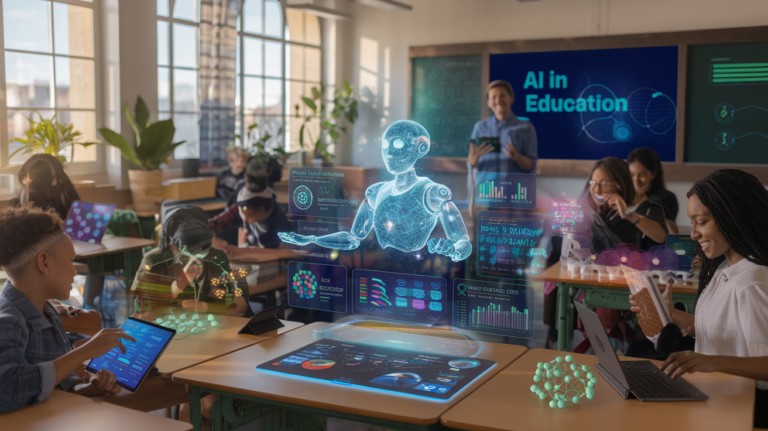
Artificial Intelligence in education (AIEd) is transforming traditional learning paradigms by integrating intelligent systems that adapt to individual student needs, automate administrative tasks, and provide real-time feedback. Unlike conventional educational tools, AI-driven platforms leverage vast datasets to identify patterns in learning behaviors, predict academic performance, and tailor instruction accordingly. This shift from a one-size-fits-all approach to a personalized learning model is reshaping classrooms, from K-12 to higher education and corporate training. AI in education encompasses a broad spectrum of applications, including intelligent tutoring systems (ITS), adaptive learning platforms, automated assessment tools, and educational chatbots. These technologies not only support educators by reducing workload but also empower students through interactive, on-demand learning experiences. As AI continues to evolve, its role in education is expanding beyond mere automation to fostering deeper cognitive engagement and lifelong learning.
#History / Background
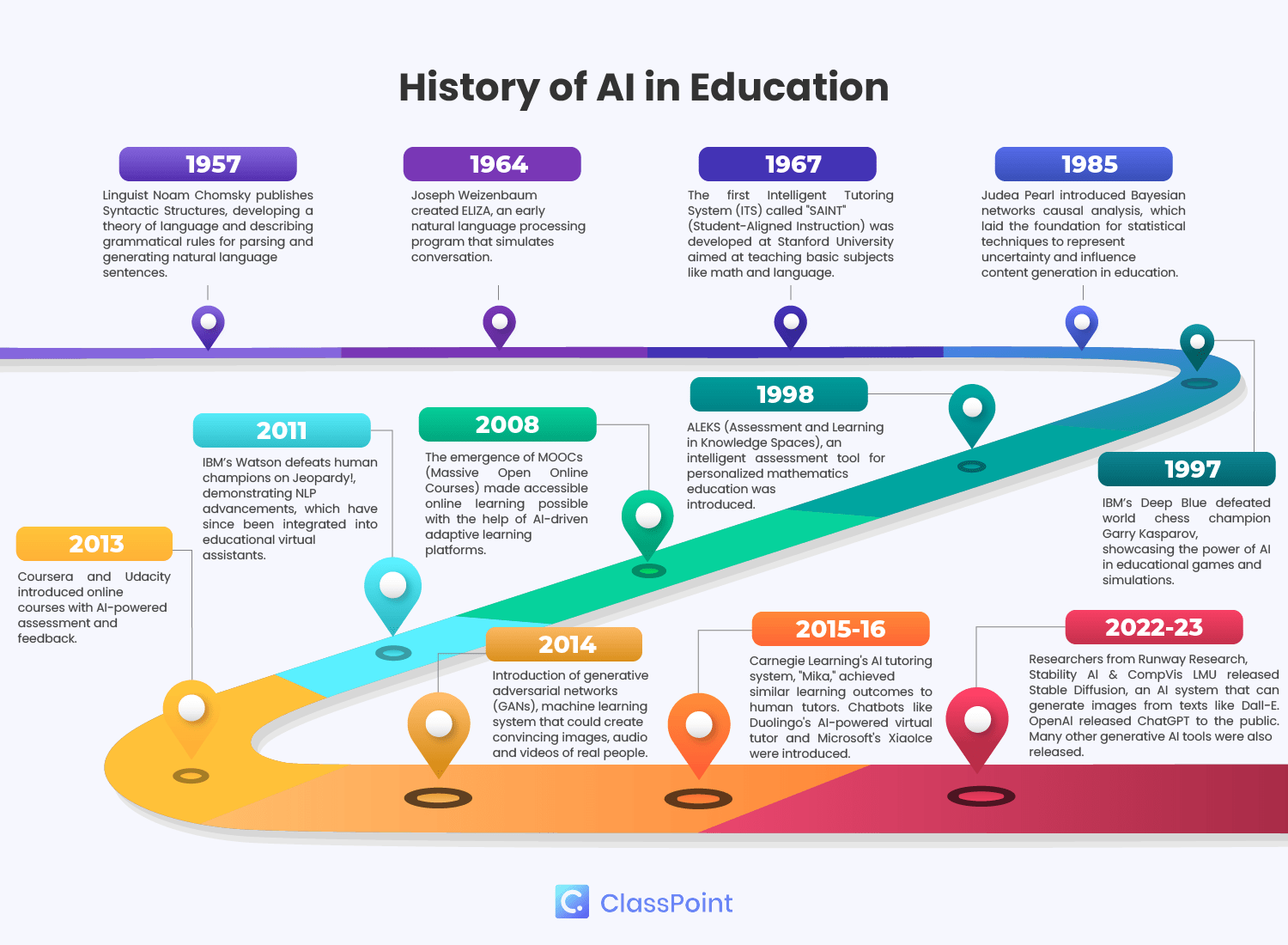
The integration of AI into education traces its roots to the mid-20th century, with early experiments in computer-assisted instruction (CAI) during the 1960s. One of the first notable systems, PLATO (Programmed Logic for Automatic Teaching Operations), developed at the University of Illinois, used mainframe computers to deliver personalized lessons. However, the computational limitations of the time restricted widespread adoption. The 1980s and 1990s saw the emergence of intelligent tutoring systems (ITS), which incorporated AI techniques to simulate human tutoring. Systems like SOPHIE (1970s) and Cognitive Tutor (1990s) demonstrated the potential of AI to provide step-by-step guidance in problem-solving. The rise of the internet in the late 1990s and early 2000s accelerated AIEd development, enabling web-based learning platforms and early adaptive learning tools. The 2010s marked a turning point with the advent of big data analytics and machine learning, allowing AI systems to process vast amounts of educational data. Companies like Khan Academy and Duolingo leveraged AI to create adaptive learning paths, while MOOCs (Massive Open Online Courses) integrated AI-driven assessments. The proliferation of learning management systems (LMS) such as Blackboard and Canvas further embedded AI into institutional workflows. Today, AI in education is a multi-billion-dollar industry, driven by advancements in natural language processing (NLP), computer vision, and affective computing (the ability to recognize emotions). The COVID-19 pandemic accelerated adoption, as remote learning necessitated scalable, intelligent solutions for engagement and assessment.
#How It Works
AI in education operates through a combination of core technologies, data-driven methodologies, and interactive interfaces. Below is a breakdown of how these components function together:
#1. Core AI Technologies in Education
- Machine Learning (ML): Algorithms analyze student data (e.g., quiz scores, time spent on tasks) to identify learning patterns and predict outcomes. Supervised learning trains models on labeled data, while unsupervised learning detects hidden trends.
- Natural Language Processing (NLP): Enables systems to understand and generate human language. Applications include chatbots (e.g., answering student queries), automated essay scoring, and language translation tools.
- Computer Vision: Used in facial recognition (for engagement tracking) and handwriting analysis (for grading handwritten assignments).
- Reinforcement Learning: Adjusts learning paths dynamically based on student performance, optimizing difficulty levels in real time.
#2. Data Collection and Analysis AI systems rely on educational data, which includes:
- Student Performance Data: Test scores, assignment completion rates, and time spent on learning modules.
- Behavioral Data: Clickstream data (e.g., which videos students watch), interaction logs with tutoring systems, and engagement metrics (e.g., attention spans).
- Demographic Data: Age, grade level, and prior knowledge to contextualize learning needs.
- Feedback Data: Student responses to surveys, self-assessments, and peer reviews. This data is processed using predictive analytics to generate insights such as:
- At-risk student identification (e.g., flagging students likely to drop out).
- Personalized recommendation engines (suggesting resources based on weak areas).
- Adaptive content delivery (adjusting difficulty in real time).
#3. Key AI Applications in Education
| Application | How It Works | Example Tools | |-------------------------------|---------------------------------------------------------------------------------|---------------------------------------| | Intelligent Tutoring Systems (ITS) | Simulates one-on-one tutoring by adapting to student responses and providing hints. | Carnegie Learning, Squirrel AI | | Adaptive Learning Platforms | Adjusts content difficulty based on real-time performance. | Khan Academy, DreamBox | | Automated Grading Systems | Uses NLP and ML to evaluate essays, multiple-choice tests, and even coding assignments. | Gradescope, Turnitin | | Educational Chatbots | Provides 24/7 assistance for FAQs, homework help, and administrative queries. | Duolingo’s chatbots, Georgia State University’s "Pounce" | | Virtual Reality (VR) & AI | Combines immersive simulations with AI-driven feedback for hands-on learning. | Labster, zSpace | | Predictive Analytics | Forecasts student success using historical data and identifies intervention points. | Civitas Learning, BrightBytes |
#4. Personalization and Adaptive Learning AI-driven personalization tailors education to individual needs by:
- Diagnosing Knowledge Gaps: Systems like ALEKS (Assessment and Learning in Knowledge Spaces) use AI to pinpoint areas where a student struggles.
- Dynamic Content Delivery: Platforms like Coursera adjust video pacing, quiz difficulty, and supplementary materials based on user interactions.
- Gamification: AI tracks progress and rewards achievements (e.g., Duolingo’s streaks and leaderboards).
#5. Administrative AI Tools Beyond teaching, AI optimizes institutional operations:
- Automated Scheduling: AI tools like Chronicle optimize class timetables.
- Fraud Detection: AI monitors online exams for cheating (e.g., ProctorU).
- Resource Allocation: Predicts enrollment trends to optimize staffing and infrastructure.
#Important Facts
- Market Growth: The global AI in education market is projected to reach $25.7 billion by 2030, growing at a CAGR of 36% (2023–2030).
- Student Engagement: AI-powered tools increase engagement by 40% compared to traditional methods (McKinsey, 2022).
- Bias Concerns: AI grading systems have been criticized for racial and gender biases in essay scoring (e.g., studies by MIT and Stanford).
- Accessibility: AI tools like text-to-speech and speech-to-text assist students with disabilities, improving inclusivity.
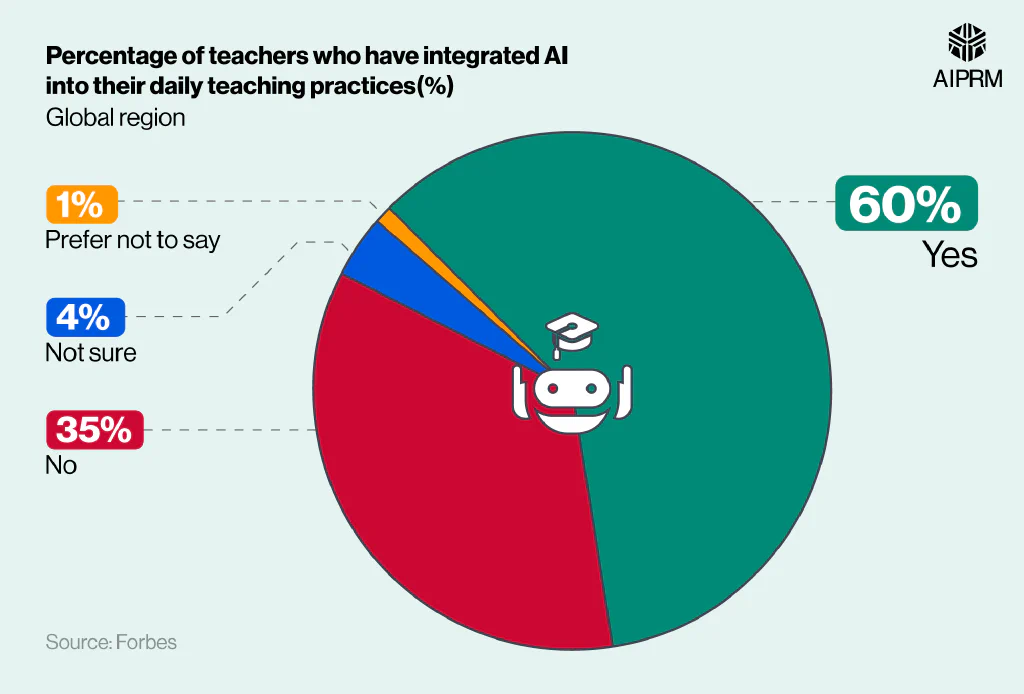
- Teacher Roles: AI augments rather than replaces educators; 80% of teachers report that AI saves time on administrative tasks (OECD, 2021).
- Global Adoption: Countries like China, the U.S., and India lead in AIEd implementation, with China’s Squirrel AI serving over 2 million students.
- Ethical Challenges: Issues include data privacy (e.g., student tracking), algorithmic transparency, and over-reliance on automation.
#Timeline
- Foundational ideas
Core concepts and early methods shape How Does AI in Education Work?.
- Practical use
Tools, examples, and real-world deployments make the topic easier to evaluate.
- Responsible implementation
Current work focuses on reliability, governance, performance, and measurable impact.
#Related Terms
#FAQ
What does How Does AI in Education Work? cover?
Explains how does ai in education work?, including the main process, tools, examples, risks, and practical implementation steps.
Why is How Does AI in Education Work? important?
It helps readers understand key concepts, compare practical use cases, and evaluate how Education Technology decisions affect outcomes, risks, and implementation choices.
What should readers verify before applying this topic?
Readers should compare benefits, limitations, data requirements, and related themes such as Does, AI, Education before using the ideas in real projects.
#References
- How Does AI in Education Work? terminology and background research
- How Does AI in Education Work? use cases, implementation examples, and limitations
- Education Technology best practices, standards, and risk guidance
- Does case studies, benchmarks, and current industry analysis


Comments
No comments yet. Start the discussion with a useful note.