


#Short Answer
Traces timeline of ai in transportation, highlighting major milestones, context, examples, and future implications.
#Infobox
#Overview
Artificial intelligence (AI) has revolutionized transportation by enhancing safety, optimizing routes, reducing congestion, and enabling autonomous mobility. The integration of AI in transportation spans multiple domains, including road, rail, air, and maritime sectors. Early applications focused on rule-based systems and basic automation, while modern implementations leverage deep learning, real-time data processing, and predictive analytics. AI’s role in transportation is categorized into several key areas:
- Autonomous Vehicles: Self-driving cars, trucks, and drones that use AI to perceive environments and make decisions.
- Traffic Management: AI-powered systems that analyze traffic patterns to reduce congestion and improve flow.
- Predictive Maintenance: Machine learning models that forecast equipment failures in vehicles and infrastructure.
- Logistics Optimization: AI-driven route planning and fleet management for cost and time efficiency.
- Smart Infrastructure: AI-enabled traffic lights, toll systems, and parking solutions. The adoption of AI in transportation has been accelerated by advancements in computing power, sensor technology, and data availability. Governments and private companies worldwide are investing heavily in AI-driven transportation solutions to address challenges such as road accidents, carbon emissions, and urban sprawl.
#History / Background
#Early Foundations (1950s–1980s)
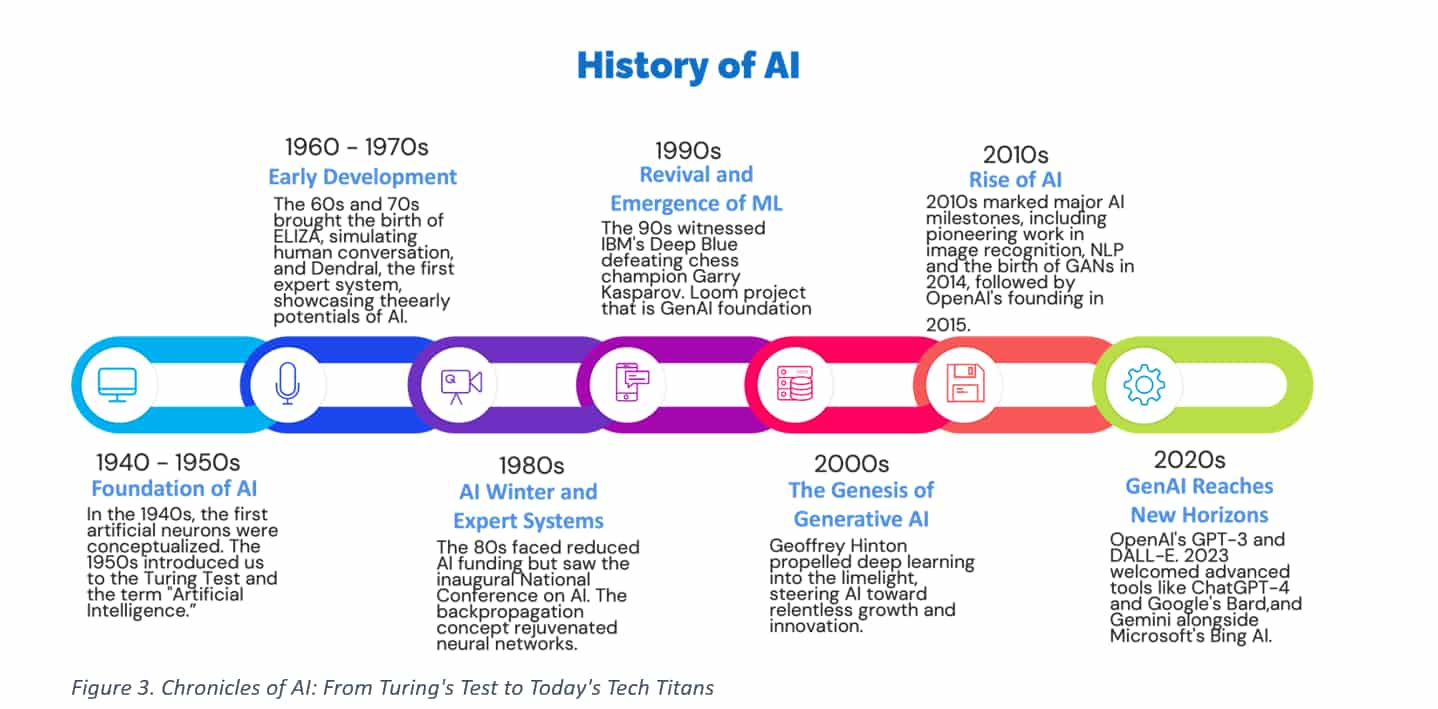
The conceptual groundwork for AI in transportation began in the mid-20th century with early experiments in automation and robotics. In 1956, the Dartmouth Conference marked the birth of AI as a field, leading to theoretical explorations of machine intelligence. By the 1970s, researchers at institutions like Stanford and MIT developed early autonomous vehicle prototypes, such as the Stanford Cart (1961), which used primitive computer vision to navigate obstacles. During this period, AI applications in transportation were limited by computational constraints and sensor technology. However, advancements in control theory and cybernetics laid the foundation for future developments. The 1980s saw the introduction of rule-based expert systems, which were used in traffic signal optimization and route planning.
#The Rise of Machine Learning (1990s–2000s)
The 1990s witnessed a shift toward data-driven approaches, with machine learning techniques gaining prominence. Projects like the PROMETHEUS program in Europe (1987–1995) focused on autonomous driving, while the DARPA Autonomous Vehicle (AV) Challenge (2004–2007) spurred innovation by offering prizes for self-driving cars that could navigate complex environments. Key breakthroughs included:
- Computer Vision: Algorithms for object detection and lane-keeping, such as those developed by researchers at Carnegie Mellon University.
- Sensor Fusion: Combining data from LiDAR, radar, and cameras to improve environmental perception.
- Reinforcement Learning: Training AI models to make decisions through trial and error, as seen in early robotic pathfinding experiments.
#Modern Era
(2010s–Present)
The 2010s marked a turning point with the commercialization of AI-driven transportation technologies. Companies like Tesla, Waymo, and Uber began testing autonomous vehicles on public roads, while governments introduced regulatory frameworks to govern their deployment. The rise of deep learning enabled AI systems to process vast amounts of data, improving decision-making in real time. Major milestones in this era include:
- Tesla’s Autopilot (2014): A semi-autonomous driving system that uses AI to assist drivers with steering, acceleration, and braking.
- Waymo’s Public Trials (2017): The launch of fully autonomous ride-hailing services in Phoenix, Arizona.
- AI in Traffic Management: Cities like Singapore and Los Angeles implemented AI-powered adaptive traffic signals to reduce congestion.
- Drones and Delivery Robots: Companies like Amazon and Zipline began using AI for autonomous package delivery and medical supply transport.
#How It Works
#Core AI Technologies in Transportation AI systems in transportation rely on a combination of technologies to function effectively:
- Machine Learning (ML)
- Supervised Learning: Used for tasks like traffic prediction and route optimization, where models are trained on labeled datasets.
- Unsupervised Learning: Applied in anomaly detection, such as identifying unusual traffic patterns or equipment failures.
- Reinforcement Learning (RL): Enables AI agents to learn optimal behaviors through rewards and penalties, crucial for autonomous driving.
- Computer Vision
- Object Detection: AI models analyze camera feeds to identify pedestrians, vehicles, and road signs.
- Semantic Segmentation: Classifies different parts of an image (e.g., lanes, curbs) to assist in navigation.
- Depth Estimation: Uses stereo cameras or LiDAR to measure distances and create 3D maps of surroundings.
- Sensor Fusion - Combines data from multiple sensors (e.g., LiDAR, radar, ultrasonic) to create a comprehensive environmental model. - Helps mitigate sensor limitations (e.g., LiDAR struggles in fog, while radar performs better in poor visibility).
- Natural Language Processing (NLP) - Enables voice-activated controls in vehicles (e.g., "Hey Mercedes, set the temperature to 22°C"). - Used in chatbots for customer service in logistics and public transit.
- Predictive Analytics - Forecasts traffic conditions, demand for ride-sharing, and maintenance needs using historical and real-time data. - Helps logistics companies optimize delivery routes and reduce fuel consumption.
#AI in Autonomous Vehicles Autonomous vehicles (AVs) are the most visible application of AI in transportation. Their operation can be broken down into several stages:
- Perception - Sensors (cameras, LiDAR, radar) capture data about the vehicle’s surroundings. - AI algorithms process this data to detect objects, classify them (e.g., pedestrian, cyclist, traffic cone), and predict their movements.
- Localization and Mapping - Simultaneous Localization and Mapping (SLAM) algorithms create a real-time map of the environment while tracking the vehicle’s position. - High-definition maps provide additional context, such as lane markings and speed limits.
- Path Planning - AI generates a safe and efficient route to the destination, considering traffic, road conditions, and obstacles.
- Behavioral Planning: Decides how the vehicle should respond to dynamic situations (e.g., yielding to an emergency vehicle).
- Control - The AI sends commands to the vehicle’s actuators (steering, acceleration, braking) to execute the planned path.
- Feedback Loops: Continuously adjust the vehicle’s actions based on new sensor data.
#AI in Traffic Management AI enhances traffic management through:
- Adaptive Traffic Signals: Adjust signal timings in real time based on traffic flow, reducing wait times and emissions.
- Incident Detection: Computer vision systems identify accidents or road hazards and alert authorities.
- Dynamic Routing: GPS apps like Google Maps and Waze use AI to suggest optimal routes, avoiding congestion.
#AI in Logistics and Supply Chain AI optimizes logistics by:
- Route Optimization: Algorithms calculate the fastest and most fuel-efficient routes for delivery trucks.
- Demand Forecasting: Predicts consumer demand to optimize inventory and reduce waste.
- Autonomous Drones and Robots: Used for last-mile delivery (e.g., Amazon Prime Air, Starship Technologies).
#Important Facts
- Safety Improvements: AI-powered autonomous vehicles have the potential to reduce traffic accidents by up to 90%, as human error accounts for 94% of crashes (NHTSA).
- Economic Impact: The global AI in transportation market is projected to reach $10.3 billion by 2027, growing at a CAGR of 17.8% (MarketsandMarkets).
- Environmental Benefits: AI-driven route optimization can reduce fuel consumption by 10–15%, lowering carbon emissions.
- Regulatory Challenges: The deployment of autonomous vehicles faces hurdles due to varying regulations across countries. The UN’s 2016 Vienna Convention was amended in 2021 to allow automated driving systems.
- Job Displacement vs. Creation: While AI may automate some driving jobs, it is expected to create new roles in AI maintenance, cybersecurity, and fleet management.
- Public Trust: Surveys indicate that 63% of Americans are uncomfortable with fully autonomous vehicles, citing safety concerns (AAA, 2022).
- Edge Computing: AI models in vehicles often run on edge devices (e.g., NVIDIA DRIVE) to reduce latency and improve real-time decision-making.
#Timeline
- Foundational ideas
Core concepts and early methods shape Timeline of AI in Transportation.
- Practical use
Tools, examples, and real-world deployments make the topic easier to evaluate.
- Responsible implementation
Current work focuses on reliability, governance, performance, and measurable impact.
#Related Terms
#FAQ
What does Timeline of AI in Transportation cover?
Traces timeline of ai in transportation, highlighting major milestones, context, examples, and future implications.
Why is Timeline of AI in Transportation important?
It helps readers understand key concepts, compare practical use cases, and evaluate how AI Trends decisions affect outcomes, risks, and implementation choices.
What should readers verify before applying this topic?
Readers should compare benefits, limitations, data requirements, and related themes such as Timeline, AI, Transportation before using the ideas in real projects.
#References
- Timeline of AI in Transportation terminology and background research
- Timeline of AI in Transportation use cases, implementation examples, and limitations
- AI Trends best practices, standards, and risk guidance
- Timeline case studies, benchmarks, and current industry analysis

Comments
No comments yet. Start the discussion with a useful note.