

#Short Answer
Explains how does ai ethics work?, including the main process, tools, examples, risks, and practical implementation steps.
#Infobox
#History / Background
Early Foundations (1950s–2000s) The concept of AI ethics emerged alongside the development of artificial intelligence itself. Early discussions in the 1950s and 1960s focused on the ethical implications of creating machines capable of human-like reasoning. Philosophers and scientists such as Norbert Wiener and Joseph Weizenbaum explored the potential risks of AI, including loss of human control and unintended consequences. In the 1980s and 1990s, the field of computer ethics began to take shape, with scholars like James Moor and Deborah Johnson examining the ethical responsibilities of programmers and the societal impacts of computing technologies. However, AI ethics as a distinct discipline remained relatively niche during this period.
Rise of Ethical AI (2010s–Present) The 2010s marked a turning point for AI ethics, driven by rapid advancements in machine learning, the proliferation of AI applications, and high-profile incidents involving biased or harmful AI systems. Key milestones include:
- 2016: The publication of the Asilomar AI Principles by the Future of Life Institute, which outlined 23 guidelines for the ethical development of AI, including safety, transparency, and alignment with human values.
- 2018: The European Commission established the High-Level Expert Group on Artificial Intelligence (AI HLEG), which published Ethics Guidelines for Trustworthy AI in 2019. These guidelines emphasized human-centric AI, robustness, and accountability.
- 2020: The European Union proposed the AI Act, a comprehensive regulatory framework aimed at mitigating risks associated with AI systems, particularly in high-risk applications such as facial recognition and autonomous vehicles.
- 2021: The IEEE Global Initiative on Ethics of Autonomous and Intelligent Systems released the Ethically Aligned Design framework, which provides practical guidance for engineers and developers.
- 2023: The UNESCO Recommendation on the Ethics of Artificial Intelligence was adopted, becoming the first global ethical framework for AI, endorsed by 193 member states. These developments reflect a growing recognition of the need for ethical oversight in AI, driven by public concerns about privacy, bias, and the potential for AI to be weaponized or misused.
#How It Works
AI ethics operates through a combination of principles, frameworks, tools, and governance mechanisms designed to ensure that AI systems are developed and deployed responsibly. The process can be broken down into several key components:
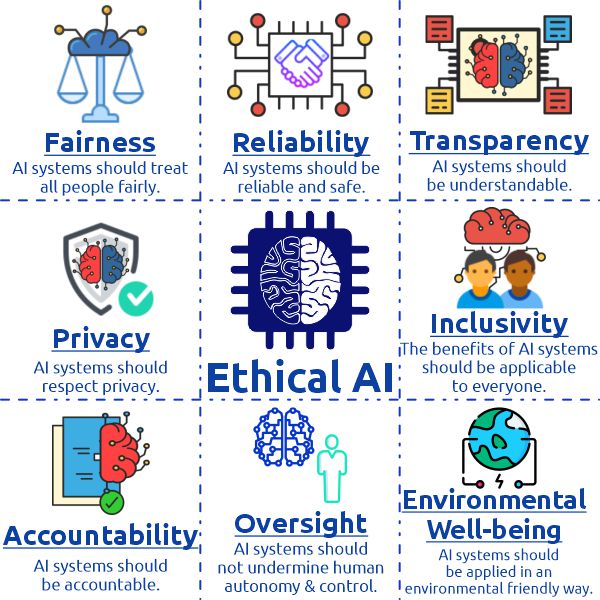
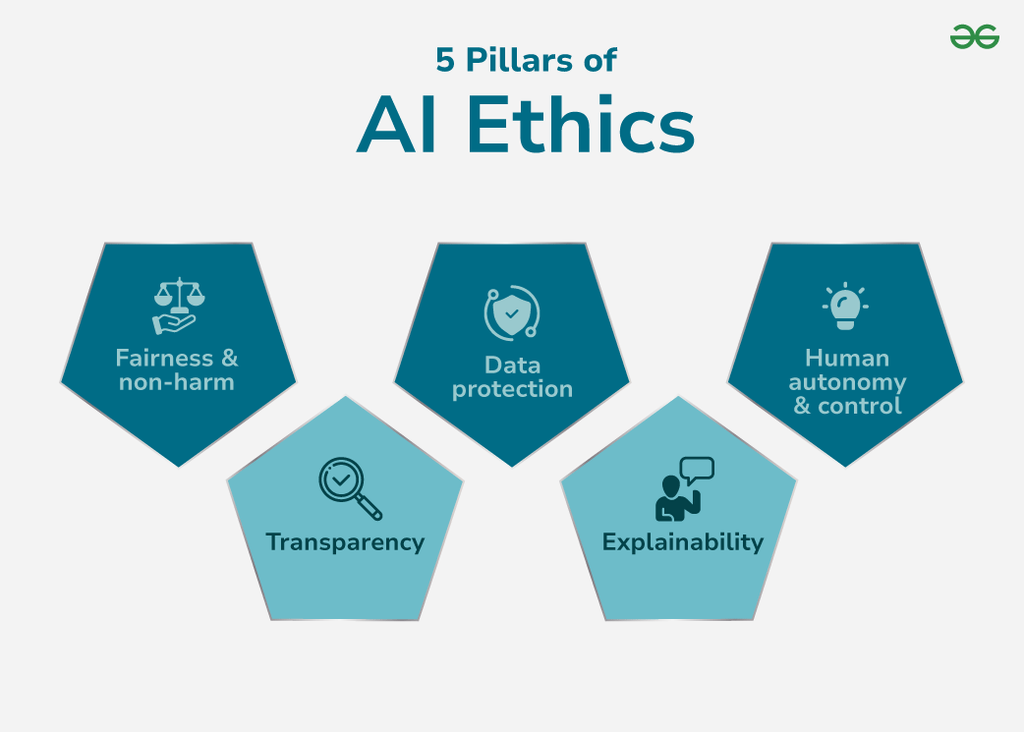
1. Ethical Principles and Frameworks Ethical AI is guided by a set of core principles that serve as the foundation for decision-making. These principles are often derived from philosophical traditions such as utilitarianism, deontology, and virtue ethics, as well as from human rights frameworks. Common principles include:
- Beneficence: AI systems should act in the best interest of humans and society, promoting well-being and positive outcomes.
- Non-maleficence: AI should avoid causing harm, whether through direct actions or unintended consequences.
- Autonomy: Individuals should have control over AI systems that affect their lives, with the ability to opt out or contest decisions.
- Justice: AI should be fair and equitable, avoiding discrimination and ensuring equal access to opportunities.
- Explicability: AI systems should be transparent and understandable, allowing users to comprehend how decisions are made. Frameworks such as the EU AI Act, Asilomar Principles, and IEEE Ethically Aligned Design provide structured approaches to implementing these principles in practice.
2. Risk Assessment and Impact Analysis Before deploying AI systems, organizations conduct risk assessments to identify potential ethical, legal, and societal risks. This involves:
- Bias and Fairness Audits: Evaluating datasets and algorithms for biases that could lead to discriminatory outcomes, particularly in areas like hiring, lending, and law enforcement.
- Privacy Impact Assessments: Assessing how AI systems handle personal data, ensuring compliance with regulations like the General Data Protection Regulation (GDPR).
- Safety and Robustness Testing: Ensuring that AI systems operate reliably under various conditions and are resilient to adversarial attacks or failures.
- Human Rights Impact Assessments: Evaluating the potential for AI to infringe on fundamental rights, such as freedom of expression or the right to privacy.
3. Transparency and Explainability Transparency is a cornerstone of ethical AI, enabling stakeholders to understand how AI systems make decisions. Techniques to achieve transparency include:
- Explainable AI (XAI): Developing AI models that provide interpretable outputs, such as decision trees, rule-based systems, or post-hoc explanations for complex models like neural networks.
- Documentation and Disclosure: Requiring organizations to document the purpose, design, and limitations of AI systems, as well as the data used to train them.
- Open-Source and Auditable Systems: Encouraging the use of open-source tools and allowing third-party audits to verify the ethical compliance of AI systems.
4. Accountability and Governance Ethical AI requires clear mechanisms for accountability, ensuring that developers, organizations, and policymakers are held responsible for the outcomes of AI systems. This involves:
- Ethics Review Boards: Establishing internal or external committees to oversee AI projects and ensure compliance with ethical guidelines.
- Regulatory Compliance: Adhering to laws and regulations, such as the EU AI Act, which classifies AI systems into risk categories (e.g., unacceptable, high, limited, minimal) and imposes obligations accordingly.
- Whistleblower Protections: Creating channels for employees or stakeholders to report unethical practices without fear of retaliation.
- Liability Frameworks: Defining legal responsibilities for harm caused by AI systems, including product liability and negligence laws.
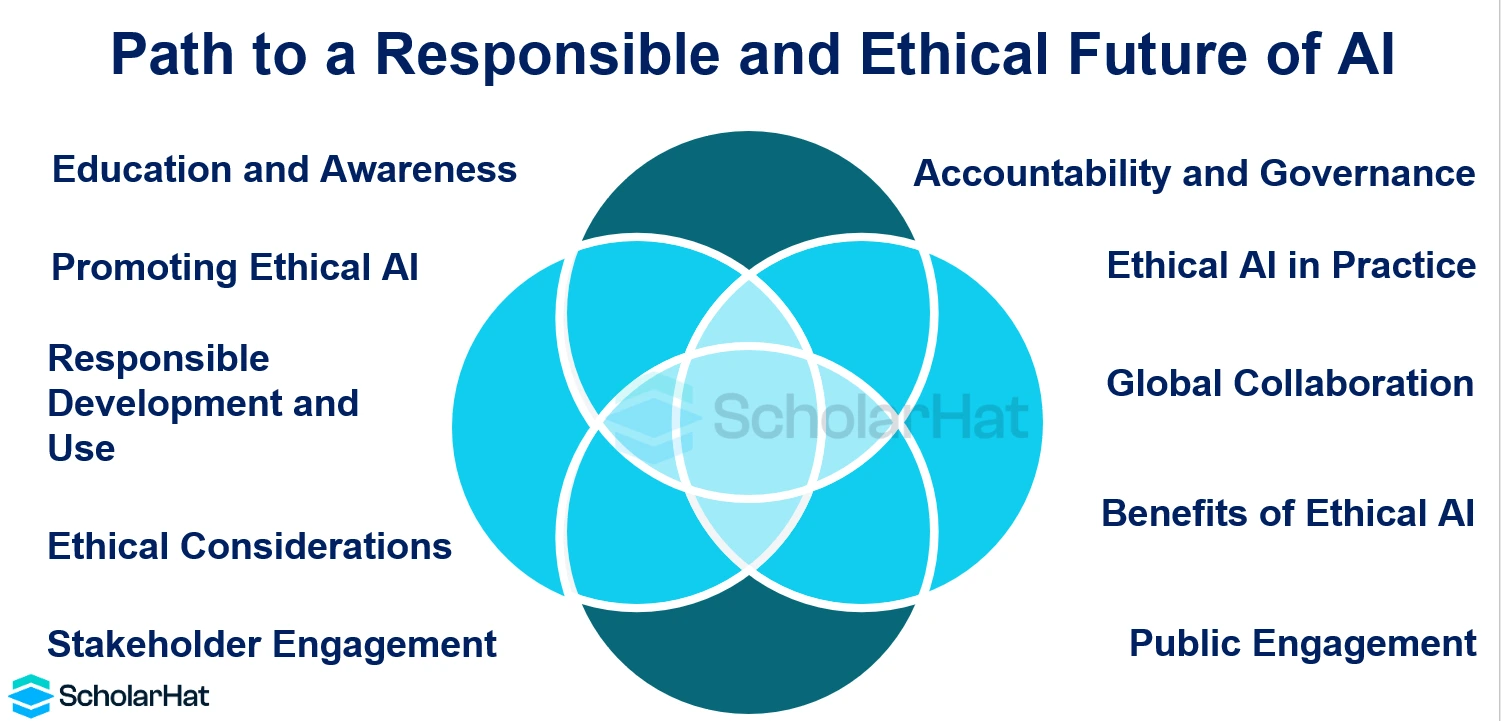
5. Stakeholder Engagement Ethical AI is not a top-down process but requires collaboration among diverse stakeholders, including:
- Developers and Engineers: Implementing ethical considerations into the design and coding of AI systems.
- Policymakers and Regulators: Creating laws and standards that enforce ethical AI practices.
- Civil Society and Advocacy Groups: Representing the interests of marginalized communities and ensuring that AI systems do not perpetuate existing inequalities.
- End Users and Affected Communities: Providing input on how AI systems impact their lives and ensuring that their voices are heard in the development process.
6. Continuous Monitoring and Adaptation Ethical AI is an ongoing process that requires continuous monitoring and adaptation to address new challenges and risks. This includes:
- Post-Deployment Audits: Regularly evaluating AI systems to ensure they remain ethical and compliant with evolving standards.
- Feedback Loops: Incorporating user feedback and real-world outcomes to improve AI systems over time.
- Adaptation to New Technologies: Staying ahead of emerging risks, such as the ethical implications of generative AI, deepfakes, or autonomous weapons.
#Important Facts
- Bias in AI: AI systems can perpetuate and amplify biases present in training data, leading to discriminatory outcomes in areas like hiring, policing, and loan approvals. For example, facial recognition systems have been shown to have higher error rates for people with darker skin tones.
- Black Box Problem: Many advanced AI models, particularly deep neural networks, operate as "black boxes," making it difficult to understand how they arrive at decisions. This lack of transparency can undermine trust and accountability.
- Dual-Use Risks: AI technologies can be used for both beneficial and harmful purposes. For instance, facial recognition can enhance security but also enable mass surveillance and repression.
- Job Displacement: AI-driven automation has the potential to disrupt labor markets, displacing workers in industries such as manufacturing, customer service, and transportation. Ethical considerations include reskilling programs and social safety nets.
- Privacy Concerns: AI systems often rely on vast amounts of personal data, raising concerns about surveillance, data breaches, and the erosion of privacy rights.
- Autonomous Weapons: The development of lethal autonomous weapons systems (LAWS) poses significant ethical and humanitarian risks, including the potential for uncontrolled escalation in conflicts.
- Explainable AI (XAI): Efforts to make AI more transparent are gaining traction, with techniques like LIME (Local Interpretable Model-agnostic Explanations) and SHAP (SHapley Additive exPlanations) helping to demystify complex models.
- Global Disparities: Ethical AI frameworks vary widely across regions. For example, the EU emphasizes human-centric AI and strict regulations, while some countries prioritize economic growth over ethical safeguards.
#Timeline
- Foundational ideas
Core concepts and early methods shape How Does AI Ethics Work?.
- Practical use
Tools, examples, and real-world deployments make the topic easier to evaluate.
- Responsible implementation
Current work focuses on reliability, governance, performance, and measurable impact.
#Related Terms
#FAQ
What does How Does AI Ethics Work? cover?
Explains how does ai ethics work?, including the main process, tools, examples, risks, and practical implementation steps.
Why is How Does AI Ethics Work? important?
It helps readers understand key concepts, compare practical use cases, and evaluate how AI Ethics decisions affect outcomes, risks, and implementation choices.
What should readers verify before applying this topic?
Readers should compare benefits, limitations, data requirements, and related themes such as Does, AI, Ethics before using the ideas in real projects.
#References
- How Does AI Ethics Work? terminology and background research
- How Does AI Ethics Work? use cases, implementation examples, and limitations
- AI Ethics best practices, standards, and risk guidance
- Does case studies, benchmarks, and current industry analysis

Comments
No comments yet. Start the discussion with a useful note.