

#Short Answer
Covers step-by-step guide to ai ethics compliance, including core concepts, practical examples, benefits, limitations, and risks in AI Ethics.
#Infobox
#Overview
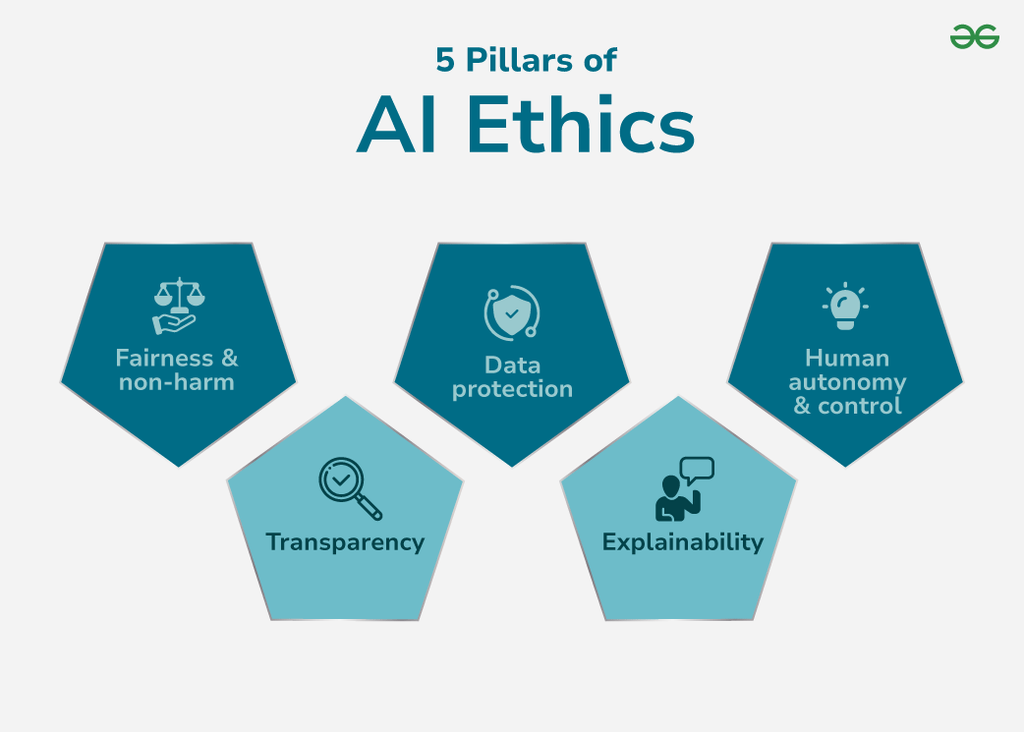
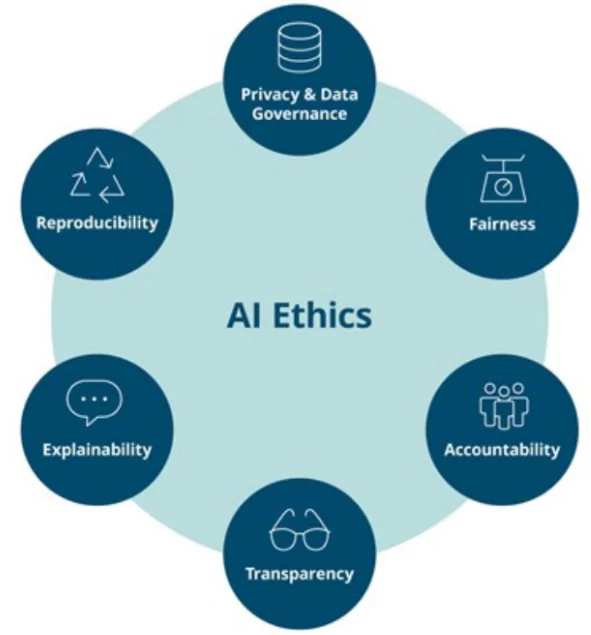
AI Ethics Compliance is a structured approach to ensuring that artificial intelligence systems are developed and deployed in alignment with ethical principles and legal requirements. As AI technologies become increasingly integrated into critical sectors such as healthcare, finance, and public services, the need for robust compliance frameworks has grown significantly. These frameworks aim to mitigate risks such as algorithmic bias, privacy violations, and unintended societal harm while fostering trust among stakeholders. The concept of AI Ethics Compliance is rooted in the broader field of AI governance, which emphasizes the responsible use of AI through policies, standards, and best practices. Unlike traditional compliance, which often focuses solely on legal adherence, AI Ethics Compliance incorporates moral and societal considerations, ensuring that AI systems do not perpetuate discrimination or infringe on fundamental rights. Key components of AI Ethics Compliance include transparency in AI decision-making, fairness in algorithmic outcomes, accountability for AI-driven actions, and the protection of user privacy. Organizations implementing these principles often adopt industry-specific frameworks, such as the EU AI Act, GDPR, or NIST AI Risk Management Framework, to guide their compliance efforts.
#History / Background
The evolution of AI Ethics Compliance can be traced back to the early 2000s, when concerns about algorithmic bias and data privacy began to surface in academic and policy circles. However, the field gained significant momentum in the 2010s with the proliferation of AI applications in high-stakes domains like healthcare, criminal justice, and hiring.
#Early Foundations (2000–2015)
- 2001: The European Commission published the European Group on Ethics in Science and New Technologies report, highlighting ethical concerns in AI.
- 2011: The Organization for Economic Cooperation and Development (OECD) began exploring AI ethics, leading to early discussions on accountability.
- 2016: The White House released a report on AI ethics, emphasizing fairness, transparency, and accountability in AI systems.
#Regulatory Milestones (2016–2020)
- 2016: The EU General Data Protection Regulation (GDPR) introduced provisions for automated decision-making, requiring explanations for AI-driven decisions.
- 2018: The European Commission published Ethics Guidelines for Trustworthy AI, outlining seven key requirements for ethical AI.
- 2019: The IEEE Global Initiative on Ethics of Autonomous Systems released the Ethically Aligned Design framework, promoting human-centric AI.
#Modern Developments (2020–Present)
- 2021: The EU AI Act was proposed, marking a significant step toward legally binding AI regulations.
- 2022: The NIST AI Risk Management Framework was published, providing a voluntary but widely adopted guide for AI risk assessment.
- 2023: The ISO/IEC 23894 standard on AI risk management was released, offering a global benchmark for AI compliance.
- 2024: Multiple countries, including the U.S., Canada, and Singapore, introduced or expanded AI ethics guidelines and regulatory sandboxes.
#How It Works
AI Ethics Compliance operates through a multi-layered approach that integrates ethical principles, regulatory requirements, and organizational practices. The process typically involves the following stages:
#
- Assessment of Ethical Risks
- AI Impact Assessment: Organizations evaluate the potential ethical risks of an AI system, including bias, privacy violations, and societal harm.
- Stakeholder Engagement: Involving affected communities, employees, and regulators in the assessment process to identify overlooked risks.
- Bias Audits: Testing datasets and algorithms for discriminatory patterns, often using tools like Fairlearn or Aequitas.
#
- Implementation of Ethical Frameworks
- Transparency Mechanisms: Deploying explainable AI (XAI) techniques, such as LIME or SHAP, to make AI decisions interpretable.
- Fairness Constraints: Incorporating fairness-aware algorithms (e.g., equalized odds, demographic parity) to mitigate bias.
- Privacy-Preserving Techniques: Using differential privacy, federated learning, or homomorphic encryption to protect user data.
#
- Compliance with Legal and Industry Standards
- Regulatory Alignment: Ensuring adherence to laws like GDPR (data protection), EU AI Act (high-risk AI systems), and CCPA (California privacy rights).
- Certification and Audits: Obtaining certifications such as ISO/IEC 23894 or IEEE 7000 to demonstrate compliance.
- Documentation and Reporting: Maintaining records of AI system design, data sources, and compliance efforts for regulatory reviews.
#
- Monitoring and Continuous Improvement
- Real-Time Monitoring: Using tools like IBM AI Fairness 360 or Google’s What-If Tool to detect and address ethical issues post-deployment.
- Feedback Loops: Establishing channels for users and stakeholders to report concerns or unintended consequences.
- Periodic Reviews: Updating compliance frameworks in response to new regulations, technological advancements, or emerging risks.
#Important Facts
- Algorithmic Bias: Studies show that AI systems can perpetuate biases present in training data, leading to discriminatory outcomes in hiring, lending, and law enforcement.
- Explainability Gap: Many advanced AI models (e.g., deep neural networks) operate as "black boxes," making it difficult to understand their decision-making processes.
- Regulatory Fragmentation: Different countries and regions have varying AI ethics guidelines, creating challenges for multinational organizations.
- Cost of Non-Compliance: Fines for violating AI ethics regulations (e.g., GDPR penalties) can reach up to 4% of global revenue for organizations.
- Human Oversight: Ethical AI compliance often requires human-in-the-loop systems to review and override AI decisions when necessary.
- Ethical AI Certifications: Programs like Trustworthy AI Certification (by the EU) or IEEE 7000 provide third-party validation of ethical AI practices.
- AI Ethics in Critical Sectors: Healthcare AI must comply with HIPAA, while financial AI must adhere to anti-discrimination laws like the Equal Credit Opportunity Act.
#Timeline
- Foundational ideas
Core concepts and early methods shape Step-by-step Guide to AI Ethics Compliance.
- Practical use
Tools, examples, and real-world deployments make the topic easier to evaluate.
- Responsible implementation
Current work focuses on reliability, governance, performance, and measurable impact.
#Related Terms
#FAQ
What does Step-by-step Guide to AI Ethics Compliance cover?
Covers step-by-step guide to ai ethics compliance, including core concepts, practical examples, benefits, limitations, and risks in AI Ethics.
Why is Step-by-step Guide to AI Ethics Compliance important?
It helps readers understand key concepts, compare practical use cases, and evaluate how AI Ethics decisions affect outcomes, risks, and implementation choices.
What should readers verify before applying this topic?
Readers should compare benefits, limitations, data requirements, and related themes such as AI, Ethics, Compliance before using the ideas in real projects.
#References
- Step-by-step Guide to AI Ethics Compliance terminology and background research
- Step-by-step Guide to AI Ethics Compliance use cases, implementation examples, and limitations
- AI Ethics best practices, standards, and risk guidance
- AI case studies, benchmarks, and current industry analysis

Comments
No comments yet. Start the discussion with a useful note.