

#Short Answer
Explains how do ai startups work?, including the main process, tools, examples, risks, and practical implementation steps.
#Infobox
#Overview
AI startups are at the forefront of the fourth industrial revolution, driving innovation in automation, decision-making, and personalized experiences. Unlike traditional software companies, AI startups rely heavily on data, computational power, and specialized talent to train models that can perform tasks ranging from image recognition to autonomous decision-making. These startups often emerge from research labs, universities, or corporate spin-offs, focusing on niche applications or disruptive technologies. The ecosystem of AI startups is diverse, encompassing sectors such as healthcare diagnostics, financial fraud detection, autonomous vehicles, and customer service automation. Many AI startups begin as small teams with a clear problem statement, leveraging open-source frameworks like TensorFlow, PyTorch, or scikit-learn to build their initial models. As they grow, they may pivot from research-focused ventures to product-driven companies, securing funding to scale their operations.
#History / Background
The concept of artificial intelligence dates back to the 1950s, with early pioneers like Alan Turing and John McCarthy laying the theoretical groundwork. However, the modern AI startup ecosystem began to take shape in the 2010s, fueled by breakthroughs in deep learning, the availability of large datasets, and advancements in computing hardware (e.g., GPUs). Key milestones in AI startup evolution include:
- 2011: IBM Watson’s victory on Jeopardy! showcased the potential of AI in natural language processing.
- 2012: The ImageNet competition demonstrated the power of deep learning in computer vision, inspiring startups like Clarifai and DeepMind.
- 2014: Google acquired DeepMind, signaling corporate interest in AI startups.
- 2016: The release of AlphaGo by DeepMind defeated a world champion Go player, proving AI’s capability in complex decision-making.
- 2020s: The rise of generative AI, with startups like OpenAI (ChatGPT), MidJourney, and Stability AI revolutionizing content creation. The COVID-19 pandemic accelerated AI adoption, with startups focusing on healthcare diagnostics, remote work tools, and supply chain optimization. Today, AI startups are integral to industries undergoing digital transformation, with governments and corporations investing heavily in AI research and deployment.
#How It Works
#
- Problem Identification and Research AI startups typically begin by identifying a specific problem or inefficiency in an industry. This could range from automating repetitive tasks in manufacturing to improving diagnostic accuracy in healthcare. Founders conduct market research to validate demand and assess competition.
#
- Data Collection and Preparation Data is the lifeblood of AI startups. They gather structured (e.g., databases) and unstructured (e.g., text, images, videos) data from public sources, partnerships, or proprietary datasets. Data preprocessing involves cleaning, labeling, and augmenting datasets to ensure high-quality inputs for training models.
#
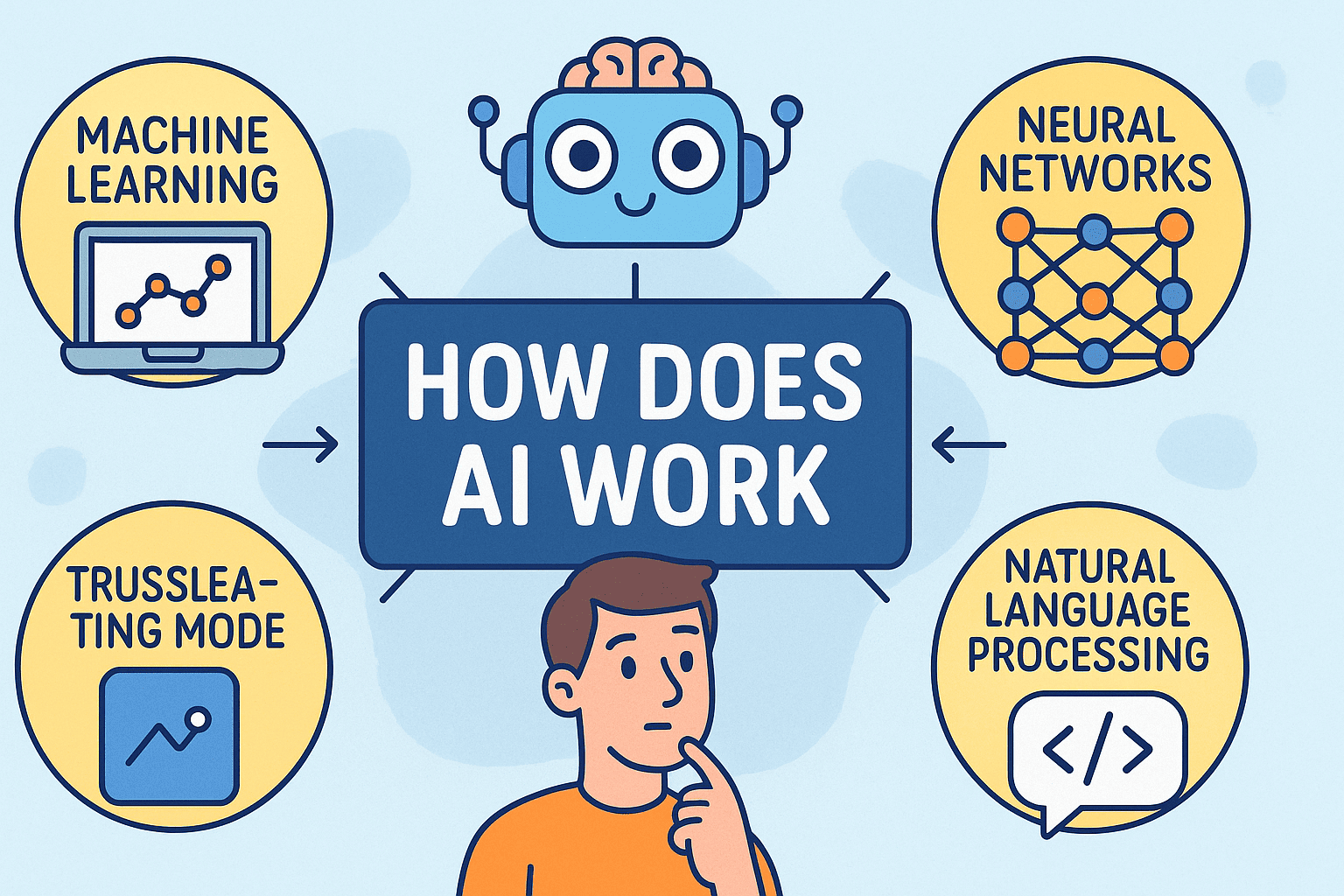
- Model Development Startups use machine learning frameworks (e.g., TensorFlow, PyTorch) to design and train models. The choice of algorithm depends on the problem:
- Supervised Learning: Used for classification (e.g., spam detection) or regression (e.g., price prediction).
- Unsupervised Learning: Identifies patterns in unlabeled data (e.g., customer segmentation).
- Reinforcement Learning: Optimizes decision-making in dynamic environments (e.g., robotics, gaming).
- Deep Learning: Powers complex tasks like natural language understanding (e.g., chatbots) or image recognition.
#
- Prototyping and MVP Development Startups build a minimum viable product (MVP) to test their AI model in real-world scenarios. This often involves:
- API Integration: Embedding AI models into existing software (e.g., customer service chatbots).
- User Interface: Developing dashboards or applications for end-users.
- Feedback Loops: Iterating based on user input to improve accuracy and usability.
#
- Scaling and Deployment Once validated, startups scale their solutions by:
- Cloud Computing: Leveraging platforms like AWS, Google Cloud, or Azure for scalable infrastructure.
- Edge AI: Deploying models on local devices (e.g., smartphones, IoT) for low-latency applications.
- Partnerships: Collaborating with enterprises to integrate AI into workflows (e.g., supply chain optimization).
#
- Monetization Strategies AI startups generate revenue through:
- Subscription Models: Recurring payments for access to AI services (e.g., SaaS platforms).
- Licensing: Selling proprietary AI models or algorithms to businesses.
- Freemium: Offering basic features for free while charging for premium functionalities.
- Data Monetization: Selling anonymized datasets or insights to third parties.
#Important Facts
- AI Startup Success Rates: Approximately 90% of AI startups fail within the first few years due to challenges like data scarcity, model bias, or lack of product-market fit.
- Computational Costs: Training advanced AI models (e.g., large language models) can cost millions of dollars in cloud computing resources.
- Ethical Concerns: AI startups face scrutiny over bias in algorithms, data privacy violations, and job displacement due to automation.
- Talent Shortage: There is a global shortage of AI/ML engineers, with top talent often lured by FAANG companies or high-paying startups.
- Regulatory Landscape: Governments are increasingly imposing regulations (e.g., EU AI Act, U.S. AI Executive Order) to ensure responsible AI development.
- Open-Source vs. Proprietary: Many AI startups contribute to open-source projects (e.g., Hugging Face’s Transformers) to build community trust and reduce development costs.
#Timeline
- Foundational ideas
Core concepts and early methods shape How Do AI Startups Work?.
- Practical use
Tools, examples, and real-world deployments make the topic easier to evaluate.
- Responsible implementation
Current work focuses on reliability, governance, performance, and measurable impact.
#Related Terms
#FAQ
What does How Do AI Startups Work? cover?
Explains how do ai startups work?, including the main process, tools, examples, risks, and practical implementation steps.
Why is How Do AI Startups Work? important?
It helps readers understand key concepts, compare practical use cases, and evaluate how Business & Marketing decisions affect outcomes, risks, and implementation choices.
What should readers verify before applying this topic?
Readers should compare benefits, limitations, data requirements, and related themes such as Do, AI, Startups before using the ideas in real projects.
#References
- How Do AI Startups Work? terminology and background research
- How Do AI Startups Work? use cases, implementation examples, and limitations
- Business & Marketing best practices, standards, and risk guidance
- Do case studies, benchmarks, and current industry analysis


Comments
No comments yet. Start the discussion with a useful note.