

#Short Answer
Explains how does ai in finance work?, including the main process, tools, examples, risks, and practical implementation steps.
#Infobox
#Overview
Artificial Intelligence has become a transformative force in the financial services industry, reshaping how institutions operate, interact with customers, and manage risk. By leveraging vast amounts of structured and unstructured data—such as transaction records, market feeds, social media sentiment, and economic indicators—AI enables financial institutions to make faster, more accurate, and data-driven decisions. AI applications in finance span multiple domains, including retail banking, corporate finance, asset management, insurance, and regulatory compliance. These systems not only enhance operational efficiency but also democratize access to financial services through personalized tools like robo-advisors and chatbots. The integration of AI has led to the emergence of "FinTech 2.0," where technology-driven innovation is redefining traditional financial models. Moreover, AI-powered analytics are increasingly used to assess creditworthiness beyond traditional credit scores, detect anomalous transactions in real time, and forecast macroeconomic trends with greater precision. As AI continues to evolve, its role in finance is expected to expand, particularly with advancements in generative AI and large language models (LLMs), which are beginning to assist in financial reporting, regulatory filings, and customer communication.
#History / Background
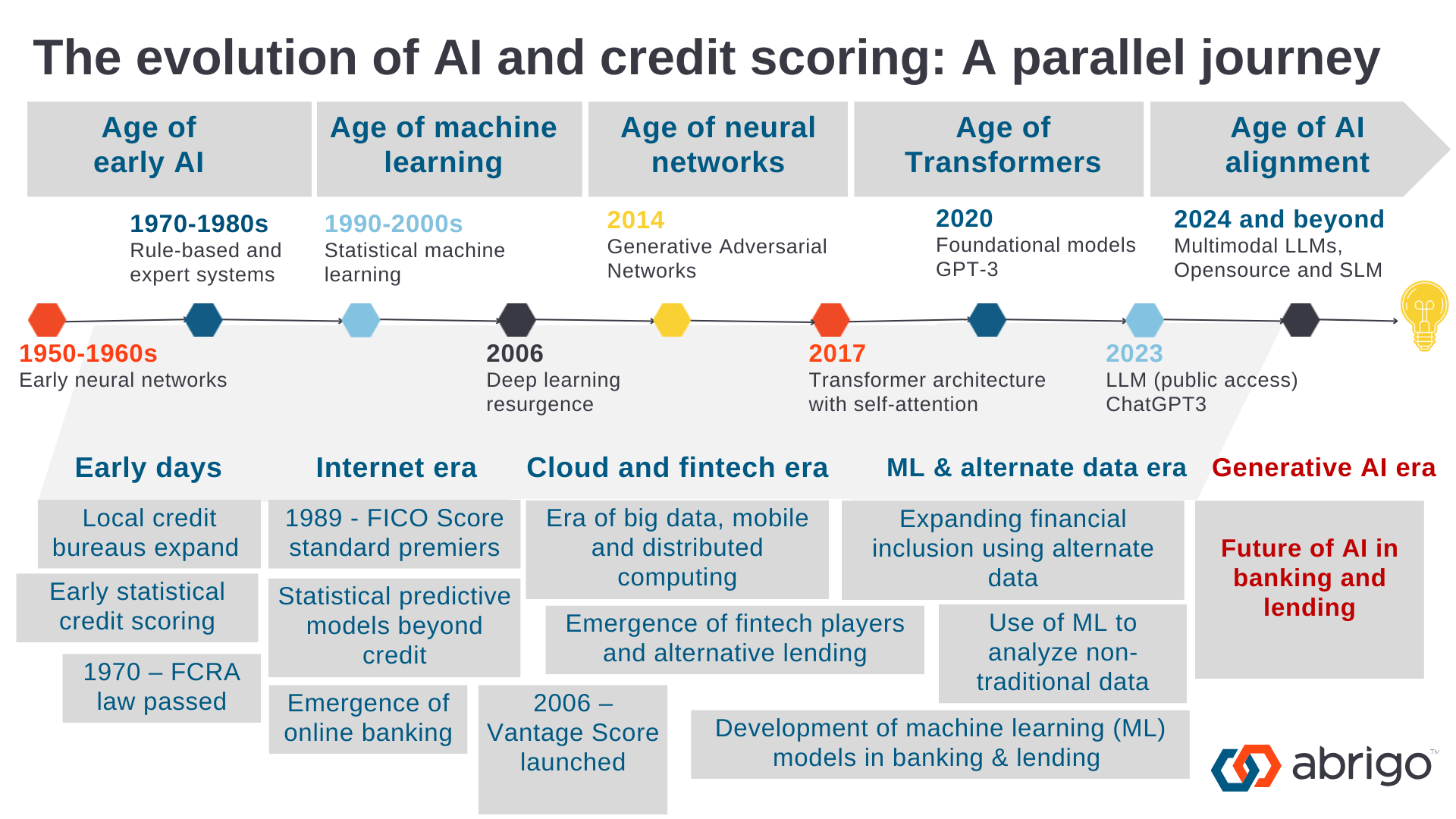
The integration of AI into finance traces back to the 1980s, when early expert systems were deployed to assist in loan approvals and portfolio management. These rule-based systems, though limited in scope, laid the groundwork for more sophisticated approaches. The 1990s saw the rise of statistical models and neural networks in quantitative finance, particularly in algorithmic trading. Firms like Renaissance Technologies and Two Sigma pioneered the use of machine learning to identify market inefficiencies and execute high-frequency trades. The availability of large financial datasets and improvements in computing power accelerated this trend. The 2000s marked a turning point with the advent of big data technologies and open-source machine learning frameworks such as TensorFlow and scikit-learn. Financial institutions began deploying AI for fraud detection, customer segmentation, and risk modeling. The global financial crisis of 2008 further underscored the need for robust risk management tools, prompting increased investment in AI-driven predictive analytics. The 2010s witnessed the rise of fintech startups and the mainstream adoption of AI-powered services. Companies like Betterment and Wealthfront introduced robo-advisors that used AI to automate investment portfolio management. Meanwhile, natural language processing (NLP) enabled sentiment analysis of news articles and earnings calls, providing traders with real-time market insights. In recent years, explainable AI (XAI) has gained prominence due to regulatory demands for transparency, especially in credit scoring and loan decisions. The integration of AI with blockchain technology has also opened new frontiers in decentralized finance (DeFi), where smart contracts and AI agents collaborate to automate financial agreements.
#How It Works
#Core AI Technologies in Finance
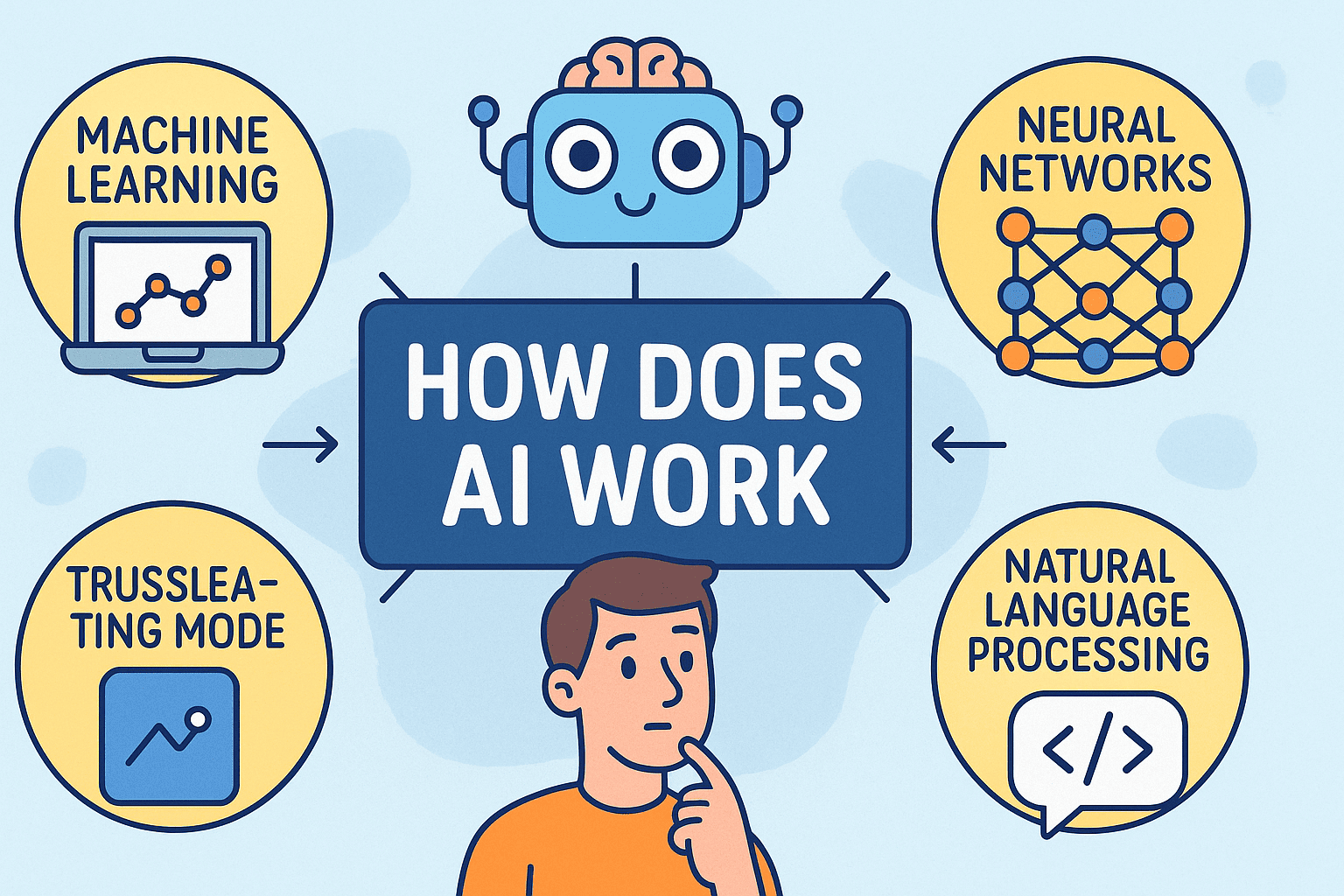
- Machine Learning (ML) ML algorithms learn from historical data to identify patterns and make predictions. Supervised learning is commonly used for credit scoring and fraud detection, where models are trained on labeled datasets. Unsupervised learning helps in anomaly detection and customer segmentation by identifying hidden structures in data.
- Deep Learning (DL) Deep neural networks, including convolutional and recurrent neural networks (CNNs and RNNs), are used for complex tasks such as time-series forecasting, image recognition in check processing, and natural language understanding in financial documents. Transformers, a type of deep learning model, power modern NLP applications like chatbots and sentiment analysis.
- Natural Language Processing (NLP) NLP enables systems to interpret human language from sources like earnings reports, news articles, and social media. Sentiment analysis models assess market mood, while named entity recognition (NER) extracts financial entities such as company names and ticker symbols from unstructured text.
- Computer Vision Used in check processing, document verification, and facial recognition for KYC (Know Your Customer) compliance. Optical character recognition (OCR) converts scanned documents into machine-readable text.
- Reinforcement Learning (RL) Applied in algorithmic trading and portfolio optimization, where AI agents learn optimal strategies through trial and error by interacting with simulated or real market environments.
#Key AI Applications in Finance
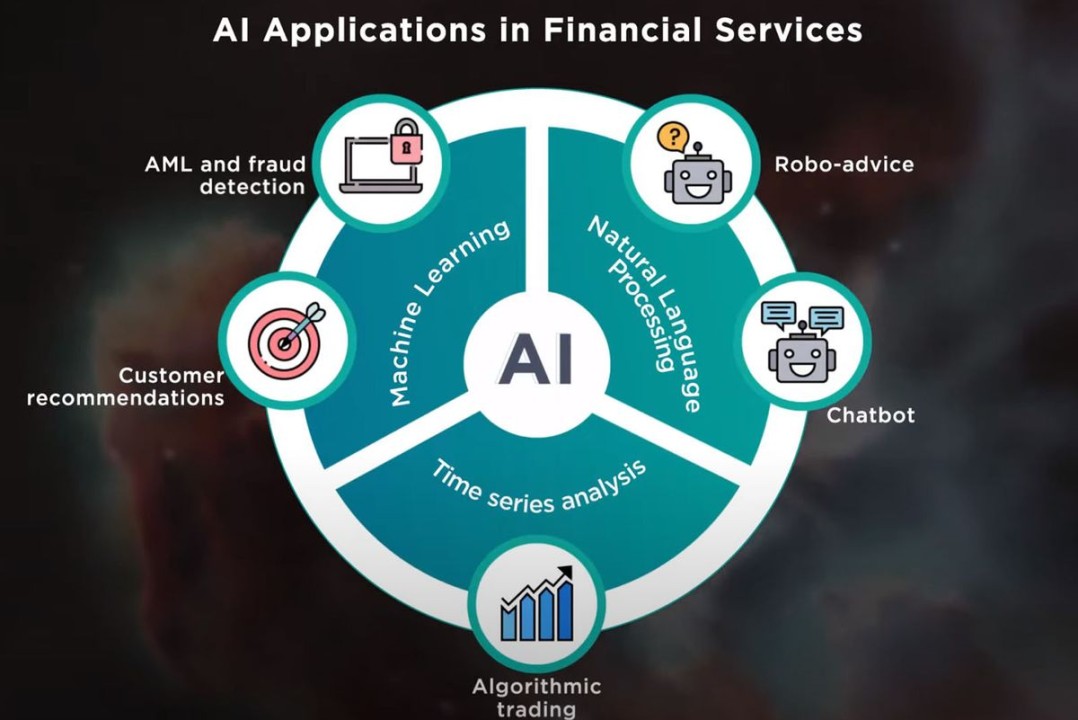
- Algorithmic Trading AI models analyze market data in real time to execute trades at optimal prices and frequencies. High-frequency trading (HFT) firms use ML to detect microsecond-level arbitrage opportunities.
- Credit Scoring and Lending Alternative data sources (e.g., utility payments, rental history) are combined with traditional credit data to assess borrower risk, enabling financial inclusion for underbanked populations.
- Fraud Detection AI systems monitor transactions in real time, flagging suspicious activities based on deviations from user behavior patterns. Techniques include clustering, anomaly detection, and graph-based analysis.
- Risk Management AI models simulate various economic scenarios to assess portfolio risk, stress-test financial systems, and predict defaults. Monte Carlo simulations and Bayesian networks are commonly used.
- Customer Service and Personalization AI-powered chatbots and virtual assistants (e.g., Erica by Bank of America) handle customer inquiries, recommend financial products, and assist in budgeting. Personalized marketing is driven by collaborative filtering and recommendation engines.
- Regulatory Compliance AI automates the monitoring of transactions for anti-money laundering (AML) and sanctions compliance. Natural language processing parses regulatory documents to ensure adherence to evolving laws.
- Robo-Advisors Automated platforms use AI to construct and rebalance investment portfolios based on user risk tolerance, financial goals, and market conditions. Examples include Betterment and Wealthfront.
#Important Facts
- Data Dependency: AI in finance relies heavily on high-quality, diverse datasets. Poor or biased data can lead to inaccurate predictions and discriminatory outcomes.
- Regulatory Scrutiny: Financial AI systems are subject to stringent regulations, including the EU’s AI Act, which classifies AI applications by risk level, and the U.S. Fair Lending laws.
- Explainability Challenge: Many AI models, especially deep learning systems, operate as "black boxes," making it difficult to justify decisions—particularly in credit and loan applications.
- Cybersecurity Risks: AI systems can be targeted by adversarial attacks, where manipulated inputs deceive models into making incorrect decisions (e.g., spoofing transaction patterns to bypass fraud detection).
- Bias and Fairness: AI models may inherit biases from historical data, leading to unfair outcomes in lending, hiring, or insurance underwriting. Techniques like fairness-aware ML and bias audits are being developed to address this.
- Energy Consumption: Training large AI models consumes significant computational resources, raising concerns about the environmental impact of AI in finance.
- Interdisciplinary Integration: Successful AI deployment in finance requires collaboration between data scientists, financial experts, legal teams, and ethicists.
#Timeline
- Foundational ideas
Core concepts and early methods shape How Does AI in Finance Work?.
- Practical use
Tools, examples, and real-world deployments make the topic easier to evaluate.
- Responsible implementation
Current work focuses on reliability, governance, performance, and measurable impact.
#Related Terms
#FAQ
What does How Does AI in Finance Work? cover?
Explains how does ai in finance work?, including the main process, tools, examples, risks, and practical implementation steps.
Why is How Does AI in Finance Work? important?
It helps readers understand key concepts, compare practical use cases, and evaluate how Business & Marketing decisions affect outcomes, risks, and implementation choices.
What should readers verify before applying this topic?
Readers should compare benefits, limitations, data requirements, and related themes such as Does, AI, Finance before using the ideas in real projects.
#References
- How Does AI in Finance Work? terminology and background research
- How Does AI in Finance Work? use cases, implementation examples, and limitations
- Business & Marketing best practices, standards, and risk guidance
- Does case studies, benchmarks, and current industry analysis


Comments
No comments yet. Start the discussion with a useful note.