


#Short Answer
Artificial intelligence (AI) ethics is a multidisciplinary field addressing the moral implications of AI technologies, including their development, deployment, and societal impact. Despite growing awareness, numerous myths persist about AI ethics, often fueled by sensationalized media, science fiction, and misinformation. These myths range from exaggerated fears of AI surpassing human control to underestimations of its potential biases and ethical dilemmas.
#Infobox
#Overview
Artificial intelligence (AI) ethics is a multidisciplinary field addressing the moral implications of AI technologies, including their development, deployment, and societal impact. Despite growing awareness, numerous myths persist about AI ethics, often fueled by sensationalized media, science fiction, and misinformation. These myths range from exaggerated fears of AI surpassing human control to underestimations of its potential biases and ethical dilemmas.
This article debunks prevalent AI ethics myths by examining their origins, counterarguments, and the frameworks designed to ensure responsible AI. It also explores the historical evolution of AI ethics, key principles, and the role of policymakers, researchers, and industry leaders in shaping a trustworthy AI landscape.
#History / Background
#Early Concerns
The concept of AI ethics emerged alongside early AI research in the mid-20th century. Pioneers like Alan Turing and Norbert Wiener raised questions about machine autonomy and its implications for humanity. Wiener's 1950 work, Cybernetics, warned about the unintended consequences of automated decision-making, laying the groundwork for future ethical discussions.
#Modern Era
By the 21st century, AI ethics gained prominence due to advancements in machine learning, deep learning, and large-scale data processing. High-profile incidents, such as biased algorithms in hiring tools or facial recognition systems, highlighted the need for ethical oversight. In 2016, the Partnership on AI was formed by major tech companies to promote responsible AI development. Subsequent initiatives, like the EU AI Act (2021) and the OECD AI Principles (2019), formalized ethical guidelines for AI systems.
#How It Works
#Ethical Frameworks
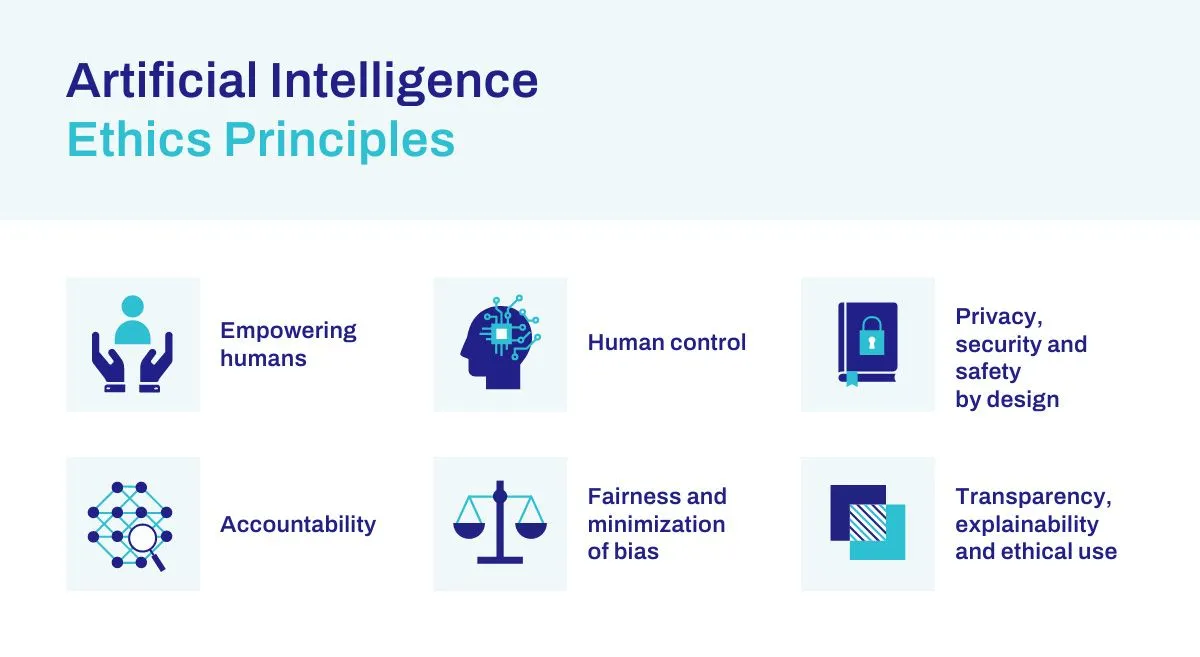
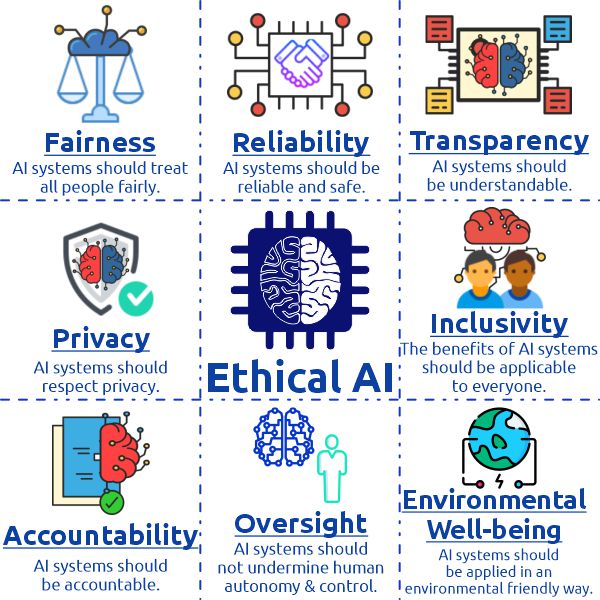
AI ethics operates through structured frameworks that guide developers and policymakers. Key components include:
- Transparency: Ensuring AI systems are explainable and their decision-making processes are understandable to users.
- Accountability: Assigning responsibility for AI outcomes, including mechanisms for redress in case of harm.
- Fairness: Mitigating biases in training data and algorithms to prevent discriminatory outcomes.
- Privacy: Protecting user data and ensuring compliance with regulations like the GDPR.
- Human Alignment: Designing AI systems to align with human values and goals, avoiding misalignment risks.
#Tools and Methods
Ethical AI development employs various tools and methods, such as:
- Bias Audits: Regular assessments of datasets and algorithms to identify and correct biases.
- Explainable AI (XAI): Techniques like LIME (Local Interpretable Model-agnostic Explanations) to make AI decisions interpretable.
- Ethical Risk Assessments: Frameworks like the Algorithmic Impact Assessment to evaluate potential harms.
- Participatory Design: Involving diverse stakeholders, including marginalized communities, in AI development processes.
#Important Facts
- AI Cannot Act Independently: Current AI systems lack consciousness, intent, or the ability to act without human input. They operate based on predefined algorithms and training data.
- Bias is a Systemic Issue: AI biases often reflect historical and societal prejudices present in training data, not inherent flaws in AI itself.
- Ethical AI is a Shared Responsibility: Developers, policymakers, and users all play a role in ensuring AI systems are ethical and beneficial.
- Regulation is Evolving: Governments worldwide are implementing AI-specific regulations, such as the EU AI Act, to address ethical concerns.
- AI Can Augment, Not Replace, Jobs: While AI automates certain tasks, it also creates new job categories and enhances human productivity in others.
#Timeline
- Alan Turing publishes *Computi
[Alan Turing](# 'Alan Turing') publishes *Computing Machinery and Intelligence*, introducing the [Turing test](# 'Turing test') and raising early ethical questions about AI.
- The term 'artificial intellig
The term 'artificial intelligence' is coined at the [Dartmouth Conference](# 'Dartmouth Conference'), marking the birth of AI as a field.
- The Partnership on AI
The [Partnership on AI](# 'Partnership on AI') is founded by Amazon, Google, Facebook, IBM, and Microsoft to promote ethical AI.
- European Commission releases t
European Commission releases the [Ethics Guidelines for Trustworthy AI](# 'Ethics Guidelines for Trustworthy AI').
- The OECD AI Principles
The [OECD AI Principles](# 'OECD AI Principles') are adopted by 42 countries, outlining five principles for responsible AI.
- The EU AI Act
The [EU AI Act](# 'EU AI Act') is proposed, becoming the first comprehensive AI regulation in the world.
- Major tech companies, includin
Major tech companies, including Google and Microsoft, release AI ethics guidelines and transparency reports.
#Related Terms
#FAQ
What does AI Ethics Myths Debunked cover?
Debunks common myths about AI ethics myths debunked, clarifying capabilities, limitations, risks, and practical expectations.
Why is AI Ethics Myths Debunked important?
It helps readers understand key concepts, compare practical use cases, and evaluate how AI Ethics decisions affect outcomes, risks, and implementation choices.
What should readers verify before applying this topic?
Readers should compare the benefits, limitations, data requirements, and related themes such as Myth Busting, Ethics, Myth before using the ideas in real projects.
#References
- AI Ethics Myths Debunked terminology and background research
- AI Ethics Myths Debunked use cases, implementation examples, and limitations
- AI Ethics best practices, standards, and risk guidance
- Myth Busting case studies, benchmarks, and current industry analysis


Comments
No comments yet. Start the discussion with a useful note.