


#Short Answer
AI ethics refers to the moral principles and guidelines that govern the development, deployment, and use of artificial intelligence systems. It ensures that AI technologies respect human rights, promote fairness, maintain transparency, and prioritize accountability to prevent harm and bias.
#Infobox
#Overview
Artificial Intelligence (AI) ethics is an interdisciplinary field that addresses the moral, legal, and societal implications of AI technologies. As AI systems become more integrated into daily life—from healthcare diagnostics to autonomous vehicles—the need for ethical frameworks has intensified. AI ethics aims to ensure that these systems operate within boundaries that respect human dignity, prevent discrimination, and avoid unintended consequences.
At its core, AI ethics seeks to answer critical questions: Who is responsible when an AI system causes harm? How can bias in AI algorithms be mitigated? What rights do individuals have over their data used in AI training? These questions have led to the development of principles, regulations, and best practices designed to guide AI development responsibly.
The field intersects with multiple disciplines, including computer science, philosophy, law, and sociology. Ethical AI is not just about technical solutions but also about fostering public trust through transparency and accountability. Governments, corporations, and researchers worldwide are increasingly collaborating to establish global standards for ethical AI.
#How It Works
#Core Principles
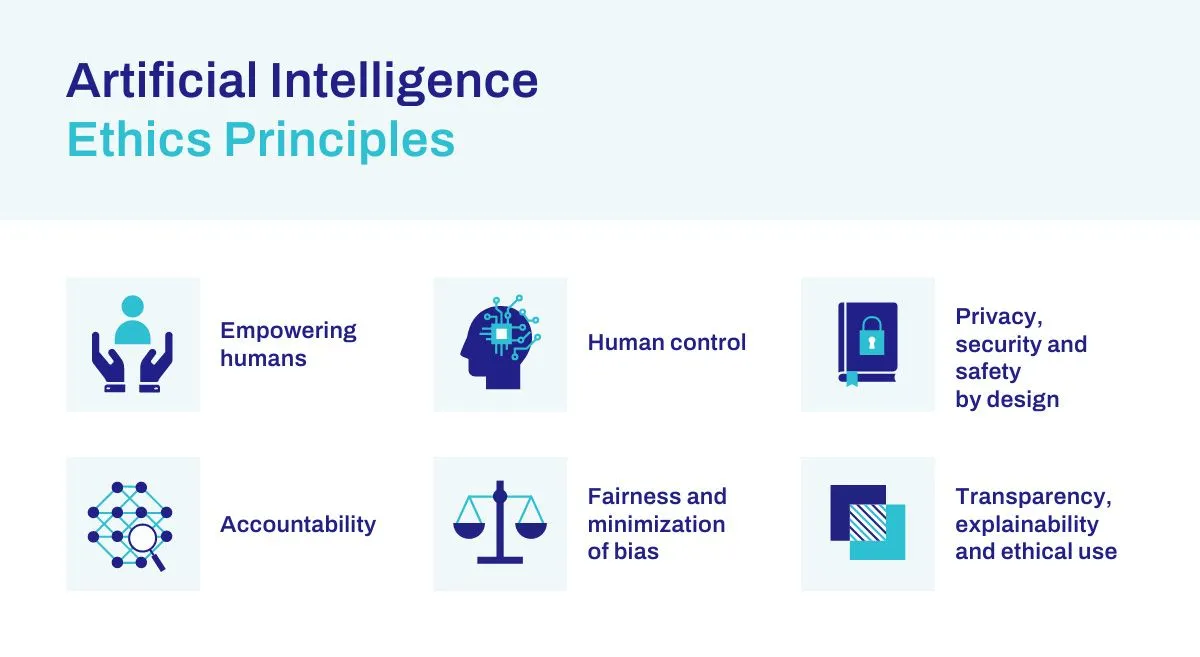
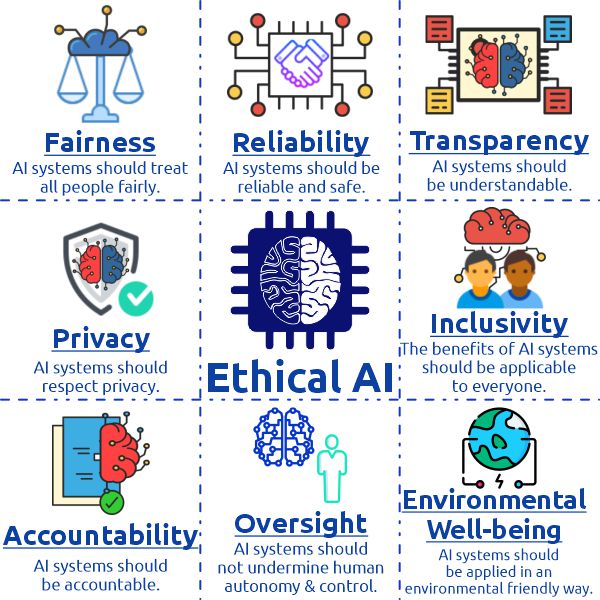
AI ethics operates on several foundational principles that guide the design, deployment, and governance of AI systems:
- Fairness: AI systems must be designed to avoid bias and discrimination. This involves ensuring that training data is representative and that algorithms do not perpetuate existing societal inequalities. Techniques such as fairness-aware machine learning and bias detection tools are employed to mitigate bias.
- Transparency: AI systems should be explainable, meaning their decision-making processes should be understandable to users and stakeholders. This is particularly important in high-stakes applications like healthcare and finance, where opaque algorithms can lead to mistrust. Explainable AI (XAI) techniques, such as LIME (Local Interpretable Model-agnostic Explanations) and SHAP (SHapley Additive exPlanations), are used to demystify AI decisions.
- Accountability: Clear lines of responsibility must be established for AI systems. This includes defining who is accountable for harm caused by AI, whether it's the developers, the organizations deploying the system, or the users. Legal frameworks, such as the EU AI Act, impose liability rules for AI-related damages.
- Privacy: AI systems must respect individuals' data privacy rights. This involves implementing techniques like differential privacy, federated learning, and data anonymization to protect sensitive information. Regulations such as the General Data Protection Regulation (GDPR) in the EU set strict guidelines for data handling.
- Safety: AI systems must be designed with safety in mind to prevent unintended harm. This includes rigorous testing, fail-safe mechanisms, and continuous monitoring. For example, autonomous vehicles undergo extensive simulations and real-world testing to ensure they operate safely in all scenarios.
#Ethical AI Frameworks
Several frameworks have been developed to operationalize AI ethics:
- Asilomar AI Principles: Developed by the Future of Life Institute, these 23 principles cover research, ethics, and values, emphasizing the importance of human control over AI systems.
- IEEE Ethically Aligned Design: This framework provides guidelines for designing AI systems that align with human values, focusing on transparency, accountability, and the mitigation of bias.
- EU AI Act: A regulatory framework that classifies AI systems into four risk categories (unacceptable, high, limited, and minimal) and imposes obligations on developers and deployers based on the risk level.
- OECD AI Principles: Adopted by 42 countries, these principles emphasize inclusive growth, human-centered values, transparency, robustness, and accountability.
#Implementation Challenges
Despite the availability of ethical frameworks, implementing AI ethics poses several challenges:
- Trade-offs: Balancing ethical principles with practical constraints, such as cost and performance, can be difficult. For example, ensuring fairness may require sacrificing some predictive accuracy.
- Global Harmonization: Different countries and regions have varying ethical standards, making it challenging to create universally applicable guidelines. For instance, the EU's approach to AI regulation is more stringent than that of the United States.
- Technical Limitations: Some ethical goals, such as complete transparency, are difficult to achieve with current AI technologies. Black-box models, like deep neural networks, often lack interpretability.
- Cultural Differences: Ethical norms vary across cultures, complicating the development of global standards. For example, concepts of privacy and fairness differ between Western and Eastern societies.
#Important Facts
- Algorithmic Bias: AI systems can perpetuate and even amplify biases present in their training data. For example, facial recognition systems have been shown to have higher error rates for people with darker skin tones.
- Explainable AI (XAI): The field of XAI aims to make AI systems more interpretable. Techniques like SHAP and LIME help users understand how AI models arrive at their decisions.
- Data Privacy: AI systems often require vast amounts of data, raising concerns about privacy. Techniques like federated learning allow AI models to be trained on decentralized data without compromising individual privacy.
- AI and Employment: AI-driven automation is expected to displace millions of jobs, particularly in manufacturing and routine-based roles. Ethical considerations include retraining programs and social safety nets to support affected workers.
- Autonomous Weapons: The development of autonomous weapons systems raises ethical dilemmas about accountability and the potential for AI to make life-and-death decisions without human oversight.
- AI in Healthcare: AI is transforming healthcare through applications like diagnostic tools and personalized treatment plans. Ethical considerations include ensuring patient consent, data security, and equitable access to AI-driven healthcare.
- AI and Misinformation: AI-powered tools, such as deepfake technology, can be used to spread misinformation. Ethical AI development must include safeguards against malicious use.
#Timeline
- Alan Turing publishes 'Comput
Alan Turing publishes 'Computing Machinery and Intelligence,' posing the question 'Can machines think?'
- Joseph Weizenbaum publishes *C
Joseph Weizenbaum publishes *Computer Power and Human Reason*, arguing against AI replacing human judgment.
- Microsoft's AI chatbot Tay
Microsoft's AI chatbot Tay becomes controversial after generating offensive content.
- The Asilomar AI Principles
The Asilomar AI Principles are introduced by the Future of Life Institute.
- The European Commission releas
The European Commission releases its *Ethics Guidelines for Trustworthy AI*.
- The European Commission propos
The European Commission proposes the *AI Act*, the first comprehensive legal framework for AI.
- The OECD AI Principles
The OECD AI Principles are adopted by 42 countries.
- Global discussions intensify o
Global discussions intensify on AI governance, with calls for international cooperation on ethical AI standards.
#Related Terms
#FAQ
What does AI Ethics Explained: A Simple Guide cover?
Explains AI ethics in plain language, covering the core idea, how it works, common uses, and why it matters.
Why is AI Ethics Explained: A Simple Guide important?
It helps readers understand key concepts, compare practical use cases, and evaluate how AI Ethics decisions affect outcomes, risks, and implementation choices.
What should readers verify before applying this topic?
Readers should compare the benefits, limitations, data requirements, and related themes such as Ethics, Responsible AI, Policy before using the ideas in real projects.
#References
- AI Ethics Explained: A Simple Guide terminology and background research
- AI Ethics Explained: A Simple Guide use cases, implementation examples, and limitations
- AI Ethics best practices, standards, and risk guidance
- Ethics case studies, benchmarks, and current industry analysis


Comments
No comments yet. Start the discussion with a useful note.