

#Short Answer
AI Ethics: Principles, Challenges, and Applications
#Infobox
#Overview
AI ethics refers to the moral principles and guidelines that govern the development, deployment, and use of artificial intelligence systems. As AI technologies become increasingly integrated into society—affecting areas such as healthcare, finance, law enforcement, and social media—the need for ethical frameworks has grown substantially. These principles aim to ensure that AI systems are designed and used in ways that are fair, transparent, accountable, and respectful of human rights.
At its core, AI ethics addresses concerns such as algorithmic bias, data privacy, accountability in automated decision-making, and the potential for AI to exacerbate social inequalities. It also explores the long-term implications of advanced AI, including existential risks and the alignment of AI goals with human values. Ethical AI practices are not only a moral imperative but also a practical necessity to maintain public trust and regulatory compliance.
#How It Works
#Core Principles
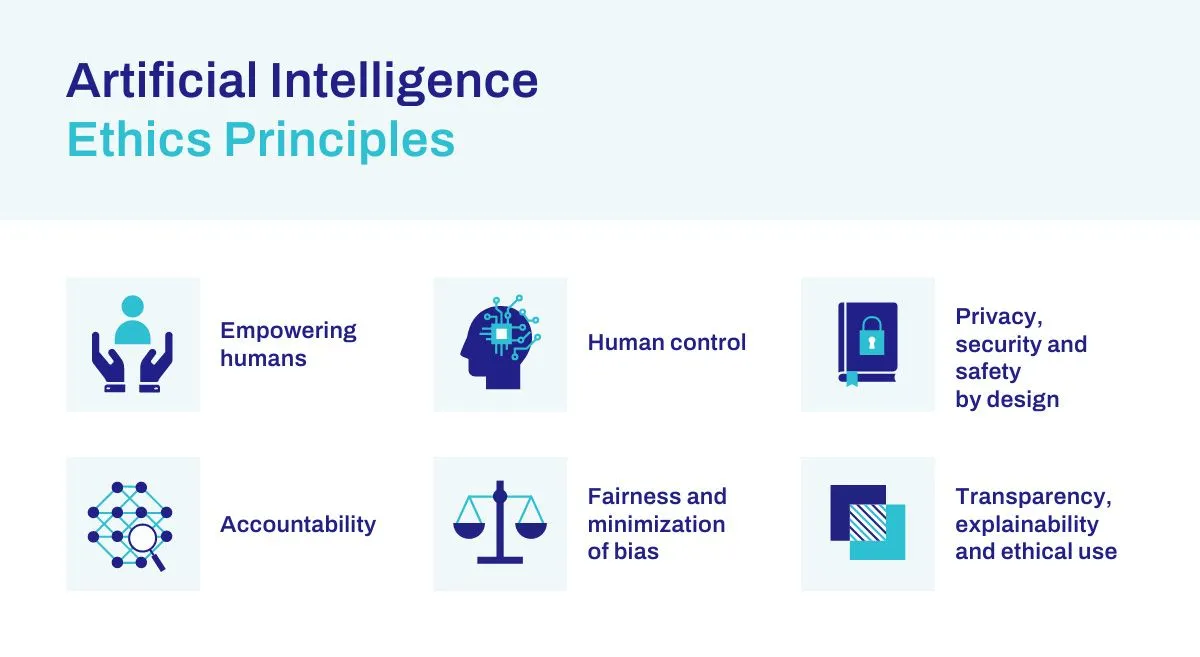
AI ethics operates through a set of guiding principles that inform the design, development, and deployment of AI systems:
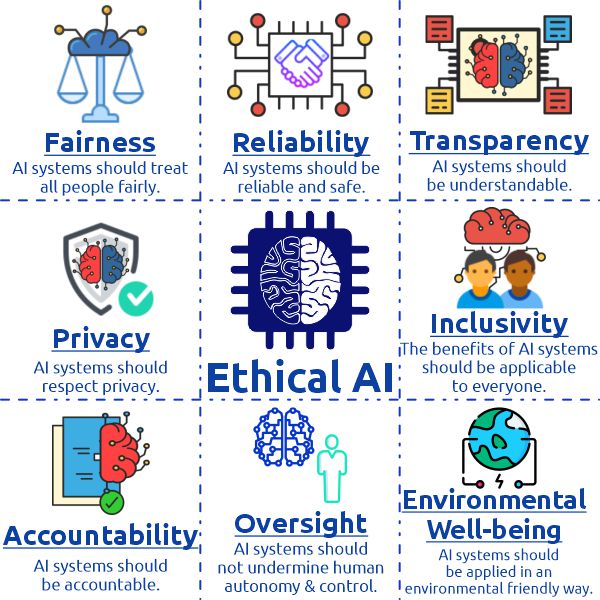
- Fairness: Ensuring that AI systems do not discriminate against individuals or groups based on attributes such as race, gender, or socioeconomic status. This involves auditing datasets for bias and implementing fairness-aware algorithms.
- Transparency: Making AI systems understandable and interpretable to users and stakeholders. Techniques such as explainable AI (XAI) help demystify how AI models make decisions.
- Accountability: Establishing clear lines of responsibility for AI-driven outcomes. This includes mechanisms for redress when AI systems cause harm or make erroneous decisions.
- Privacy: Protecting user data and ensuring compliance with regulations such as the GDPR. Techniques like federated learning and differential privacy are used to safeguard sensitive information.
- Safety: Preventing AI systems from causing unintended harm. This involves rigorous testing, fail-safe mechanisms, and adherence to safety standards such as ISO/IEC 23894.
#Implementation Methods
Ethical AI is implemented through a combination of technical and organizational measures:
- Ethics Review Boards: Many organizations establish internal ethics committees to oversee AI projects and ensure compliance with ethical guidelines.
- Bias Audits: Regular assessments of AI models to identify and mitigate biases in training data and algorithms.
- Ethical Design Frameworks: Methodologies such as Value Sensitive Design (VSD) and Responsible AI guide developers in embedding ethical considerations into the design process.
- Regulatory Compliance: Adherence to laws and standards, such as the EU AI Act, the Algorithmic Accountability Act (proposed in the U.S.), and industry-specific regulations.
#Important Facts
- Algorithmic Bias: AI systems can perpetuate and amplify biases present in training data. For example, facial recognition systems have been shown to have higher error rates for people with darker skin tones.
- Black Box Problem: Many advanced AI models, particularly deep learning systems, operate as "black boxes," making it difficult to understand how they arrive at decisions.
- Existential Risks: Some researchers, such as Nick Bostrom, argue that advanced AI could pose existential risks if not properly aligned with human values.
- AI in Decision-Making: AI is increasingly used in high-stakes decisions, such as loan approvals, criminal sentencing, and medical diagnoses, raising concerns about accountability and fairness.
- Ethical AI Certifications: Initiatives like the Partnership on AI and AI Ethics Lab offer frameworks and certifications for organizations committed to ethical AI practices.
#Timeline
- Alan Turing publishes *Computi
Alan Turing publishes *Computing Machinery and Intelligence*, introducing the Turing Test and raising early questions about machine intelligence and ethics.
- The term 'Artificial Intellig
The term 'Artificial Intelligence' is coined at the Dartmouth Conference, marking the beginning of AI as a field of study.
- Joseph Weizenbaum publishes *C
Joseph Weizenbaum publishes *Computer Power and Human Reason*, critiquing the uncritical acceptance of AI and advocating for ethical considerations.
- ProPublica publishes an invest
ProPublica publishes an investigation revealing racial bias in COMPAS, a widely used criminal risk assessment tool.
- The Future of Life
The Future of Life Institute releases the Asilomar AI Principles, outlining ethical guidelines for AI research.
- GDPR, the EU's data
GDPR, the EU's data protection regulation, comes into effect, setting a global standard for data privacy and AI ethics.
- IEEE releases *Ethically Align
IEEE releases *Ethically Aligned Design*, a comprehensive framework for embedding ethics into AI systems.
- Timnit Gebru and colleagues
Timnit Gebru and colleagues publish a paper highlighting biases in large language models, sparking industry-wide discussions on AI ethics.
- The EU proposes the
The EU proposes the AI Act, the first comprehensive legal framework for AI regulation.
- Major tech companies, includin
Major tech companies, including Google and Microsoft, release their own AI ethics guidelines and commit to responsible AI development.
#Related Terms
#FAQ
What does AI Ethics: Everything You Need To Know cover?
AI ethics: everything you need to know covers practical examples, benefits, limitations, and important considerations for readers.
Why is AI Ethics: Everything You Need To Know important?
It helps readers understand key concepts, compare practical use cases, and evaluate how AI Ethics decisions affect outcomes, risks, and implementation choices.
What should readers verify before applying this topic?
Readers should compare the benefits, limitations, data requirements, and related themes such as Ethics, Responsible AI, Policy before using the ideas in real projects.
#References
- AI Ethics: Everything You Need To Know terminology and background research
- AI Ethics: Everything You Need To Know use cases, implementation examples, and limitations
- AI Ethics best practices, standards, and risk guidance
- Ethics case studies, benchmarks, and current industry analysis


Comments
No comments yet. Start the discussion with a useful note.