

#Short Answer
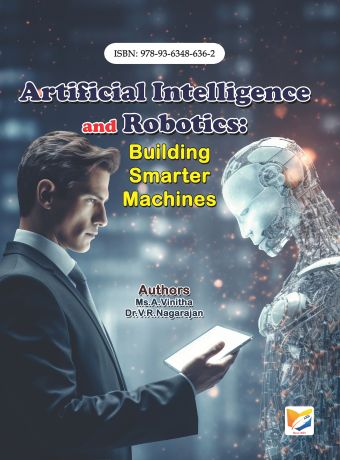
Explores how artificial intelligence shapes robotics and building smarter machines, covering practical use cases, benefits, limitations, and risks.
#Infobox
Artificial Intelligence and Robotics: Building Smarter Machines Field Artificial intelligence, Robotics Focus Development of intelligent machines capable of performing tasks autonomously Key Figures Alan Turing, John McCarthy, Marvin Minsky, Rodney Brooks Major Applications Manufacturing, healthcare, autonomous vehicles, home automation, space exploration Notable Projects Deep Blue, ASIMO, Boston Dynamics robots, Tesla Autopilot Influential Organizations MIT CSAIL, Stanford AI Lab, OpenAI, Boston Dynamics
#Overview
Artificial Intelligence and Robotics represent the convergence of computer science, engineering, and cognitive science to develop systems that can perceive their environment, process information, and act autonomously. AI provides the algorithms and computational models that enable machines to learn from data, recognize patterns, and make decisions, while robotics supplies the mechanical and sensory components necessary for physical interaction.
This synergy has led to advancements in autonomous robots, which operate without human intervention, and collaborative robots (cobots), designed to work alongside humans. The integration of AI into robotics has expanded applications across industries, including manufacturing, logistics, healthcare, and consumer electronics.
#Key Concepts
- Machine Learning (ML): A subset of AI that enables systems to learn from data and improve over time without explicit programming.
- Deep Learning: A type of ML that uses neural networks with multiple layers to model complex patterns in large datasets.
- Computer Vision: The field of AI that enables machines to interpret and understand visual information from the world.
- Natural Language Processing (NLP): AI techniques for enabling machines to understand, interpret, and generate human language.
- Reinforcement Learning: A learning paradigm where an agent learns to make decisions by interacting with an environment to maximize rewards.
- Sensors and Actuators: Components in robotics that allow machines to perceive their surroundings and execute physical actions.
#History / Background
#Early Developments
The foundations of AI and robotics were laid in the mid-20th century. In 1950, Alan Turing proposed the Turing test as a criterion for machine intelligence, while in 1956, the term "artificial intelligence" was coined at the Dartmouth Conference by John McCarthy and others.
Early robotics efforts included William Grey Walter's tortoise robots in the 1940s and George Devol's patent for a programmable robotic arm in 1961. The first industrial robot, Unimate, was installed in a General Motors factory in 1961, marking the beginning of modern industrial robotics.
#AI Winter and Resurgence
During the 1970s and 1980s, AI research faced significant challenges due to limited computational power and unmet expectations, leading to periods known as "AI winters." However, breakthroughs in the 1990s and 2000s, such as the defeat of world chess champion Garry Kasparov by IBM's Deep Blue in 1997, reignited interest in AI.
The 2010s saw exponential growth in AI capabilities, driven by advances in deep learning, big data, and computing power. Landmark achievements included IBM Watson's victory on Jeopardy! in 2011 and AlphaGo's defeat of a world champion Go player in 2016.
#Modern Robotics
Contemporary robotics has evolved from rigid, pre-programmed industrial arms to highly adaptable machines capable of learning and interacting with dynamic environments. Companies like Boston Dynamics have demonstrated robots like Spot and Atlas that can run, jump, and perform complex maneuvers. In consumer technology, robots like Roomba vacuum cleaners and Tesla Bot exemplify the integration of AI and robotics in everyday life.
#How It Works
#AI Architecture
AI systems typically consist of several key components:
- Data Collection: Gathering relevant data from sensors, databases, or user interactions.
- Data Processing: Cleaning, normalizing, and transforming data for analysis.
- Model Training: Using machine learning algorithms to train models on the processed data.
- Inference: Applying trained models to make predictions or decisions on new data.
- Feedback Loop: Continuously updating models based on performance and new data.
#Robotics Systems
Robotic systems integrate hardware and software to perform physical tasks. Key components include:
- Sensors: Devices like cameras, LiDAR, and accelerometers that provide environmental data.
- Actuators: Motors and servos that enable movement and manipulation.
- Control Systems: Algorithms that process sensor data and determine actions.
- Power Supply: Batteries or external power sources for operation.
- Human-Machine Interface (HMI): Systems for user interaction, such as touchscreens or voice commands.
#Integration of AI and Robotics
The fusion of AI and robotics enables machines to perform tasks that were previously impossible. For example:
- Autonomous Navigation: Robots like self-driving cars use AI-powered computer vision and path planning to navigate roads.
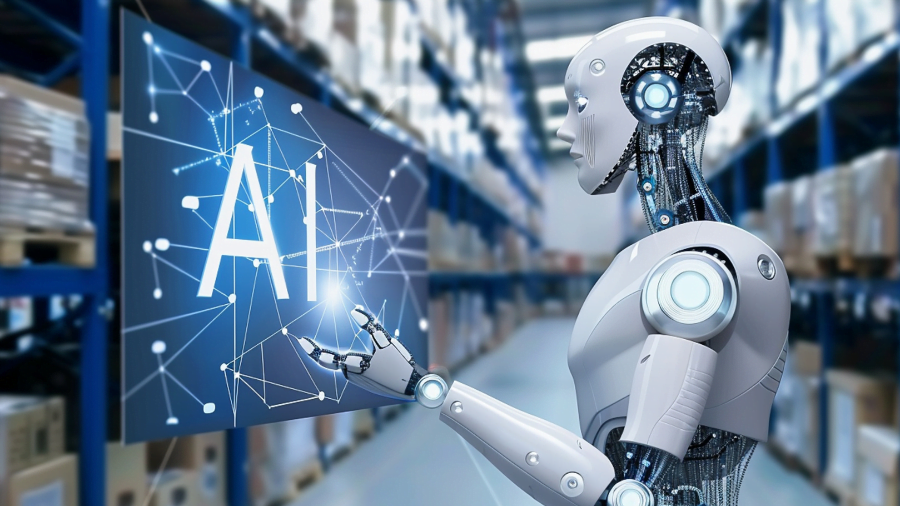
- Object Manipulation: Robotic arms in warehouses use AI to identify and grasp objects with precision.
- Natural Interaction: Social robots like Sophia use NLP and facial recognition to engage in conversations.
- Predictive Maintenance: Industrial robots equipped with AI predict equipment failures before they occur, reducing downtime.
#Important Facts
- AI and Robotics Market: The global AI market is projected to reach $1.8 trillion by 2030, while the robotics market is expected to exceed $260 billion by 2025.
- Autonomous Vehicles: Companies like Tesla, Waymo, and Cruise are developing self-driving cars that rely on AI for real-time decision-making.
- Medical Robotics: Surgical robots like the da Vinci Surgical System enable minimally invasive procedures with greater precision.
- Ethical Concerns: The rise of AI and robotics has sparked debates about job displacement, privacy, and the potential for autonomous weapons.
- Open-Source AI: Platforms like TensorFlow and PyTorch have democratized AI development, allowing researchers and developers worldwide to contribute.
- Humanoid Robots: Projects like Optimus by Tesla aim to create robots that can perform tasks in human-centric environments.
#Timeline
Year Event 1940s William Grey Walter develops the first autonomous robots, "Elmer" and "Elsie." 1950 Alan Turing publishes "Computing Machinery and Intelligence," introducing the Turing test. 1956 The term "artificial intelligence" is coined at the Dartmouth Conference. 1961 Unimate, the first industrial robot, is installed in a General Motors factory. 1966 Shakey the robot is developed at Stanford Research Institute, combining AI and robotics. 1997 IBM's Deep Blue defeats world chess champion Garry Kasparov. 2011 IBM Watson wins Jeopardy! against human champions. 2016 AlphaGo defeats Lee Sedol, a world champion Go player. 2020 Boston Dynamics' Spot robot is deployed for tasks like inspection and monitoring. 2023 OpenAI releases ChatGPT, a conversational AI model that accelerates AI adoption.
#Related Terms
#FAQ
What does AI And Robotics: Building Smarter Machines cover?
Explores how artificial intelligence shapes robotics and building smarter machines, covering practical use cases, benefits, limitations, and risks.
Why is AI And Robotics: Building Smarter Machines important?
It helps readers understand key concepts, compare practical use cases, and evaluate how Technology decisions affect outcomes, risks, and implementation choices.
What should readers verify before applying this topic?
Readers should compare the benefits, limitations, data requirements, and related themes such as Robotic, Building, Smarter before using the ideas in real projects.
#References
- AI And Robotics: Building Smarter Machines terminology and background research
- AI And Robotics: Building Smarter Machines use cases, implementation examples, and limitations
- Technology best practices, standards, and risk guidance
- Robotic case studies, benchmarks, and current industry analysis


Comments
No comments yet. Start the discussion with a useful note.