

#Short Answer
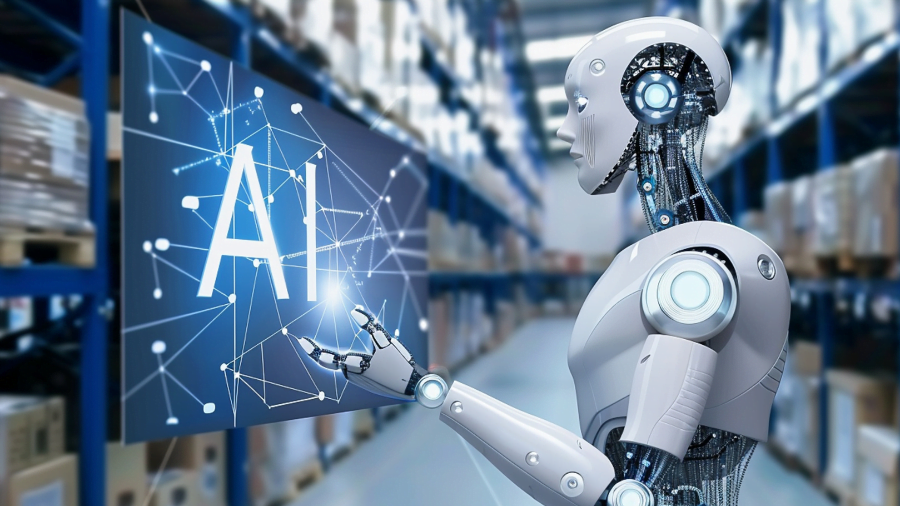
Explores how artificial intelligence shapes robotics and the next generation, covering practical use cases, benefits, limitations, and risks.
#Infobox
Artificial Intelligence (AI) and Robotics: The Next Generation explores the convergence of AI-driven automation and robotic systems, highlighting breakthroughs in autonomous decision-making, human-robot collaboration, and real-world applications across industries.
AI and Robotics: The Next Generation Field Artificial Intelligence, Robotics Focus Autonomous systems, machine learning integration, human-robot interaction, ethical AI Key Technologies Deep learning, reinforcement learning, computer vision, edge computing, swarm robotics Applications Manufacturing, healthcare, logistics, agriculture, space exploration Notable Figures Alan Turing, Marvin Minsky, Rodney Brooks, Fei-Fei Li First Introduced Mid-20th century (theoretical foundations), 2010s (practical integration) Current Status Rapid advancement with increasing autonomy and adaptability
#Overview
AI and Robotics: The Next Generation represents the fusion of artificial intelligence and robotic systems to create intelligent, adaptive machines capable of performing complex tasks with minimal human intervention. This integration leverages advances in machine learning, computer vision, and real-time data processing to enable robots to perceive, reason, and act in dynamic environments. The field is characterized by the development of autonomous systems that can learn from experience, collaborate with humans, and operate in unstructured settings such as homes, hospitals, and industrial floors.
At its core, the next generation of AI-powered robotics emphasizes contextual awareness, where machines interpret surroundings through sensors and make decisions based on probabilistic models. Unlike traditional robots, which follow pre-programmed instructions, modern AI-driven robots utilize deep reinforcement learning to refine their actions over time. This evolution is transforming industries by enhancing efficiency, reducing operational costs, and enabling new applications previously deemed impossible.
#History / Background
#Early Developments
The conceptual roots of AI and robotics trace back to the mid-20th century. In 1950, Alan Turing proposed the "Turing Test" as a criterion for machine intelligence, laying the groundwork for AI as a scientific discipline. Concurrently, the term "robotics" was coined by Isaac Asimov in 1942, who also formulated the Three Laws of Robotics, a foundational ethical framework for robotic behavior.
In 1956, the Dartmouth Conference marked the official birth of AI, where researchers like John McCarthy and Marvin Minsky explored symbolic reasoning and problem-solving algorithms. During this era, early robotic systems such as the Unimate (1961), the first industrial robot, automated assembly line tasks in manufacturing.
#The AI Winter and Renaissance
The late 1970s and 1980s saw a decline in AI funding and interest, known as the "AI Winter," due to overpromised capabilities and limited computational power. However, robotics continued to advance in industrial and military applications. The 1990s brought a resurgence with breakthroughs in machine learning, particularly neural networks, and the introduction of probabilistic models like Markov decision processes.
In 1997, Deep Blue, an IBM supercomputer, defeated world chess champion Garry Kasparov, demonstrating the potential of AI in complex decision-making. Concurrently, robotic systems like ASIMO (2000) by Honda showcased humanoid robotics with bipedal mobility and basic AI-driven interaction.
#Modern Era and AI-Robotics Integration
The 2010s marked a pivotal shift with the convergence of AI and robotics, fueled by exponential growth in computing power, big data, and algorithmic innovation. Key milestones include:
- 2012: The AlphaGo program defeated a human Go champion, showcasing deep learning's ability to master complex strategy games.
- 2016: Boston Dynamics introduced Atlas, a bipedal humanoid robot capable of dynamic movement and obstacle navigation.
- 2018: Tesla unveiled the Tesla Bot, a humanoid robot designed for general-purpose automation in industrial and domestic settings.
- 2020s: The rise of edge AI enabled robots to process data locally, reducing latency and improving real-time decision-making in fields like autonomous vehicles and surgical robotics.
#How It Works
#Core Components
The integration of AI and robotics relies on several interconnected components:
- Sensing: Robots use sensors such as LiDAR, cameras, and tactile arrays to perceive their environment. Computer vision algorithms process visual data to identify objects, obstacles, and human gestures.
- Perception: AI models, including convolutional neural networks (CNNs) and transformers, interpret sensor data to create a spatial and semantic understanding of the surroundings.
- Decision-Making: Reinforcement learning (RL) and probabilistic models enable robots to evaluate multiple action sequences and select optimal paths. For example, a warehouse robot might use RL to optimize its picking route in real time.
- Actuation: Robotic arms, grippers, and mobility platforms execute decisions. Advanced systems incorporate force feedback and adaptive control to handle delicate or unpredictable tasks.
- Learning and Adaptation: Continuous learning mechanisms, such as online learning and transfer learning, allow robots to improve performance through experience and generalize knowledge across tasks.
#Key Technologies
Technology Description Applications Deep Learning Neural networks with multiple layers that learn hierarchical representations of data. Object recognition, speech processing, predictive maintenance Reinforcement Learning Algorithms that learn optimal actions through trial and error and reward signals. Autonomous navigation, robotic manipulation, game-playing agents Computer Vision AI systems that analyze and interpret visual input from cameras and sensors. Medical imaging, surveillance, autonomous vehicles Edge AI Processing data locally on the robot's hardware to reduce latency and improve privacy. Industrial inspection, drone surveillance, surgical robotics Swarm Robotics Coordinated operation of multiple robots to achieve complex tasks through decentralized control. Agricultural harvesting, search and rescue, environmental monitoring
#Important Facts
- Autonomy Levels: Robots are classified into six levels of autonomy (0–5) by the SAE J3016 standard, ranging from no automation to full autonomy.
- Energy Efficiency: Modern AI robots consume significantly less power than earlier models due to advancements in neuromorphic computing and energy-efficient hardware.
- Ethical Considerations: The deployment of AI robots raises concerns about job displacement, privacy, and accountability, leading to the development of ethical guidelines such as the Asilomar AI Principles.
- Speed of Advancement: The time from lab prototype to commercial deployment has decreased from decades to just a few years due to cloud computing and open-source AI frameworks like TensorFlow and PyTorch.
- Human-Robot Collaboration: Collaborative robots (cobots) are designed to work safely alongside humans, with features like force limiting and real-time obstacle detection.
#Timeline
Year Event 1950 Alan Turing publishes "Computing Machinery and Intelligence," introducing the Turing Test. 1956 Dartmouth Conference marks the official birth of AI; term "artificial intelligence" coined. 1961 Unimate, the first industrial robot, is installed in a General Motors factory. 1970 Shakey the Robot, developed at Stanford, becomes the first general-purpose mobile robot with AI. 1997 IBM's Deep Blue defeats Garry Kasparov in chess. 2000 Honda's ASIMO debuts as a humanoid robot capable of walking and basic interaction. 2012 Google's self-driving car project begins testing autonomous vehicles on public roads. 2016 Boston Dynamics' Atlas robot demonstrates dynamic movement and parkour skills. 2018 Tesla unveils the Tesla Bot, a humanoid robot designed for general-purpose tasks. 2020 OpenAI's DALL·E generates images from text prompts, showcasing multimodal AI capabilities. 2023 Figure AI raises $675 million to develop humanoid robots for labor-intensive industries.
#Related Terms
#FAQ
What does AI And Robotics: The Next Generation cover?
Explores how artificial intelligence shapes robotics and the next generation, covering practical use cases, benefits, limitations, and risks.
Why is AI And Robotics: The Next Generation important?
It helps readers understand key concepts, compare practical use cases, and evaluate how Technology decisions affect outcomes, risks, and implementation choices.
What should readers verify before applying this topic?
Readers should compare the benefits, limitations, data requirements, and related themes such as Robotic, Generation, Autonomous Systems before using the ideas in real projects.
#References
- AI And Robotics: The Next Generation terminology and background research
- AI And Robotics: The Next Generation use cases, implementation examples, and limitations
- Technology best practices, standards, and risk guidance
- Robotic case studies, benchmarks, and current industry analysis



Comments
No comments yet. Start the discussion with a useful note.