


#Short Answer
Artificial intelligence (AI) has become a transformative force in the aviation industry, reshaping how aircraft are operated, maintained, and managed. From autonomous flight systems to AI-driven air traffic control, the integration of AI technologies is driving unprecedented improvements in safety, efficiency, and sustainability. Airlines and manufacturers are increasingly adopting AI to reduce human error, optimize fuel consumption, and enhance passenger experiences.
#Infobox
#Overview
Artificial intelligence (AI) has become a transformative force in the aviation industry, reshaping how aircraft are operated, maintained, and managed. From autonomous flight systems to AI-driven air traffic control, the integration of AI technologies is driving unprecedented improvements in safety, efficiency, and sustainability. Airlines and manufacturers are increasingly adopting AI to reduce human error, optimize fuel consumption, and enhance passenger experiences.
AI in aviation encompasses a broad spectrum of applications, including predictive maintenance, where machine learning models analyze sensor data to predict equipment failures before they occur. Additionally, AI-powered flight path optimization systems adjust routes in real time to avoid turbulence, adverse weather, and congested airspace, reducing delays and fuel burn. The rise of autonomous aircraft and AI co-pilots is also paving the way for next-generation aviation, where AI systems assist or even replace human pilots in certain scenarios.
#History / Background
#Early Developments
The roots of AI in aviation trace back to the mid-20th century, when early autopilot systems were introduced to assist pilots in maintaining stable flight. The first autopilot, developed in the 1930s, used gyroscopic instruments to stabilize aircraft without human intervention. By the 1950s and 1960s, advancements in computing allowed for more sophisticated flight control systems, including automatic landing systems used in commercial aviation.
In the 1980s and 1990s, AI research began incorporating expert systems—rule-based programs designed to mimic human decision-making. These systems were used in flight simulators and air traffic control to assist controllers in managing complex airspace scenarios. However, early AI applications were limited by computational power and data availability.
#Modern AI Integration
The 21st century marked a turning point with the advent of machine learning (ML) and deep learning, which enabled AI systems to process vast amounts of data and improve over time. Companies like Boeing, Airbus, and NASA began integrating AI into flight operations, maintenance, and safety protocols. The introduction of predictive maintenance in the 2010s revolutionized aircraft upkeep by using AI to detect anomalies in engine performance, structural integrity, and avionics systems.
In 2016, Airbus demonstrated the first fully autonomous commercial aircraft taxiing tests, while Boeing invested heavily in AI-driven flight optimization tools. The FAA and EASA began developing regulatory frameworks to accommodate AI in aviation, ensuring safety and reliability standards were met. By the 2020s, AI had become a cornerstone of NextGen Air Traffic Management and Single European Sky ATM Research (SESAR) initiatives.
#How It Works
#Predictive Maintenance
AI-driven predictive maintenance relies on sensor data from aircraft components such as engines, landing gear, and avionics. Machine learning models analyze this data to identify patterns indicative of potential failures. For example, vibration sensors can detect unusual oscillations in an engine, while temperature sensors may reveal overheating in electrical systems. By predicting failures before they occur, airlines can schedule maintenance proactively, reducing unscheduled downtime and improving fleet availability.
Companies like GE Aviation and Rolls-Royce use AI platforms such as Predix and Engine Health Management to monitor aircraft health in real time. These systems leverage supervised learning (trained on historical failure data) and unsupervised learning (detecting anomalies without prior examples) to enhance reliability.
#Autonomous Flight Systems
AI enables autonomous flight through a combination of computer vision, sensor fusion, and reinforcement learning. Modern aircraft use LiDAR, radar, and cameras to perceive their surroundings, while AI algorithms process this data to make split-second decisions. Autopilot systems like Boeing’s 777X and Airbus’s A350 incorporate AI to handle takeoff, cruise, and landing phases with minimal human input.
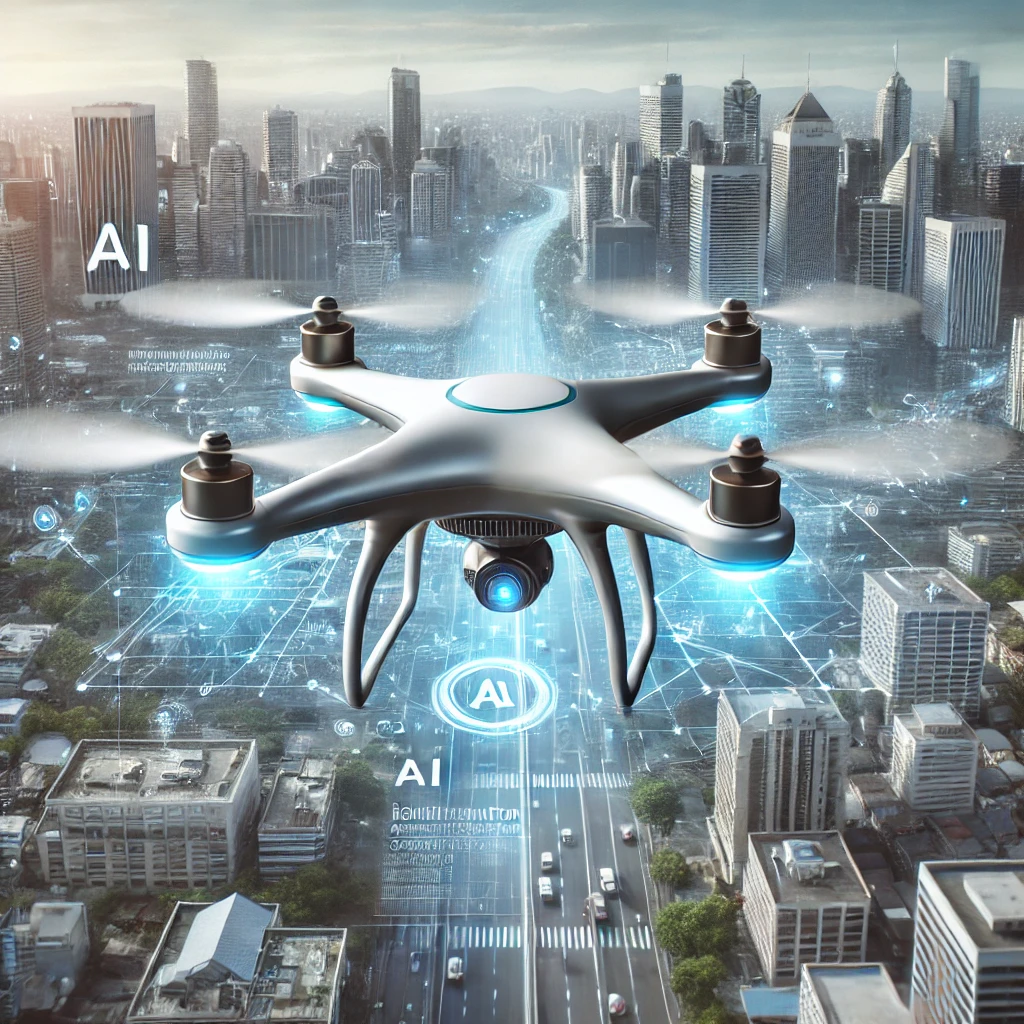
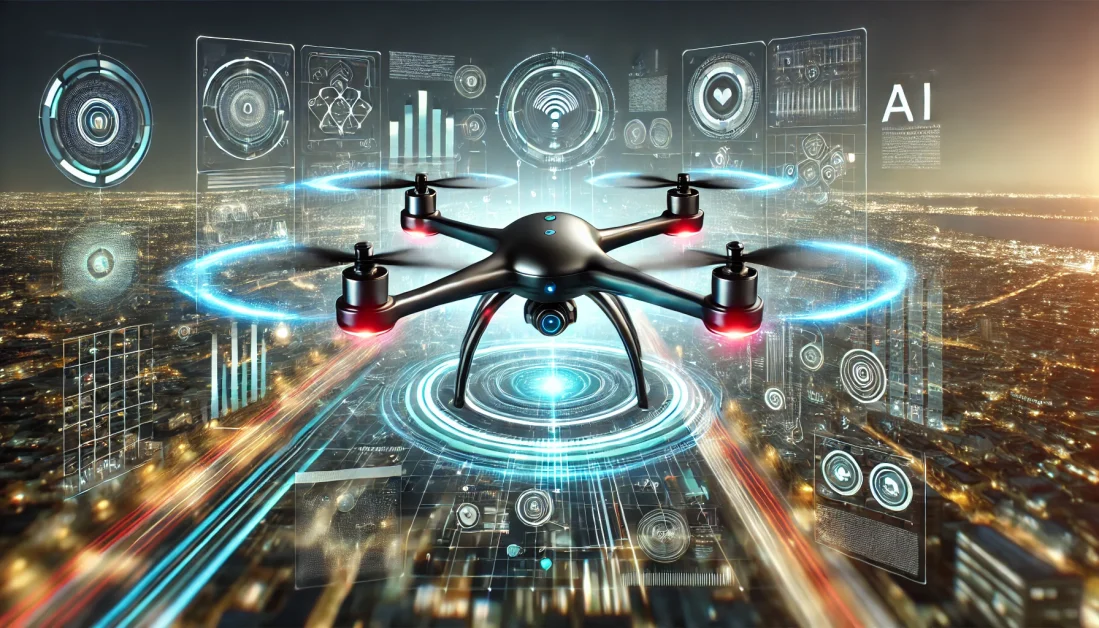
For fully autonomous aircraft, AI must account for dynamic environments, including weather changes, air traffic, and terrain obstacles. Reinforcement learning trains AI models by simulating millions of flight scenarios, allowing the system to learn optimal decision-making strategies. Companies like Wing (Alphabet) and Zipline have deployed AI-powered drones for cargo delivery, demonstrating the feasibility of autonomous flight in controlled airspace.
#Air Traffic Management
AI optimizes air traffic control (ATC) by analyzing flight data, weather patterns, and airspace congestion in real time. Traditional ATC relies on human controllers to manage aircraft separation, but AI systems like NASA’s Air Traffic Management System and EUROCONTROL’s iTEC use predictive algorithms to suggest optimal flight paths and reduce delays.
AI also enhances collision avoidance through Traffic Alert and Collision Avoidance System (TCAS) upgrades, which now incorporate machine learning to improve response times. Additionally, AI-driven dynamic sectorization adjusts airspace divisions based on real-time demand, maximizing efficiency in high-traffic regions like New York’s JFK or London Heathrow.
#Fuel Optimization and Sustainability
Airlines lose billions annually due to inefficient fuel consumption. AI addresses this by analyzing weather data, fuel burn rates, and aircraft weight to recommend optimal flight paths and altitudes. For instance, SAS Scandinavian Airlines uses AI to reduce fuel usage by up to 5%, while Delta Air Lines employs AI-driven flight planning tools to minimize carbon emissions.
AI also supports sustainable aviation fuels (SAF) by predicting the best routes for SAF-powered flights and optimizing refueling schedules. The International Air Transport Association (IATA) estimates that AI could help the aviation industry achieve its net-zero carbon emissions goals by 2050.
#Important Facts
- AI reduces pilot workload: by automating routine tasks, allowing pilots to focus on critical decision-making.
- Predictive maintenance: can reduce aircraft downtime by up to 30%, according to Boeing.
- Autonomous drones: are already delivering medical supplies in remote areas, such as Rwanda and Ghana.
- AI-powered weather forecasting: improves flight safety by predicting turbulence and storms with 90% accuracy.
- The global AI in aviation market: is projected to reach $4.2 billion by 2027, growing at a CAGR of 45%.
- Cybersecurity risks: in AI aviation systems are a growing concern, with hackers targeting flight data and navigation systems.
- AI can reduce CO₂ emissions: by optimizing flight paths, potentially saving 1.5 million tons of fuel annually.
- Regulatory bodies: like the FAA and EASA are developing guidelines for AI certification in aviation.
#Timeline
- Artificial Intelligence, Aviat
Artificial Intelligence, Aviation Technology
- Predictive Maintenance, Autono
Predictive Maintenance, Autonomous Flight, Air Traffic Control, Fuel Optimization, Safety Monitoring
- Enhanced Safety, Reduced Opera
Enhanced Safety, Reduced Operational Costs, Improved Efficiency, Lower Carbon Emissions
- Machine Learning, Computer Vis
Machine Learning, Computer Vision, Natural Language Processing, Reinforcement Learning
- Commercial Aviation, Military
Commercial Aviation, Military Aviation, Drone Operations, Air Traffic Management
- Data Privacy, Cybersecurity Ri
Data Privacy, Cybersecurity Risks, Regulatory Compliance, Human-AI Collaboration
- Fully Autonomous Aircraft, AI
Fully Autonomous Aircraft, AI-Powered Cabin Systems, Predictive Weather Routing, Digital Twins
#Related Terms
#FAQ
What does AI And Aviation: Safer Flights cover?
Explores how artificial intelligence shapes aviation and safer flights, covering practical use cases, benefits, limitations, and risks.
Why is AI And Aviation: Safer Flights important?
It helps readers understand key concepts, compare practical use cases, and evaluate how Technology decisions affect outcomes, risks, and implementation choices.
What should readers verify before applying this topic?
Readers should compare the benefits, limitations, data requirements, and related themes such as Aviation, Safer, Flight before using the ideas in real projects.
#References
- AI And Aviation: Safer Flights terminology and background research
- AI And Aviation: Safer Flights use cases, implementation examples, and limitations
- Technology best practices, standards, and risk guidance
- Aviation case studies, benchmarks, and current industry analysis

Comments
No comments yet. Start the discussion with a useful note.