

#Short Answer
Explores how artificial intelligence shapes insurance and risk assessment, covering practical use cases, benefits, limitations, and risks.
#Infobox
Artificial intelligence (AI) is transforming the insurance industry by enhancing risk assessment, claims processing, and customer service. Artificial Intelligence in Insurance Field Insurance Focus Risk assessment, claims processing, underwriting, fraud detection Key Technologies Machine learning, natural language processing (NLP), computer vision, predictive analytics Applications Automated underwriting, personalized policies, real-time risk evaluation, chatbots Benefits Increased efficiency, reduced costs, improved accuracy, enhanced customer experience Challenges Data privacy, ethical concerns, regulatory compliance, algorithmic bias Industries Affected Life insurance, health insurance, property & casualty insurance, reinsurance
#Overview
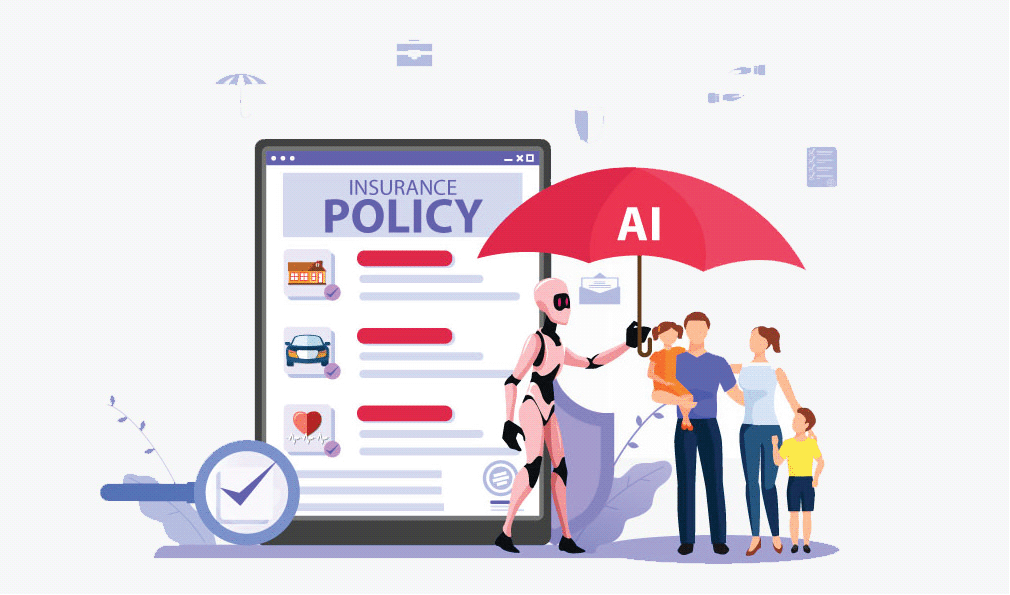
Artificial intelligence (AI) is revolutionizing the insurance industry by automating processes, improving decision-making, and enhancing customer interactions. AI-driven tools analyze vast datasets to assess risks more accurately, streamline claims processing, and personalize insurance policies. The integration of AI in insurance has led to significant advancements in underwriting, fraud detection, and customer service, making operations more efficient and cost-effective. As AI continues to evolve, its role in insurance is expected to expand, further transforming traditional practices.
#History and Background
The application of AI in insurance dates back to the late 20th century, with early uses focusing on rule-based systems for underwriting and claims processing. In the 1980s and 1990s, expert systems were employed to automate decision-making in insurance, though their capabilities were limited by the technology of the time. The advent of machine learning (ML) and big data in the 2000s marked a turning point, enabling insurers to analyze large datasets for predictive modeling and risk assessment.
By the 2010s, advancements in natural language processing (NLP) and computer vision allowed insurers to process unstructured data, such as medical records and accident reports, with greater accuracy. The rise of insurtech startups further accelerated AI adoption, introducing innovative solutions like chatbots, automated underwriting, and real-time risk evaluation. Today, AI is a cornerstone of digital transformation in the insurance sector, driving efficiency and innovation.
#How AI Works in Insurance
#Risk Assessment
AI enhances risk assessment by analyzing historical data, external factors, and behavioral patterns to predict potential risks. Machine learning models process vast amounts of data, including credit scores, medical histories, and environmental factors, to generate risk scores for individuals or properties. For example, in health insurance, AI can evaluate a policyholder's lifestyle habits and medical records to determine premiums. In property insurance, AI models assess risks based on location, construction materials, and historical disaster data.
Predictive analytics, a subset of AI, is widely used to forecast claims and identify high-risk customers. By leveraging algorithms, insurers can adjust premiums dynamically and offer tailored policies, improving both profitability and customer satisfaction.
#Claims Processing
AI streamlines claims processing by automating document verification, fraud detection, and settlement calculations. Optical character recognition (OCR) and NLP enable insurers to extract relevant information from claim forms, medical reports, and police records. AI-powered systems can flag suspicious claims for further review, reducing fraudulent payouts.
In auto insurance, computer vision is used to assess vehicle damage from photos or videos uploaded by policyholders, expediting claim settlements. Similarly, in health insurance, AI can cross-reference medical bills with treatment records to detect billing errors or overcharges. These automation tools significantly reduce processing times and operational costs.
#Underwriting
Underwriting, the process of evaluating and pricing insurance policies, has been transformed by AI. Traditional underwriting relies on manual reviews and static risk models, which are time-consuming and prone to human error. AI-driven underwriting uses ML algorithms to analyze diverse data sources, including social media activity, IoT device data, and telematics, to assess risk more accurately.
For instance, in life insurance, AI can analyze an applicant's fitness tracker data to evaluate their health risks. In business insurance, AI models assess operational risks by analyzing financial statements, industry trends, and supply chain data. This data-driven approach enables insurers to offer more competitive premiums and reduce underwriting costs.
#Customer Service
AI-powered chatbots and virtual assistants are increasingly used to handle customer inquiries, policy updates, and claims reporting. These tools leverage NLP to understand and respond to customer queries in real time, reducing the need for human intervention. Chatbots can assist with tasks such as filing claims, checking policy status, and providing personalized recommendations.
Additionally, AI-driven sentiment analysis tools monitor customer interactions to identify dissatisfaction or complaints, allowing insurers to address issues proactively. This enhances customer retention and improves overall service quality.
#Important Facts
- AI can reduce claims processing times by up to 80% through automation.
- Machine learning models can predict fraudulent claims with an accuracy of over 90%.
- The global AI in insurance market is projected to reach $45.74 billion by 2027, growing at a CAGR of 32.5%.
- AI-driven underwriting can reduce processing times from weeks to minutes.
- Over 60% of insurers have adopted AI in some form, with adoption rates increasing annually.
- AI can analyze unstructured data such as medical records and social media posts to assess risks.
- Regulatory compliance remains a major challenge, with insurers needing to ensure AI models adhere to data protection laws.
#Timeline
Year Milestone 1980s Introduction of expert systems for underwriting and claims processing. 2000s Adoption of machine learning for predictive modeling and risk assessment. 2010 Emergence of insurtech startups leveraging AI for innovative insurance solutions. 2015 Widespread use of NLP for processing unstructured data in claims and underwriting. 2018 AI-powered chatbots become mainstream in customer service. 2020 Computer vision is adopted for automated vehicle damage assessment in auto insurance. 2023 AI-driven personalized policies and dynamic pricing models gain traction.
#Related Terms
#FAQ
What does AI And Insurance: Risk Assessment cover?
Explores how artificial intelligence shapes insurance and risk assessment, covering practical use cases, benefits, limitations, and risks.
Why is AI And Insurance: Risk Assessment important?
It helps readers understand key concepts, compare practical use cases, and evaluate how Business & Finance decisions affect outcomes, risks, and implementation choices.
What should readers verify before applying this topic?
Readers should compare the benefits, limitations, data requirements, and related themes such as Insurance, Risk, Assessment before using the ideas in real projects.
#References
- AI And Insurance: Risk Assessment terminology and background research
- AI And Insurance: Risk Assessment use cases, implementation examples, and limitations
- Business & Finance best practices, standards, and risk guidance
- Insurance case studies, benchmarks, and current industry analysis


Comments
No comments yet. Start the discussion with a useful note.