


#Short Answer
AI and Freedom: User Autonomy refers to the capacity of individuals to maintain control over artificial intelligence systems that interact with or...
#Infobox
Exploration of the intersection between artificial intelligence and individual user autonomy, emphasizing control, personalization, and ethical considerations in AI-driven systems.
#Overview
AI and Freedom: User Autonomy refers to the capacity of individuals to maintain control over artificial intelligence systems that interact with or influence their lives. This concept intersects with fields such as human-computer interaction, digital ethics, and AI governance. As AI systems become more pervasive—from personalized recommendation engines to autonomous decision-making tools—the question of who controls these systems and how much autonomy users retain has gained significant attention.
User autonomy in AI contexts involves several dimensions: the ability to understand how AI systems operate, the power to opt out of AI-driven processes, and the capacity to influence or override AI decisions. This autonomy is often balanced against the efficiency, scalability, and predictive capabilities that AI systems provide. Ethical frameworks emphasize transparency, accountability, and user empowerment as core principles to preserve individual freedom in an increasingly AI-mediated world.
#History / Background
The evolution of AI and its relationship to user autonomy can be traced through several key phases in the development of artificial intelligence and digital technology.
#Early AI and User Control
In the early decades of AI research (1950s–1980s), systems were largely rule-based and deterministic. Users interacted with AI through structured interfaces, and control was centralized in the hands of developers and operators. The concept of user autonomy was limited, as AI systems were not designed to adapt to individual preferences or behaviors. However, this era laid the foundation for later advancements in personalization.
#Rise of Machine Learning and Personalization
The late 1990s and early 2000s saw the rise of machine learning algorithms capable of learning from user data. Systems like recommendation engines (e.g., Amazon’s product suggestions, Netflix’s viewing algorithms) began to personalize experiences based on behavior. While this increased convenience, it also introduced concerns about data privacy and the opacity of decision-making processes. Users often lacked insight into how their data was used or how recommendations were generated.
#Emergence of Agentic AI
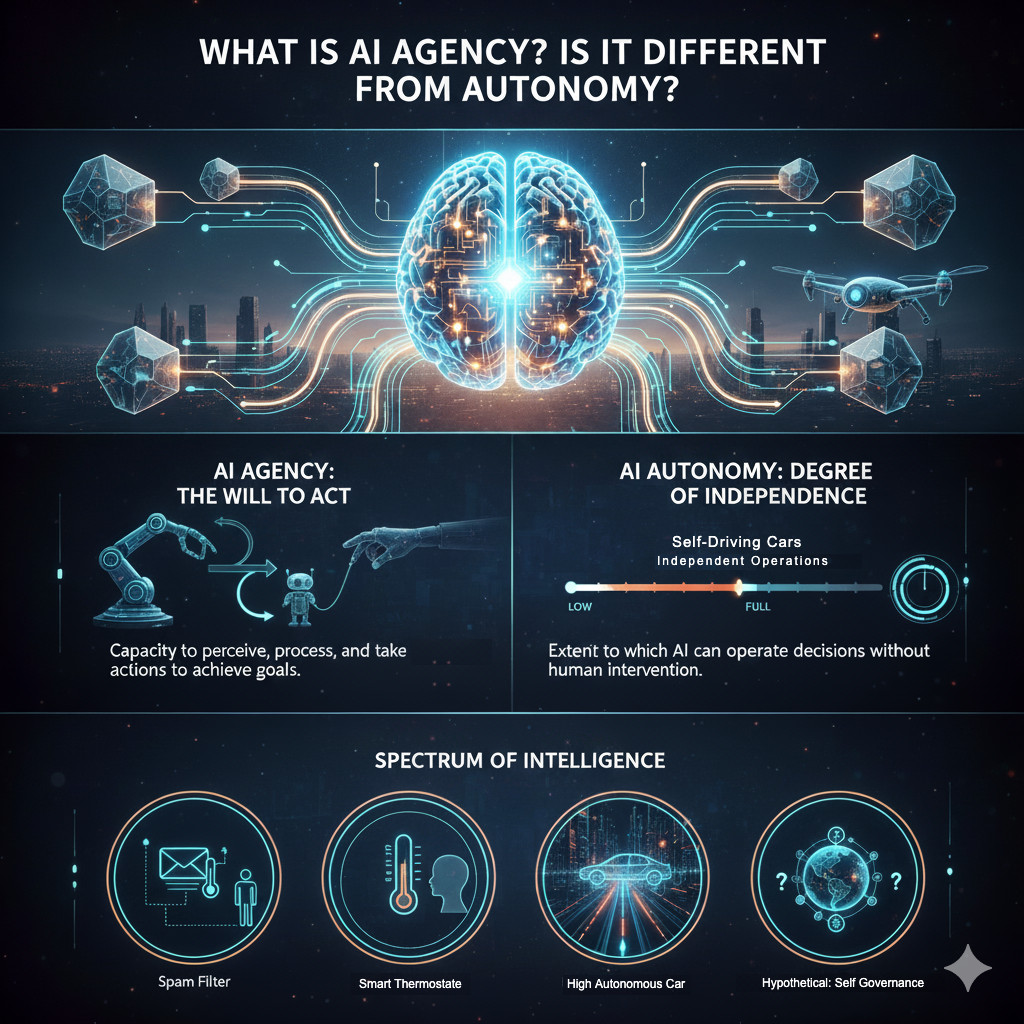
In the 2010s and 2020s, the concept of agentic AI—systems capable of autonomous action in pursuit of defined goals—gained prominence. Unlike traditional AI, which follows pre-programmed rules, agentic systems can make decisions, adapt strategies, and even negotiate with users. This shift raised critical questions about user autonomy: Can individuals meaningfully consent to AI actions? How can systems be designed to respect user boundaries while still being useful?
Landmark works such as Human Compatible by Stuart Russell (2019) argued for AI systems that are provably aligned with human values and capable of deferring to user intent. This perspective emphasizes the importance of designing AI that prioritizes user control and interpretability over raw performance.
#How It Works
Preserving user autonomy in AI systems involves a combination of technical, design, and governance strategies. These mechanisms work together to ensure that AI systems remain tools for human empowerment rather than sources of control.
#Explainable AI (XAI)
Explainable AI refers to systems designed to provide clear, interpretable outputs that users can understand. Techniques such as SHAP (SHapley Additive exPlanations), LIME (Local Interpretable Model-agnostic Explanations), and attention mechanisms in neural networks help demystify AI decisions. For example, a credit scoring AI might explain why a user was denied a loan by highlighting specific factors in their financial history.
#User Consent and Opt-Out Mechanisms
Modern AI systems increasingly incorporate consent management platforms that allow users to review, modify, or withdraw consent for data collection and processing. The EU’s General Data Protection Regulation (GDPR) mandates that users have the "right to be forgotten" and the ability to opt out of automated decision-making. These legal frameworks reinforce user autonomy by giving individuals agency over their digital footprint.
#Human-in-the-Loop (HITL)
In Human-in-the-Loop systems, AI performs preliminary analysis or recommendations, but final decisions are made by humans. This approach is common in high-stakes domains such as healthcare (e.g., AI-assisted diagnosis) and finance (e.g., fraud detection). By keeping humans involved in critical stages, these systems preserve autonomy while leveraging AI’s speed and pattern recognition.
#Personalization without Overreach
AI systems can be designed to personalize experiences without compromising user autonomy. Techniques such as federated learning allow models to be trained on decentralized data, meaning user information never leaves their device. This preserves privacy while still enabling tailored recommendations. Additionally, user-controlled preference dashboards allow individuals to adjust how AI systems interact with them, balancing personalization with control.
#Important Facts
- User autonomy in AI is recognized as a fundamental digital right by organizations such as the European Data Protection Board and the UNESCO.
- The term agentic AI was popularized by researchers like Stuart Russell to describe AI systems capable of autonomous goal-directed behavior.
- Studies show that 72% of users are more likely to trust AI systems that provide explanations for their decisions (Pew Research Center, 2023).
- AI systems in the European Union are required to conduct Data Protection Impact Assessments (DPIAs) when processing personal data, ensuring user rights are considered.
- The concept of algorithmic fairness is closely tied to user autonomy, as biased AI systems can undermine individual agency by making discriminatory decisions.
- Open-source AI models, such as those released by Hugging Face, allow users to inspect, modify, and deploy AI systems independently, enhancing autonomy.
#Related Terms
#FAQ
What does AI And Freedom: User Autonomy cover?
Explores how artificial intelligence shapes freedom and user autonomy, covering practical use cases, benefits, limitations, and risks.
Why is AI And Freedom: User Autonomy important?
It helps readers understand key concepts, compare practical use cases, and evaluate how Biography decisions affect outcomes, risks, and implementation choices.
What should readers verify before applying this topic?
Readers should compare the benefits, limitations, data requirements, and related themes such as Freedom, User, Autonomy before using the ideas in real projects.
#References
- AI And Freedom: User Autonomy terminology and background research
- AI And Freedom: User Autonomy use cases, implementation examples, and limitations
- Biography best practices, standards, and risk guidance
- Freedom case studies, benchmarks, and current industry analysis

Comments
No comments yet. Start the discussion with a useful note.