


#Short Answer
AI in filmmaking refers to the integration of artificial intelligence technologies to enhance, automate, and innovate various stages of movie production, including pre-production, production, and post-production. This includes AI-driven scriptwriting, virtual cinematography, automated editing, deepfake technology, and personalized content recommendations. AI tools analyze vast datasets to predict audience preferences, optimize marketing strategies, and even generate realistic visual effects, reducing costs and time while expanding creative possibilities.
#Infobox
#Overview
Artificial Intelligence (AI) is transforming the film industry by automating repetitive tasks, enhancing creative processes, and enabling entirely new forms of storytelling. From generating scripts and casting actors to creating visual effects and optimizing distribution, AI is reshaping how films are conceived, produced, and consumed. The integration of AI in cinema spans multiple domains, including pre-production planning, on-set assistance, post-production editing, and audience engagement. As machine learning models become more sophisticated, AI is not only streamlining workflows but also pushing the boundaries of what is possible in visual storytelling.
AI tools in filmmaking leverage large datasets to analyze trends, predict audience behavior, and even generate content autonomously. For instance, AI can analyze thousands of scripts to identify patterns in successful storytelling, suggest dialogue improvements, or generate entirely new storylines based on user inputs. In post-production, AI-powered software can automatically color-grade footage, remove unwanted objects from scenes, or even dub films into different languages with near-human accuracy. Additionally, AI-driven platforms like Netflix and Amazon Prime use recommendation algorithms to curate personalized viewing experiences, influencing which films gain visibility and commercial success.
#History / Background
#Early Developments
The concept of AI in filmmaking dates back to the mid-20th century, with early experiments in computer-generated imagery (CGI) and automated editing. One of the first notable applications was in 2001: A Space Odyssey (1968), which featured pioneering computer graphics. However, AI as we understand it today began to take shape in the 1980s and 1990s with the advent of machine learning and neural networks. The 1990s saw the rise of digital editing software like Adobe Premiere and Final Cut Pro, which laid the groundwork for AI-assisted workflows.
In 2016, the release of Morgan marked a turning point, as it became one of the first films to use AI for script analysis and editing assistance. Around the same time, deepfake technology emerged, allowing for the creation of hyper-realistic fake videos by swapping faces in existing footage. This technology, initially developed for academic research, quickly gained notoriety in the entertainment industry for its potential in resurrecting deceased actors or de-aging living ones.
#Modern Era
The 2020s have witnessed an explosion of AI applications in filmmaking, driven by advancements in generative AI, natural language processing (NLP), and computer vision. In 2022, Sunspring, a short film entirely written by an AI named Benjamin, gained viral attention, showcasing the potential (and limitations) of AI-generated content. Major studios and independent filmmakers alike have since adopted AI tools for various purposes, including scriptwriting, voice synthesis, and even AI-generated actors.
Companies like Runway ML, DeepMind, and NVIDIA have developed AI platforms that assist filmmakers in real-time video editing, style transfer, and even generating entire scenes from text prompts. The COVID-19 pandemic further accelerated the adoption of AI, as remote collaboration tools and virtual production techniques became essential. Today, AI is an integral part of the filmmaking ecosystem, with its influence expected to grow exponentially in the coming decades.
#How It Works
#Pre-Production
AI assists filmmakers in the earliest stages of production through tools that analyze scripts, predict audience engagement, and optimize casting decisions. Script analysis AI can evaluate scripts for plot structure, character arcs, and emotional beats by comparing them to successful films in a database. Some platforms, like ScriptBook, use AI to predict a film’s box office performance based on its script, helping studios make informed greenlighting decisions.
Casting AI tools analyze actors’ past performances, social media presence, and audience demographics to suggest ideal casting choices. For example, AI can determine whether a particular actor’s fanbase aligns with the target audience for a film. Additionally, AI-driven location scouting software can analyze satellite imagery and local regulations to identify suitable filming locations quickly.
#Production
During filming, AI enhances efficiency and creativity through automated camera systems and real-time visual effects. AI-powered cameras, such as those developed by ARRI and RED Digital Cinema, can adjust focus, exposure, and framing automatically based on the scene’s lighting and subject movement. Virtual production techniques, popularized by films like The Mandalorian, use AI to composite live-action footage with CGI environments in real time, reducing the need for extensive post-production work.
Deepfake technology allows filmmakers to seamlessly integrate actors into scenes where they were not physically present, either due to scheduling conflicts or posthumous projects. For instance, AI can de-age actors (as seen in The Irishman) or resurrect deceased stars (as in Fast & Furious 7, where Paul Walker’s scenes were completed using AI).
#Post-Production
AI revolutionizes post-production by automating labor-intensive tasks such as editing, color grading, and sound design. AI editing tools, like Adobe Premiere Pro’s Auto Reframe, can automatically adjust a film’s aspect ratio for different platforms (e.g., Instagram, YouTube, or cinema screens). Color grading AI, such as Dolby Vision, uses machine learning to enhance visual consistency across scenes.
Sound design has also been transformed by AI, with tools like iZotope’s Neutron automatically balancing audio levels and removing background noise. Additionally, AI can generate synthetic voices for dubbing or voiceovers, as demonstrated by ElevenLabs, which creates highly realistic human-like speech from text inputs.
Visual effects (VFX) have benefited immensely from AI, particularly in tasks like rotoscoping, motion capture, and 3D rendering. AI algorithms can track and isolate objects in footage, reducing the time required for manual rotoscoping. In animation, AI tools like DeepMotion can generate realistic character movements from motion capture data, streamlining the animation pipeline.
#Distribution and Marketing
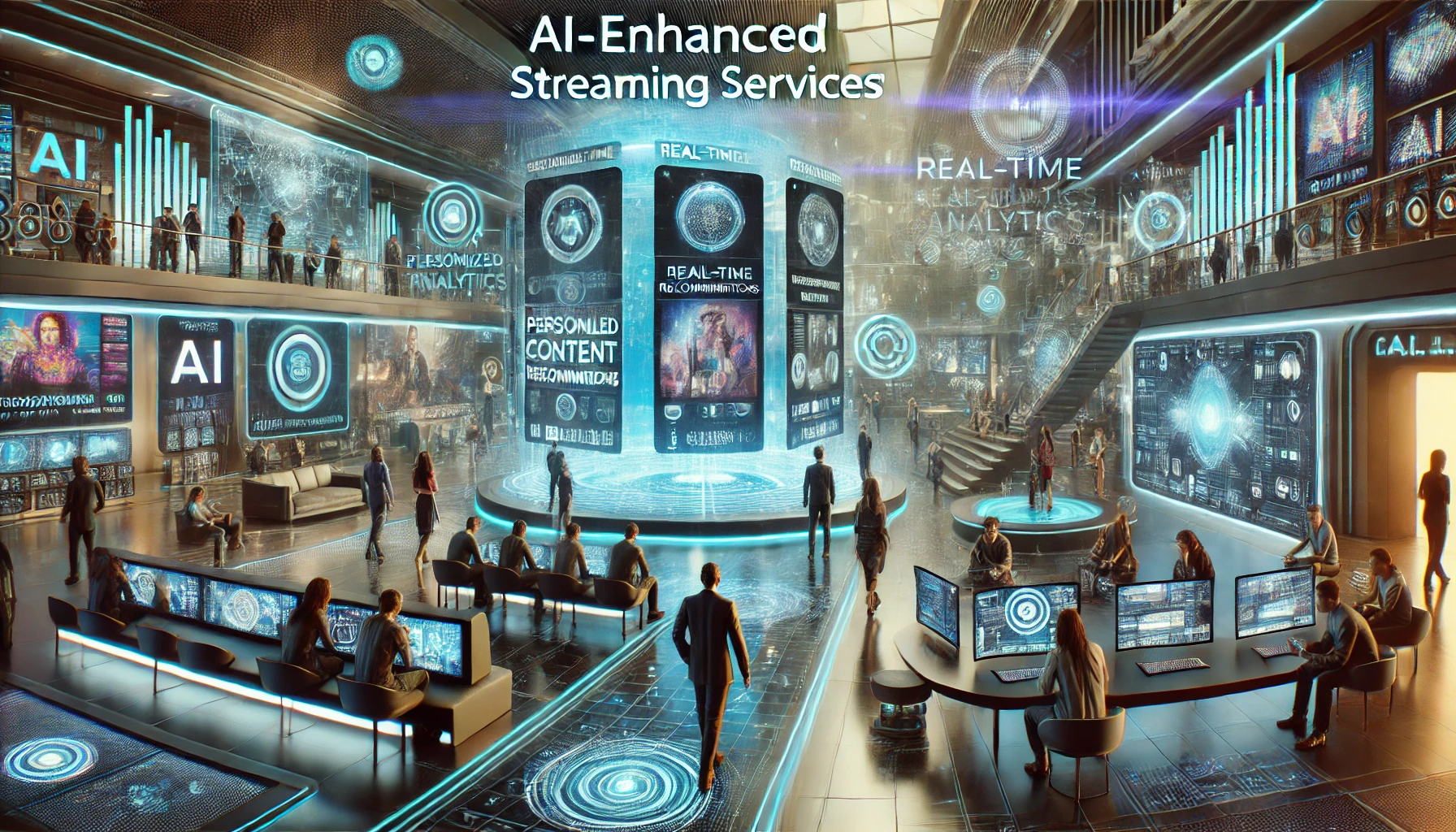
AI plays a crucial role in film distribution and marketing by analyzing audience data to optimize release strategies. Streaming platforms like Netflix and Amazon Prime use AI algorithms to recommend content to users based on their viewing history, increasing engagement and retention. AI-driven predictive analytics can forecast a film’s performance by analyzing social media trends, box office data, and critic reviews.
Personalized trailers are another innovation, where AI generates different versions of a trailer tailored to specific audience segments. For example, a horror film’s trailer might emphasize suspense for one demographic and jump scares for another. AI also assists in dynamic pricing for theater tickets, adjusting prices in real time based on demand and competitor pricing.
#Important Facts
- AI-Generated Films: The first fully AI-written film, Sunspring (2016), was created by an AI named Benjamin, demonstrating the potential (and quirks) of machine-generated storytelling.
- Deepfake Technology: Deepfakes, which use AI to swap faces in videos, have raised ethical concerns but are increasingly used in filmmaking for de-aging actors or resurrecting deceased stars.
- AI in Animation: Studios like Pixar and Disney use AI to automate the animation process, reducing the time and cost of producing high-quality animated films.
- Predictive Analytics: AI models can predict a film’s box office success with up to 80% accuracy by analyzing script elements, cast choices, and market trends.
- Virtual Production: Films like The Mandalorian use AI-powered LED walls to create real-time CGI environments, eliminating the need for green screens and extensive post-production work.
- AI Voice Synthesis: Tools like ElevenLabs can generate synthetic voices that mimic human speech with near-perfect accuracy, enabling multilingual dubbing and voiceovers.
- Copyright Challenges: AI-generated content raises legal questions about ownership, as it is unclear who holds the copyright to a film created entirely by AI.
- Job Displacement Concerns: While AI automates many tasks, it also creates new roles, such as AI trainers, prompt engineers, and ethical oversight specialists in the film industry.
#Timeline
- AI systems capable of creating new content, such as scripts, images, or music, based on training data.
- A technique using AI to create hyper
realistic fake videos by swapping faces or voices.
- A process where AI generates or enhances visual content in real time, used in virtual production.
- The use of AI to forecast outcomes, such as box office performance or audience engagement.
- The use of AI to translate and dub films into different languages with natural
sounding voices.
- A filmmaking technique that combines live
action footage with real-time CGI using AI and LED walls.
- The use of AI to generate, analyze, or optimize scripts for films and TV shows.
- A process where AI tracks and records an actor’s movements to create digital animations.
- An AI technique that applies the visual style of one image to another, used in color grading and VFX.
- The practice of developing AI systems that are transparent, unbiased, and respectful of intellectual property rights.
#Related Terms
#FAQ
What does AI And Film: Creating Movies cover?
Explores how artificial intelligence shapes film and creating movies, covering practical use cases, benefits, limitations, and risks.
Why is AI And Film: Creating Movies important?
It helps readers understand key concepts, compare practical use cases, and evaluate how Creative AI decisions affect outcomes, risks, and implementation choices.
What should readers verify before applying this topic?
Readers should compare the benefits, limitations, data requirements, and related themes such as Film, Creating, Movie before using the ideas in real projects.
#References
- AI And Film: Creating Movies terminology and background research
- AI And Film: Creating Movies use cases, implementation examples, and limitations
- Creative AI best practices, standards, and risk guidance
- Film case studies, benchmarks, and current industry analysis

Comments
No comments yet. Start the discussion with a useful note.