

#Short Answer
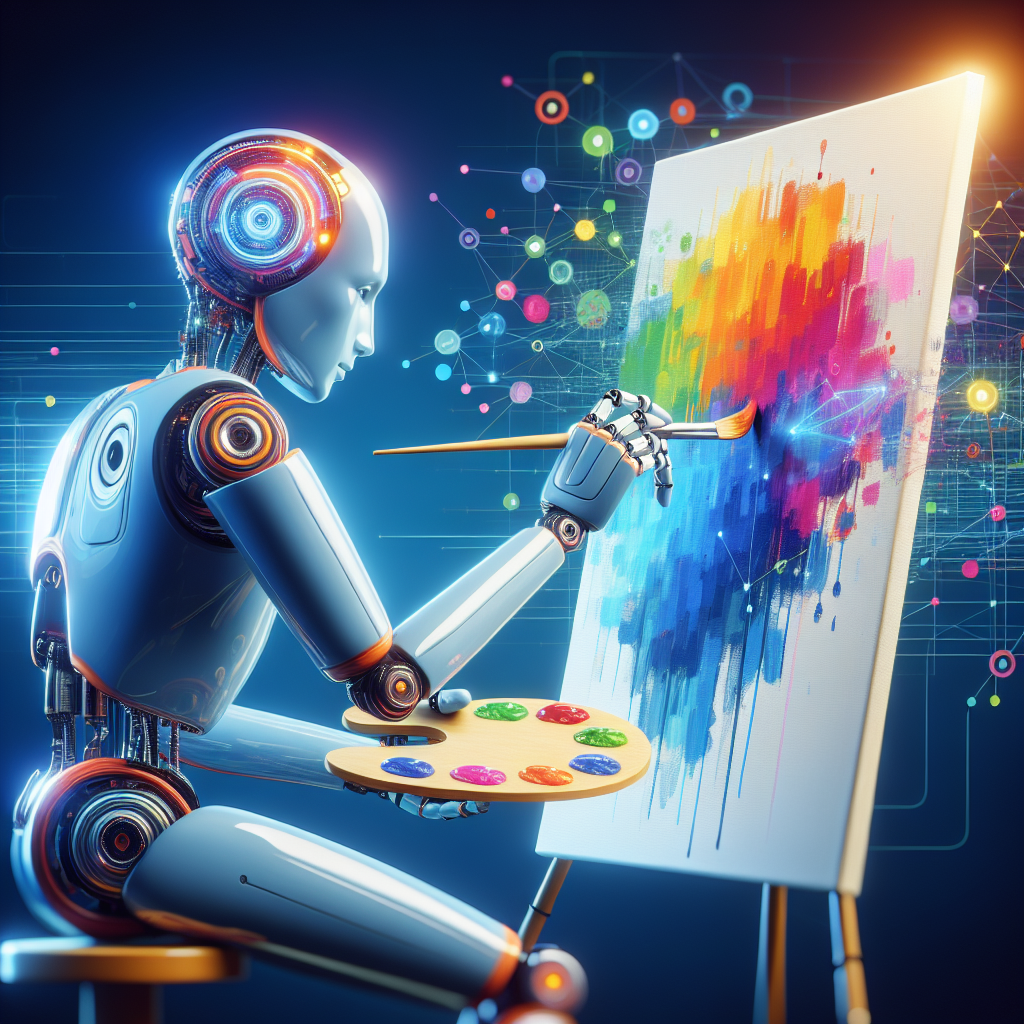
AI and Creativity: New Possibilities explores how artificial intelligence is transforming creative industries by automating, augmenting, and genera...
#Infobox
AI and Creativity: New Possibilities refers to the intersection of artificial intelligence technologies and human creative processes, enabling novel forms of artistic expression, problem-solving, and innovation across industries.
#Overview
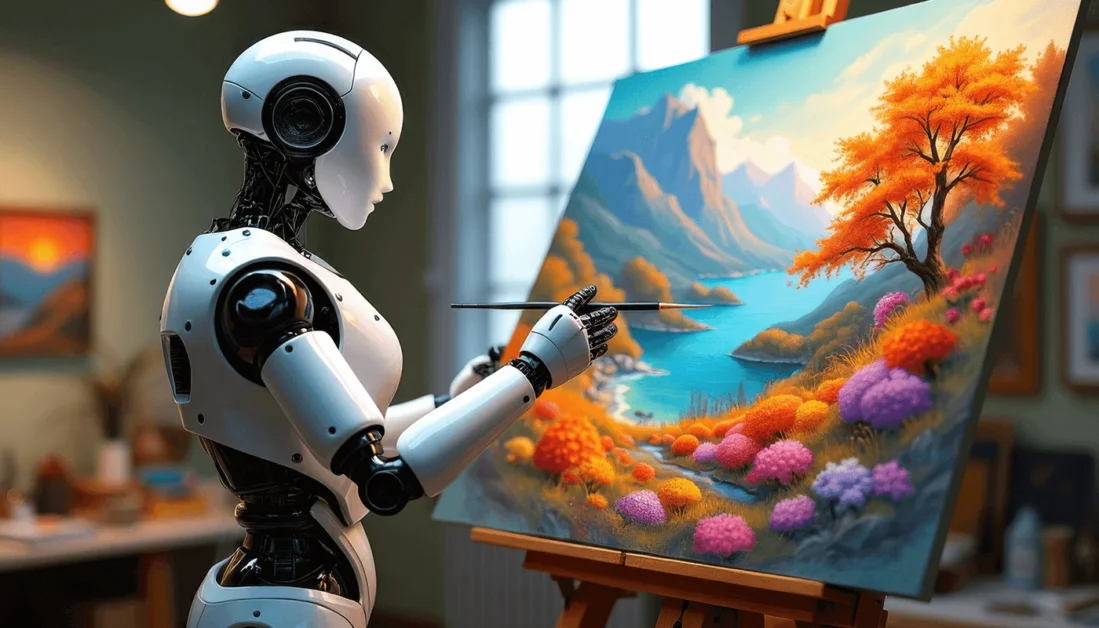
AI and Creativity: New Possibilities explores how artificial intelligence is transforming creative industries by automating, augmenting, and generating content. Unlike traditional tools that assist human creators, modern AI systems can produce original works—such as images, music, and text—based on learned patterns from vast datasets. This shift has sparked both excitement and controversy, as it challenges conventional notions of authorship, ownership, and the role of human intuition in art.
The integration of AI into creative workflows has led to the emergence of new artistic styles, collaborative human-AI partnerships, and even entirely AI-generated artworks. Platforms like DALL·E, Midjourney, and Stable Diffusion have made it possible for non-artists to generate high-quality visuals with simple text prompts, while tools like Suno AI and AIVA compose music autonomously. These advancements are not only reshaping how creativity is practiced but also raising questions about the future of creative professions and the ethical implications of AI-generated content.
#History / Background
#Early Foundations (1950s–2000s)
The concept of AI in creativity dates back to the mid-20th century, with early experiments in algorithmic composition and generative art. In 1957, composer Lejaren Hiller and mathematician Leonard Isaacson created Illiac Suite, the first piece of music composed by a computer. This groundbreaking work demonstrated that machines could follow complex rules to produce aesthetically pleasing results.
During the 1960s and 1970s, artists like Harold Cohen developed AARON, a program capable of creating original drawings and paintings. Cohen’s work highlighted the potential for AI to mimic human artistic processes, though early systems were limited by computational power and algorithmic complexity.
#Rise of Machine Learning (2010s)
The advent of deep learning in the 2010s revolutionized AI’s creative capabilities. Convolutional neural networks (CNNs) and recurrent neural networks (RNNs) enabled systems to analyze and generate complex data, including images and text. In 2014, Google’s DeepDream project showcased how neural networks could produce surreal, dream-like visuals by enhancing patterns in images—a precursor to modern generative AI.
The breakthrough came in 2015 with the introduction of Generative Adversarial Networks (GANs) by Ian Goodfellow. GANs consist of two neural networks—a generator and a discriminator—that compete against each other, with the generator creating new data (e.g., images) and the discriminator evaluating its authenticity. This adversarial training method significantly improved the quality of AI-generated outputs.
#Generative AI Revolution (2020s)
The 2020s marked the mainstream adoption of generative AI tools, democratizing creativity for millions. In 2021, OpenAI released DALL·E, a text-to-image model capable of generating detailed illustrations from textual descriptions. Its successor, DALL·E 2 (2022), and competitors like Midjourney and Stable Diffusion further refined the technology, making it accessible to non-technical users.
Beyond visual art, AI has made strides in music composition (e.g., AIVA, Soundraw), video generation (e.g., Runway ML, Pika Labs), and even storytelling (e.g., Sudowrite, Jasper). The rapid proliferation of these tools has led to a cultural shift, where AI is no longer seen as a mere tool but as a collaborative partner in the creative process.
#How It Works
#Core Technologies
AI-driven creativity relies on several key technologies, each contributing to different aspects of the creative pipeline:
- Generative Adversarial Networks (GANs): Used primarily for image generation, GANs consist of two neural networks—the generator creates images, while the discriminator evaluates their realism. This adversarial process refines the generator’s outputs over time.
- Diffusion Models: A newer approach, diffusion models (e.g., Stable Diffusion, DALL·E 3) work by gradually adding noise to an image and then reversing the process to generate a new one. This method produces higher-quality and more diverse outputs compared to GANs.
- Transformer Models: Originally designed for natural language processing (e.g., BERT, GPT), transformers have been adapted for creative tasks like text generation (e.g., Sudowrite) and music composition (e.g., MusicLM). Their ability to process sequential data makes them ideal for creative applications.
- Reinforcement Learning: Some AI systems use reinforcement learning to optimize creative decisions based on feedback. For example, AI-generated art can be fine-tuned using user ratings to improve its aesthetic appeal.
#Creative Workflow Integration
AI tools integrate into creative workflows in various ways:
- Idea Generation: AI can suggest themes, styles, or concepts based on user inputs or trending data (e.g., AI-powered mood boards).
- Content Creation: Tools like Midjourney or DALL·E generate visuals from text prompts, while platforms like Suno AI compose music based on genre or mood specifications.
- Enhancement and Editing: AI assists in refining existing content—e.g., upscaling images, removing backgrounds, or applying artistic filters (e.g., Adobe Firefly, Topaz Labs).
- Collaboration: Some AI systems act as "co-creators," allowing artists to iterate on ideas in real time (e.g., NVIDIA’s GauGAN for digital painting).
#Important Facts
- Democratization of Creativity: AI tools have lowered the barrier to entry for creative fields, enabling non-artists to produce professional-quality work.
- Copyright Ambiguity: AI-generated content exists in a legal gray area—while some jurisdictions grant copyright to AI outputs, others require human authorship.
- Ethical Concerns: Issues include deepfakes, plagiarism, and the potential devaluation of human artists’ work.
- Energy Consumption: Training large AI models (e.g., Stable Diffusion) requires significant computational resources, raising concerns about environmental impact.
- Bias in Training Data: AI systems can inherit biases from their training datasets, leading to skewed or culturally insensitive outputs.
- Commercial Adoption: Major brands (e.g., Coca-Cola, IKEA) and media outlets (e.g., The New York Times) are using AI-generated content for marketing and storytelling.
#Timeline
- AI systems that create new content (e.g., text, images, music) based on learned patterns.
- A technique that applies the artistic style of one image to another (e.g., turning a photo into a Van Gogh painting).
- Artwork created or significantly assisted by artificial intelligence.
- The practice of crafting input prompts to guide AI systems toward desired outputs.
- AI
generated media (e.g., images, videos) that convincingly mimics real people or events.
- Software that assists human creators in brainstorming, designing, or refining their work.
- The study of moral implications and responsible development of AI systems, particularly in creative fields.
#Related Terms
#FAQ
What does AI And Creativity: New Possibilities cover?
Explores how artificial intelligence shapes creativity and new possibilities, covering practical use cases, benefits, limitations, and risks.
Why is AI And Creativity: New Possibilities important?
It helps readers understand key concepts, compare practical use cases, and evaluate how Creative AI decisions affect outcomes, risks, and implementation choices.
What should readers verify before applying this topic?
Readers should compare the benefits, limitations, data requirements, and related themes such as Creativity, Possibilitie, Generative Media before using the ideas in real projects.
#References
- AI And Creativity: New Possibilities terminology and background research
- AI And Creativity: New Possibilities use cases, implementation examples, and limitations
- Creative AI best practices, standards, and risk guidance
- Creativity case studies, benchmarks, and current industry analysis


Comments
No comments yet. Start the discussion with a useful note.