

#Short Answer
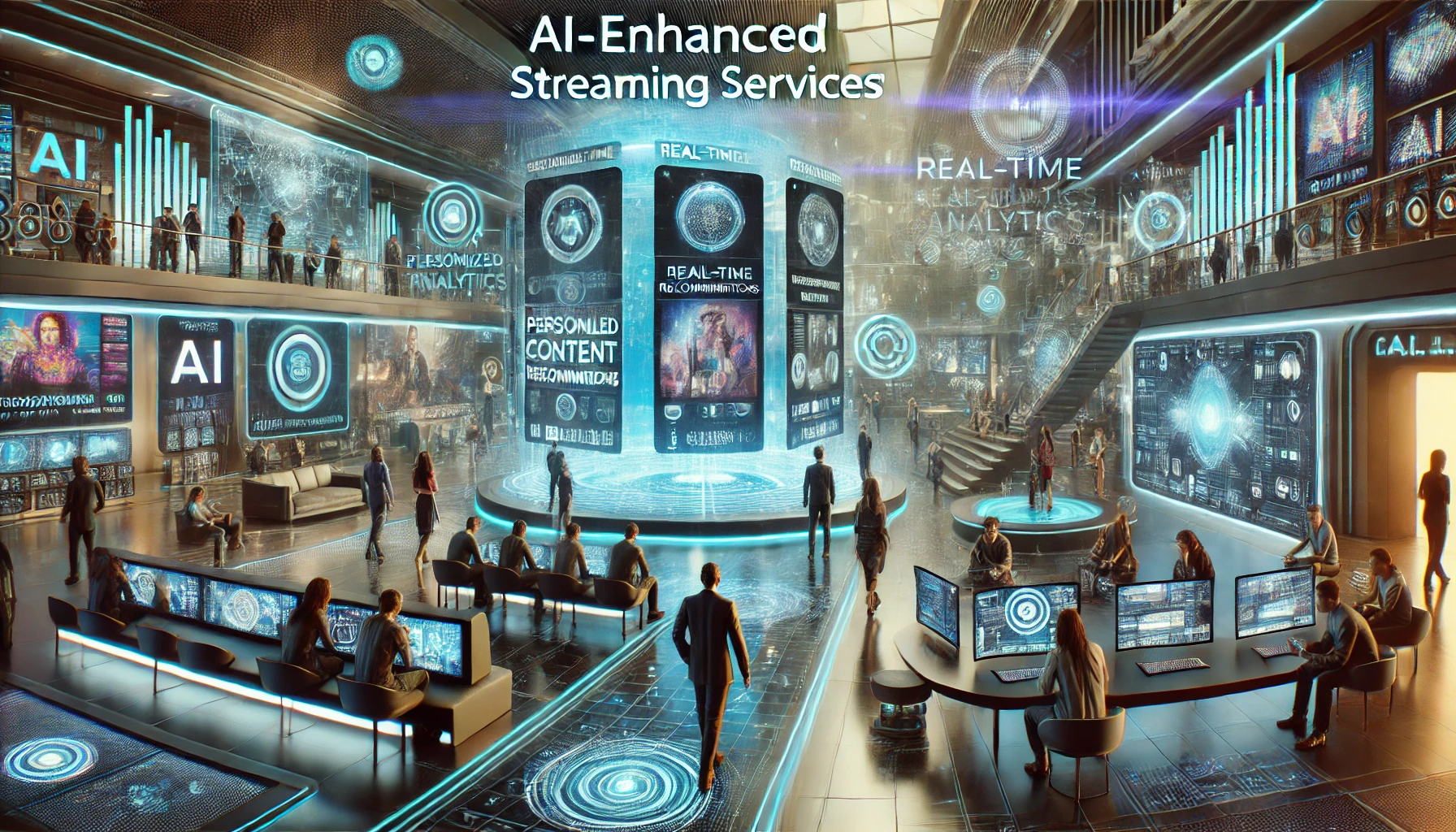
Artificial intelligence (AI) in entertainment refers to the use of AI technologies to enhance content creation, distribution, and consumption. It enables personalized experiences through recommendation algorithms, AI-generated media, and interactive entertainment platforms, transforming how audiences engage with digital content.
#Infobox
#Overview
AI has revolutionized the entertainment industry by introducing personalized experiences, automated content creation, and data-driven decision-making. From streaming platforms to video games, AI enhances user engagement by tailoring recommendations, generating synthetic media, and optimizing production processes. The integration of AI has led to the rise of virtual influencers, AI-driven storytelling, and real-time content adaptation based on user behavior.
In the streaming sector, AI algorithms analyze viewing patterns to suggest content, while in gaming, procedural generation creates unique experiences. AI also plays a role in music composition, scriptwriting, and even deepfake technology for visual effects. As AI continues to evolve, its influence on entertainment is expected to grow, blurring the lines between human creativity and machine intelligence.
#History / Background
The concept of AI in entertainment dates back to early experiments in the 1960s, such as ELIZA, an early natural language processing program that simulated conversation. However, significant advancements occurred in the 2010s with the rise of big data and deep learning.
Netflix pioneered AI-driven recommendations in 2006, using collaborative filtering to suggest shows. By the late 2010s, platforms like Spotify and YouTube adopted similar systems, refining algorithms to predict user preferences with greater accuracy. The introduction of generative AI models, such as DALL·E and Stable Diffusion, enabled AI-generated art and music, further expanding AI's role in entertainment.
In 2020, the COVID-19 pandemic accelerated AI adoption as studios and creators sought remote collaboration tools. Virtual influencers, like Lil Miquela, gained popularity, showcasing AI's ability to create lifelike digital personas. Today, AI is a cornerstone of modern entertainment, driving innovation in content delivery and audience interaction.
#How It Works
#Recommendation Systems
AI-powered recommendation engines analyze user behavior, such as watch history, likes, and search queries, to suggest personalized content. These systems use collaborative filtering and content-based filtering to predict preferences. For example, Netflix's recommendation algorithm accounts for over 80% of user engagement by leveraging deep learning models trained on vast datasets.
#AI-Generated Content
Generative AI models, such as GPT for text and GANs for images, create original media. These models are trained on large datasets to produce realistic outputs, from music compositions to video game levels. Tools like Midjourney and Runway ML allow creators to generate art, scripts, and animations with minimal input.
#Interactive Entertainment
AI enhances interactivity in gaming and virtual reality (VR) through procedural generation, where algorithms create dynamic environments. Games like No Man's Sky use AI to generate entire universes, while AI-driven NPCs (non-player characters) adapt to player actions in real time. In VR, AI enables realistic avatars and responsive storytelling based on user choices.
#Dynamic Pricing and Distribution
AI optimizes pricing and distribution strategies by analyzing market trends, competitor pricing, and consumer demand. Streaming services adjust subscription tiers dynamically, while ticketing platforms use AI to set prices based on real-time data. This approach maximizes revenue while ensuring accessibility for different audience segments.
#Important Facts
- Personalization: AI-driven recommendations account for up to 80% of user engagement on platforms like Netflix and Spotify.
- Generative AI: Tools like DALL·E and Midjourney can produce high-quality images and art from text prompts in seconds.
- Virtual Influencers: Digital personas like Lil Miquela have millions of followers and collaborate with major brands.
- Deepfake Technology: AI-generated deepfakes are used in filmmaking for de-aging actors and creating realistic CGI characters.
- Procedural Generation: Games like Minecraft and No Man's Sky use AI to generate infinite, unique worlds.
- Ethical Concerns: AI in entertainment raises issues like copyright infringement, misinformation, and the displacement of human creators.
#Related Terms
#FAQ
What does AI And Entertainment: Personalized Experiences cover?
Explores how artificial intelligence shapes entertainment and personalized experiences, covering practical use cases, benefits, limitations, and risks.
Why is AI And Entertainment: Personalized Experiences important?
It helps readers understand key concepts, compare practical use cases, and evaluate how Creative AI decisions affect outcomes, risks, and implementation choices.
What should readers verify before applying this topic?
Readers should compare the benefits, limitations, data requirements, and related themes such as Entertainment, Personalized, Experience before using the ideas in real projects.
#References
- AI And Entertainment: Personalized Experiences terminology and background research
- AI And Entertainment: Personalized Experiences use cases, implementation examples, and limitations
- Creative AI best practices, standards, and risk guidance
- Entertainment case studies, benchmarks, and current industry analysis


Comments
No comments yet. Start the discussion with a useful note.