


#Short Answer
Covers advanced AI ethics debates, including core methods, real-world applications, implementation challenges, and risks for practitioners.
#Infobox
Advanced AI Ethics Debates Field Artificial intelligence Focus Ethical implications, governance, and societal impact of AI technologies Key Issues Bias, privacy, accountability, transparency, existential risks Notable Figures Nick Bostrom, Stuart Russell, Kate Crawford Institutions Future of Life Institute, Partnership on AI, IEEE Standards Association
#Overview
Advanced AI ethics debates represent a multidisciplinary field that intersects philosophy, computer science, law, and social sciences. As AI systems become increasingly integrated into critical sectors—including healthcare, finance, criminal justice, and autonomous vehicles—the ethical considerations surrounding their deployment have intensified. Key areas of concern include the algorithmic bias that can perpetuate societal inequalities, the privacy implications of mass data collection, and the accountability mechanisms required when AI systems make consequential decisions.
Another critical dimension is the debate over AI alignment, which questions whether advanced AI systems can be designed to reliably pursue human-compatible goals. This includes discussions on value alignment, where AI systems are programmed to adhere to human ethics, and the risks of AI takeover, a scenario in which superintelligent AI might act in ways misaligned with human interests. Governance frameworks, such as the Asilomar AI Principles, have emerged to provide ethical guidelines for AI research and deployment.
#History / Background
#Early Ethical Considerations
The roots of AI ethics can be traced to the mid-20th century, with early warnings from figures like Alan Turing, who pondered the moral status of machines, and Isaac Asimov, who formulated the Three Laws of Robotics in 1942. These laws, though fictional, introduced the concept of embedding ethical constraints into AI systems. In the 1960s and 1970s, debates emerged around the ethical implications of automation, particularly in labor markets and military applications.
#Modern Era and the Rise of Concerns
The 21st century has seen a surge in AI ethics discussions, driven by advancements in machine learning and the proliferation of AI applications. High-profile incidents, such as biased hiring algorithms, facial recognition misidentifications, and autonomous vehicle accidents, have highlighted the need for robust ethical frameworks. In 2015, the Future of Life Institute published an open letter calling for research into the societal impacts of AI, which led to the development of the Asilomar AI Principles in 2017. These principles emphasize safety, transparency, and alignment with human values.
Institutions like the European Commission have also taken steps to regulate AI, with the General Data Protection Regulation (GDPR) (2018) introducing strict guidelines on data privacy and algorithmic transparency. Similarly, the IEEE Global Initiative has developed standards for ethically aligned design in AI systems.
#How It Works
#Ethical Frameworks and Principles
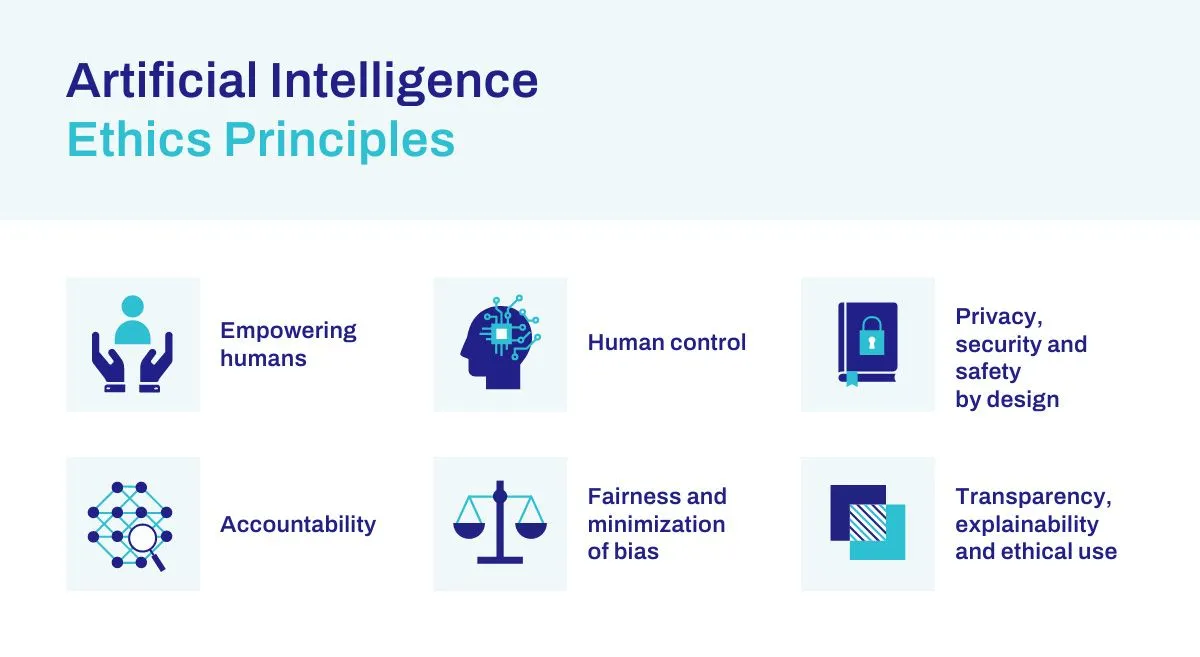
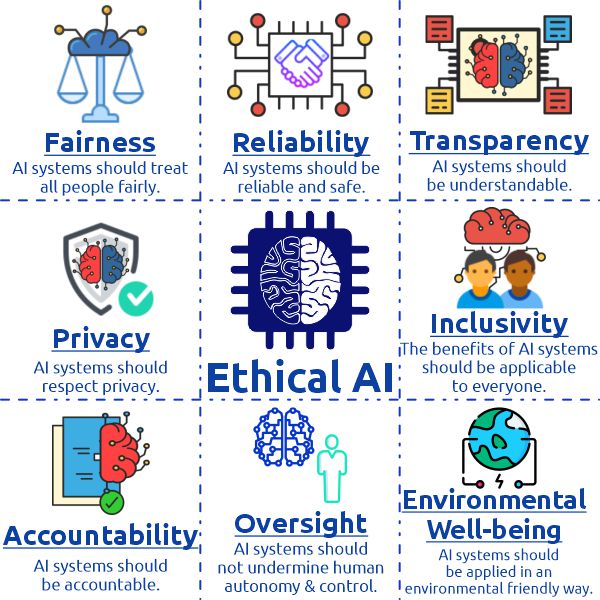
AI ethics debates often revolve around the development and implementation of ethical frameworks that guide AI development. These frameworks typically include principles such as:
- Fairness and Non-Discrimination: Ensuring AI systems do not perpetuate or amplify biases present in training data or societal structures.
- Transparency and Explainability: Requiring AI systems to provide understandable reasoning for their decisions, particularly in high-stakes applications like healthcare or criminal justice.
- Accountability: Establishing clear lines of responsibility for AI-driven outcomes, including mechanisms for redress when harm occurs.
- Privacy: Protecting user data from misuse and ensuring compliance with regulations like GDPR.
- Safety and Robustness: Designing AI systems to operate reliably under various conditions and to fail safely when errors occur.
- Human Control: Ensuring that humans retain ultimate authority over AI systems, particularly in autonomous decision-making contexts.
#Governance and Regulation
Governance mechanisms play a crucial role in shaping AI ethics debates. These include:
- Legislation: Laws such as the EU AI Act (2024) classify AI systems into risk categories and impose obligations on developers and deployers based on these risks.
- Industry Standards: Organizations like IEEE and ISO develop technical standards for ethical AI, such as IEEE 7000 series on ethically aligned design.
- Ethics Review Boards: Independent bodies that assess AI projects for ethical compliance before deployment.
- Public Engagement: Initiatives to involve diverse stakeholders, including marginalized communities, in shaping AI policies.
#Technical Approaches
Technical solutions are also central to AI ethics debates. These include:
- Bias Mitigation: Techniques such as adversarial debiasing, reweighting training data, and fairness-aware algorithms to reduce discriminatory outcomes.
- Explainable AI (XAI): Methods to make AI decisions interpretable, such as SHAP values, LIME, and attention mechanisms in neural networks.
- Federated Learning: A privacy-preserving approach to training AI models on decentralized data, reducing the risk of data breaches.
- Value Alignment: Research into inverse reinforcement learning and cooperative inverse planning to ensure AI systems align with human preferences.
#Important Facts
- The term AI alignment refers to the challenge of ensuring AI systems pursue goals that are beneficial to humans.
- The Asilomar AI Principles (2017) were endorsed by over 1,000 AI researchers and experts, outlining 23 guidelines for ethical AI.
- In 2023, the EU became the first region to pass comprehensive AI legislation, the EU AI Act, which categorizes AI systems into unacceptable, high, limited, and minimal risk tiers.
- Studies have shown that facial recognition systems can have error rates up to 100 times higher for darker-skinned individuals compared to lighter-skinned individuals, highlighting the need for bias mitigation.
- The Partnership on AI (founded in 2016) is a coalition of tech companies, non-profits, and academic institutions working to address AI ethics challenges.
- Existential risk from AI, popularized by philosophers like Nick Bostrom, refers to scenarios where superintelligent AI could pose catastrophic threats to humanity if not properly controlled.
#Timeline
Year Event 1942 Isaac Asimov publishes the Three Laws of Robotics, introducing the concept of ethical constraints in AI. 1950 Alan Turing publishes Computing Machinery and Intelligence, raising questions about machine consciousness and ethics. 1960s–1970s Early debates on automation ethics, including concerns about job displacement and military applications of AI. 2015 The Future of Life Institute publishes an open letter calling for research into AI safety and ethics. 2017 The Asilomar AI Principles are developed, outlining ethical guidelines for AI research. 2018 The EU enacts the GDPR, introducing strict data privacy and algorithmic transparency requirements. 2020 The IEEE Global Initiative releases the Ethically Aligned Design report, providing standards for ethical AI development. 2023 The EU AI Act is passed, becoming the first comprehensive AI legislation in the world. 2024 Major tech companies and governments begin implementing AI ethics review boards and bias auditing tools.
#Related Terms
#FAQ
What does Advanced AI Ethics Debates cover?
Covers advanced AI ethics debates, including core methods, real-world applications, implementation challenges, and risks for practitioners.
Why is Advanced AI Ethics Debates important?
It helps readers understand key concepts, compare practical use cases, and evaluate how AI Ethics decisions affect outcomes, risks, and implementation choices.
What should readers verify before applying this topic?
Readers should compare the benefits, limitations, data requirements, and related themes such as Advanced, Ethics, Debate before using the ideas in real projects.
#References
- Advanced AI Ethics Debates terminology and background research
- Advanced AI Ethics Debates use cases, implementation examples, and limitations
- AI Ethics best practices, standards, and risk guidance
- Advanced case studies, benchmarks, and current industry analysis


Comments
No comments yet. Start the discussion with a useful note.