

#Short Answer
Explains What Is Narrow AI, including the core definition, how it works, practical examples, and limitations.
#Infobox
#Overview
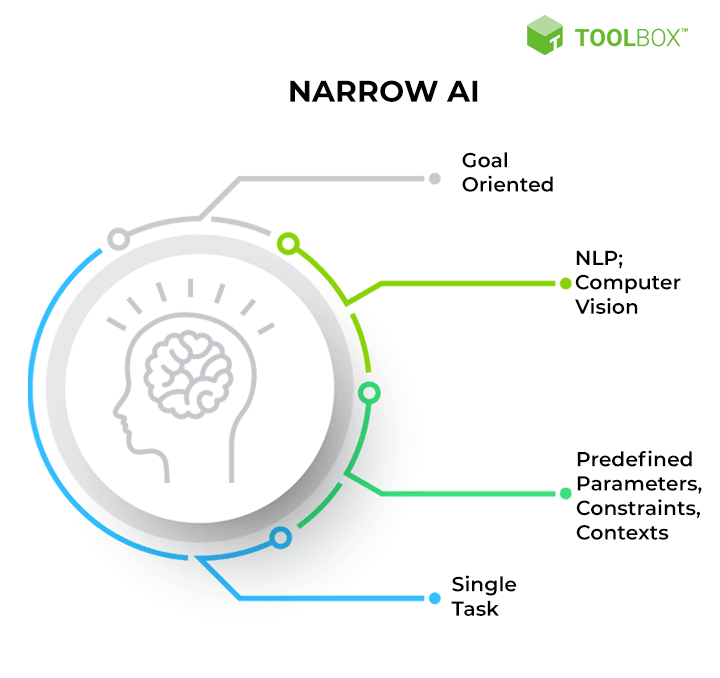
Narrow AI represents the most prevalent form of artificial intelligence in use today. Unlike the hypothetical General AI, which would possess human-like reasoning and adaptability, Narrow AI is engineered to perform a single function or a narrow set of functions with high proficiency. These systems are trained on vast datasets to recognize patterns, make predictions, or automate decision-making processes within their designated domain. The distinction between Narrow AI and other forms of AI lies in its specialization. For instance, a Narrow AI system designed for medical imaging analysis excels at identifying tumors in X-rays but cannot engage in conversation or play chess. Similarly, a chatbot trained for customer service can understand and respond to queries but lacks the ability to perform tasks outside its programming. Narrow AI has become a cornerstone of modern technology, enabling breakthroughs in industries such as healthcare, finance, transportation, and entertainment. Its applications range from predictive analytics in business to real-time language translation in communication tools. Despite its limitations, Narrow AI has demonstrated remarkable capabilities, often surpassing human performance in specific tasks, such as playing complex strategy games like Go or Chess.
#History / Background
The concept of Narrow AI predates the term itself, with roots tracing back to the mid-20th century. The foundational ideas were laid by early computer scientists and mathematicians who explored the possibility of machines performing tasks that typically require human intelligence.
#Early Developments
(1950s–1980s)
- 1950: Alan Turing proposed the Turing Test, a criterion for determining a machine's ability to exhibit intelligent behavior equivalent to, or indistinguishable from, that of a human.
- 1956: The term "Artificial Intelligence" was coined at the Dartmouth Conference, marking the birth of AI as a formal field of study. Early AI systems, such as Logic Theorist and General Problem Solver, were rule-based and lacked the adaptability of modern Narrow AI.
- 1966: ELIZA, an early natural language processing program, simulated conversation by using pattern matching and substitution methodology, laying the groundwork for chatbots.
- 1980s: The rise of expert systems, such as MYCIN for medical diagnosis, demonstrated the potential of AI in specialized domains. These systems relied on predefined rules and knowledge bases but were limited by their inability to learn from new data.
#The Machine Learning Revolution (1990s–2010s)
- 1997: IBM's Deep Blue defeated world chess champion Garry Kasparov, showcasing the power of AI in strategic decision-making.
- 2011: IBM Watson won Jeopardy!, demonstrating advanced natural language processing and question-answering capabilities.
- 2012: The ImageNet competition highlighted the breakthroughs in deep learning, where convolutional neural networks (CNNs) achieved unprecedented accuracy in image classification tasks.
- 2016: Google's AlphaGo defeated Lee Sedol, a top Go player, using deep reinforcement learning, a milestone in AI's ability to master complex games.
#The Narrow AI Era (2010s–Present)
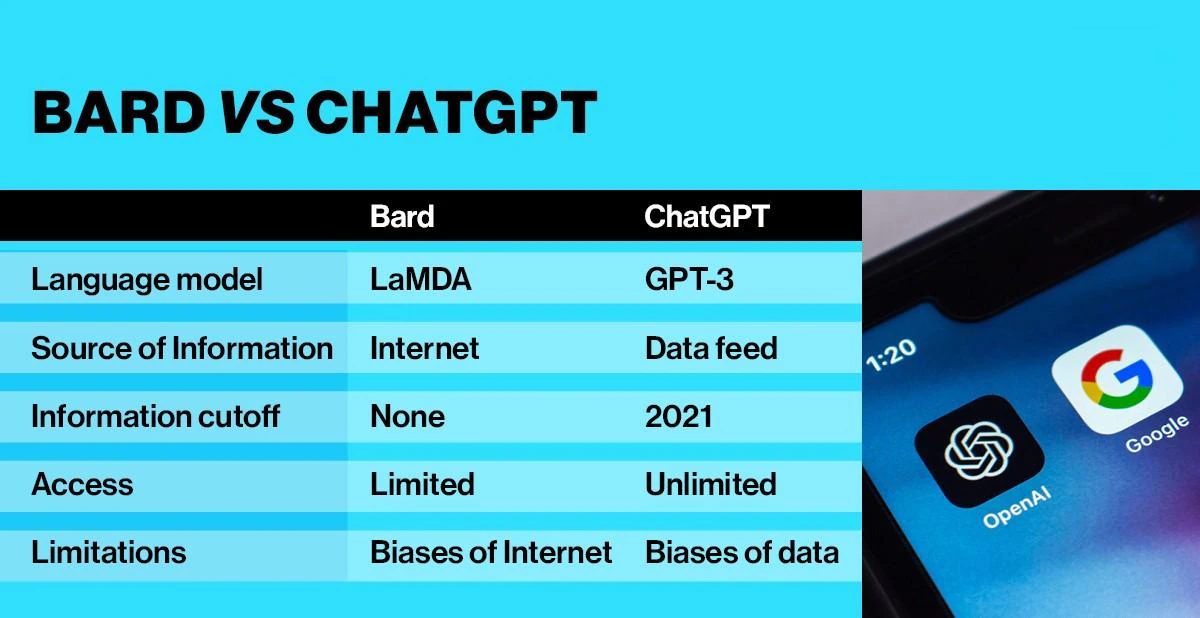
The proliferation of big data, cloud computing, and advanced algorithms has accelerated the development of Narrow AI. Companies like Google, Amazon, and Tesla have integrated Narrow AI into consumer products, such as voice assistants (Google Assistant, Siri, Alexa), recommendation systems (Netflix, Spotify), and autonomous vehicles (Tesla Autopilot). The rise of transformer models (e.g., BERT, GPT) has further expanded the capabilities of Narrow AI in natural language understanding and generation.
#How It Works
Narrow AI systems operate through a combination of data, algorithms, and computational power. The process typically involves the following stages:
#
- Data Collection and Preprocessing Narrow AI relies on high-quality, labeled datasets for training. Data is collected from various sources, such as sensors, databases, or user interactions, and preprocessed to remove noise, normalize formats, and enhance relevance. For example, an AI system designed for facial recognition would require a dataset of labeled images of faces.
#
- Model Selection and Training The choice of algorithm depends on the task:
- Supervised Learning: Used for classification and regression tasks (e.g., spam detection, sales forecasting). The model is trained on labeled data, where input-output pairs are provided.
- Unsupervised Learning: Identifies patterns in unlabeled data (e.g., customer segmentation, anomaly detection). Techniques like clustering and dimensionality reduction are employed.
- Reinforcement Learning: The model learns by interacting with an environment and receiving rewards or penalties (e.g., game-playing AI, robotics).
- Deep Learning: A subset of machine learning that uses neural networks with multiple layers (e.g., CNNs for image recognition, RNNs for sequence prediction).
#
- Feature Extraction and Representation For tasks like image or speech recognition, raw data (e.g., pixels, audio waves) is transformed into features that the model can process. Deep learning models, particularly convolutional neural networks (CNNs), automatically extract hierarchical features, such as edges, textures, and shapes in images.
#
- Model Training and Optimization The model is trained using optimization techniques like gradient descent to minimize errors. Hyperparameters (e.g., learning rate, batch size) are fine-tuned to improve performance. Techniques like transfer learning allow models to leverage pre-trained networks, reducing the need for large datasets.
#
- Evaluation and Deployment The trained model is evaluated using metrics such as accuracy, precision, recall, and F1-score. Once validated, it is deployed in real-world applications, where it processes new data and makes predictions or decisions. Continuous monitoring ensures performance remains optimal, and models may be retrained periodically to adapt to changing data distributions.
#
- Feedback Loop and Iteration Many Narrow AI systems incorporate a feedback loop, where user interactions or outcomes are used to refine the model. For example, a recommendation engine on an e-commerce platform may adjust its suggestions based on click-through rates or purchases.
#Important Facts
- Specialization Over Generalization: Narrow AI is designed for specific tasks and lacks the ability to generalize across unrelated domains. For instance, an AI trained to play poker cannot diagnose diseases.
- Dependence on Data: The performance of Narrow AI is heavily reliant on the quality and quantity of training data. Biased or incomplete datasets can lead to inaccurate or unfair outcomes.
- Black Box Nature: Many Narrow AI models, particularly deep learning systems, operate as "black boxes," making it difficult to interpret how decisions are made. This poses challenges in fields like healthcare, where explainability is critical.
- Scalability: Narrow AI systems can be scaled efficiently to handle large volumes of data or users. Cloud computing platforms (e.g., AWS, Google Cloud) enable the deployment of AI models at scale.
- Ethical and Societal Implications: The widespread adoption of Narrow AI raises concerns about privacy, job displacement, algorithmic bias, and accountability. Regulations like the EU AI Act aim to address these issues.
- Energy Consumption: Training large AI models requires significant computational resources, leading to high energy consumption and carbon footprints. Efforts are underway to develop more energy-efficient algorithms.
- Interdisciplinary Collaboration: Narrow AI integrates knowledge from fields such as computer science, mathematics, neuroscience, and cognitive psychology to mimic aspects of human intelligence.
#Timeline
- Foundational ideas
Core concepts and early methods shape What Is Narrow AI?.
- Practical use
Tools, examples, and real-world deployments make the topic easier to evaluate.
- Responsible implementation
Current work focuses on reliability, governance, performance, and measurable impact.
#Related Terms
#FAQ
What does What Is Narrow AI? cover?
Explains What Is Narrow AI, including the core definition, how it works, practical examples, and limitations.
Why is What Is Narrow AI? important?
It helps readers understand key concepts, compare practical use cases, and evaluate how Artificial Intelligence decisions affect outcomes, risks, and implementation choices.
What should readers verify before applying this topic?
Readers should compare benefits, limitations, data requirements, and related themes such as Narrow, AI, Machine Learning before using the ideas in real projects.
#References
- What Is Narrow AI? terminology and background research
- What Is Narrow AI? use cases, implementation examples, and limitations
- Artificial Intelligence best practices, standards, and risk guidance
- Narrow case studies, benchmarks, and current industry analysis


Comments
No comments yet. Start the discussion with a useful note.