

#Short Answer
Covers understanding ai: a comprehensive guide, including core concepts, practical examples, benefits, limitations, and risks in Artificial Intelligence.
#Infobox
#Overview
Understanding AI: A Comprehensive Guide serves as an introductory yet thorough exploration of artificial intelligence, catering to readers ranging from beginners to intermediate learners. The guide systematically breaks down complex AI concepts into digestible sections, including machine learning, neural networks, natural language processing (NLP), and computer vision. It emphasizes real-world applications such as healthcare diagnostics, autonomous vehicles, and financial forecasting, while also addressing common misconceptions about AI’s capabilities and limitations. The resource is structured to demystify AI by providing clear definitions, historical context, and practical examples. It bridges the gap between technical jargon and layman’s terms, making it accessible to non-experts. Additionally, the guide highlights the ethical dilemmas posed by AI, such as bias in algorithms, job displacement, and privacy concerns, encouraging readers to critically evaluate the technology’s role in society.
#History / Background
#Early Foundations (1950s–1980s)
The origins of AI trace back to the mid-20th century, with seminal works by pioneers like Alan Turing, who proposed the Turing Test in 1950 as a measure of machine intelligence. The term "artificial intelligence" was coined in 1956 at the Dartmouth Conference, where researchers such as John McCarthy and Marvin Minsky laid the groundwork for the field. Early AI systems, like the Logic Theorist (1956) and ELIZA (1966), demonstrated basic problem-solving and conversational abilities, though they were limited by computational constraints.
#The AI Winter and Revival (1980s–2000s)
The 1980s saw a decline in AI research funding, dubbed the "AI Winter," due to unmet expectations and technical limitations. However, advancements in machine learning, particularly the development of backpropagation algorithms and expert systems, reignited interest. The 1997 victory of IBM’s Deep Blue over chess champion Garry Kasparov marked a turning point, showcasing AI’s potential in complex decision-making.
#The Modern Era (2010s–Present)
The 21st century has witnessed an explosion in AI capabilities, driven by:
- Big Data: The availability of vast datasets enabled training of more sophisticated models.
- Computational Power: Graphics Processing Units (GPUs) and cloud computing accelerated AI training.
- Deep Learning: Convolutional Neural Networks (CNNs) and Recurrent Neural Networks (RNNs) revolutionized image and speech recognition.
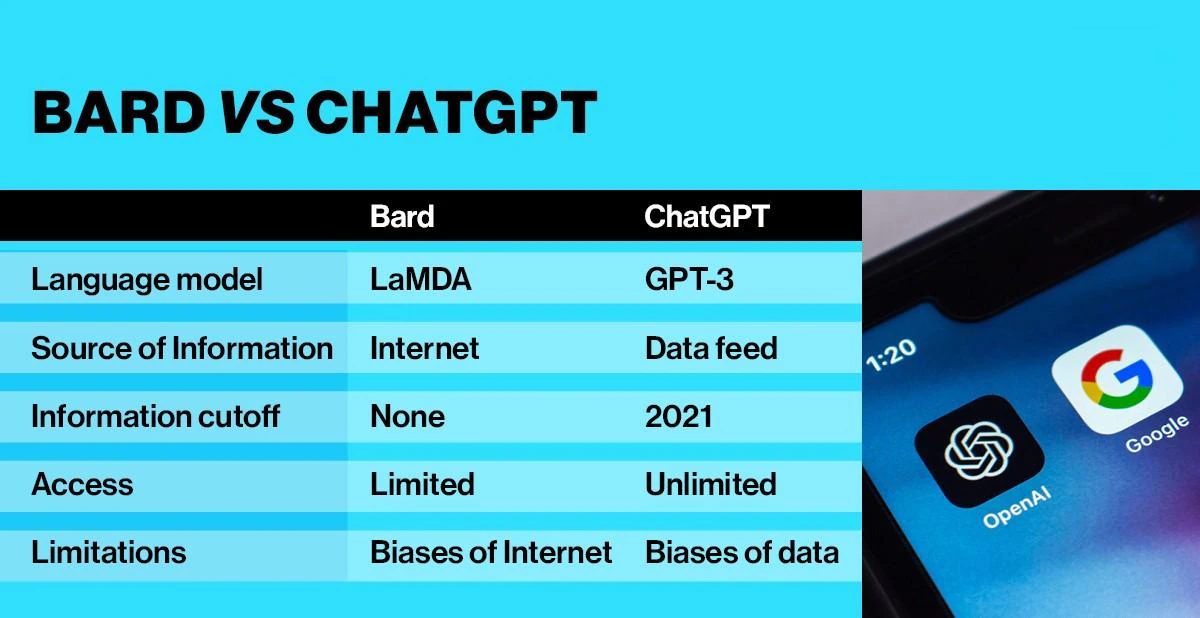
- Breakthroughs: AlphaGo’s 2016 defeat of Lee Sedol in the board game Go demonstrated AI’s strategic prowess, while large language models like GPT-3 (2020) showcased its linguistic capabilities. Today, AI is integrated into everyday technologies, from virtual assistants (e.g., Siri, Alexa) to recommendation algorithms (e.g., Netflix, Amazon).
#How It Works
#Core Principles of AI AI systems operate by processing data to identify patterns, make predictions, or perform tasks autonomously. The two primary approaches are:
- Rule-Based Systems: Early AI relied on predefined rules (e.g., expert systems in medical diagnosis).
- Machine Learning (ML): Modern AI uses algorithms to learn from data without explicit programming. Subfields include:
- Supervised Learning: Models are trained on labeled data (e.g., spam detection).
- Unsupervised Learning: Models identify patterns in unlabeled data (e.g., customer segmentation).
- Reinforcement Learning: Agents learn by interacting with environments (e.g., robotics, game-playing AI).
#Key Technologies
- Neural Networks: Inspired by the human brain, these consist of interconnected layers of nodes (neurons) that process input data. Deep learning employs multi-layered networks (deep neural networks) for tasks like image classification.
- Natural Language Processing (NLP): Enables machines to understand and generate human language (e.g., chatbots, translation tools).
- Computer Vision: Uses CNNs to analyze visual data, powering applications like facial recognition and autonomous driving.
- Generative AI: Models like GANs (Generative Adversarial Networks) create new content (e.g., deepfake videos, synthetic art).
#AI Workflow
- Data Collection: Gathering relevant datasets (e.g., text, images, sensor data).
- Preprocessing: Cleaning and normalizing data to remove noise.
- Model Training: Feeding data into algorithms to optimize performance.
- Evaluation: Testing the model’s accuracy using metrics like precision, recall, or F1-score.
- Deployment: Integrating the model into real-world applications (e.g., chatbots, predictive analytics).
#Important Facts
#AI’s Impact on Industries
- Healthcare: AI assists in drug discovery (e.g., AlphaFold for protein folding), radiology (e.g., detecting tumors in X-rays), and personalized medicine.
- Finance: Algorithms power fraud detection, algorithmic trading, and credit scoring.
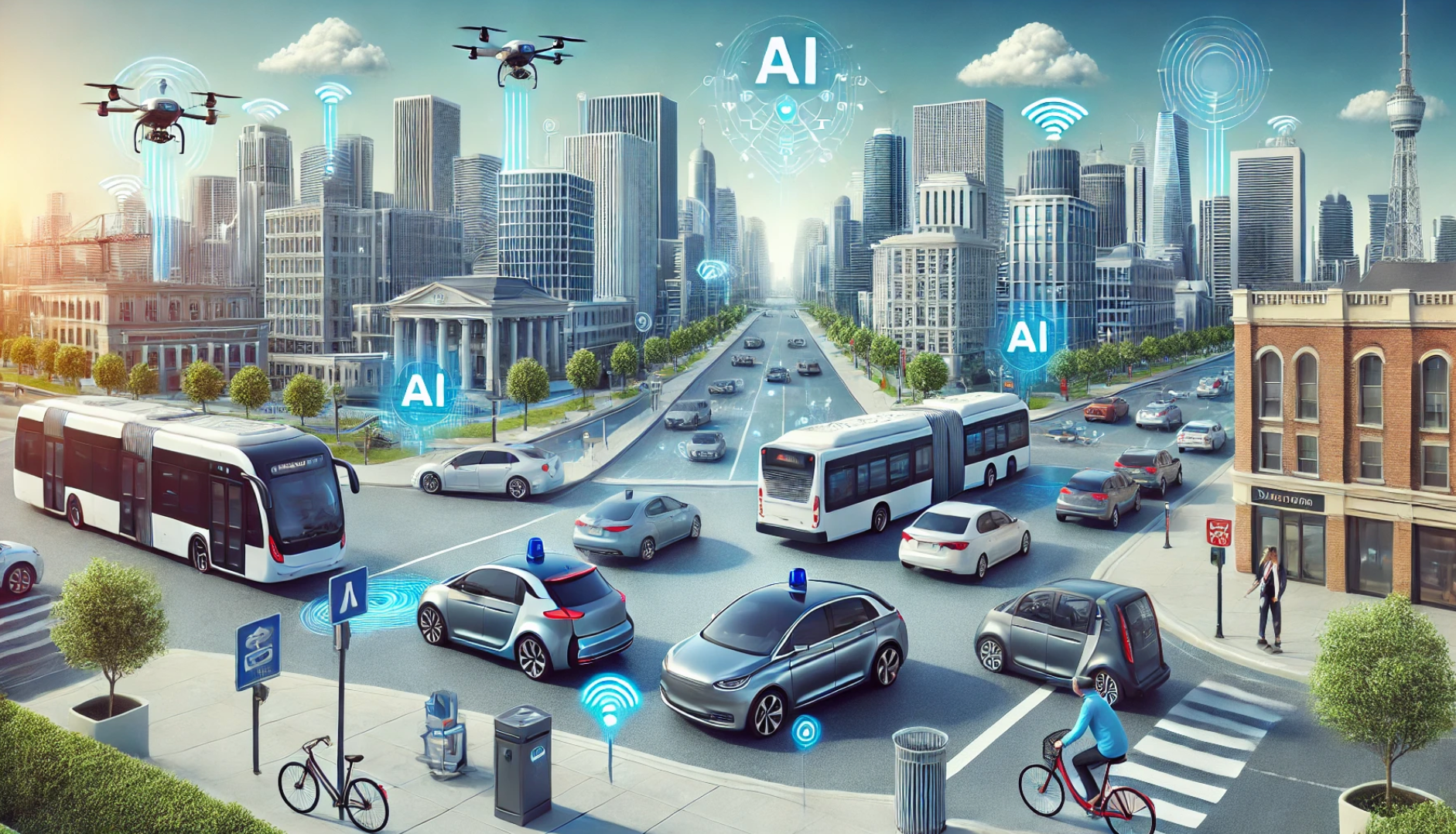
- Transportation: Autonomous vehicles (e.g., Tesla, Waymo) rely on AI for navigation and decision-making.
- Retail: Recommendation systems (e.g., Amazon, Spotify) use AI to personalize user experiences.
- Manufacturing: Predictive maintenance and robotic automation enhance efficiency.
#Limitations and Challenges
- Bias and Fairness: AI models can perpetuate biases present in training data (e.g., racial bias in facial recognition).
- Explainability: "Black box" models (e.g., deep neural networks) lack transparency, making it hard to interpret decisions.
- Data Privacy: AI systems often require vast amounts of personal data, raising ethical concerns.
- Job Displacement: Automation may render certain jobs obsolete, necessitating reskilling initiatives.
- Energy Consumption: Training large AI models (e.g., LLMs) consumes significant computational resources, contributing to carbon footprints.
#Ethical Considerations
- Accountability: Who is responsible for AI-driven decisions (e.g., self-driving car accidents)?
- Autonomy: Should AI systems have decision-making authority in critical areas (e.g., healthcare, law)?
- Regulation: Governments are grappling with frameworks to govern AI (e.g., EU’s AI Act, US Executive Order on AI).
#Timeline
- Foundational ideas
Core concepts and early methods shape Understanding AI: a Comprehensive Guide.
- Practical use
Tools, examples, and real-world deployments make the topic easier to evaluate.
- Responsible implementation
Current work focuses on reliability, governance, performance, and measurable impact.
#Related Terms
#FAQ
What does Understanding AI: a Comprehensive Guide cover?
Covers understanding ai: a comprehensive guide, including core concepts, practical examples, benefits, limitations, and risks in Artificial Intelligence.
Why is Understanding AI: a Comprehensive Guide important?
It helps readers understand key concepts, compare practical use cases, and evaluate how Artificial Intelligence decisions affect outcomes, risks, and implementation choices.
What should readers verify before applying this topic?
Readers should compare benefits, limitations, data requirements, and related themes such as Understanding, AI, Machine Learning before using the ideas in real projects.
#References
- Understanding AI: a Comprehensive Guide terminology and background research
- Understanding AI: a Comprehensive Guide use cases, implementation examples, and limitations
- Artificial Intelligence best practices, standards, and risk guidance
- Understanding case studies, benchmarks, and current industry analysis

Comments
No comments yet. Start the discussion with a useful note.