

#Short Answer
Reviews top 10 machine learning tools in 2026, covering notable options, strengths, limitations, and practical selection factors.
#Infobox
#Overview
Machine learning (ML) platforms and tools in 2026 have evolved to address the growing demands of scalability, automation, and accessibility. The landscape is dominated by frameworks that simplify model development, deployment, and maintenance while integrating seamlessly with cloud infrastructure. The top 10 tools reflect a blend of open-source innovation and enterprise-grade solutions, catering to researchers, data scientists, and business users alike. Key trends shaping the 2026 ML ecosystem include:
- Automated Machine Learning (AutoML): Tools like DataRobot and H2O.ai have matured to offer end-to-end automation, reducing the need for manual hyperparameter tuning.
- Cloud-Native Platforms: Amazon SageMaker, Google Vertex AI, and Microsoft Azure ML dominate the cloud segment, providing managed services for training, deployment, and monitoring.
- Deep Learning Dominance: TensorFlow and PyTorch remain the leading frameworks for neural network development, with PyTorch gaining traction in research and TensorFlow excelling in production.
- Explainability and Ethics: Tools now incorporate features for model interpretability, bias detection, and compliance with regulations like GDPR and AI Act.
#History / Background
#Early Foundations (Pre-2010)
The origins of modern ML platforms trace back to libraries like scikit-learn (2007), which democratized machine learning for Python users. Concurrently, TensorFlow (2015) and PyTorch (2016) emerged as successors to Theano and Torch, respectively, introducing dynamic computation graphs and GPU acceleration.
#Rise of AutoML (2015–2020)
The mid-2010s saw the advent of AutoML tools like H2O.ai (2012) and DataRobot (2012), which automated feature engineering, model selection, and hyperparameter optimization. Cloud platforms such as Amazon SageMaker (2017) and Google Vertex AI (2021) further lowered barriers to entry by offering managed ML services.
#Maturity and Integration (2020–2026)
By 2026, ML platforms have integrated with MLOps pipelines, enabling continuous deployment and monitoring. Tools like IBM Watson Studio and Microsoft Azure ML have expanded their offerings to include low-code/no-code interfaces, making ML accessible to non-experts. The shift toward edge computing and federated learning has also influenced tool development, with frameworks like TensorFlow Lite gaining prominence.
#How It Works
#Framework-Based Tools (TensorFlow, PyTorch)
- Model Definition: Users define neural networks using high-level APIs (e.g., Keras for TensorFlow) or imperative code (PyTorch).
- Training: Models are trained on labeled datasets using optimization algorithms like Adam or SGD, with hardware acceleration via GPUs/TPUs.
- Deployment: Trained models are exported as SavedModels (TensorFlow) or TorchScript (PyTorch) and deployed via APIs or embedded systems.
- Monitoring: Post-deployment, tools track performance metrics (e.g., accuracy, latency) and retrain models as needed.
#AutoML Tools (DataRobot, H2O.ai)
- Data Ingestion: Users upload datasets, which are automatically preprocessed (e.g., handling missing values, encoding categorical variables).
- Model Training: The platform explores multiple algorithms (e.g., XGBoost, Random Forest) and selects the best-performing model.
- Hyperparameter Tuning: Bayesian optimization or grid search is used to refine model parameters.
- Deployment: The best model is deployed as an API or integrated into business applications.
#Cloud Platforms (Amazon SageMaker, Google Vertex AI)
- Notebook Environments: Users write code in Jupyter notebooks or Google Colab, leveraging pre-configured environments.
- Managed Training: Cloud providers handle infrastructure scaling, allowing users to train models without managing servers.
- Endpoint Deployment: Models are deployed as REST APIs with built-in load balancing and auto-scaling.
- MLOps Integration: Tools like SageMaker Pipelines enable CI/CD for ML models, including versioning and A/B testing.
#Important Facts
#TensorFlow
- Developed by: Google Brain Team
- Key Features: Supports distributed training, TensorFlow Extended (TFX) for MLOps, and TensorFlow Lite for mobile/edge devices.
- Adoption: Used by 50% of ML developers globally (2026 survey).
- Notable Use Cases: Google Photos, DeepMind’s AlphaFold.
#PyTorch
- Developed by: Meta (formerly Facebook)
- Key Features: Dynamic computation graph, TorchScript for deployment, and strong community support.
- Adoption: Preferred by 60% of AI researchers (2026 data).
- Notable Use Cases: Tesla Autopilot, Facebook’s recommendation systems.
#scikit-learn
- Developed by: David Cournapeau and others
- Key Features: Simple API, extensive documentation, and compatibility with NumPy and Pandas.
- Adoption: The go-to library for traditional ML (e.g., classification, regression).
- Notable Use Cases: Healthcare diagnostics, financial modeling.
#AutoML Tools (DataRobot, H2O.ai)
- DataRobot: Used by 40% of Fortune 500 companies for automated model deployment.
- H2O.ai: Open-source H2O platform powers over 20,000 enterprise deployments.
#Cloud Platforms
- Amazon SageMaker: Processes over 100 billion predictions daily (2026).
- Google Vertex AI: Integrates with BigQuery for large-scale data analysis.
- Microsoft Azure ML: Offers built-in compliance tools for regulated industries (e.g., healthcare, finance).
#Timeline
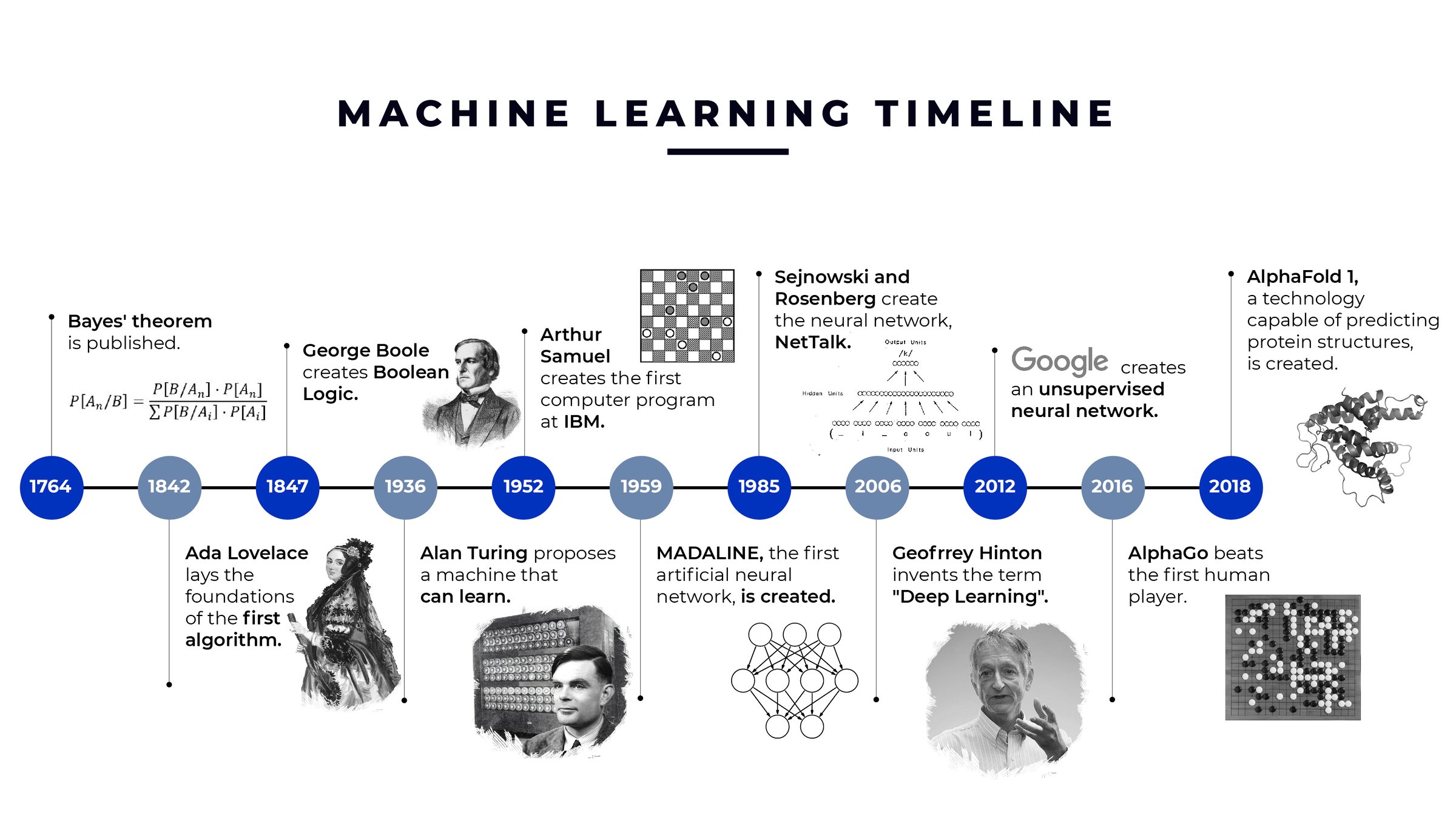
- Foundational ideas
Core concepts and early methods shape Top 10 Machine Learning Tools in 2026.
- Practical use
Tools, examples, and real-world deployments make the topic easier to evaluate.
- Responsible implementation
Current work focuses on reliability, governance, performance, and measurable impact.
#Related Terms
#FAQ
What does Top 10 Machine Learning Tools in 2026 cover?
Reviews top 10 machine learning tools in 2026, covering notable options, strengths, limitations, and practical selection factors.
Why is Top 10 Machine Learning Tools in 2026 important?
It helps readers understand key concepts, compare practical use cases, and evaluate how Machine Learning decisions affect outcomes, risks, and implementation choices.
What should readers verify before applying this topic?
Readers should compare benefits, limitations, data requirements, and related themes such as Top, 10, Machine before using the ideas in real projects.
#References
- Top 10 Machine Learning Tools in 2026 terminology and background research
- Top 10 Machine Learning Tools in 2026 use cases, implementation examples, and limitations
- Machine Learning best practices, standards, and risk guidance
- Top case studies, benchmarks, and current industry analysis


Comments
No comments yet. Start the discussion with a useful note.