

#Short Answer
Covers machine learning in action: real-world case studies, including core concepts, practical examples, benefits, limitations, and risks in Machine Learning.
#Infobox
#Overview
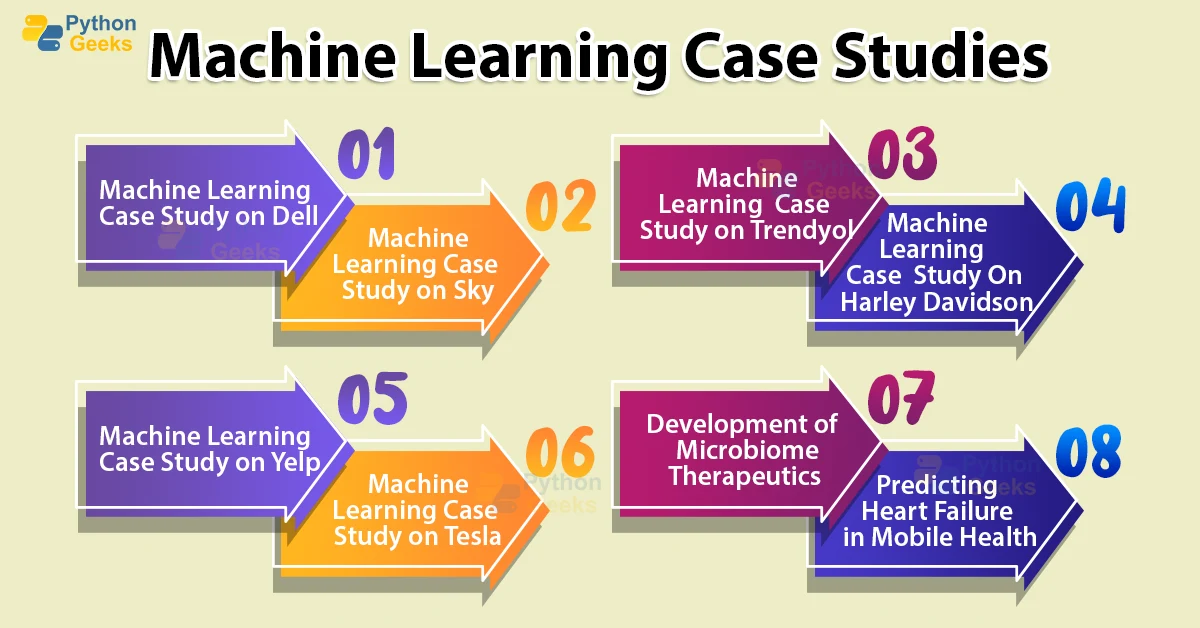
Machine learning (ML) has evolved into a cornerstone of modern technology, enabling systems to learn from data and improve over time without explicit programming. Its real-world applications span diverse sectors, from diagnosing diseases to optimizing supply chains. This article examines 16 case studies where ML has driven innovation, efficiency, and competitive advantage. These examples illustrate how ML models—ranging from simple linear regressions to deep neural networks—address complex problems by identifying patterns, predicting outcomes, and automating decisions. The integration of ML into business and societal frameworks has led to measurable improvements in accuracy, speed, and scalability. For instance, ML-powered recommendation systems in e-commerce increase sales by up to 30%, while predictive maintenance in manufacturing reduces downtime by 40%. These case studies not only showcase technological advancements but also underscore the importance of ethical considerations, data quality, and interdisciplinary collaboration in deploying ML solutions.
#History / Background
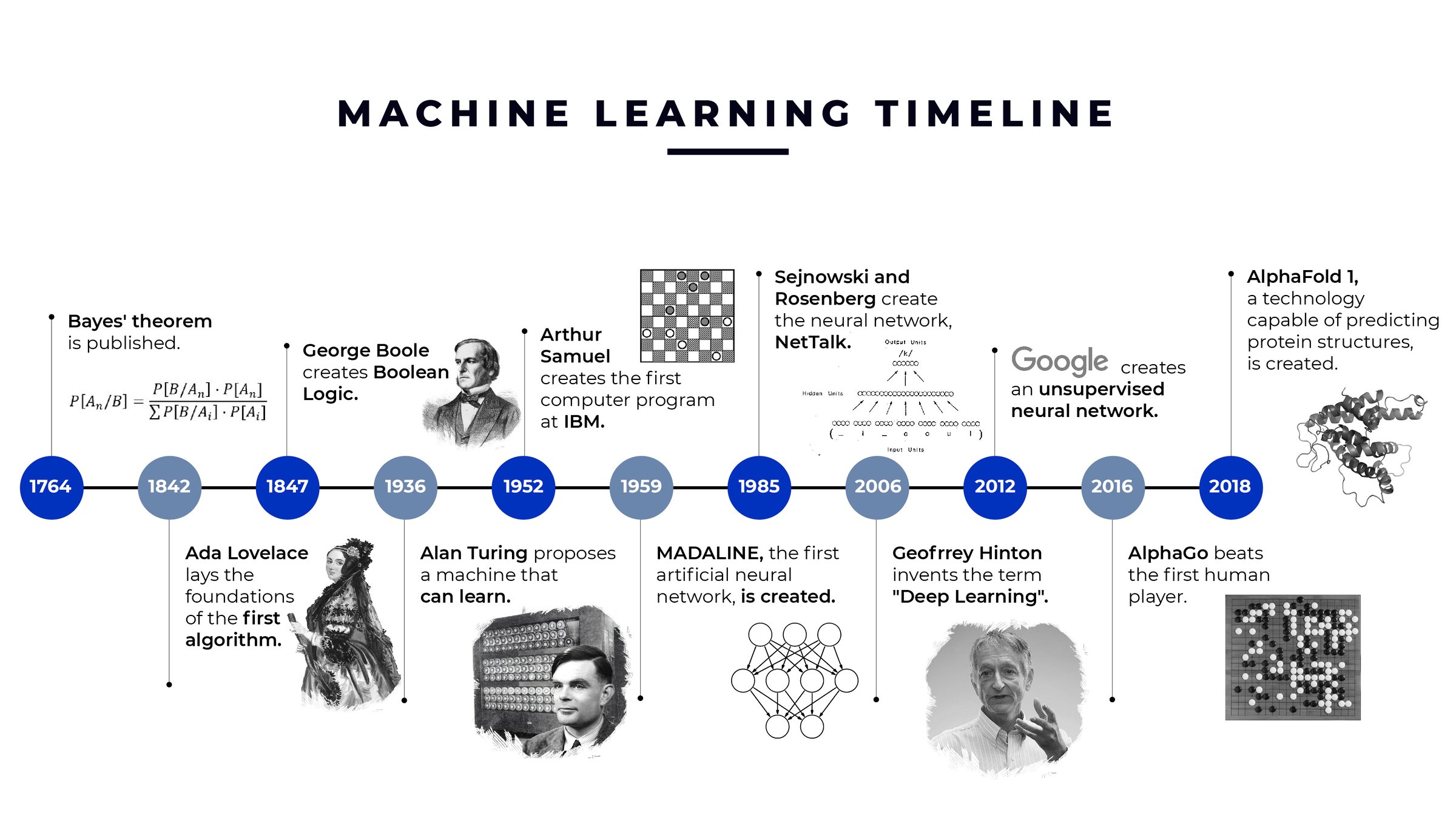
The foundations of machine learning trace back to the mid-20th century, with early contributions from Alan Turing’s 1950 paper "Computing Machinery and Intelligence" and Arthur Samuel’s 1959 work on self-learning checkers programs. The term "machine learning" was coined by Arthur Samuel in 1959, defining it as the ability of computers to learn without being explicitly programmed. The 1980s and 1990s saw significant progress with the development of neural networks and the backpropagation algorithm, enabling models to learn from large datasets. However, limited computational power and data availability constrained widespread adoption. The early 2000s marked a turning point with the rise of big data, cloud computing, and advances in algorithms like support vector machines (SVMs) and random forests. The 2010s witnessed the deep learning revolution, fueled by the availability of GPUs, large-scale datasets, and breakthroughs in convolutional neural networks (CNNs) and recurrent neural networks (RNNs). Companies like Google, Amazon, and Tesla began integrating ML into core products, from search algorithms to autonomous vehicles. Today, ML is ubiquitous, embedded in smartphones, healthcare diagnostics, financial trading, and even creative fields like art and music generation.
#How It Works
Machine learning operates on the principle of training models on historical data to make predictions or decisions on new, unseen data. The process involves several key stages:
#
- Data Collection and Preprocessing
- Data Sources: Structured (databases, spreadsheets) and unstructured (text, images, videos) data are collected from various sources.
- Preprocessing: Data is cleaned (handling missing values, outliers), normalized, and transformed into a format suitable for modeling. Techniques like feature scaling, encoding categorical variables, and dimensionality reduction (e.g., PCA) are applied.
#
- Model Selection
- Supervised Learning: Models are trained on labeled data (input-output pairs). Examples include:
- Classification: Predicting categories (e.g., spam detection, disease diagnosis).
- Regression: Predicting continuous values (e.g., house prices, stock prices).
- Unsupervised Learning: Models identify patterns in unlabeled data. Examples include:
- Clustering: Grouping similar data points (e.g., customer segmentation).
- Dimensionality Reduction: Simplifying data (e.g., t-SNE, autoencoders).
- Reinforcement Learning: Models learn by interacting with an environment to maximize rewards (e.g., robotics, game AI).
#
- Training and Optimization
- Training: The model learns from the data by adjusting its parameters to minimize error (e.g., using gradient descent).
- Hyperparameter Tuning: Techniques like grid search, random search, or Bayesian optimization are used to optimize model performance.
- Cross-Validation: Ensures the model generalizes well to unseen data (e.g., k-fold cross-validation).
#
- Evaluation and Deployment
- Metrics: Performance is evaluated using metrics like accuracy, precision, recall, F1-score, RMSE, or AUC-ROC.
- Deployment: The trained model is integrated into applications (e.g., APIs, embedded systems) for real-time predictions.
- Monitoring: Continuous tracking of model performance and retraining to adapt to new data.
#Key Algorithms and Techniques
- Linear Regression: Predicts continuous outcomes.
- Logistic Regression: Classifies binary outcomes.
- Decision Trees & Random Forests: Handles both classification and regression.
- Support Vector Machines (SVM): Effective for high-dimensional data.
- Neural Networks: Deep learning models for complex patterns (e.g., CNNs for images, RNNs for sequences).
- Natural Language Processing (NLP): Enables text analysis (e.g., sentiment analysis, chatbots).
#Important Facts
- Accuracy vs. Interpretability: Highly accurate models (e.g., deep neural networks) often lack interpretability, while simpler models (e.g., decision trees) are more transparent but may sacrifice performance.
- Bias and Fairness: ML models can inherit biases from training data, leading to unfair outcomes (e.g., biased hiring algorithms). Mitigation strategies include diverse datasets and fairness-aware algorithms.
- Data Privacy: Regulations like GDPR and CCPA impose strict guidelines on data usage, requiring anonymization and consent management.
- Explainable AI (XAI): Techniques like SHAP (SHapley Additive exPlanations) and LIME (Local Interpretable Model-agnostic Explanations) help interpret model decisions.
- Edge AI: Deploying ML models on edge devices (e.g., smartphones, IoT sensors) reduces latency and improves privacy.
- Automated ML (AutoML): Tools like Google AutoML and H2O.ai automate model selection, training, and deployment, democratizing ML for non-experts.
#Timeline
- Foundational ideas
Core concepts and early methods shape Machine Learning in Action: Real-world Case Studies.
- Practical use
Tools, examples, and real-world deployments make the topic easier to evaluate.
- Responsible implementation
Current work focuses on reliability, governance, performance, and measurable impact.
#Related Terms
#FAQ
What does Machine Learning in Action: Real-world Case Studies cover?
Covers machine learning in action: real-world case studies, including core concepts, practical examples, benefits, limitations, and risks in Machine Learning.
Why is Machine Learning in Action: Real-world Case Studies important?
It helps readers understand key concepts, compare practical use cases, and evaluate how Machine Learning decisions affect outcomes, risks, and implementation choices.
What should readers verify before applying this topic?
Readers should compare benefits, limitations, data requirements, and related themes such as Machine, Learning, Action before using the ideas in real projects.
#References
- Machine Learning in Action: Real-world Case Studies terminology and background research
- Machine Learning in Action: Real-world Case Studies use cases, implementation examples, and limitations
- Machine Learning best practices, standards, and risk guidance
- Machine case studies, benchmarks, and current industry analysis


Comments
No comments yet. Start the discussion with a useful note.