


#Short Answer
Traces timeline of ai ethics, highlighting major milestones, context, examples, and future implications.
#Infobox
#Overview
The Timeline of AI Ethics traces the evolution of ethical considerations in artificial intelligence, reflecting growing concerns about the societal, economic, and existential risks posed by AI systems. From early theoretical frameworks to contemporary regulatory efforts, the timeline underscores the increasing urgency to establish ethical guidelines that ensure AI technologies are developed and deployed responsibly. AI ethics encompasses a broad range of issues, including algorithmic bias, privacy violations, job displacement, autonomous weapons, and the potential for superintelligent systems to act beyond human control. The timeline highlights how these concerns have been addressed—or neglected—over time, shaping the current landscape of AI governance. Key themes in the timeline include:
- Theoretical Foundations: Early philosophical and scientific contributions that laid the groundwork for AI ethics.
- Policy and Regulation: Efforts by governments, international bodies, and organizations to create enforceable ethical standards.
- Public and Academic Discourse: Debates among researchers, ethicists, and the public about the risks and benefits of AI.
- Technological Advancements: Milestones in AI development that have prompted ethical reevaluations.
#History / Background
#Early Foundations (Pre-1950s)
The ethical implications of artificial intelligence were first explored in science fiction and early philosophical works. In 1921, Czech playwright Karel Čapek’s R.U.R. introduced the term "robot," sparking discussions about the moral responsibilities of artificial beings. However, it was Isaac Asimov’s Three Laws of Robotics (1942) that provided the first formal ethical framework for AI, emphasizing the protection of humans from harm caused by robotic systems.
#The Birth of AI and Ethical Concerns (1950s–1970s)
The formal study of AI began in the 1950s with the Dartmouth Conference (1956), where the term "artificial intelligence" was coined. Early AI researchers, such as Herbert Simon and Allen Newell, focused on symbolic reasoning and problem-solving, but ethical concerns remained peripheral. However, as AI systems became more capable, questions arose about their potential misuse, particularly in military applications (e.g., autonomous weapons) and decision-making processes. In 1976, philosopher Joseph Weizenbaum published Computer Power and Human Reason, critiquing the uncritical acceptance of AI and warning against the dehumanizing effects of technology. His work highlighted the need for ethical scrutiny in AI development.
#The Rise of AI Ethics as a Discipline (1980s–2000s)
During the 1980s and 1990s, AI ethics gained traction as a distinct field of study. Key developments included:
- 1985: The IEEE Standards Association began exploring ethical guidelines for autonomous systems.
- 1997: The European Commission published Ethics of Artificial Intelligence, one of the first government-led initiatives to address AI ethics.
- 2001: The Future of Life Institute (FLI) was founded, later becoming a leading advocate for AI safety and ethics. The 2000s saw increased public awareness of AI’s ethical challenges, driven by high-profile controversies such as:
- Facial Recognition Bias: Studies revealed racial and gender biases in facial recognition algorithms, prompting calls for regulation.
- Autonomous Vehicles: Ethical dilemmas in programming self-driving cars (e.g., the "trolley problem") sparked debates about accountability.
#The Modern Era (2010s–Present)
The 2010s marked a turning point in AI ethics, characterized by:
- 2015: The Asilomar AI Principles, developed by the Future of Life Institute, outlined 23 guidelines for ethical AI, including transparency, accountability, and long-term safety.
- 2016: DeepMind’s AlphaGo defeated a human champion in the game of Go, demonstrating the rapid advancement of AI and intensifying discussions about its societal impact.
- 2018: The EU General Data Protection Regulation (GDPR) introduced strict rules on data privacy, indirectly influencing AI ethics by requiring transparency in automated decision-making.
- 2019: The IEEE Global Initiative on Ethics of Autonomous and Intelligent Systems released Ethically Aligned Design, a comprehensive framework for ethical AI development.
- 2020: The AI Ethics Guidelines by the European Commission’s High-Level Expert Group on AI emphasized human-centric AI, risk-based regulation, and fundamental rights.
- 2023: The UNESCO Recommendation on the Ethics of AI was adopted, becoming the first global standard for AI ethics, covering issues like bias, transparency, and human rights.
- 2024: The EU AI Act was enacted, marking the first comprehensive legal framework for AI regulation, categorizing AI systems by risk level and imposing strict obligations on high-risk applications.
#How It Works
AI ethics operates through a combination of theoretical frameworks, policy mechanisms, and technological safeguards to ensure that AI systems are developed and deployed in ways that align with human values. The process involves:
#
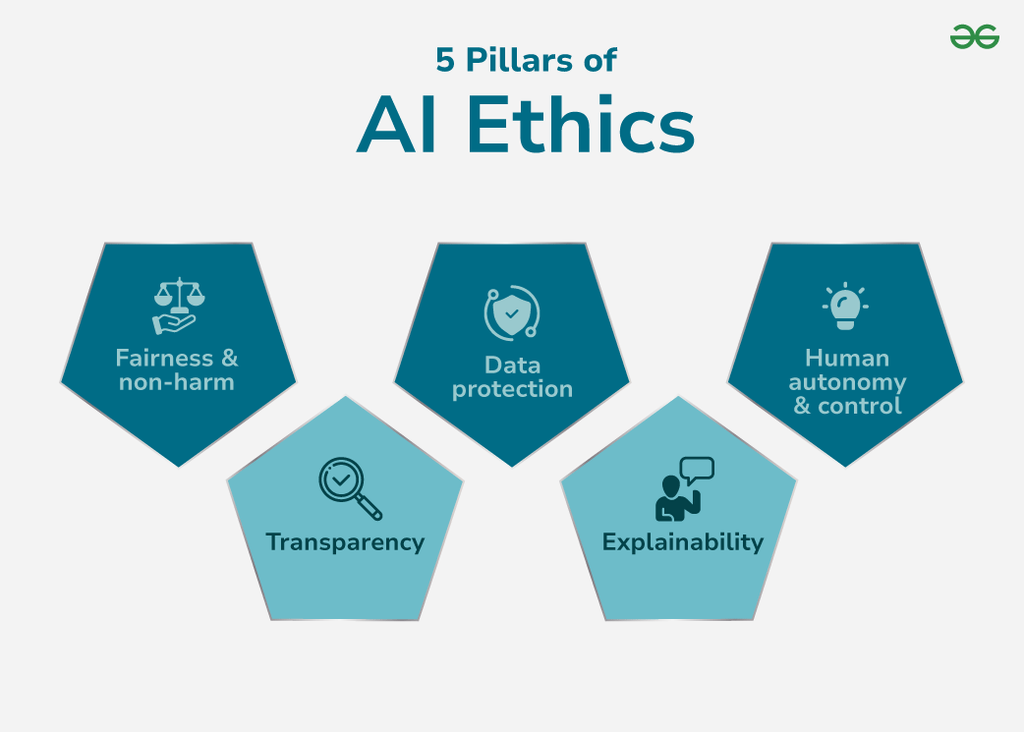
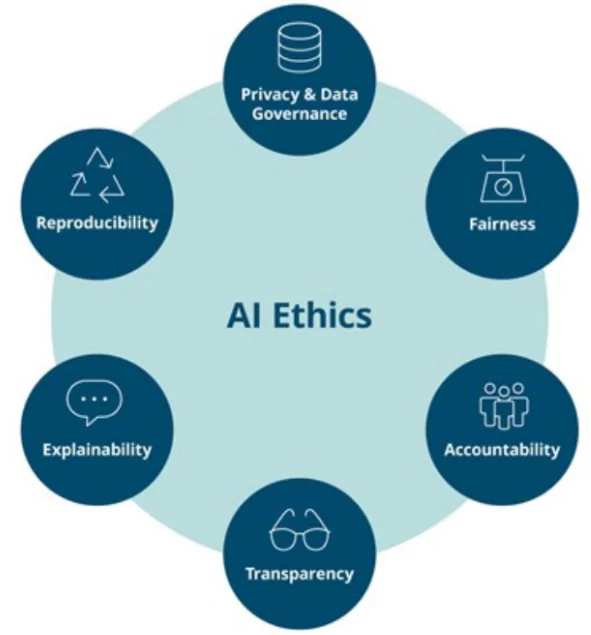
- Ethical Frameworks and Principles AI ethics relies on foundational principles such as:
- Transparency: Ensuring that AI systems and their decision-making processes are explainable and understandable.
- Accountability: Assigning responsibility for AI-driven outcomes, particularly in cases of harm or bias.
- Fairness and Non-Discrimination: Preventing algorithmic bias and ensuring equitable treatment across demographic groups.
- Privacy and Data Protection: Safeguarding personal data and preventing unauthorized surveillance.
- Human Control and Autonomy: Ensuring that AI systems augment rather than replace human decision-making.
- Safety and Robustness: Designing AI systems to operate reliably and avoid unintended harmful consequences. These principles are often codified in ethical guidelines issued by governments, international organizations, and professional bodies (e.g., IEEE, EU Commission).
#
- Regulatory and Policy Mechanisms AI ethics is enforced through:
- Legislation: Laws such as the EU AI Act (2024), which classifies AI systems into risk categories (unacceptable, high, limited, minimal) and imposes compliance requirements.
- Standards and Certifications: Organizations like the ISO/IEC 23894 (AI risk management) and IEEE 7000 series (ethical design standards) provide technical standards for ethical AI.
- Ethics Review Boards: Many companies and research institutions establish internal ethics committees to oversee AI projects.
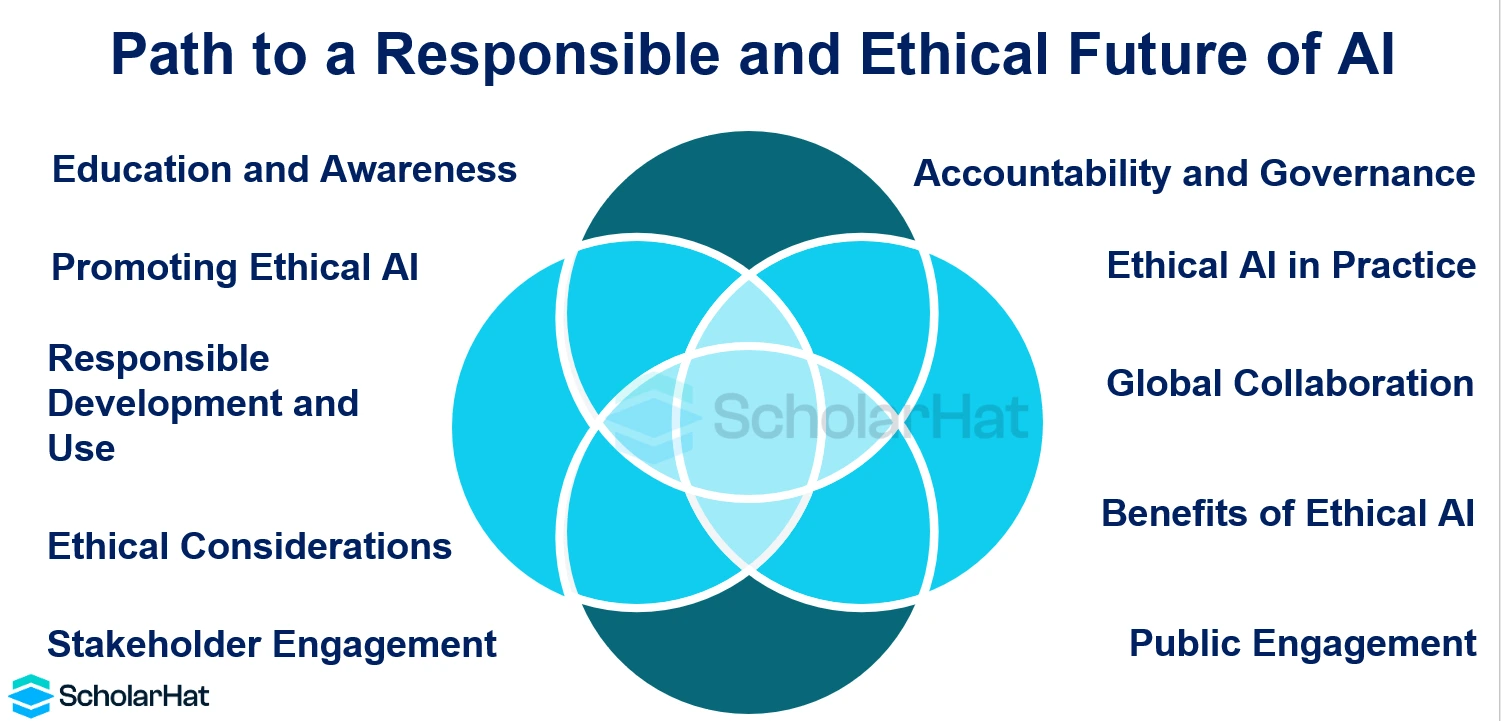
- Public Consultation and Participation: Engaging stakeholders (e.g., affected communities, civil society) in the development of AI policies.
#
- Technological Safeguards AI systems incorporate ethical safeguards through:
- Bias Mitigation Algorithms: Techniques to detect and reduce bias in training data and models (e.g., fairness-aware machine learning).
- Explainable AI (XAI): Tools and methods to make AI decisions interpretable (e.g., LIME, SHAP).
- Differential Privacy: Techniques to protect individual privacy in data analysis.
- Human-in-the-Loop Systems: Designing AI systems that require human oversight for critical decisions.
- Red Teaming and Testing: Simulating adversarial scenarios to identify ethical vulnerabilities.
#
- Public and Academic Engagement Ethical AI development is also driven by:
- Education and Awareness: Programs to train AI developers in ethical considerations.
- Public Debates: Discussions in media, academia, and civil society about the societal impacts of AI.
- Advocacy Groups: Organizations like the AI Now Institute and Partnership on AI that push for ethical AI practices.
#Important Facts
- First AI Ethics Principle: Isaac Asimov’s Three Laws of Robotics (1942) were the earliest formal ethical guidelines for AI, though they were fictional.
- First Government AI Ethics Report: The European Commission’s Ethics of Artificial Intelligence (1997) was one of the first official documents to address AI ethics at a national level.
- First Global AI Ethics Framework: The Asilomar AI Principles (2017), developed by the Future of Life Institute, were endorsed by over 1,000 AI researchers and experts.
- First Binding AI Regulation: The EU AI Act (2024) is the first comprehensive legal framework to regulate AI based on risk levels.
- Most Cited AI Ethics Document: The IEEE Ethically Aligned Design (2019) has been widely referenced by policymakers and industry leaders.
- First AI Ethics Certification: The IEEE 7000 series provides standards for ethical AI design, including IEEE 7001 (transparency) and IEEE 7003 (algorithmic bias).
- Most Controversial AI Ethics Issue: Algorithmic bias in facial recognition, hiring tools, and predictive policing has been a major focus of ethical debates.
- Fastest-Growing AI Ethics Field: AI safety research, which focuses on preventing catastrophic risks from advanced AI, has seen a surge in funding and attention since the 2010s.
#Timeline
- Foundational ideas
Core concepts and early methods shape Timeline of AI Ethics.
- Practical use
Tools, examples, and real-world deployments make the topic easier to evaluate.
- Responsible implementation
Current work focuses on reliability, governance, performance, and measurable impact.
#Related Terms
#FAQ
What does Timeline of AI Ethics cover?
Traces timeline of ai ethics, highlighting major milestones, context, examples, and future implications.
Why is Timeline of AI Ethics important?
It helps readers understand key concepts, compare practical use cases, and evaluate how AI Ethics decisions affect outcomes, risks, and implementation choices.
What should readers verify before applying this topic?
Readers should compare benefits, limitations, data requirements, and related themes such as Timeline, AI, Ethics before using the ideas in real projects.
#References
- Timeline of AI Ethics terminology and background research
- Timeline of AI Ethics use cases, implementation examples, and limitations
- AI Ethics best practices, standards, and risk guidance
- Timeline case studies, benchmarks, and current industry analysis

Comments
No comments yet. Start the discussion with a useful note.