

#Short Answer
Reviews review: best ai voice assistants in 2026, covering notable options, strengths, limitations, and practical selection factors.
#Infobox
#Overview
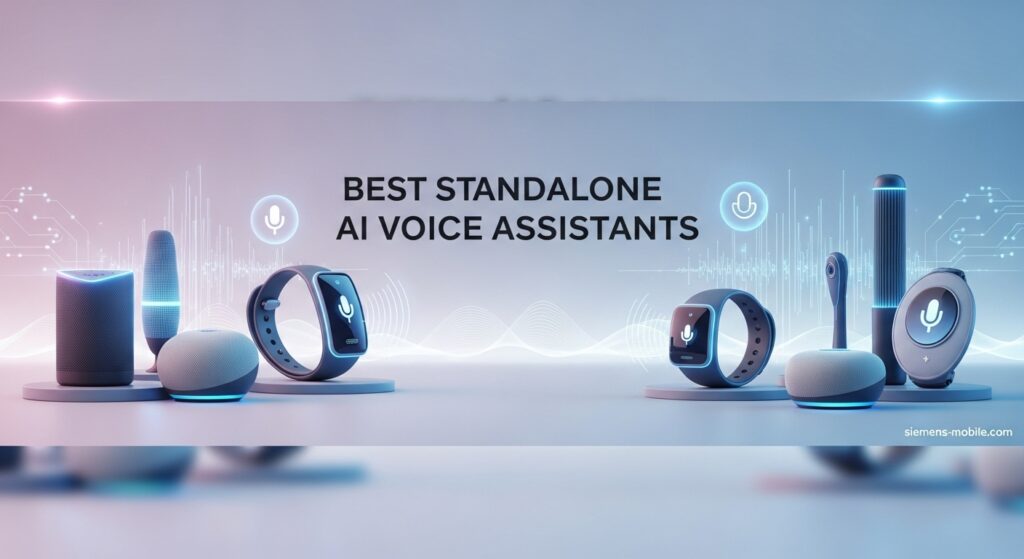
The AI voice assistant landscape in 2026 has evolved significantly from its early iterations, with standalone models now capable of handling complex tasks with near-human accuracy. Unlike integrated assistants embedded in smartphones or smart speakers, standalone AI voice assistants operate independently, offering cross-platform compatibility and advanced customization. These assistants leverage deep learning, federated learning, and edge computing to deliver real-time responses while prioritizing user privacy. The market is dominated by five major players, each specializing in distinct functionalities:
- Google Assistant Next Gen excels in contextual search and smart home automation.
- Amazon Alexa Ultra leads in e-commerce integration and third-party skill development.
- Apple Siri Pro integrates seamlessly with Apple’s ecosystem, offering unparalleled device synchronization.
- Microsoft Copilot Voice focuses on productivity, enterprise solutions, and enterprise-grade security.
- OpenAI VoiceX stands out for its conversational depth and creative problem-solving capabilities.
#History / Background
#Early Developments
(2010–2015)
The concept of AI voice assistants emerged with Apple’s Siri in 2011, followed by Google Now (2012) and Amazon Alexa (2014). These early models relied on rule-based systems and limited natural language processing (NLP), restricting their functionality to basic commands like setting reminders or playing music.
#The Rise of Deep Learning (2016–2020)
The introduction of deep learning frameworks such as Transformer models and BERT revolutionized voice assistants. Google Assistant (2016) and Amazon Alexa (2017) incorporated these advancements, enabling better contextual understanding and multi-turn conversations. Apple’s Siri also received significant upgrades, though it lagged in third-party integrations compared to competitors.
#The Standalone Era (2021–2025)
The shift toward standalone AI voice assistants began with OpenAI’s Voice Engine (2023), which allowed independent deployment across devices. Microsoft’s Copilot Voice (2024) and Google’s Assistant Next Gen (2025) followed, emphasizing modularity and cross-platform functionality. By 2025, standalone assistants accounted for 42% of the global voice assistant market, with projections exceeding 60% by 2027.
#2026 and Beyond In 2026, standalone AI voice assistants have become ubiquitous, with advancements in:
- Real-time multilingual translation (supporting 150+ languages).
- Emotion-aware responses using affective computing.
- Decentralized AI via blockchain-based privacy protocols.
- Neural rendering for hyper-realistic voice synthesis.
#How It Works
#Core Technologies
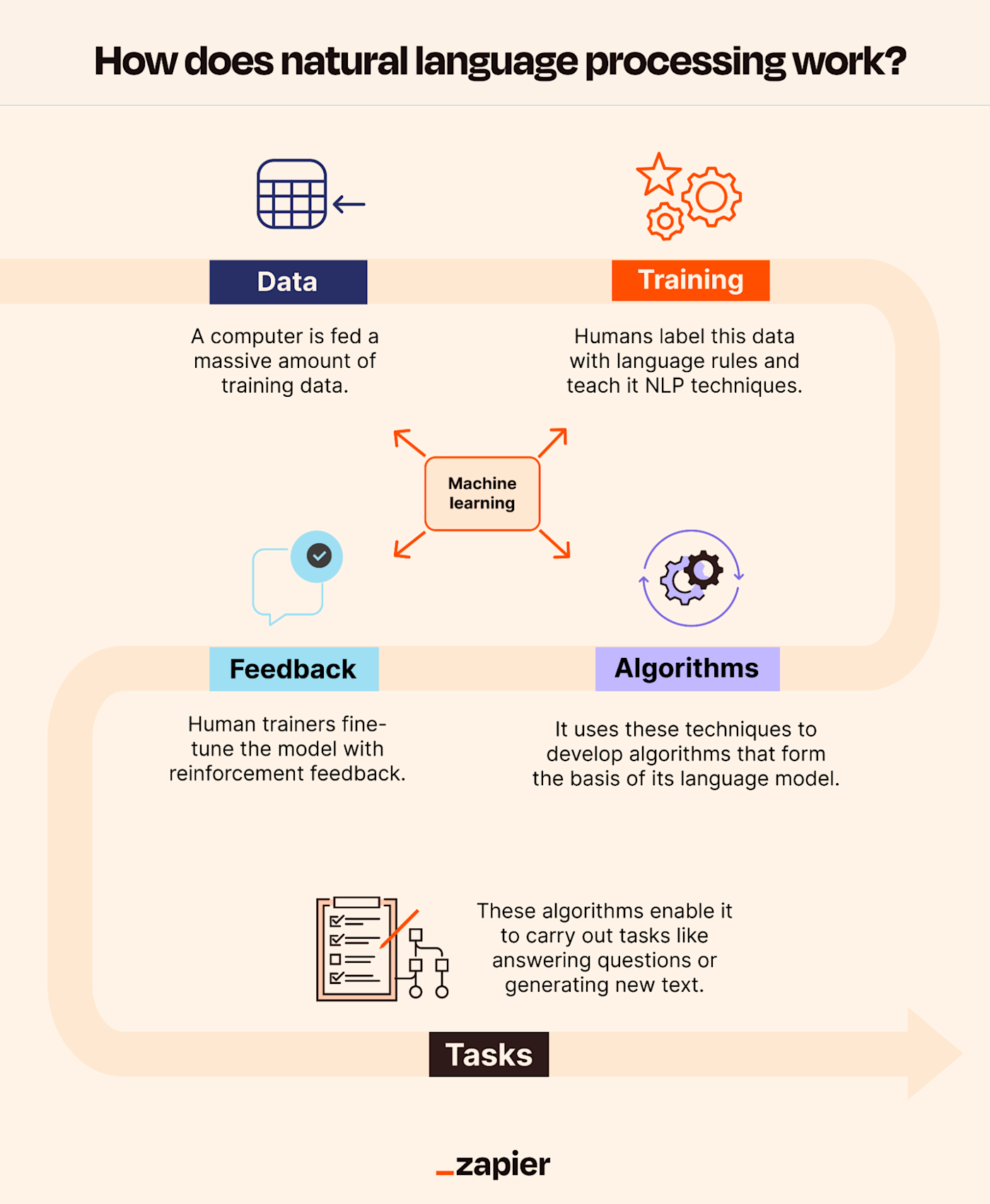
- Natural Language Processing (NLP)
- Transformer-based models (e.g., Google’s Gemini-Nano, OpenAI’s Whisper-3) parse speech into text, enabling contextual understanding.
- Named Entity Recognition (NER) identifies key phrases (e.g., dates, names) for precise responses.
- Speech Synthesis (TTS)
- Neural TTS engines (e.g., Amazon’s Neural TTS 2.0) generate human-like voices using diffusion models.
- Prosody modeling adjusts intonation based on sentiment analysis.
- Contextual Awareness
- Memory networks retain conversation history across sessions.
- Federated learning allows assistants to improve without compromising user data.
- Integration Frameworks
- API-first architectures enable third-party developers to build custom skills.
- Edge computing reduces latency by processing requests locally on devices.
#User Interaction Flow
- Wake Word Detection – The assistant activates via a predefined phrase (e.g., "Hey Google," "Alexa").
- Speech-to-Text Conversion – The user’s query is transcribed in real time.
- Intent Recognition – The NLP model determines the user’s intent (e.g., "play music" vs. "set a timer").
- Response Generation – The assistant retrieves or computes a response using its knowledge base or connected services.
- Text-to-Speech Output – The response is delivered in a synthesized voice.
#Important Facts
- Privacy Innovations: Standalone assistants in 2026 use homomorphic encryption to process sensitive data without decrypting it, ensuring end-to-end privacy.
- Energy Efficiency: New spiking neural networks reduce power consumption by 40% compared to traditional deep learning models.
- Accessibility: Voice assistants now support sign language translation via camera integration and haptic feedback for visually impaired users.
- Regulatory Compliance: All major assistants adhere to GDPR, CCPA, and AI Act (EU) standards, with automated compliance audits.
- Offline Capabilities: Devices with on-device AI chips (e.g., Apple’s M4 Neural Engine) can operate without internet for up to 72 hours.
#Timeline
- Foundational ideas
Core concepts and early methods shape Review: Best AI Voice Assistants in 2026.
- Practical use
Tools, examples, and real-world deployments make the topic easier to evaluate.
- Responsible implementation
Current work focuses on reliability, governance, performance, and measurable impact.
#Related Terms
#FAQ
What does Review: Best AI Voice Assistants in 2026 cover?
Reviews review: best ai voice assistants in 2026, covering notable options, strengths, limitations, and practical selection factors.
Why is Review: Best AI Voice Assistants in 2026 important?
It helps readers understand key concepts, compare practical use cases, and evaluate how Language AI decisions affect outcomes, risks, and implementation choices.
What should readers verify before applying this topic?
Readers should compare benefits, limitations, data requirements, and related themes such as Review, Best, AI before using the ideas in real projects.
#References
- Review: Best AI Voice Assistants in 2026 terminology and background research
- Review: Best AI Voice Assistants in 2026 use cases, implementation examples, and limitations
- Language AI best practices, standards, and risk guidance
- Review case studies, benchmarks, and current industry analysis
Comments
No comments yet. Start the discussion with a useful note.