

#Short Answer
Reviews review: best ai translation tools in 2026, covering notable options, strengths, limitations, and practical selection factors.
#Infobox
#Overview
AI translation tools in 2026 represent a paradigm shift from traditional rule-based and statistical methods to sophisticated neural architectures. These tools now prioritize contextual accuracy, cultural nuance, and real-time adaptability, addressing long-standing challenges in machine translation. The integration of large language models (LLMs) has further enhanced their ability to handle idiomatic expressions, technical jargon, and domain-specific terminology. The market is dominated by a mix of cloud-based platforms and on-premise solutions, catering to diverse user needs—from individual travelers to multinational corporations. Innovations such as voice-to-text translation, image-based translation (OCR), and collaborative translation workflows have expanded their utility beyond text-based communication.
#History / Background
#Early Developments
(Pre-2010s)
The foundations of AI translation were laid in the 1950s with the Georgetown-IBM experiment, which demonstrated the feasibility of machine translation. Early systems relied on rule-based approaches, where linguists manually encoded grammar and vocabulary rules. However, these methods were limited by their inability to handle ambiguity and context.
#Statistical Machine Translation (SMT)
Era (2000s–2010s) The advent of statistical machine translation (SMT) in the 2000s marked a significant improvement. Systems like Google Translate (2006) and Microsoft Translator used statistical models trained on large bilingual corpora to predict translations. While more flexible than rule-based systems, SMT still struggled with idiomatic expressions and long-range dependencies in sentences.
#Neural Machine Translation (NMT)
Revolution (2016–Present) The breakthrough came with neural machine translation (NMT), introduced by Google in 2016. NMT models, particularly Transformer architectures, use deep learning to process entire sentences as a single unit, capturing contextual relationships more effectively. This led to a dramatic improvement in translation quality, especially for languages with complex grammar structures.
#Post-2020 Advancements By 2026, AI translation tools have evolved to incorporate:
- Multimodal translation: Combining text, speech, and visual input (e.g., translating signs or menus via camera).
- Domain adaptation: Specialized models for legal, medical, or technical domains.
- Cultural localization: Adjusting translations to align with regional customs and preferences.
- Federated learning: Privacy-preserving translation models trained on decentralized data.
#How It Works
#Core Technologies
- Neural Machine Translation (NMT) - Uses Transformer models (e.g., Google’s Transformer, Facebook’s NLLB) to process input sequences.
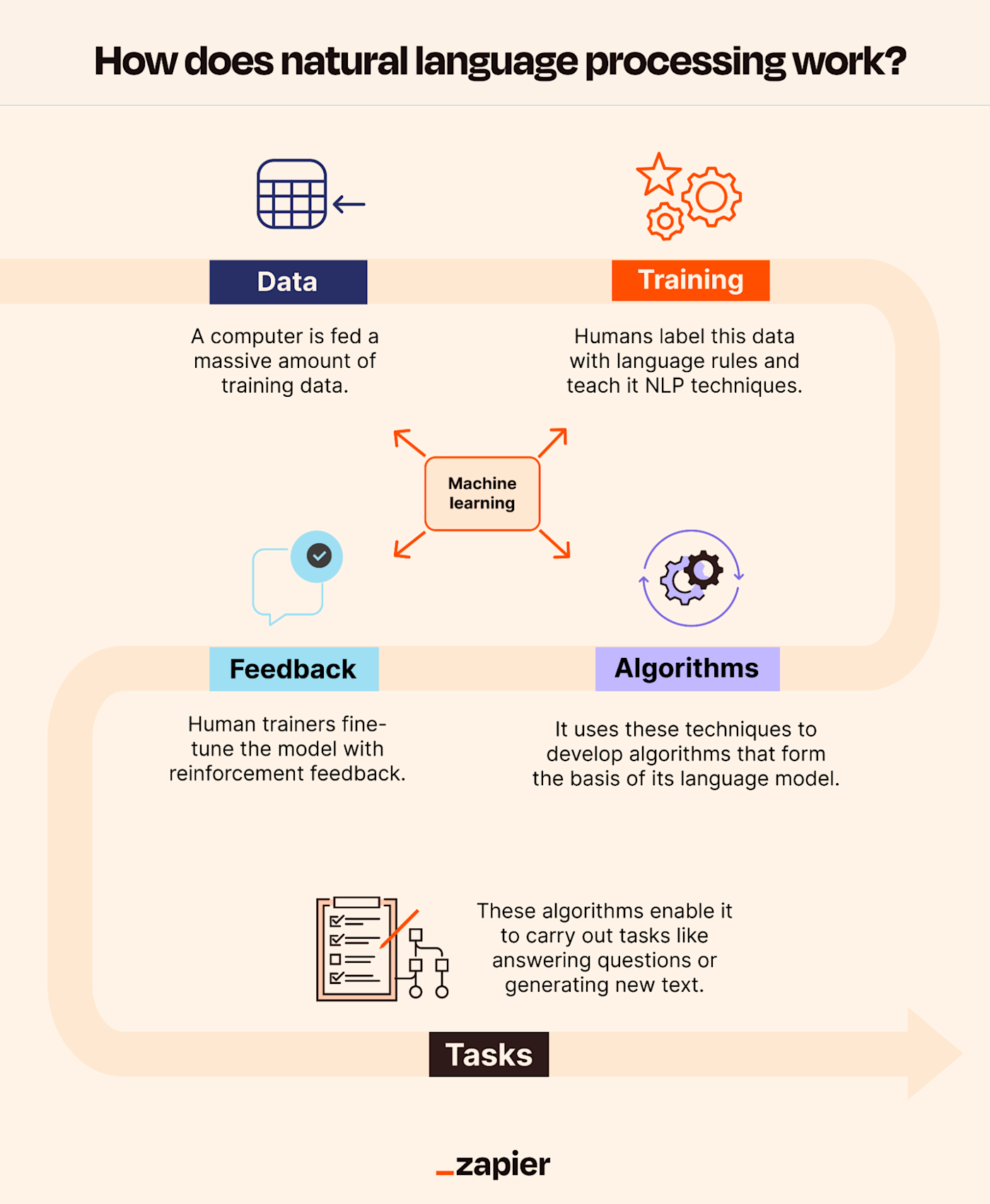
- Encoder-decoder architecture: The encoder converts the source text into a numerical representation, while the decoder generates the target translation.
- Attention mechanisms: Allow the model to focus on relevant parts of the input, improving accuracy for long sentences.
- Large Language Models (LLMs) - Fine-tuned LLMs (e.g., Mistral, Llama) enhance translation by understanding semantic nuances and contextual cues.
- Prompt-based translation: Users can specify tone (formal/casual) or style (literary/technical) via instructions.
- Multimodal Processing
- Optical Character Recognition (OCR): Extracts text from images (e.g., signs, documents) for translation.
- Speech-to-text and text-to-speech: Enables real-time voice translation (e.g., Google’s Interpreter Mode).
- Domain Adaptation - Models are fine-tuned on domain-specific datasets (e.g., medical, legal) to improve terminology accuracy.
- Glossaries and custom dictionaries: Allow users to define preferred translations for industry-specific terms.
#Workflow Example
- Input: User uploads a document or speaks into a microphone.
- Preprocessing: Text is normalized (e.g., handling abbreviations, correcting OCR errors).
- Translation: The NMT/LLM model generates a draft translation.
- Post-processing: Contextual adjustments, cultural localization, and formatting refinements.
- Output: Delivered as text, audio, or formatted document.
#Important Facts
- Accuracy Variability: High-resource languages (e.g., English, Spanish) achieve 95%+ accuracy, while low-resource languages (e.g., Swahili, Haitian Creole) may reach 80–85%.
- Latency: Real-time translation tools (e.g., for conversations) typically process <1 second per sentence.
- Data Privacy: Enterprise solutions offer on-premise deployment to comply with GDPR and other regulations.
- Cost Efficiency: Cloud-based tools reduce translation costs by 60–80% compared to human translators for high-volume tasks.
- Cultural Adaptation: Advanced tools adjust translations to avoid offensive or culturally insensitive phrasing (e.g., formal vs. informal address in Japanese).
- API Integration: Businesses embed translation APIs into workflows (e.g., customer support, e-commerce) for seamless multilingual operations.
#Timeline
- Foundational ideas
Core concepts and early methods shape Review: Best AI Translation Tools in 2026.
- Practical use
Tools, examples, and real-world deployments make the topic easier to evaluate.
- Responsible implementation
Current work focuses on reliability, governance, performance, and measurable impact.
#Related Terms
#FAQ
What does Review: Best AI Translation Tools in 2026 cover?
Reviews review: best ai translation tools in 2026, covering notable options, strengths, limitations, and practical selection factors.
Why is Review: Best AI Translation Tools in 2026 important?
It helps readers understand key concepts, compare practical use cases, and evaluate how Language AI decisions affect outcomes, risks, and implementation choices.
What should readers verify before applying this topic?
Readers should compare benefits, limitations, data requirements, and related themes such as Review, Best, AI before using the ideas in real projects.
#References
- Review: Best AI Translation Tools in 2026 terminology and background research
- Review: Best AI Translation Tools in 2026 use cases, implementation examples, and limitations
- Language AI best practices, standards, and risk guidance
- Review case studies, benchmarks, and current industry analysis


Comments
No comments yet. Start the discussion with a useful note.