


#Short Answer
Covers neural networks explained: a simple guide, including core concepts, practical examples, benefits, limitations, and risks in Machine Learning.
#Infobox
#How It Works
Basic Structure A neural network consists of interconnected layers of neurons (nodes). Each neuron receives input, processes it using an activation function, and passes the output to the next layer.
- Input Layer: Receives raw data (e.g., pixels in an image, words in a sentence).
- Hidden Layers: Perform computations through weighted connections. The weights determine the strength of the connection between neurons.
- Output Layer: Produces the final result (e.g., a classification label, a numerical prediction).
Key Components
- Weights and Biases: Parameters that the network learns during training. Weights adjust the influence of inputs, while biases shift the activation function.
- Activation Functions: Introduce non-linearity, enabling the network to learn complex patterns. Common functions include:
- Sigmoid: Outputs values between 0 and 1.
- ReLU (Rectified Linear Unit): Outputs the input directly if positive, otherwise zero.
- Tanh: Outputs values between -1 and 1.
- Loss Function: Measures the difference between predicted and actual outputs. Common functions include Mean Squared Error (MSE) for regression and Cross-Entropy Loss for classification.
- Optimization Algorithm: Adjusts weights to minimize the loss function. Popular algorithms include Stochastic Gradient Descent (SGD) and Adam.
Training Process
- Forward Propagation: Input data is passed through the network to generate a prediction.
- Loss Calculation: The prediction is compared to the actual output using the loss function.
- Backpropagation: The error is propagated backward through the network, and weights are updated using the optimization algorithm.
- Iteration: The process repeats over multiple epochs (training cycles) until the network achieves satisfactory performance.
Types of Neural Networks
- Feedforward Neural Networks (FNN): Data flows in one direction, from input to output.
- Convolutional Neural Networks (CNN): Specialized for image processing, using convolutional layers to detect spatial patterns.
- Recurrent Neural Networks (RNN): Designed for sequential data, such as time series or text, by maintaining a "memory" of previous inputs.
- Generative Adversarial Networks (GAN): Consist of two networks (a generator and a discriminator) that compete to improve each other’s performance.
- Transformer Networks: Use self-attention mechanisms to process sequential data efficiently, powering models like BERT and GPT.
#Important Facts
- Universal Approximation Theorem: A neural network with a single hidden layer can approximate any continuous function, given sufficient neurons.
- Deep Learning: Refers to neural networks with multiple hidden layers, enabling the learning of hierarchical representations.
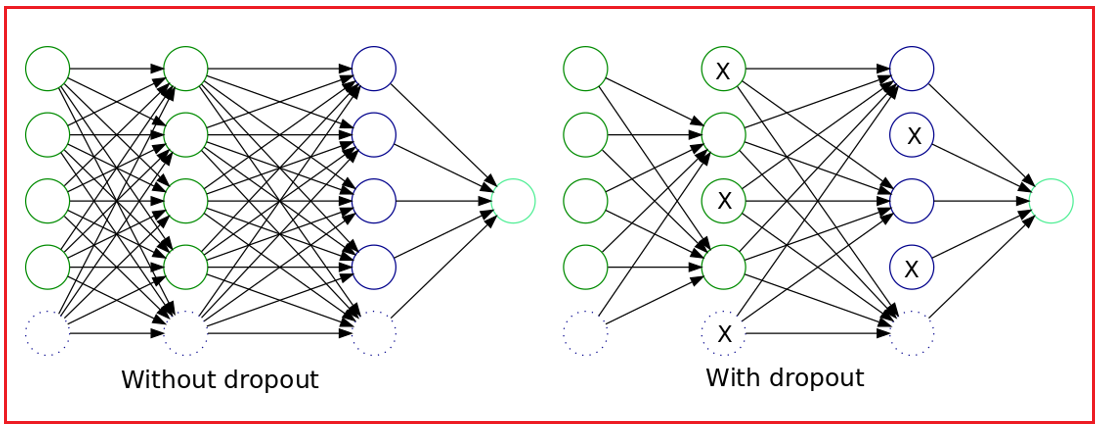
- Overfitting: Occurs when a model learns noise in the training data, leading to poor generalization. Techniques like dropout and regularization mitigate this issue.
- Transfer Learning: Involves using a pre-trained model on a new task, reducing the need for large datasets and computational resources.
- Explainability: Neural networks are often considered "black boxes" due to their complexity. Techniques like SHAP and LIME aim to interpret their decisions.
#Timeline
- Foundational ideas
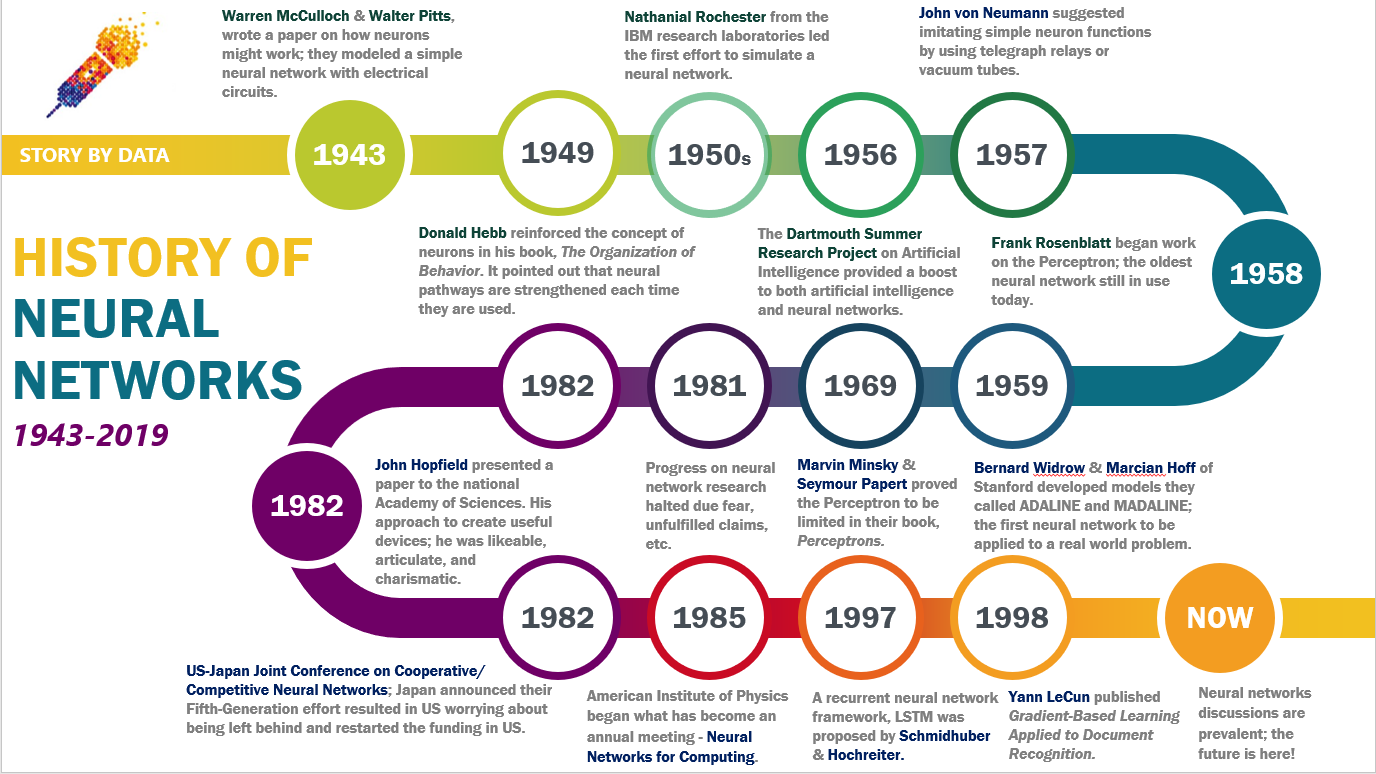
Core concepts and early methods shape Neural Networks Explained: a Simple Guide.
- Practical use
Tools, examples, and real-world deployments make the topic easier to evaluate.
- Responsible implementation
Current work focuses on reliability, governance, performance, and measurable impact.
#Related Terms
#FAQ
What does Neural Networks Explained: a Simple Guide cover?
Covers neural networks explained: a simple guide, including core concepts, practical examples, benefits, limitations, and risks in Machine Learning.
Why is Neural Networks Explained: a Simple Guide important?
It helps readers understand key concepts, compare practical use cases, and evaluate how Machine Learning decisions affect outcomes, risks, and implementation choices.
What should readers verify before applying this topic?
Readers should compare benefits, limitations, data requirements, and related themes such as Neural, Networks, Explained before using the ideas in real projects.
#References
- Neural Networks Explained: a Simple Guide terminology and background research
- Neural Networks Explained: a Simple Guide use cases, implementation examples, and limitations
- Machine Learning best practices, standards, and risk guidance
- Neural case studies, benchmarks, and current industry analysis

Comments
No comments yet. Start the discussion with a useful note.