

#Short Answer
Covers meaning of ai, including core concepts, practical examples, benefits, limitations, and risks in Artificial Intelligence.
#Infobox
#Overview
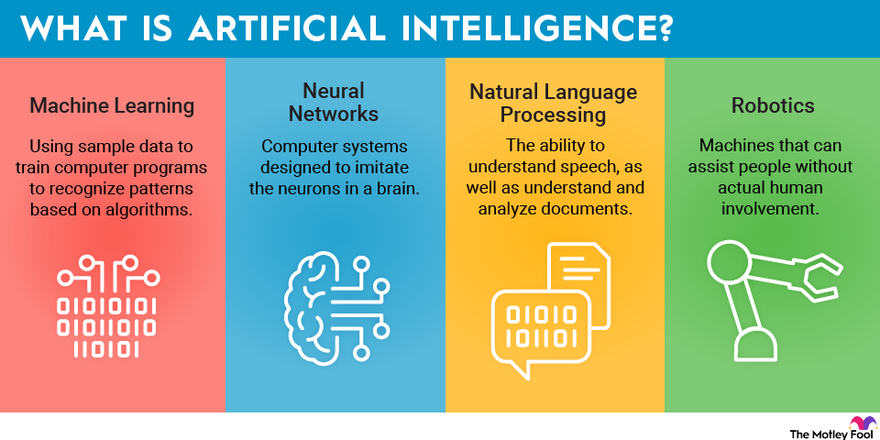
Artificial Intelligence (AI) is a branch of computer science focused on creating systems capable of performing tasks that typically require human intelligence. These tasks include visual perception, speech recognition, decision-making, and language translation. AI systems are designed to analyze vast amounts of data, identify patterns, and make predictions or decisions with minimal human intervention. AI can be categorized into two main types:
- Narrow AI (Weak AI): Designed to perform a narrow task (e.g., facial recognition or internet searches) and operates under a limited set of constraints.
- General AI (Strong AI): Hypothetical AI that possesses the ability to understand, learn, and apply knowledge across a wide range of tasks, similar to human cognition. This form of AI remains theoretical. The field of AI encompasses various sub-disciplines, including machine learning (ML), deep learning, natural language processing (NLP), computer vision, and robotics. Advances in computational power, big data, and algorithmic innovations have accelerated AI development, leading to breakthroughs in areas such as autonomous vehicles, medical diagnostics, and personalized recommendations.
#History / Background
#Early Foundations (Pre-1950s)
The concept of artificial intelligence dates back to ancient myths and stories of artificial beings endowed with intelligence. Philosophers like Aristotle explored the idea of logical reasoning, while mathematicians such as George Boole developed Boolean algebra, laying the groundwork for computational logic.
#The Birth of AI (1950s–1970s)
- 1950: Alan Turing published "Computing Machinery and Intelligence," introducing the Turing Test as a criterion for machine intelligence.
- 1956: The term "Artificial Intelligence" was coined at the Dartmouth Conference, organized by John McCarthy, Marvin Minsky, Nathaniel Rochester, and Claude Shannon. This event is widely regarded as the birth of AI as a formal discipline.
- 1958: John McCarthy developed the LISP programming language, which became fundamental for AI research.
- 1966: The first chatbot, ELIZA, was created by Joseph Weizenbaum, simulating human conversation.
- 1970s: AI research faced setbacks due to overpromising and underdelivering, leading to the first "AI winter," a period of reduced funding and interest.
#Revival and Expansion (1980s–2000s)
- 1980s: Expert systems, which mimicked human decision-making in specific domains, gained popularity. The Japanese Fifth Generation Computer Systems project aimed to create AI-powered computers but ultimately failed to meet expectations.
- 1997: IBM's Deep Blue defeated world chess champion Garry Kasparov, marking a milestone in AI's ability to perform complex tasks.
- 2000s: The rise of machine learning, particularly support vector machines and neural networks, revitalized AI research. The availability of large datasets and improved computational power enabled significant progress.
#Modern Era
(2010s–Present)
- 2011: IBM Watson won Jeopardy!, demonstrating AI's capability in natural language processing and question answering.
- 2012: The ImageNet competition saw deep learning models achieve unprecedented accuracy in image recognition, sparking a surge in AI research.
- 2016: AlphaGo, developed by DeepMind, defeated a world champion Go player, showcasing AI's ability to master complex strategy games.
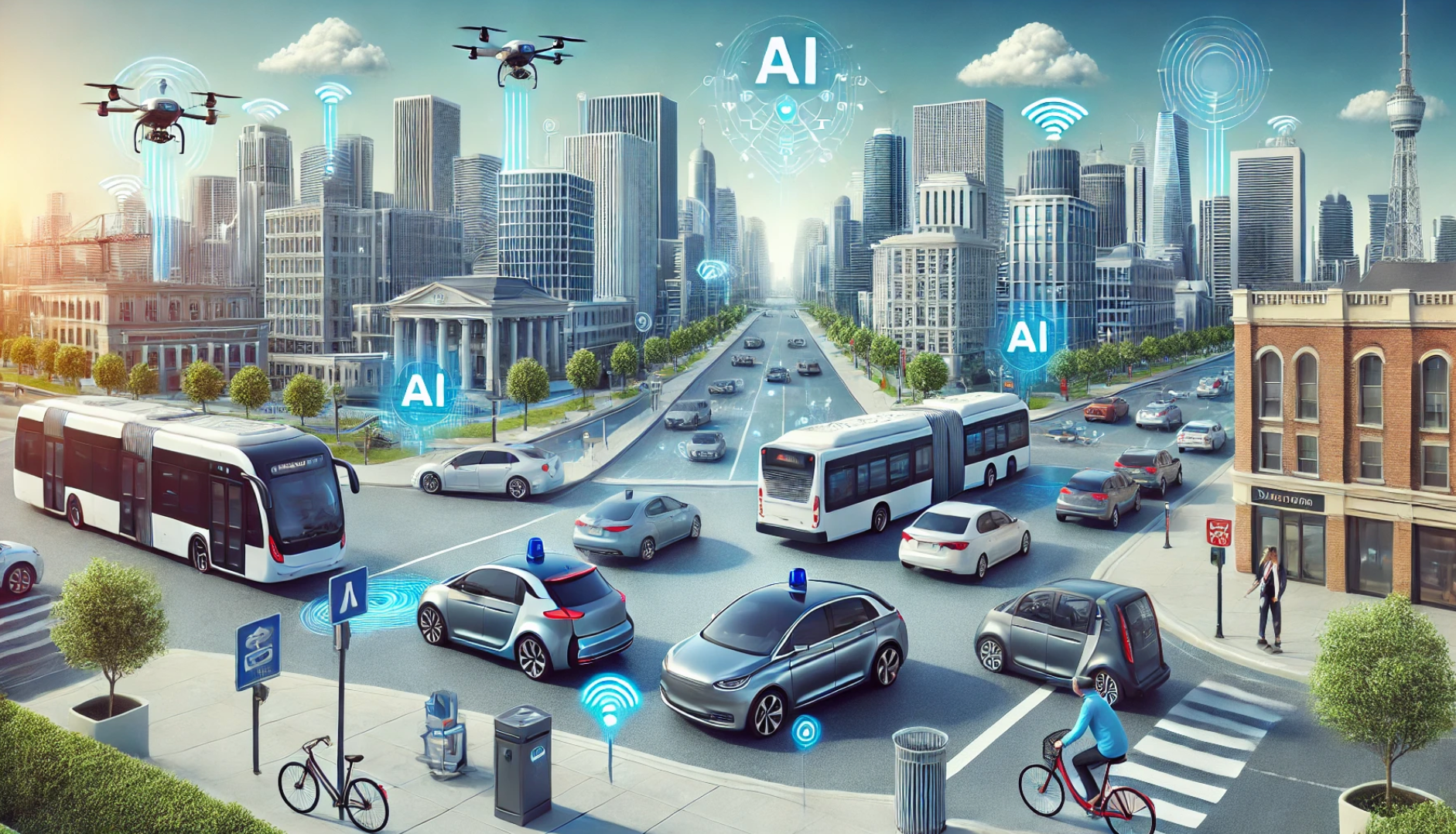
- 2020s: AI integration into everyday life became ubiquitous, with applications in healthcare (e.g., drug discovery), finance (e.g., fraud detection), and autonomous systems (e.g., self-driving cars). Generative AI, such as large language models (LLMs), gained prominence for creating human-like text and images.
#How It Works
#Core Principles AI systems operate based on algorithms and data. The primary methodologies include:
- Machine Learning (ML)
- Definition: A subset of AI where machines learn from data without explicit programming.
- Types:
- Supervised Learning: Models are trained on labeled data (e.g., spam detection).
- Unsupervised Learning: Models identify patterns in unlabeled data (e.g., customer segmentation).
- Reinforcement Learning: Models learn by interacting with an environment and receiving rewards or penalties (e.g., game-playing AI).
- Deep Learning
- Definition: A subset of ML that uses artificial neural networks with multiple layers (deep neural networks) to model complex patterns.
- Key Architectures:
- Convolutional Neural Networks (CNNs): Used for image and video recognition.
- Recurrent Neural Networks (RNNs): Used for sequential data, such as time series or text.
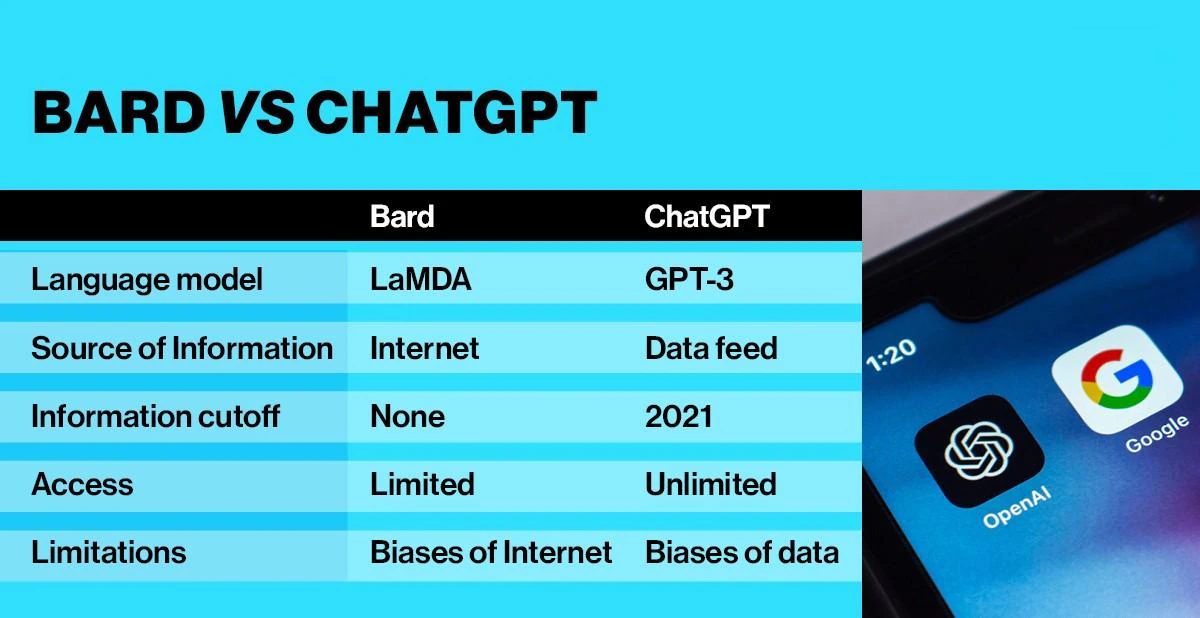
- Transformers: Used for natural language processing tasks, enabling models like BERT and GPT.
- Natural Language Processing (NLP)
- Definition: Enables machines to understand, interpret, and generate human language.
- Applications: Chatbots, language translation, sentiment analysis, and text summarization.
- Computer Vision
- Definition: Enables machines to interpret and make decisions based on visual input.
- Applications: Facial recognition, medical imaging, autonomous vehicles, and object detection.
- Robotics
- Definition: Combines AI with physical systems to perform tasks in the real world.
- Applications: Industrial automation, surgical robots, and drones.
#Data and Training AI systems rely on high-quality data for training. The process involves:
- Data Collection: Gathering relevant datasets (e.g., images, text, sensor data).
- Data Preprocessing: Cleaning, normalizing, and augmenting data to improve model performance.
- Model Training: Using algorithms to learn patterns from the data.
- Evaluation: Assessing model performance using metrics such as accuracy, precision, recall, and F1 score.
- Deployment: Integrating the trained model into real-world applications.
#Challenges
- Bias and Fairness: AI models can perpetuate biases present in training data, leading to unfair outcomes.
- Explainability: Many AI models, particularly deep learning, operate as "black boxes," making it difficult to interpret their decisions.
- Scalability: Training large models requires significant computational resources and energy.
- Ethical Concerns: Issues such as privacy, job displacement, and autonomous weaponry pose ethical dilemmas.
#Important Facts
- AI in Daily Life: AI powers virtual assistants (e.g., Siri, Alexa), recommendation systems (e.g., Netflix, Amazon), and navigation apps (e.g., Google Maps).
- Economic Impact: The global AI market is projected to reach over $1.8 trillion by 2030, with significant growth in sectors like healthcare and finance.
- Human vs. Machine: While AI excels in specific tasks (e.g., chess, image recognition), it lacks general intelligence and consciousness.
- Energy Consumption: Training large AI models consumes substantial energy, raising concerns about environmental impact.
- Regulation: Governments worldwide are developing AI policies to address ethical, legal, and societal implications (e.g., the EU AI Act).
#Timeline
- Foundational ideas
Core concepts and early methods shape Meaning of AI.
- Practical use
Tools, examples, and real-world deployments make the topic easier to evaluate.
- Responsible implementation
Current work focuses on reliability, governance, performance, and measurable impact.
#Related Terms
#FAQ
What does Meaning of AI cover?
Covers meaning of ai, including core concepts, practical examples, benefits, limitations, and risks in Artificial Intelligence.
Why is Meaning of AI important?
It helps readers understand key concepts, compare practical use cases, and evaluate how Artificial Intelligence decisions affect outcomes, risks, and implementation choices.
What should readers verify before applying this topic?
Readers should compare benefits, limitations, data requirements, and related themes such as Meaning, AI, Machine Learning before using the ideas in real projects.
#References
- Meaning of AI terminology and background research
- Meaning of AI use cases, implementation examples, and limitations
- Artificial Intelligence best practices, standards, and risk guidance
- Meaning case studies, benchmarks, and current industry analysis
Comments
No comments yet. Start the discussion with a useful note.