

#Short Answer
Explains how does ai in gaming work?, including the main process, tools, examples, risks, and practical implementation steps.
#Infobox
#Overview
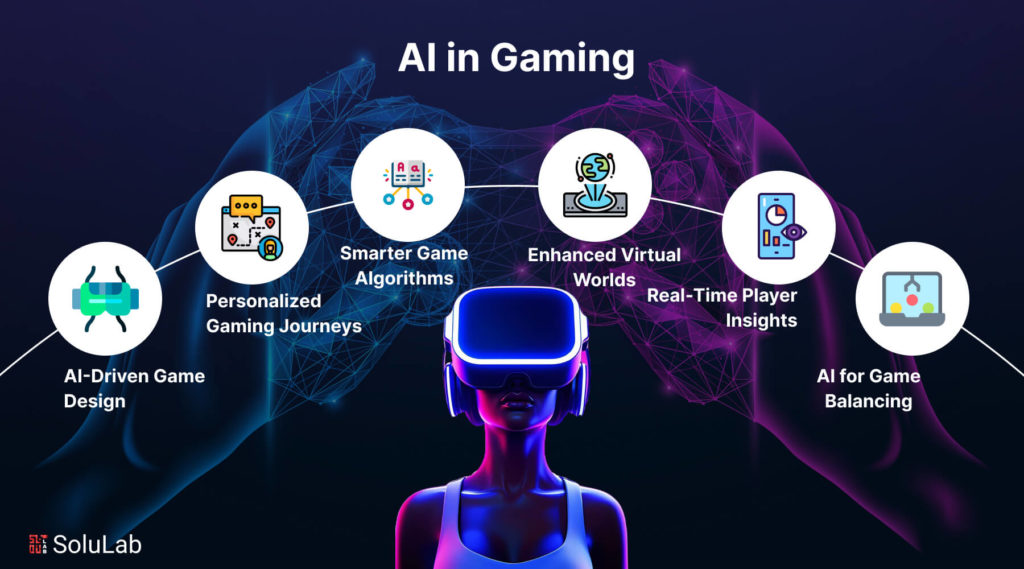
Artificial Intelligence has revolutionized the gaming industry by introducing smarter, more responsive, and immersive experiences. Unlike traditional games where NPCs follow pre-scripted behaviors, AI-driven games adapt to player choices, generate unique content, and even learn from gameplay patterns. This shift has led to more engaging narratives, unpredictable challenges, and lifelike virtual worlds. AI in gaming encompasses several domains, including:
- Procedural Content Generation (PCG): Automatically creating game levels, quests, or items.
- Adaptive AI: Adjusting game difficulty based on player skill.
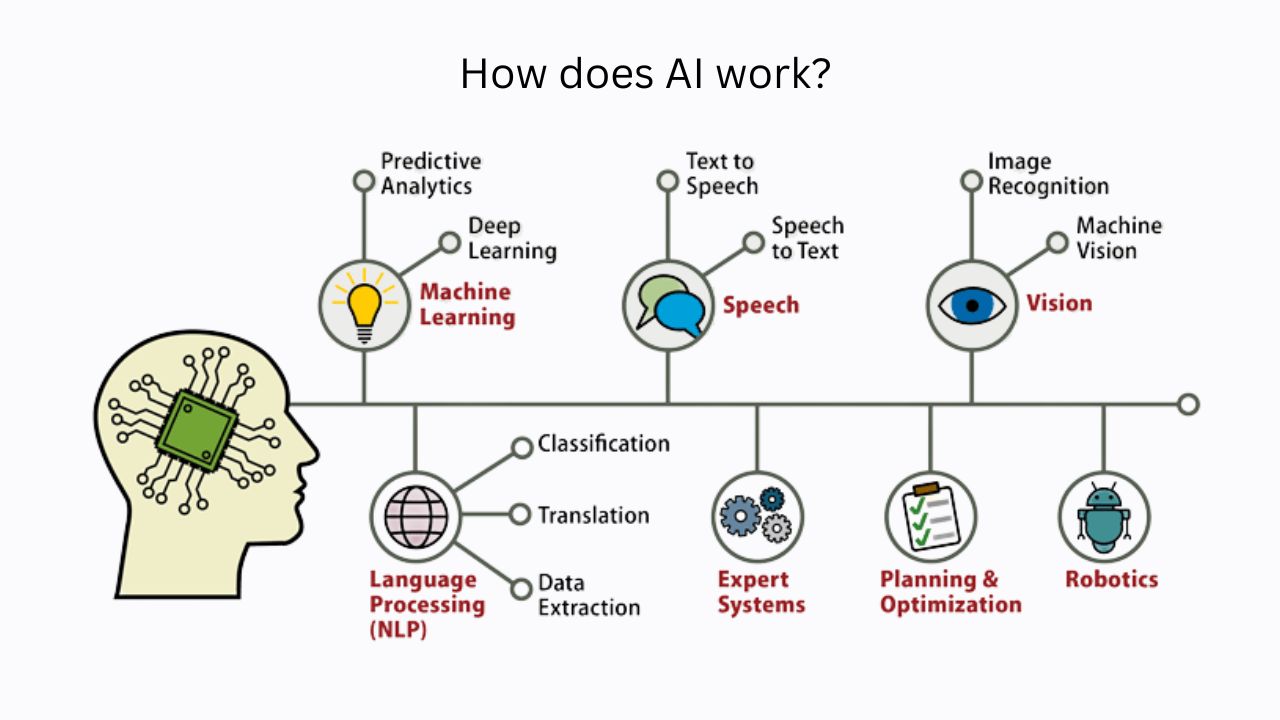
- Behavioral AI: Enabling NPCs to make decisions using pathfinding, decision trees, or neural networks.
- Natural Language Processing (NLP): Powering chatbots and voice-controlled interactions. The integration of AI has blurred the line between scripted and emergent gameplay, allowing for experiences that feel uniquely tailored to each player.
#History / Background
#Early Developments
(1950s–1980s)
The concept of AI in gaming predates modern computing. Early experiments in the 1950s and 1960s, such as Nim (1951) and Tic-Tac-Toe (1952), used simple algorithms to compete against human players. The 1970s saw the rise of arcade games like Pong (1972) and Space Invaders (1978), which featured basic AI opponents with predictable patterns. One of the first games to incorporate adaptive AI was Pac-Man (1980), where ghosts followed distinct behavioral rules (e.g., Blinky chased the player, while Pinky ambushed from the side). This marked a shift toward more dynamic enemy behavior.
#The 1990s: Rule-Based AI and 3D Worlds The 1990s introduced 3D graphics and more complex AI systems. Games like Half-Life (1998) featured NPCs with scripted but responsive behaviors, while Deus Ex (2000) allowed players to approach missions in multiple ways, thanks to AI-driven decision-making.
#The 2000s: Machine Learning and Procedural Generation The 2000s saw the adoption of machine learning in gaming. F.E.A.R. (2005) used a goal-oriented action planning (GOAP) system, enabling NPCs to dynamically combine actions (e.g., reloading while moving). Spore (2008) employed procedural generation to create unique creatures and planets.
#The 2010s–Present: Deep Learning and Adaptive Experiences Modern AI leverages deep learning and reinforcement learning to create more sophisticated behaviors. Games like The Last of Us Part II (2020) use AI to simulate realistic enemy tactics, while AI Dungeon (2019) employs large language models (LLMs) to generate dynamic narratives. The rise of cloud computing and neural networks has further expanded AI’s role in gaming.
#How It Works
#
- Procedural Content Generation (PCG) PCG uses algorithms to create game content dynamically, reducing the need for manual design. Techniques include:
- Noise-based generation: Perlin noise or Simplex noise creates terrain, caves, or textures.
- Grammar-based systems: Rules define how elements (e.g., buildings, quests) are assembled.
- Neural networks: Generative Adversarial Networks (GANs) or Variational Autoencoders (VAEs) produce new assets based on training data. Example: Minecraft (2011) uses seeded noise functions to generate infinite worlds.
#
- Adaptive AI and Difficulty Balancing AI adjusts game difficulty in real-time by:
- Player modeling: Tracking player skill (e.g., reaction time, accuracy) and modifying enemy strength.
- Dynamic scripting: Changing NPC behaviors based on performance (e.g., Left 4 Dead’s "AI Director").
- Reinforcement learning: NPCs learn optimal strategies through trial and error (e.g., AlphaStar for StarCraft II). Example: Celeste (2018) uses adaptive difficulty to ensure players face manageable challenges.
#
- Behavioral AI for NPCs NPCs require intelligent decision-making to appear lifelike. Common methods include:
- Finite State Machines (FSMs): NPCs transition between predefined states (e.g., "patrol," "attack," "flee").
- Behavior Trees: Hierarchical decision-making for complex behaviors (e.g., Halo’s enemies).
- Pathfinding: Algorithms like A* or Dijkstra’s find optimal routes for NPCs.
- Machine Learning: Neural networks predict player actions (e.g., Middle-earth: Shadow of Mordor’s Nemesis System). Example: Red Dead Redemption 2 (2018) uses behavior trees to simulate realistic NPC routines (e.g., farming, socializing).
#
- Natural Language Processing (NLP) and Voice AI NLP enables games to understand and respond to player speech or text:
- Chatbots: NPCs converse using pre-trained models (e.g., AI Dungeon).
- Voice commands: Games like The Elder Scrolls V: Skyrim allow voice-activated spells or actions.
- Sentiment analysis: AI detects player emotions via voice tone or text input (e.g., Hellblade: Senua’s Sacrifice).
#
- Reinforcement Learning (RL) for Game AI RL trains AI agents by rewarding desired behaviors. Key applications:
- Superhuman performance: AlphaGo (2016) defeated human champions in Go.
- Game balancing: AI adjusts difficulty or spawns enemies dynamically.
- Procedural storytelling: RL generates coherent narratives (e.g., Prom Week). Example: OpenAI Five (2018) used RL to master Dota 2, defeating professional teams.
#Important Facts
- AI in NPCs: Modern NPCs can remember player interactions, hold grudges, or adapt strategies (e.g., Middle-earth: Shadow of Mordor’s Nemesis System).
- Procedural Worlds: Games like No Man’s Sky (2016) generate entire planets with unique ecosystems using AI.
- Voice AI: Starfield (2023) and Cyberpunk 2077 (2020) use NLP for immersive dialogue.
- AI-Generated Music: Tools like AIVA compose dynamic soundtracks based on gameplay.
- Cheating Prevention: AI detects and mitigates cheating in multiplayer games (e.g., Valorant’s anti-cheat systems).
- Accessibility: AI-powered tools like Seeing AI help visually impaired gamers navigate virtual worlds.
- Ethical Concerns: AI-generated content raises questions about copyright, originality, and job displacement for human designers.
#Timeline
- Foundational ideas
Core concepts and early methods shape How Does AI in Gaming Work?.
- Practical use
Tools, examples, and real-world deployments make the topic easier to evaluate.
- Responsible implementation
Current work focuses on reliability, governance, performance, and measurable impact.
#Related Terms
#FAQ
What does How Does AI in Gaming Work? cover?
Explains how does ai in gaming work?, including the main process, tools, examples, risks, and practical implementation steps.
Why is How Does AI in Gaming Work? important?
It helps readers understand key concepts, compare practical use cases, and evaluate how Artificial Intelligence decisions affect outcomes, risks, and implementation choices.
What should readers verify before applying this topic?
Readers should compare benefits, limitations, data requirements, and related themes such as Does, AI, Gaming before using the ideas in real projects.
#References
- How Does AI in Gaming Work? terminology and background research
- How Does AI in Gaming Work? use cases, implementation examples, and limitations
- Artificial Intelligence best practices, standards, and risk guidance
- Does case studies, benchmarks, and current industry analysis
Comments
No comments yet. Start the discussion with a useful note.