

#Short Answer
Explains how does ai in agriculture work?, including the main process, tools, examples, risks, and practical implementation steps.
#Infobox
#Overview
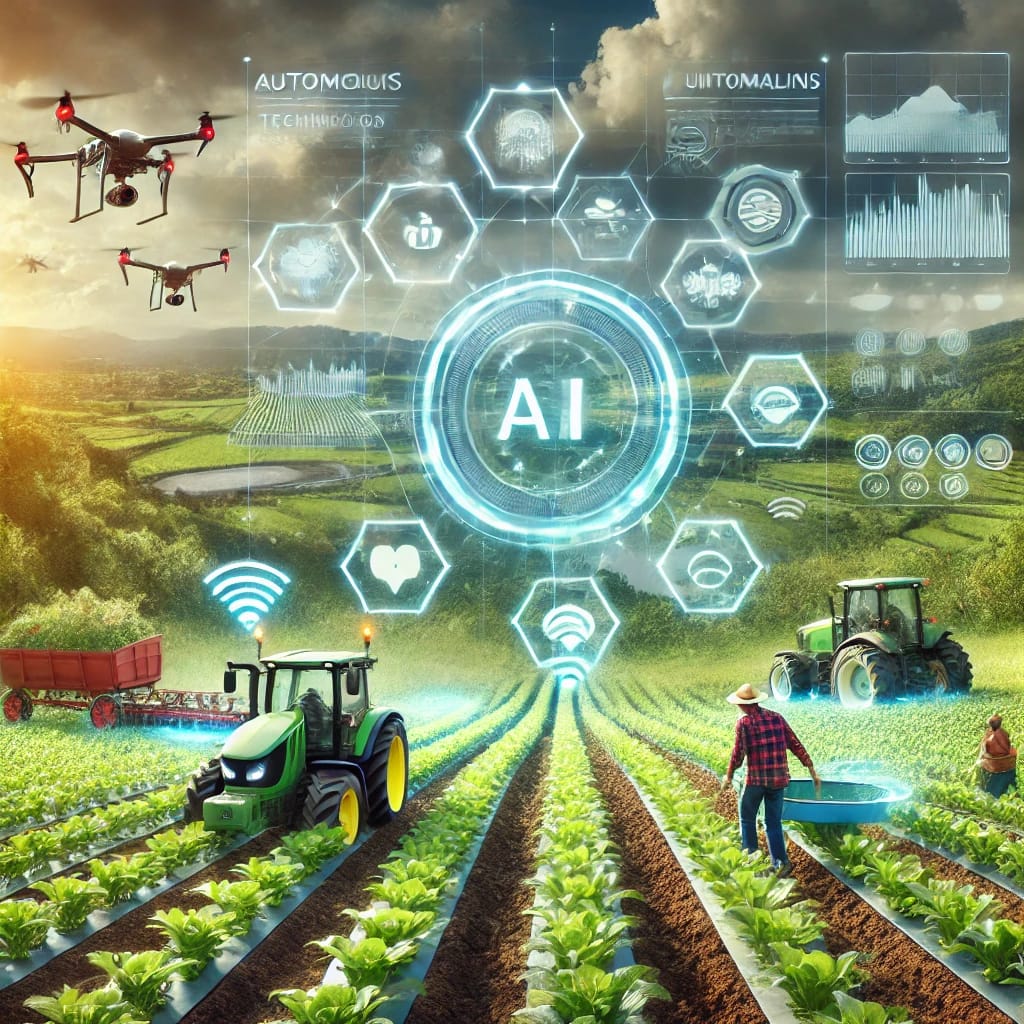
Artificial Intelligence (AI) is transforming agriculture by introducing intelligent systems that enhance decision-making, automate labor-intensive processes, and optimize resource allocation. From small-scale farms to large agribusinesses, AI technologies are being integrated to address challenges such as climate change, soil degradation, water scarcity, and labor shortages. By leveraging advanced algorithms and real-time data, AI enables farmers to monitor crops with unprecedented accuracy, predict yield outcomes, and respond to threats like pests and diseases before they escalate. The integration of AI in agriculture spans multiple domains, including crop management, livestock monitoring, supply chain optimization, and market forecasting. Tools such as autonomous tractors, AI-powered drones, and smart irrigation systems are becoming increasingly common, reducing human error and increasing operational efficiency. Additionally, AI facilitates the development of sustainable farming practices by minimizing the use of fertilizers, pesticides, and water, thereby lowering the environmental footprint of agriculture. As global food demand continues to rise due to population growth and changing dietary patterns, AI offers a pathway to meet these challenges without expanding arable land or increasing resource consumption. The convergence of AI with other emerging technologies like the Internet of Things (IoT), 5G connectivity, and edge computing is further accelerating the digital transformation of agriculture, making it smarter, more resilient, and more adaptive to future challenges.
#History / Background
The application of AI in agriculture has evolved over several decades, rooted in early advancements in computing and data analysis. The concept of using machines to assist in farming dates back to the 1960s with the development of the first agricultural robots and expert systems designed to provide crop management advice. However, the real transformation began in the late 20th and early 21st centuries with the advent of digital technologies and the internet. In the 1980s and 1990s, researchers started exploring the use of expert systems—AI programs that mimic human decision-making—to assist farmers in diagnosing crop diseases and recommending treatments. These systems laid the foundation for modern AI applications by demonstrating how structured knowledge could be used to solve complex agricultural problems. The 2000s marked a turning point with the proliferation of GPS technology, which enabled precision agriculture. Farmers began using GPS-guided tractors and variable rate technology (VRT) to apply inputs like seeds, fertilizers, and pesticides more efficiently. This period also saw the rise of remote sensing through satellites and drones, providing high-resolution imagery of farmlands that could be analyzed for crop health and growth patterns. The introduction of machine learning algorithms in the 2010s revolutionized agricultural AI. Companies like Climate Corporation (acquired by Bayer) developed predictive models that could analyze weather data, soil conditions, and historical yields to provide farmers with actionable insights. The launch of IBM’s Watson Decision Platform for Agriculture in 2017 further demonstrated the potential of AI to integrate multiple data sources and deliver comprehensive farm management solutions. Today, AI in agriculture is a rapidly growing industry, with startups and tech giants investing heavily in research and development. Governments and international organizations are also promoting AI adoption through funding programs and policy initiatives aimed at enhancing food security and sustainability.
#How It Works
AI in agriculture operates through a combination of hardware, software, and data-driven algorithms that work together to monitor, analyze, and optimize farming operations. The process can be broken down into several key components:
#
- Data Collection AI systems rely on vast amounts of data collected from various sources, including:
- IoT Sensors: Soil moisture sensors, temperature and humidity monitors, and weather stations provide real-time data on environmental conditions.
- Drones and Satellites: High-resolution multispectral and hyperspectral imagery is used to assess crop health, detect diseases, and monitor growth patterns.
- Farm Equipment: GPS-enabled tractors, harvesters, and sprayers collect data on field conditions, yield rates, and machinery performance.
- Historical Data: Past crop yields, weather records, and soil test results are used to train predictive models.
#
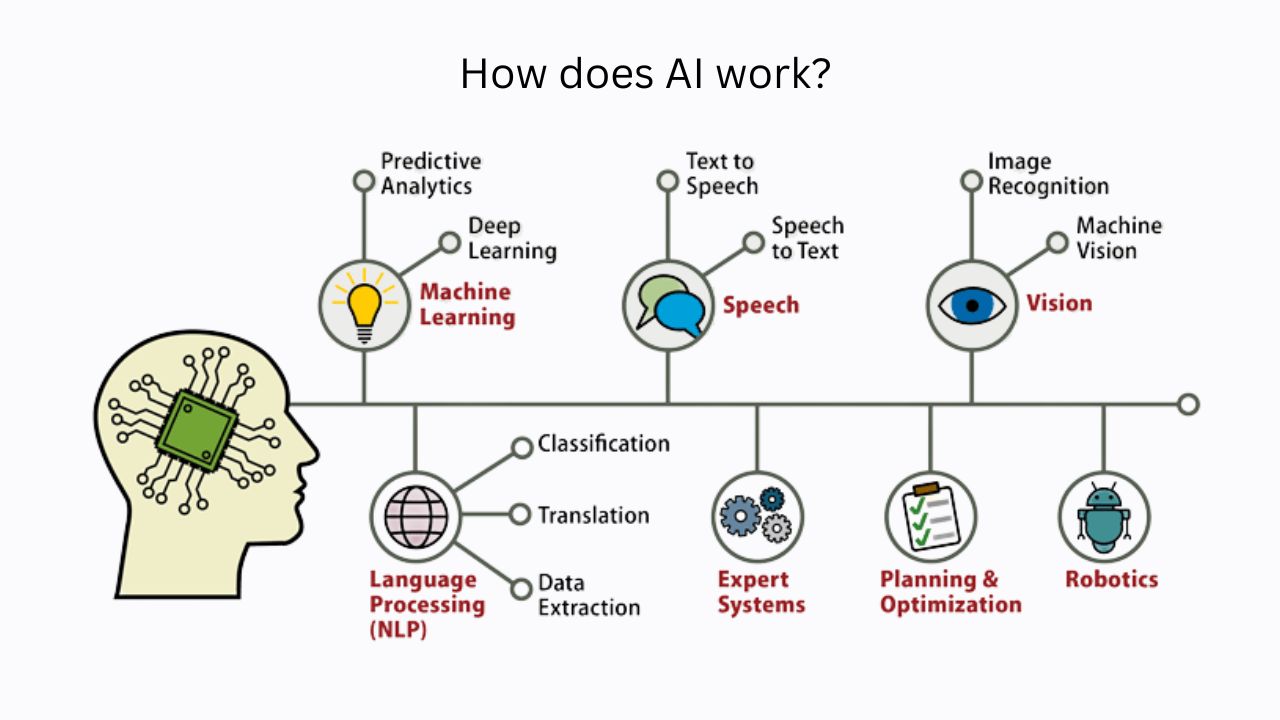
- Data Processing and Analysis Once collected, the data is processed using advanced algorithms to extract meaningful insights. Machine learning models, including deep learning and neural networks, are trained on historical and real-time data to identify patterns, detect anomalies, and make predictions. Common techniques include:
- Computer Vision: AI-powered image recognition analyzes drone and satellite imagery to identify crop diseases, nutrient deficiencies, and pest infestations.
- Predictive Analytics: Models forecast crop yields, weather impacts, and market trends based on historical and current data.
- Natural Language Processing (NLP): AI systems interpret unstructured data from farmer reports, research papers, and weather forecasts to provide contextual recommendations.
#
- Decision Support and Automation AI systems provide farmers with actionable insights through dashboards, mobile apps, and automated alerts. These recommendations may include:
- Precision Farming: Adjusting planting density, fertilizer application, and irrigation based on soil and crop conditions.
- Pest and Disease Management: Identifying early signs of infestations and recommending targeted treatments.
- Autonomous Farming: Deploying AI-driven robots and drones to perform tasks such as weeding, harvesting, and spraying pesticides.
- Supply Chain Optimization: Predicting demand, managing inventory, and optimizing logistics to reduce waste and improve profitability.
#
- Implementation and Feedback Loop Farmers implement AI recommendations and continuously feed new data back into the system. This feedback loop allows the AI models to improve over time, becoming more accurate and reliable. Cloud computing and edge computing play crucial roles in enabling real-time data processing and decision-making, even in remote agricultural settings.
#Important Facts
- Precision Agriculture: AI enables farmers to apply inputs like water, fertilizers, and pesticides with pinpoint accuracy, reducing waste by up to 30% and increasing yields by 20-30%.
- Early Disease Detection: Computer vision systems can detect crop diseases such as powdery mildew or rust with over 90% accuracy, allowing for timely intervention.
- Autonomous Tractors: Companies like John Deere offer self-driving tractors that use AI and GPS to plant, cultivate, and harvest crops without human intervention.
- Yield Prediction: AI models can predict crop yields with an accuracy of up to 95% by analyzing historical data, weather patterns, and soil conditions.
- Livestock Monitoring: AI-powered cameras and wearables track animal health, behavior, and feeding patterns, reducing mortality rates and improving productivity.
- Climate Resilience: AI helps farmers adapt to climate change by providing real-time weather forecasts, drought predictions, and flood alerts.
- Cost Savings: AI-driven automation reduces labor costs and minimizes input waste, leading to significant financial savings for farmers.
- Sustainability Impact: AI contributes to sustainable farming by promoting regenerative practices, reducing chemical use, and optimizing water consumption.
#Timeline
- Foundational ideas
Core concepts and early methods shape How Does AI in Agriculture Work?.
- Practical use
Tools, examples, and real-world deployments make the topic easier to evaluate.
- Responsible implementation
Current work focuses on reliability, governance, performance, and measurable impact.
#Related Terms
#FAQ
What does How Does AI in Agriculture Work? cover?
Explains how does ai in agriculture work?, including the main process, tools, examples, risks, and practical implementation steps.
Why is How Does AI in Agriculture Work? important?
It helps readers understand key concepts, compare practical use cases, and evaluate how Artificial Intelligence decisions affect outcomes, risks, and implementation choices.
What should readers verify before applying this topic?
Readers should compare benefits, limitations, data requirements, and related themes such as Does, AI, Agriculture before using the ideas in real projects.
#References
- How Does AI in Agriculture Work? terminology and background research
- How Does AI in Agriculture Work? use cases, implementation examples, and limitations
- Artificial Intelligence best practices, standards, and risk guidance
- Does case studies, benchmarks, and current industry analysis


Comments
No comments yet. Start the discussion with a useful note.