


#Short Answer
Highlights leading AI ethics tools and resources, comparing use cases, strengths, selection criteria, and practical value for readers.
#Infobox
Best AI Ethics Tools and Resources Type AI Ethics Frameworks, Tools, and Educational Resources Primary Focus Responsible AI Development, Bias Mitigation, Transparency, Accountability Developed By Academic Institutions, Tech Companies, Non-Profits, Government Agencies First Introduced Early 2010s (with major frameworks emerging post-2016) Latest Version Varies by tool (many updated quarterly or annually) License Open Source (majority), Proprietary, Creative Commons Website Best Places to Live | Compare cost of living, crime, cities, schools
#Overview
The rapid advancement of artificial intelligence has brought unprecedented opportunities alongside significant ethical challenges. AI ethics tools and resources serve as essential instruments to navigate these complexities, ensuring that AI systems align with human values and societal norms. These resources are categorized into several key areas:
- Ethical Frameworks: Principles and guidelines that define responsible AI development.
- Bias Detection and Mitigation Tools: Software to identify and reduce biases in AI models.
- Explainability and Interpretability Tools: Techniques to make AI decisions transparent and understandable.
- Privacy-Preserving Technologies: Methods to protect user data while enabling AI functionality.
- Datasets and Benchmarks: Curated collections for training and evaluating ethical AI systems.
- Educational Resources: Courses, guidelines, and best practices for AI ethics implementation.
These tools are increasingly integrated into AI development pipelines, regulatory compliance frameworks, and corporate governance policies. Their adoption is driven by growing public scrutiny, legal requirements (such as the EU AI Act), and the need for competitive differentiation in an ethical AI market.
#History / Background
The evolution of AI ethics tools can be traced back to early discussions on machine ethics in the 1950s and 1960s, but significant progress began in the 2010s as AI systems became more pervasive. Key milestones include:
- 2011: The launch of the Machine Ethics research field, focusing on moral decision-making in AI.
- 2016: The publication of Ethics Guidelines for Trustworthy AI by the European Commission’s High-Level Expert Group on AI.
- 2018: Google’s release of What-If Tool, one of the first interactive tools for bias detection in machine learning models.
- 2019: IBM’s AI Fairness 360 toolkit, providing a comprehensive suite for bias identification and mitigation.
- 2020: The establishment of the Partnership on AI, a coalition of tech companies and NGOs promoting ethical AI practices.
- 2021: The EU’s Proposal for a Regulation on Artificial Intelligence, mandating ethical compliance for high-risk AI systems.
- 2023: The widespread adoption of LLM (Large Language Model) ethics tools to address hallucinations, toxicity, and misinformation in generative AI.
The field has since expanded to include specialized tools for generative AI, autonomous systems, and real-world applications like healthcare and finance.
#How It Works
AI ethics tools operate through various methodologies depending on their specific function. Below are the core mechanisms:
#Ethical Frameworks
These are structured guidelines that outline principles for responsible AI. Examples include:
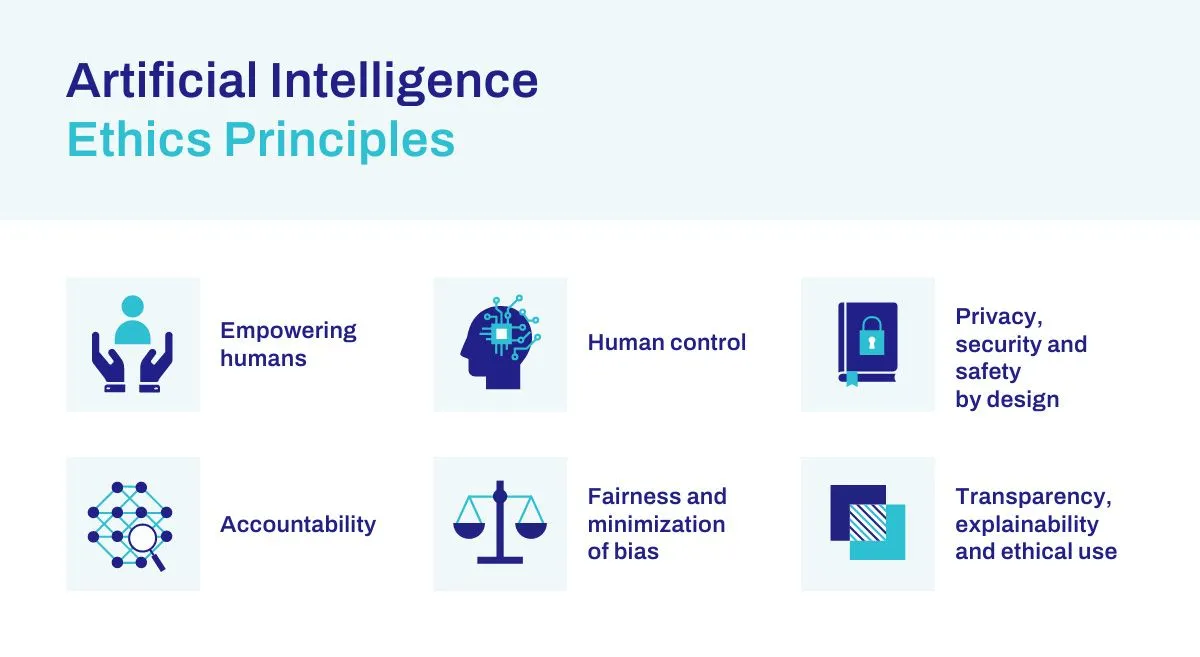
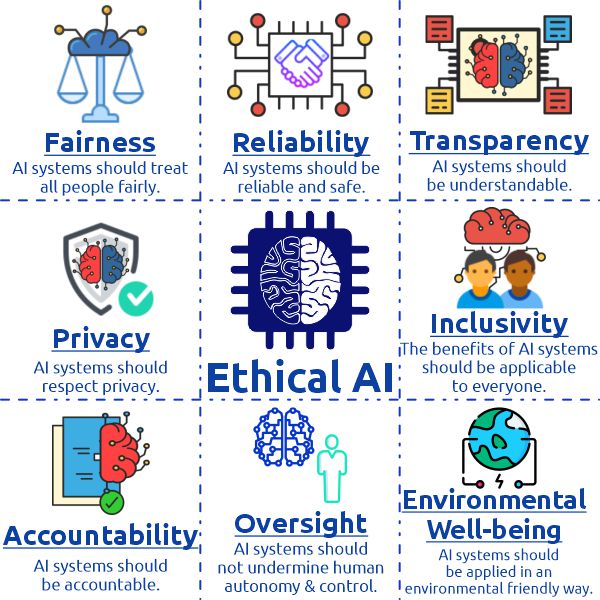
- Fairness: Ensuring AI systems do not discriminate based on race, gender, or other protected attributes.
- Transparency: Providing clear explanations for AI decisions (e.g., through model cards or decision trees).
- Accountability: Assigning responsibility for AI outcomes to developers, organizations, or users.
- Privacy: Implementing techniques like differential privacy or federated learning to protect user data.
#Bias Detection and Mitigation
Tools in this category analyze datasets and models for biases using statistical methods, such as:
- Disparate Impact Analysis: Measuring how AI decisions affect different demographic groups.
- Counterfactual Fairness Testing: Simulating how outcomes would change if sensitive attributes (e.g., race) were altered.
- Adversarial Debiasing: Training models to ignore protected attributes while maintaining accuracy.
Popular tools include Fairlearn, Aequitas, and IBM AI Fairness 360.
#Explainability and Interpretability
These tools help users understand AI decisions through:
- SHAP (SHapley Additive exPlanations): Assigning importance scores to input features.
- LIME (Local Interpretable Model-agnostic Explanations): Approximating model behavior locally.
- Attention Mechanisms: Highlighting which parts of input data influence model predictions (common in NLP).
- Model Cards: Standardized documentation of model performance, limitations, and intended use cases.
Frameworks like TCAV (Testing with Concept Activation Vectors) and Captum are widely used for deep learning models.
#Privacy-Preserving Technologies
These methods enable AI training and inference without exposing raw data:
- Federated Learning: Training models across decentralized devices while keeping data local (e.g., Google’s Federated Averaging).
- Homomorphic Encryption: Performing computations on encrypted data without decryption.
- Differential Privacy: Adding noise to datasets to prevent re-identification of individuals.
- Secure Multi-Party Computation (SMPC): Enabling collaborative computation without sharing raw data.
#Datasets and Benchmarks
Curated datasets help evaluate AI systems for ethical concerns, such as:
- Bias Benchmarks: Bias in Open-Ended Language Generation Evaluation (BOLD), FairFace.
- Privacy Datasets: MNIST-C (for privacy-preserving image classification).
- Explainability Datasets: VQA-X (Visual Question Answering with explanations).
#Important Facts
- Regulatory Compliance: Tools like IBM Watson OpenScale help organizations adhere to regulations such as GDPR, CCPA, and the EU AI Act.
- Industry Adoption: Over 60% of Fortune 500 companies now have dedicated AI ethics teams or use third-party tools.
- Open Source Dominance: 70% of AI ethics tools are open-source, fostering collaboration and transparency.
- Generative AI Challenges: Tools like Detoxify and Hugging Face’s Evaluate specifically address toxicity and hallucinations in LLMs.
- Ethical AI Certifications: Initiatives like IEEE CertifAIEd provide standardized assessments for ethical AI systems.
- Bias in Hiring AI: Studies show that AI-powered hiring tools can exhibit gender bias, leading to lawsuits (e.g., Amazon’s scrapped AI recruiter in 2018).
- Explainability in Healthcare: Tools like DeepLIFT are used to interpret AI-driven medical diagnoses.
#Timeline
Year Event 1950 Alan Turing’s "Computing Machinery and Intelligence" raises early ethical questions about AI. 1960 Joseph Weizenbaum develops ELIZA, highlighting concerns about AI’s impact on human interaction. 2011 Launch of the Machine Ethics research field at the University of Oxford. 2016 European Commission publishes Ethics Guidelines for Trustworthy AI. 2018 Google releases What-If Tool for bias detection in ML models. 2019 IBM launches AI Fairness 360, a comprehensive bias mitigation toolkit. 2020 Partnership on AI releases Guidelines for AI and COVID-19. 2021 EU proposes the AI Regulation, mandating ethical compliance for high-risk AI. 2022 NIST publishes AI Risk Management Framework. 2023 Release of Hugging Face’s Evaluate for generative AI ethics assessment.
#Related Terms
#FAQ
What does Best AI Ethics Tools And Resources cover?
Highlights leading AI ethics tools and resources, comparing use cases, strengths, selection criteria, and practical value for readers.
Why is Best AI Ethics Tools And Resources important?
It helps readers understand key concepts, compare practical use cases, and evaluate how AI Ethics decisions affect outcomes, risks, and implementation choices.
What should readers verify before applying this topic?
Readers should compare the benefits, limitations, data requirements, and related themes such as Comparison, Selection Criteria, Ethics before using the ideas in real projects.
#References
- Best AI Ethics Tools And Resources terminology and background research
- Best AI Ethics Tools And Resources use cases, implementation examples, and limitations
- AI Ethics best practices, standards, and risk guidance
- Comparison case studies, benchmarks, and current industry analysis


Comments
No comments yet. Start the discussion with a useful note.