

#Short Answer
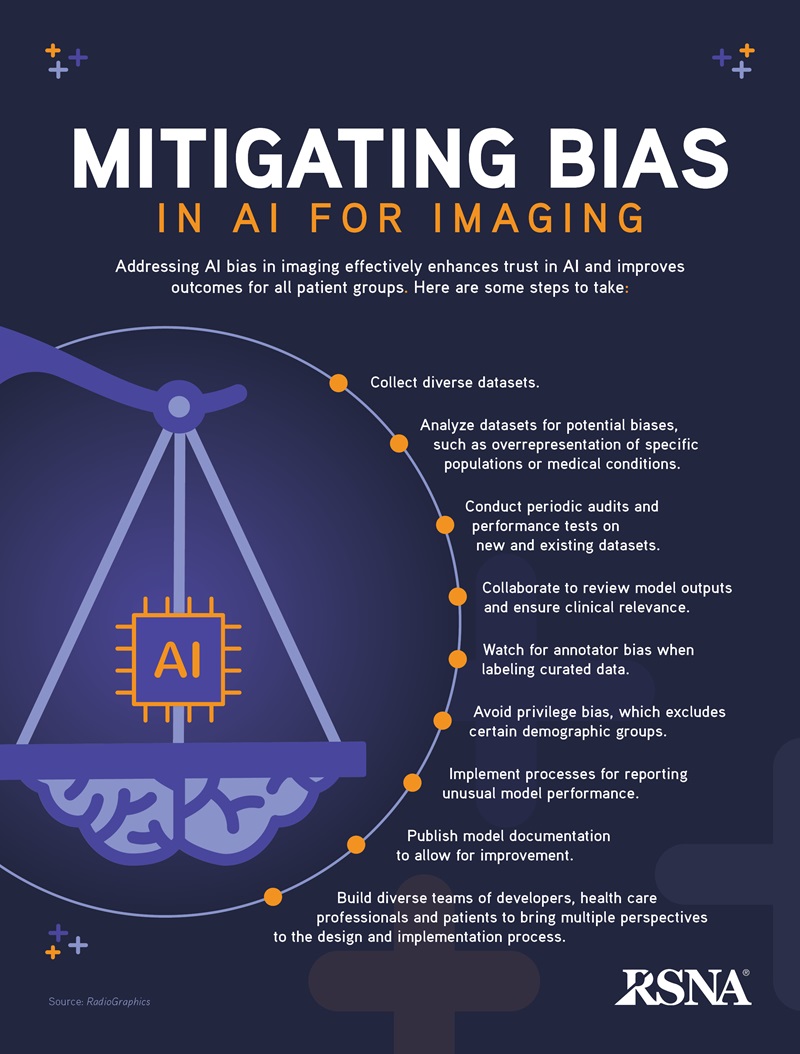
Artificial intelligence (AI) bias occurs when an AI system produces results that are systematically prejudiced due to erroneous assumptions in the machine learning process. Unlike human bias, which is often intentional, AI bias typically arises unintentionally from the data used to train models or the design of the algorithms themselves. This phenomenon affects a wide range of AI applications, including facial recognition, predictive policing, loan approval systems, and medical diagnostics.
#Infobox
#Overview
Artificial intelligence (AI) bias occurs when an AI system produces results that are systematically prejudiced due to erroneous assumptions in the machine learning process. Unlike human bias, which is often intentional, AI bias typically arises unintentionally from the data used to train models or the design of the algorithms themselves. This phenomenon affects a wide range of AI applications, including facial recognition, predictive policing, loan approval systems, and medical diagnostics.
Bias in AI can manifest in various forms, such as data bias, where the training dataset does not represent the real-world population, or algorithmic bias, where the model's design favors certain outcomes over others. The consequences of unchecked AI bias can be severe, leading to discrimination against marginalized groups, erosion of public trust in AI technologies, and legal repercussions for organizations deploying biased systems.
#History / Background
The study of bias in AI systems traces back to the early days of machine learning, but it gained significant attention in the 2010s as AI applications became more widespread. One of the earliest documented cases of AI bias occurred in 2015, when a facial recognition system developed by a major technology company was found to perform poorly on darker-skinned individuals, particularly women. This incident highlighted the lack of diversity in training datasets and sparked broader discussions about the ethical implications of AI.
In 2016, ProPublica's investigation into COMPAS, a risk assessment tool used in the U.S. criminal justice system, revealed that the algorithm was biased against African American defendants, falsely labeling them as higher risk for reoffending. This case underscored the real-world consequences of biased AI systems and led to increased scrutiny of algorithmic decision-making in high-stakes domains.
Governments and regulatory bodies have since begun addressing AI bias through legislation and guidelines. The European Union's General Data Protection Regulation (GDPR) includes provisions for automated decision-making transparency, while the U.S. has seen the introduction of bills aimed at auditing AI systems for bias. Organizations such as the National Institute of Standards and Technology (NIST) have also developed frameworks for assessing and mitigating AI bias.
#How It Works
#Types of AI bias
AI bias can be categorized into several types, each originating from different stages of the AI development lifecycle:
Data bias
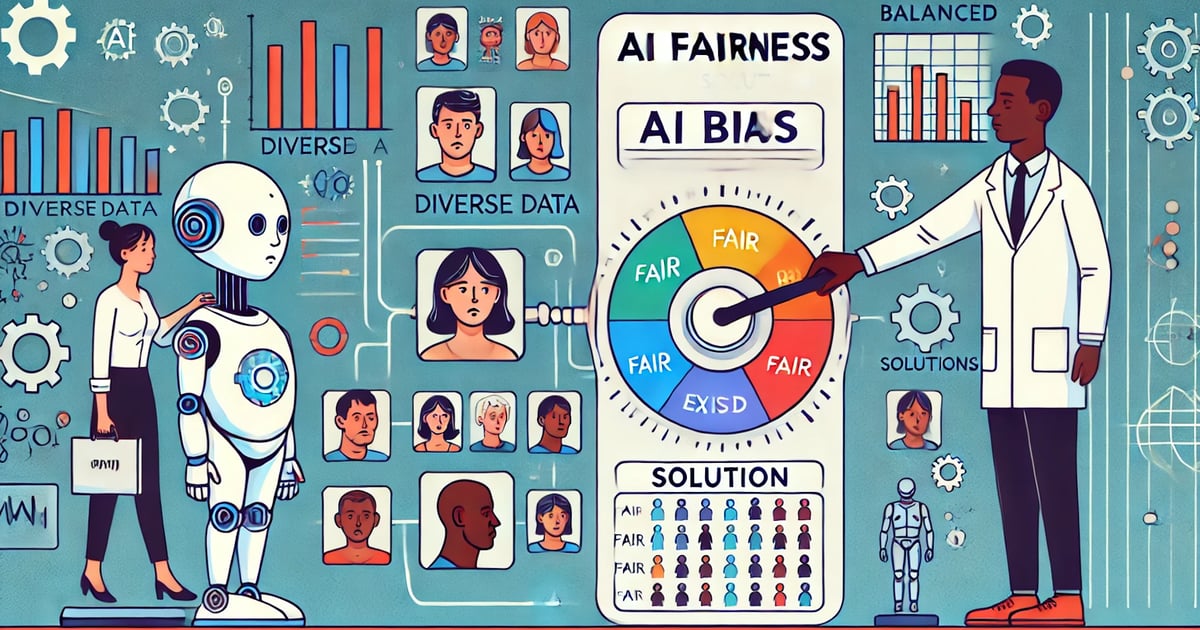
Occurs when the training dataset is not representative of the real-world population. For example, if a facial recognition system is trained primarily on images of light-skinned individuals, it will perform poorly on darker-skinned individuals. Data bias can stem from historical prejudices, sampling errors, or underrepresentation of certain groups.
Algorithmic bias
Arises from the design of the algorithm itself. Even with unbiased data, certain algorithms may inadvertently favor specific outcomes due to their mathematical properties. For instance, some optimization techniques prioritize accuracy over fairness, leading to biased predictions.
Measurement bias
Occurs when the way data is collected or labeled introduces bias. For example, if a hiring algorithm uses performance reviews from a predominantly male workforce to train a model, it may learn to favor male candidates.
Historical bias
Reflects existing societal prejudices embedded in historical data. For example, if historical hiring data shows a preference for certain demographics, an AI system trained on this data may perpetuate those biases.
Aggregation bias
Happens when data from diverse groups is aggregated in a way that obscures differences between them. This can lead to models that perform well on average but poorly for specific subgroups.
#Mechanisms of bias propagation
Bias in AI systems can propagate through multiple stages of development:
- Data collection: Bias can be introduced during the data collection process if the sample is not representative or if the data is labeled in a biased manner.
- Data preprocessing: Cleaning and normalizing data can inadvertently remove or distort information relevant to underrepresented groups.
- Model training: The choice of algorithm and its hyperparameters can influence the model's sensitivity to certain features, leading to biased outcomes.
- Model evaluation: Evaluation metrics may not account for fairness, causing biased models to go undetected during testing.
- Deployment: Even a well-designed model can produce biased results if deployed in a context different from the training environment.
#Important Facts
- Representation matters: Studies have shown that facial recognition systems can have error rates up to 100 times higher for darker-skinned women compared to lighter-skinned men.
- Fairness is not one-size-fits-all: Different definitions of fairness (e.g., demographic parity, equal opportunity) can lead to conflicting outcomes, requiring careful consideration of the application context.
- Bias can be invisible: Unlike human bias, AI bias is often subtle and may not be apparent until the system is deployed in real-world scenarios.
- Regulatory landscape is evolving: Governments worldwide are introducing laws to address AI bias, such as the EU AI Act and the U.S. Algorithmic Accountability Act.
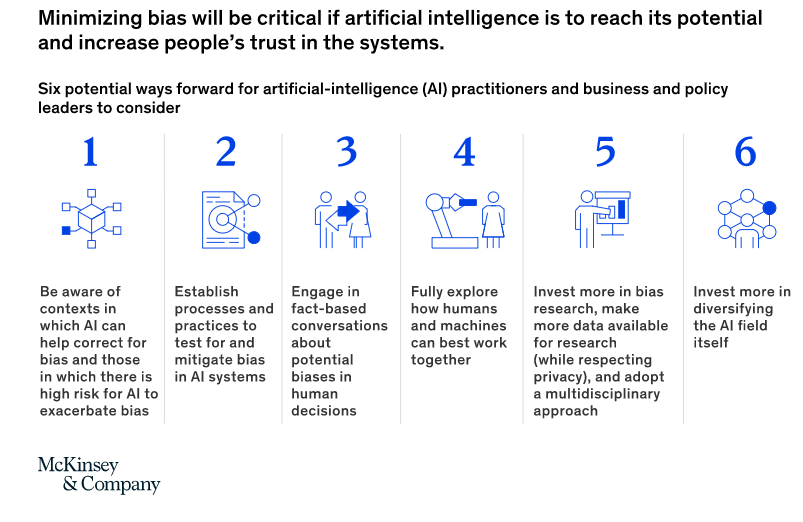
- Mitigation requires interdisciplinary collaboration: Addressing AI bias involves input from data scientists, ethicists, domain experts, and affected communities.
#Timeline
- Early discussions on bias
Early discussions on bias in statistical models and decision-making systems.
- Google Photos labels African
Google Photos labels African American individuals as 'gorillas,' highlighting racial bias in image recognition.
- ProPublica's investigation rev
ProPublica's investigation reveals racial bias in COMPAS, a risk assessment tool used in U.S. courts.
- Amazon scraps an AI
Amazon scraps an AI recruiting tool that showed bias against women due to training on predominantly male resumes.
- IBM releases the 'AI
IBM releases the 'AI Fairness 360' toolkit to help developers detect and mitigate bias in AI models.
- COVID-19 pandemic exposes bias
COVID-19 pandemic exposes bias in AI-driven healthcare tools, with some models performing poorly for minority groups.
- European Commission proposes t
European Commission proposes the AI Act, which includes provisions for high-risk AI systems to undergo bias audits.
- NIST releases the 'AI
NIST releases the 'AI Risk Management Framework,' providing guidelines for identifying and mitigating AI bias.
#Related Terms
#FAQ
What does AI Bias: Understanding And Mitigating It cover?
AI bias: understanding and mitigating IT covers practical examples, benefits, limitations, and important considerations for readers.
Why is AI Bias: Understanding And Mitigating It important?
It helps readers understand key concepts, compare practical use cases, and evaluate how AI Ethics decisions affect outcomes, risks, and implementation choices.
What should readers verify before applying this topic?
Readers should compare the benefits, limitations, data requirements, and related themes such as Bias, Understanding, Mitigating before using the ideas in real projects.
#References
- AI Bias: Understanding And Mitigating It terminology and background research
- AI Bias: Understanding And Mitigating It use cases, implementation examples, and limitations
- AI Ethics best practices, standards, and risk guidance
- Bias case studies, benchmarks, and current industry analysis

Comments
No comments yet. Start the discussion with a useful note.