


#Short Answer
Explores how artificial intelligence shapes justice and fair outcomes, covering practical use cases, benefits, limitations, and risks.
#Infobox
AI fairness governance ensures equitable outcomes in artificial intelligence systems. AI Fairness Governance Field Artificial intelligence, Ethics, Law Focus Equitable algorithmic decision-making Key Concepts Bias mitigation, transparency, accountability, regulatory compliance Notable Frameworks EU AI Act, Algorithmic Accountability Act, NIST AI Risk Management Framework Stakeholders Policymakers, technologists, ethicists, corporations, civil society
#Overview
AI fairness governance refers to the systematic approach of designing, implementing, and overseeing artificial intelligence systems to ensure they produce equitable, unbiased, and just outcomes across diverse populations. As AI systems increasingly influence critical decisions in hiring, lending, criminal justice, healthcare, and education, concerns about algorithmic bias and discriminatory practices have intensified. Fairness governance integrates ethical principles, regulatory requirements, and technical safeguards to mitigate harm and promote accountability in AI deployment.
The concept extends beyond mere technical bias correction to encompass organizational accountability, transparency in decision-making processes, and alignment with societal values. Governance frameworks often emphasize the importance of stakeholder engagement, continuous monitoring, and adaptive policies to address evolving challenges in AI ethics. By establishing clear guidelines and accountability mechanisms, fairness governance seeks to balance innovation with the protection of individual rights and social equity.
#History / Background
The origins of AI fairness governance can be traced to early discussions on algorithmic bias in the 1990s and 2000s, when researchers began documenting disparities in automated decision systems. Landmark studies, such as those by Cynthia Dwork and colleagues in 2012, formalized fairness as a mathematical concept, introducing metrics like demographic parity and equalized odds to quantify bias. These foundational works laid the groundwork for subsequent policy developments.
In 2016, high-profile cases, including the ProPublica investigation into racial bias in the COMPAS recidivism algorithm, brought public attention to the real-world consequences of biased AI. This scrutiny catalyzed regulatory responses, with institutions like the European Commission and the U.S. National Institute of Standards and Technology (NIST) publishing guidelines for trustworthy AI. The EU AI Act, proposed in 2021, marked a significant milestone by classifying high-risk AI systems and mandating fairness assessments.
Corporate initiatives, such as Google's Fairness Indicators and IBM's AI Fairness 360, further democratized access to fairness tools, enabling organizations to audit their models for bias. Meanwhile, grassroots movements and advocacy groups have pushed for stronger legal protections, influencing legislation like the Algorithmic Accountability Act in the United States.
#How It Works
AI fairness governance operates through a multi-layered framework that combines technical, organizational, and regulatory measures. At its core, the process involves identifying potential sources of bias, measuring fairness across sensitive attributes (e.g., race, gender, age), and implementing corrective strategies to ensure equitable outcomes.
#Bias Identification and Measurement
Bias in AI systems often stems from skewed training data, flawed feature selection, or algorithmic design choices. Governance frameworks employ various fairness metrics to detect disparities, including:
- Demographic Parity: Ensures equal selection rates across groups, regardless of outcome.
- Equal Opportunity: Requires equal true positive rates for all groups.
- Predictive Parity: Demands equal positive predictive values across groups.
- Calibration: Ensures predicted probabilities align with actual outcomes for all groups.
Tools like Aequitas, Themis, and Fairlearn automate these assessments, providing visualizations and statistical tests to pinpoint bias.
#Mitigation Strategies
Once bias is identified, governance frameworks recommend several mitigation techniques:
- Pre-processing: Adjusting training data to remove discriminatory patterns (e.g., reweighting, resampling, or generating synthetic data).
- In-processing: Modifying algorithms to incorporate fairness constraints (e.g., adversarial debiasing, regularization).
- Post-processing: Adjusting model outputs to meet fairness criteria (e.g., threshold optimization, outcome calibration).
For example, the IBM AI Fairness 360 toolkit offers over 70 fairness metrics and 10 mitigation algorithms to address bias at different stages of the AI lifecycle.
#Organizational and Regulatory Measures
Governance extends beyond technical solutions to include organizational policies and regulatory compliance. Key components include:
- Ethics Committees: Cross-functional teams that oversee AI projects, assess risks, and ensure alignment with ethical guidelines.
- Documentation and Transparency: Maintaining detailed records of data sources, model decisions, and fairness assessments (e.g., model cards, data sheets).
- Impact Assessments: Conducting Algorithmic Impact Assessments (AIA) to evaluate potential harms before deployment.
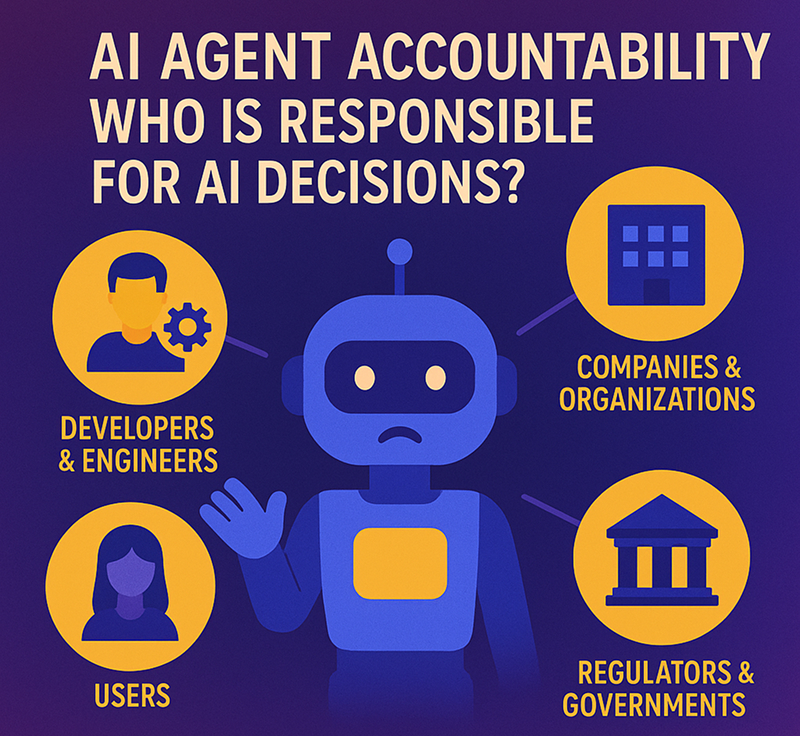
- Accountability Mechanisms: Establishing clear lines of responsibility for AI outcomes, including audit trails and redress processes for affected individuals.
Regulatory frameworks, such as the EU AI Act, classify AI systems by risk level and impose obligations like transparency, human oversight, and post-market monitoring. Non-compliance may result in fines or operational restrictions, incentivizing organizations to prioritize fairness.
#Important Facts
- Bias Amplification: AI systems can exacerbate existing societal biases. For instance, facial recognition technologies have shown higher error rates for darker-skinned individuals, particularly women.
- Fairness vs. Accuracy Trade-offs: Improving fairness may reduce model accuracy, requiring careful balancing to avoid unintended consequences.
- Intersectionality: Bias often intersects across multiple attributes (e.g., race and gender), complicating mitigation efforts.
- Explainability: Fairness governance emphasizes interpretability, as opaque models hinder the identification and correction of bias.
- Global Variability: Fairness standards differ by region. The EU prioritizes human rights, while the U.S. focuses on anti-discrimination laws like the Civil Rights Act of 1964.
- Economic Impact: Biased AI can lead to financial losses, reputational damage, and legal liabilities. For example, Amazon's abandoned AI hiring tool, which discriminated against women, cost the company significant resources.
#Timeline
Year Event 1996 First documented cases of algorithmic bias in credit scoring systems. 2012 Cynthia Dwork et al. publish "Fairness Through Awareness," formalizing fairness metrics. 2016 ProPublica exposes racial bias in the COMPAS recidivism algorithm. 2018 EU releases the Ethics Guidelines for Trustworthy AI. 2019 IBM releases AI Fairness 360, an open-source toolkit for bias detection. 2020 NIST publishes the AI Risk Management Framework draft. 2021 EU proposes the AI Act, classifying high-risk AI systems. 2022 U.S. introduces the Algorithmic Accountability Act to regulate automated decision systems. 2023 UNESCO adopts the Recommendation on the Ethics of AI, emphasizing global fairness standards.
#Related Terms
#FAQ
What does AI And Justice: Fair Outcomes cover?
Explores how artificial intelligence shapes justice and fair outcomes, covering practical use cases, benefits, limitations, and risks.
Why is AI And Justice: Fair Outcomes important?
It helps readers understand key concepts, compare practical use cases, and evaluate how AI Ethics decisions affect outcomes, risks, and implementation choices.
What should readers verify before applying this topic?
Readers should compare the benefits, limitations, data requirements, and related themes such as Justice, Fair, Outcome before using the ideas in real projects.
#References
- AI And Justice: Fair Outcomes terminology and background research
- AI And Justice: Fair Outcomes use cases, implementation examples, and limitations
- AI Ethics best practices, standards, and risk guidance
- Justice case studies, benchmarks, and current industry analysis


Comments
No comments yet. Start the discussion with a useful note.