

#Short Answer
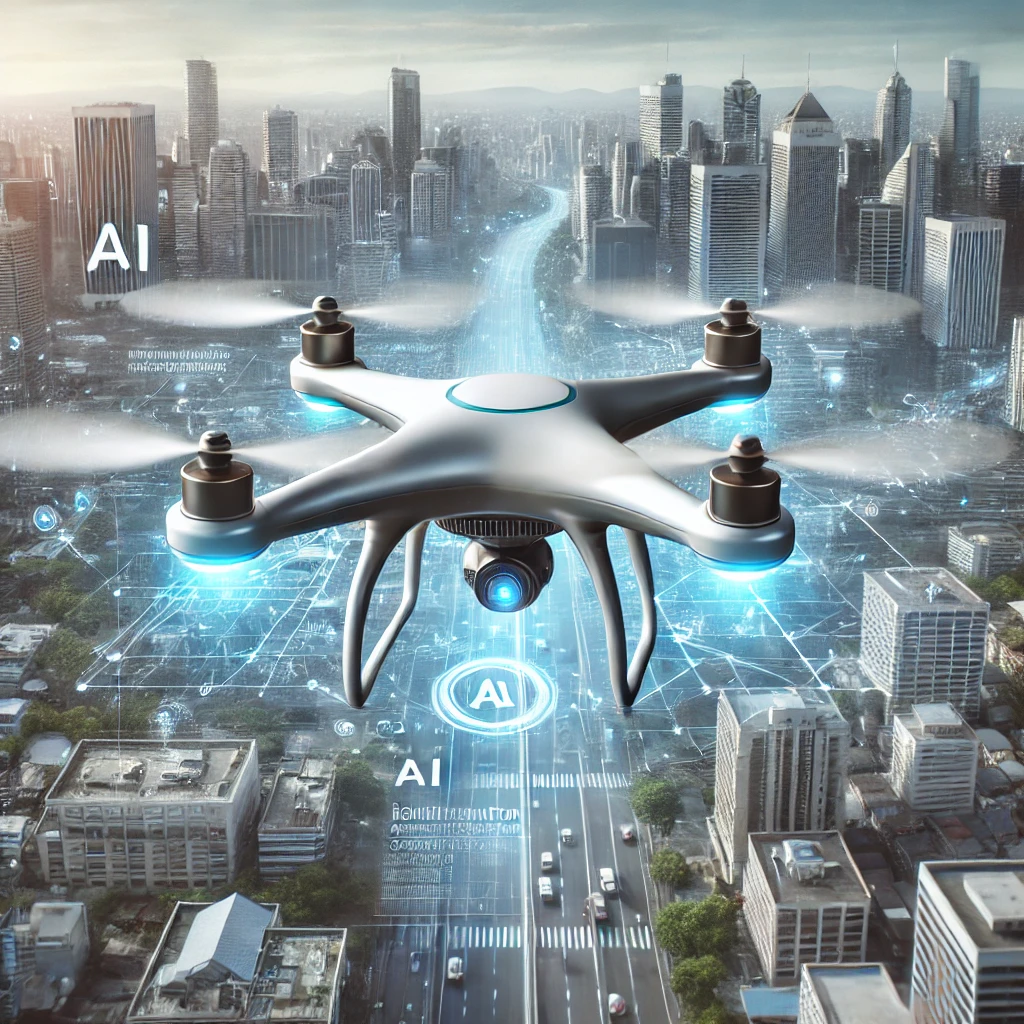
AI-powered autonomous drones use machine learning, computer vision, and sensor fusion to fly, navigate, and perform tasks without human control, transforming industries like delivery, agriculture, and infrastructure inspection.
#Infobox
Artificial intelligence in autonomous drones refers to the integration of AI technologies into unmanned aerial vehicles (UAVs) to enable them to operate without human intervention. These drones utilize advanced algorithms, sensor data, and real-time processing to navigate, make decisions, and perform tasks such as delivery, surveillance, and environmental monitoring. The fusion of AI with drone technology has revolutionized industries by enhancing efficiency, reducing operational costs, and enabling applications previously deemed impractical or impossible.
#Overview
Autonomous drones equipped with AI represent a paradigm shift in aerial robotics. Unlike traditional remote-controlled drones, AI-driven UAVs can interpret their surroundings, avoid obstacles, follow predefined routes, and adapt to dynamic environments. This autonomy is achieved through a combination of computer vision, deep learning, and sensor fusion techniques.
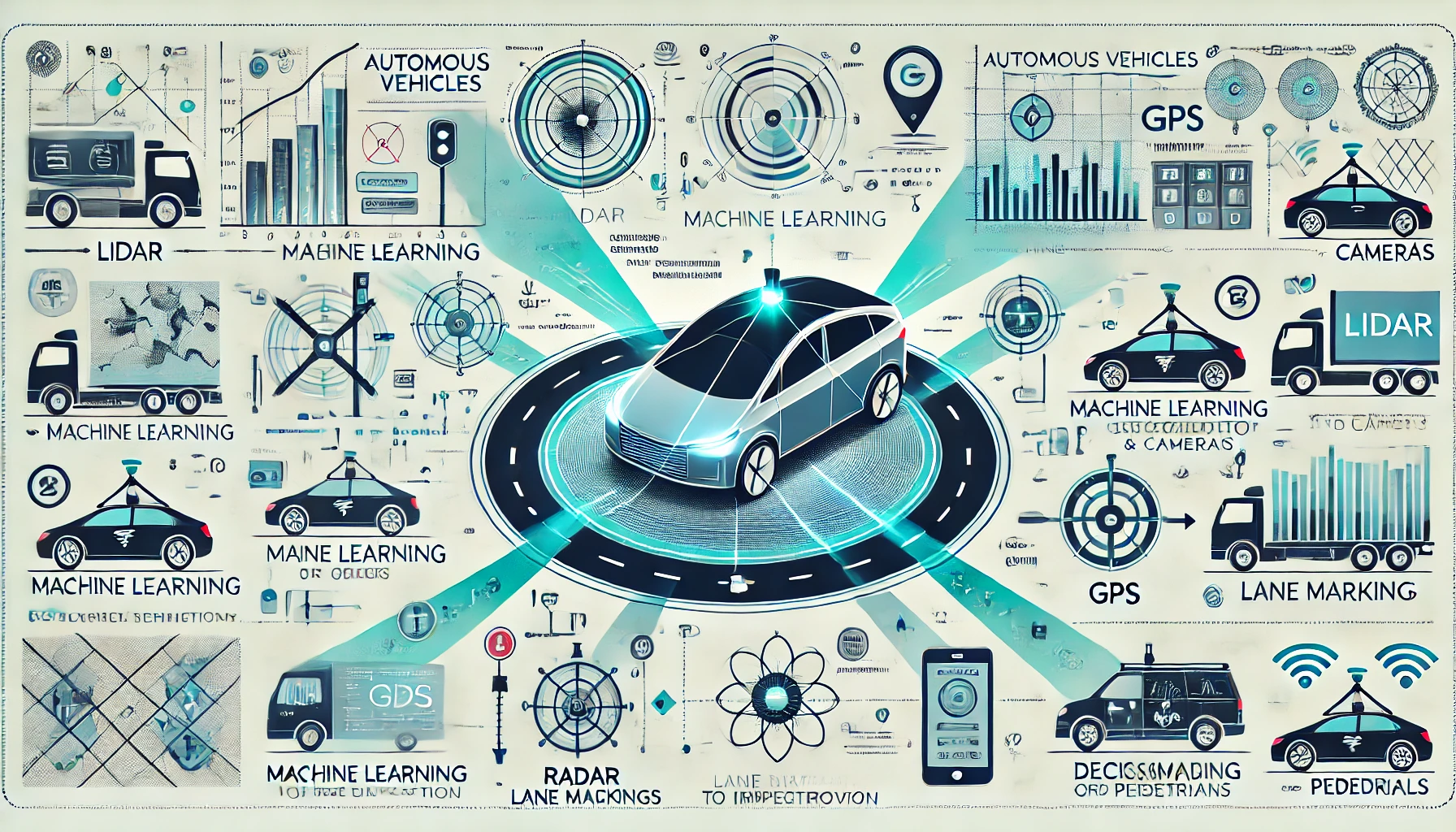
The technology enables drones to execute complex missions such as delivering medical supplies to remote areas, inspecting power lines, monitoring crops, and conducting search-and-rescue operations. AI enhances decision-making by processing vast amounts of data from cameras, LiDAR, GPS, and other sensors in real time, allowing drones to operate safely in urban, rural, and hazardous environments.
#History and background
#Early developments
The concept of autonomous flight predates modern AI. In 1917, Elmer Sperry developed the first autopilot system for aircraft, laying the groundwork for unmanned flight. By the mid-20th century, military applications of drones, such as the Ryan Firebee target drone, demonstrated the feasibility of unmanned aerial systems.
However, true autonomy required advancements in computing and AI. The 1980s and 1990s saw the emergence of early autonomous flight systems, including NASA's Autonomous Rotorcraft Testbed, which used GPS and inertial navigation to guide drones.
#Modern AI integration
The 2010s marked a turning point with the rise of deep learning and edge computing. Companies like Skydio and DJI began integrating AI-powered obstacle avoidance and real-time path planning into consumer and commercial drones. The launch of Tesla Autopilot in 2014 further accelerated the development of AI-driven navigation systems.
In 2016, Amazon Prime Air announced plans to use autonomous drones for package delivery, sparking global interest in AI-powered logistics. Regulatory bodies such as the FAA and EASA began developing frameworks to certify AI-driven drones for commercial use.
#How it works
#Core components
AI-enabled autonomous drones rely on several interconnected systems:
- Sensors: Cameras, LiDAR, ultrasonic sensors, and infrared cameras provide real-time environmental data.
- Processing units: Onboard computers, such as NVIDIA Jetson or Qualcomm Snapdragon, run AI models for object detection and navigation.
- AI algorithms: Deep learning models, including convolutional neural networks (CNNs) and recurrent neural networks (RNNs), analyze sensor data to identify obstacles, classify objects, and predict trajectories.
- Control systems: Flight controllers use sensor fusion (e.g., Kalman filters) to estimate the drone's position and orientation, enabling stable flight.
- Communication modules: Drones may use cellular networks (4G/5G), Wi-Fi, or satellite links to transmit data and receive updates.
#Navigation and path planning
Autonomous drones employ several navigation strategies:
- GPS-based navigation: Uses Global Positioning System signals for waypoint following and route planning.
- Visual odometry: Relies on camera feeds to track movement and estimate position relative to landmarks.
- SLAM (Simultaneous Localization and Mapping): Enables drones to build a map of their environment while simultaneously determining their location within it.
- Reinforcement learning: AI models are trained to optimize flight paths by learning from simulated environments and real-world feedback.
#Obstacle avoidance
AI-powered drones use computer vision to detect and avoid obstacles in real time. Techniques include:
- Object detection: AI models identify pedestrians, vehicles, trees, and buildings using frameworks like YOLO (You Only Look Once) or Faster R-CNN.
- Depth sensing: LiDAR and stereo cameras measure distances to objects, enabling precise maneuvering.
- Predictive modeling: AI predicts the movement of dynamic objects (e.g., birds, other drones) to avoid collisions.
#Important facts
- AI-driven drones can operate in beyond visual line of sight (BVLOS) conditions, expanding their range and utility.
- The global autonomous drone market is projected to reach USD 45.8 billion by 2030, growing at a CAGR of 16.8%.
- Drones equipped with AI can reduce delivery times by up to 70% compared to traditional methods.
- In agriculture, AI-powered drones can monitor crop health by analyzing multispectral imagery, detecting pests, and optimizing irrigation.
- Regulatory challenges remain a significant barrier, with many countries requiring special permits for AI-driven drone operations.
- The first fully autonomous drone delivery in the U.S. was conducted by Wing in 2019, delivering retail items to customers in Virginia.
- AI models used in drones often require thousands of hours of training data, including annotated images and simulated flight scenarios.
#Related Terms
#FAQ
What does AI And Drones: Autonomous Flight cover?
Explores how artificial intelligence shapes drones and autonomous flight, covering practical use cases, benefits, limitations, and risks.
Why is AI And Drones: Autonomous Flight important?
It helps readers understand key concepts, compare practical use cases, and evaluate how Technology decisions affect outcomes, risks, and implementation choices.
What should readers verify before applying this topic?
Readers should compare the benefits, limitations, data requirements, and related themes such as Drone, Autonomou, Flight before using the ideas in real projects.
#References
- AI And Drones: Autonomous Flight terminology and background research
- AI And Drones: Autonomous Flight use cases, implementation examples, and limitations
- Technology best practices, standards, and risk guidance
- Drone case studies, benchmarks, and current industry analysis


Comments
No comments yet. Start the discussion with a useful note.