

#Short Answer
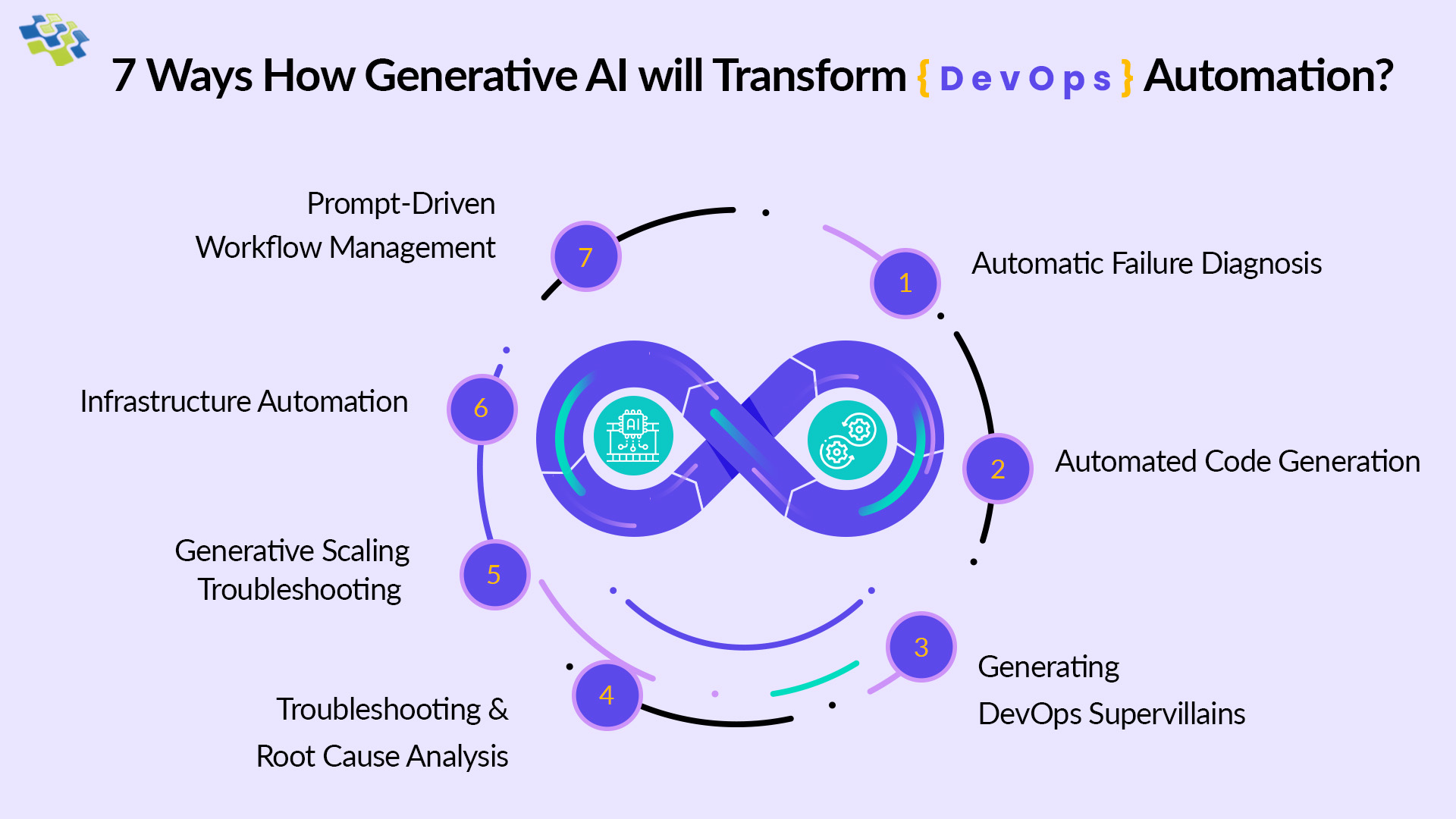
AI in DevOps refers to the integration of artificial intelligence and machine learning techniques to automate, optimize, and enhance software development and IT operations workflows. This approach leverages AI-driven tools to improve efficiency, reduce human error, and accelerate deployment cycles in DevOps pipelines.
#Infobox
#Overview
DevOps, a portmanteau of "development" and "operations," is a set of practices that combines software development (Dev) and IT operations (Ops) to shorten the development lifecycle while delivering high-quality software continuously. The incorporation of artificial intelligence (AI) into DevOps—often termed AI DevOps or AIOps—enhances traditional DevOps methodologies by introducing automation, predictive analytics, and intelligent decision-making.
AI-powered DevOps tools analyze vast amounts of data generated during software development, testing, deployment, and monitoring. These tools use machine learning algorithms to detect anomalies, predict system failures, optimize resource allocation, and automate repetitive tasks, thereby improving overall system reliability and performance.
#History / Background
The concept of DevOps emerged in the late 2000s and early 2010s as a response to the growing complexity of software systems and the need for faster, more reliable delivery cycles. Early pioneers such as John Allspaw and Patrick Debois advocated for collaboration between development and operations teams to bridge silos and improve agility.
The integration of AI into DevOps began gaining traction in the mid-2010s as advancements in machine learning, natural language processing, and big data analytics matured. Companies like Google, Amazon, and Microsoft started incorporating AI-driven tools into their DevOps pipelines to enhance automation and predictive capabilities. The term AIOps was popularized by Gartner in 2016 to describe the application of AI and machine learning in IT operations.
#How It Works
AI in DevOps operates through several key mechanisms that enhance traditional workflows:
- Data Collection and Integration: AI DevOps tools collect and integrate data from various sources, including version control systems, CI/CD pipelines, monitoring tools, and incident management platforms.
- Anomaly Detection: Machine learning models analyze historical and real-time data to identify patterns and detect anomalies that may indicate potential issues such as system failures, security breaches, or performance bottlenecks.
- Predictive Analytics: AI algorithms use historical data to predict future events, such as server outages, traffic spikes, or deployment failures, enabling proactive measures to mitigate risks.
- Automated Decision-Making: AI-driven systems can autonomously make decisions based on predefined rules and learned patterns, such as rolling back a deployment, scaling resources, or triggering alerts.
- Natural Language Processing (NLP): NLP enables AI tools to understand and process human language, facilitating features such as chatbots for incident management, automated documentation, and sentiment analysis of team communications.
- Continuous Learning and Improvement: AI models continuously learn from new data and feedback, improving their accuracy and effectiveness over time.
#Key AI Technologies in DevOps
- Machine Learning (ML): Used for predictive analytics, anomaly detection, and pattern recognition.
- Natural Language Processing (NLP): Enables chatbots, automated documentation, and sentiment analysis.
- Computer Vision: Applied in image recognition for automated testing and quality assurance.
- Reinforcement Learning: Optimizes decision-making in dynamic environments, such as resource allocation and load balancing.
- Deep Learning: Powers advanced analytics and complex pattern recognition in large datasets.
#Important Facts
- AI in DevOps can reduce deployment time by up to 50% by automating repetitive tasks and optimizing workflows.
- According to a Deloitte report, organizations using AI-driven DevOps tools experience a 30% reduction in unplanned downtime.
- The global AIOps market is projected to reach $40.9 billion by 2026, growing at a CAGR of 15.5%.
- AI-powered chatbots in DevOps can resolve up to 80% of routine IT support tickets without human intervention.
- Companies using AI in DevOps report a 40% improvement in software quality and reliability.
- AI-driven predictive maintenance can reduce maintenance costs by up to 30% by identifying potential failures before they occur.
#Timeline
- A DevOps practice where developers frequently merge code changes into a shared repository, followed by automated builds and tests.
- An extension of CI that automates the release of software to production environments.
- The management of infrastructure through machine
readable configuration files rather than physical hardware configuration.
- A discipline that applies software engineering principles to IT operations to improve system reliability and performance.
- The use of chatbots and conversational interfaces to manage DevOps workflows and incident responses.
- The ability to understand the internal state of a system by analyzing its external outputs, such as logs, metrics, and traces.
- A type of AI that generates new content, such as code, documentation, or test cases, based on learned patterns.
#Related Terms
#FAQ
What does AI And DevOps: Automating Workflows cover?
Explores how artificial intelligence shapes devops and automating workflows, covering practical use cases, benefits, limitations, and risks.
Why is AI And DevOps: Automating Workflows important?
It helps readers understand key concepts, compare practical use cases, and evaluate how Development decisions affect outcomes, risks, and implementation choices.
What should readers verify before applying this topic?
Readers should compare the benefits, limitations, data requirements, and related themes such as Devop, Automating, Workflow before using the ideas in real projects.
#References
- AI And DevOps: Automating Workflows terminology and background research
- AI And DevOps: Automating Workflows use cases, implementation examples, and limitations
- Development best practices, standards, and risk guidance
- Devop case studies, benchmarks, and current industry analysis



Comments
No comments yet. Start the discussion with a useful note.