

#Short Answer
Artificial intelligence (AI) and cloud computing represent two of the most transformative technological paradigms of the 21st century. When combine...
#Infobox
Exploration of the synergistic relationship between artificial intelligence (AI) and cloud computing, their evolution, mechanisms, and transformative impact across industries.
#Overview
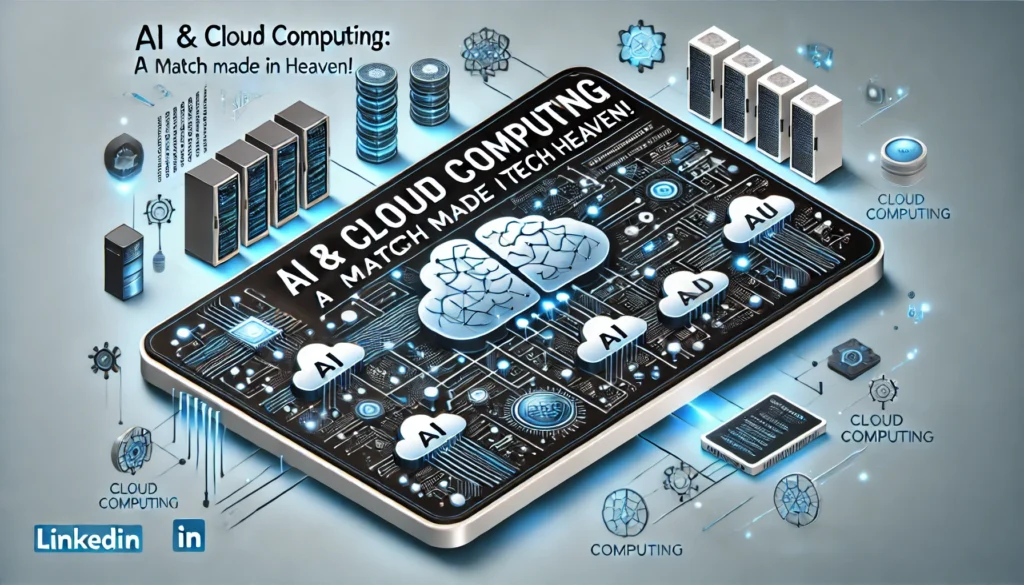
Artificial intelligence (AI) and cloud computing represent two of the most transformative technological paradigms of the 21st century. When combined, they form a powerful synergy that accelerates innovation, enhances efficiency, and unlocks new capabilities across industries. AI leverages algorithms and computational models to simulate human-like intelligence, enabling systems to learn, reason, and make decisions. Cloud computing, on the other hand, provides on-demand access to computing resources—such as storage, processing power, and software—over the internet, eliminating the need for physical infrastructure.
The integration of AI with cloud computing creates a dynamic ecosystem where AI models can be trained using vast datasets, deployed globally, and scaled instantly to meet demand. This partnership enables businesses and researchers to harness the full potential of AI without the constraints of local hardware limitations. Cloud platforms offer the computational horsepower required for training complex AI models, while AI enhances cloud services by enabling predictive maintenance, intelligent automation, and personalized user experiences.
This collaboration is not merely additive but multiplicative, fostering advancements in fields such as healthcare, finance, transportation, and cybersecurity. The scalability of cloud infrastructure ensures that AI applications can grow alongside data volumes and user bases, while AI-driven analytics provide actionable insights from the massive datasets stored in the cloud. Together, AI and cloud computing are redefining the boundaries of what is possible in the digital age.
#History / Background
The roots of AI date back to the mid-20th century, with foundational work by pioneers such as Alan Turing, who proposed the concept of a universal machine capable of performing any computation, and John McCarthy, who coined the term "artificial intelligence" in 1956. Early AI research focused on symbolic reasoning and rule-based systems, but progress was limited by computational constraints and the lack of large datasets.
Cloud computing emerged in the late 1990s and early 2000s, with companies like Amazon (AWS, launched in 2006) and Google (Google App Engine, 2008) pioneering the delivery of computing services over the internet. The concept of "utility computing" gained traction, allowing businesses to rent computing power on a pay-as-you-go basis. This shift democratized access to high-performance computing, making it feasible for smaller organizations to compete with larger enterprises.
The convergence of AI and cloud computing began in earnest during the 2010s, driven by three key developments: the explosion of big data, advancements in machine learning (particularly deep learning), and the maturation of cloud infrastructure. The availability of cloud-based AI services, such as Amazon SageMaker, Google Cloud AI, and Microsoft Azure AI, lowered the barriers to entry for AI adoption. Researchers and developers could now train and deploy AI models without investing in expensive hardware or managing complex infrastructure.
Landmark milestones include the development of deep learning frameworks like TensorFlow and PyTorch, which were optimized for cloud environments, and the launch of AI-as-a-Service (AIaaS) platforms. These innovations enabled real-time AI applications, such as natural language processing (NLP) chatbots, computer vision systems, and recommendation engines, to be deployed at scale. Today, the AI-cloud synergy continues to evolve, with emerging technologies like edge computing and federated learning further expanding the possibilities.
#How It Works
#Cloud Infrastructure for AI
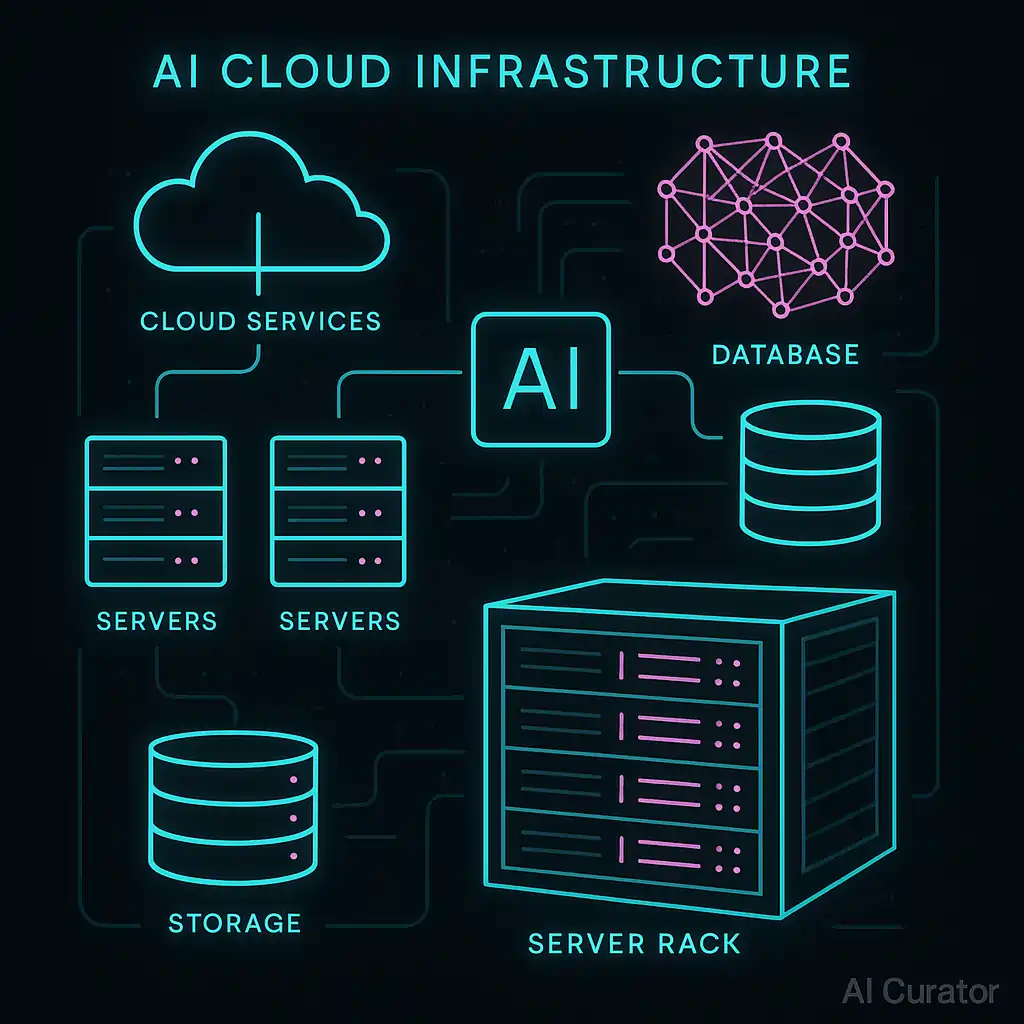
Cloud computing provides the foundational infrastructure that enables AI systems to function efficiently. This infrastructure typically includes:
- Compute Resources: High-performance GPUs and TPUs (Tensor Processing Units) are essential for training deep learning models. Cloud providers offer these resources on-demand, allowing AI developers to scale processing power as needed.
- Storage Solutions: Cloud storage systems, such as Amazon S3, Google Cloud Storage, and Azure Blob Storage, store vast datasets required for training AI models. These systems are designed for durability, scalability, and low-latency access.
- Data Management: Cloud-based databases (e.g., Google BigQuery, Amazon Redshift) and data lakes enable the organization, processing, and analysis of structured and unstructured data. AI models rely on clean, well-structured datasets to produce accurate results.
- Networking: High-speed internet connections and content delivery networks (CDNs) ensure low-latency communication between AI applications and end-users, critical for real-time applications like autonomous vehicles and virtual assistants.
#AI in the Cloud
AI services in the cloud are delivered through various models, including:
- AI-as-a-Service (AIaaS): Cloud providers offer pre-built AI models and APIs that developers can integrate into their applications without building models from scratch. Examples include Google Cloud Vision API for image recognition and AWS Comprehend for natural language processing.
- Machine Learning Platforms: Services like Amazon SageMaker, Azure Machine Learning, and Google Vertex AI provide end-to-end tools for building, training, and deploying machine learning models. These platforms automate tasks such as hyperparameter tuning, model versioning, and deployment.
- Serverless AI: Serverless computing (e.g., AWS Lambda, Azure Functions) allows AI models to be executed in response to events without managing servers. This is ideal for event-driven applications like fraud detection and chatbots.
- Edge AI: While cloud computing centralizes processing, edge AI brings computation closer to the data source (e.g., IoT devices, smartphones). Cloud platforms support edge AI by providing tools for model optimization and deployment to edge devices.
#Key Processes
The workflow of AI in the cloud typically involves the following steps:
- Data Collection and Storage: Data from various sources (e.g., sensors, user interactions, databases) is ingested and stored in cloud storage systems.
- Data Preprocessing: Cloud-based data pipelines clean, transform, and normalize data to prepare it for training. Tools like Apache Spark and Google Dataflow are commonly used.
- Model Training: AI models are trained using cloud-based compute resources. Deep learning models, for example, may require thousands of GPUs running in parallel for weeks or months.
- Model Evaluation and Optimization: Trained models are evaluated for performance metrics such as accuracy, precision, and recall. Cloud platforms offer tools for hyperparameter tuning and model optimization.
- Deployment: The optimized model is deployed as an API or embedded in an application. Cloud providers offer managed services for deployment, monitoring, and scaling.
- Inference and Feedback Loop: The deployed model processes real-time data and provides predictions or decisions. User feedback and new data are continuously fed back into the system to improve the model over time.
#Important Facts
- Cost Efficiency: Cloud computing eliminates the need for organizations to invest in expensive hardware. Pay-as-you-go models allow businesses to scale resources up or down based on demand, reducing capital expenditures.
- Scalability: Cloud platforms can handle massive datasets and high computational loads, enabling AI models to scale seamlessly. For example, Google's AI model for language translation processes billions of requests daily.
- Global Accessibility: Cloud-based AI services are accessible from anywhere with an internet connection, enabling global collaboration and deployment. This is particularly beneficial for multinational corporations and remote teams.
- Security and Compliance: Cloud providers implement robust security measures, including encryption, identity management, and compliance certifications (e.g., GDPR, HIPAA). AI models deployed in the cloud benefit from these built-in security features.
- Energy Efficiency: Cloud data centers are designed for energy efficiency, often using renewable energy sources and advanced cooling systems. This reduces the carbon footprint of AI workloads compared to on-premise solutions.
- Democratization of AI: Cloud-based AI tools lower the barriers to entry for small businesses and startups, enabling them to leverage AI capabilities without requiring in-house expertise or infrastructure.
- Real-time Processing: Cloud platforms support real-time AI applications, such as fraud detection in financial transactions and predictive maintenance in manufacturing, by processing data as it is generated.
#Related Terms
#FAQ
What does AI And Cloud Computing: A Perfect Match cover?
Explores how artificial intelligence shapes cloud computing and a perfect match, covering practical use cases, benefits, limitations, and risks.
Why is AI And Cloud Computing: A Perfect Match important?
It helps readers understand key concepts, compare practical use cases, and evaluate how Technology decisions affect outcomes, risks, and implementation choices.
What should readers verify before applying this topic?
Readers should compare the benefits, limitations, data requirements, and related themes such as Cloud, Computing, Perfect before using the ideas in real projects.
#References
- AI And Cloud Computing: A Perfect Match terminology and background research
- AI And Cloud Computing: A Perfect Match use cases, implementation examples, and limitations
- Technology best practices, standards, and risk guidance
- Cloud case studies, benchmarks, and current industry analysis

Comments
No comments yet. Start the discussion with a useful note.