


#Short Answer
Artificial Intelligence (AI) is increasingly being leveraged to combat climate change through predictive modeling, optimization of renewable energy systems, and enhancement of carbon capture technologies. While AI offers transformative potential, challenges such as high computational costs, data biases, and ethical concerns must be addressed to ensure equitable and sustainable deployment.
#Infobox
#AI and Climate Change: Solutions and Challenges
Overview
Artificial Intelligence (AI) has emerged as a critical tool in the global effort to address climate change, offering innovative solutions across mitigation, adaptation, and monitoring. By analyzing vast datasets, optimizing systems, and predicting environmental trends, AI enhances decision-making in sectors such as energy, agriculture, and transportation. However, the integration of AI into climate strategies is not without challenges, including high energy demands, data biases, and ethical dilemmas. This article explores the intersection of AI and climate change, highlighting key applications, benefits, and obstacles while emphasizing the need for sustainable and equitable implementation.
#History / Background
#Early Developments
The relationship between AI and environmental science dates back to the 1980s, when early machine learning models were used to analyze weather patterns and predict natural disasters. The first notable applications included statistical models for climate forecasting, which laid the groundwork for more advanced AI-driven solutions. By the 1990s, researchers began exploring AI's potential in optimizing energy consumption and reducing carbon emissions, though computational limitations restricted widespread adoption.
#Modern Integration
The 2010s marked a turning point with the advent of deep learning and big data analytics, enabling AI to process complex climate models and large-scale environmental datasets. Initiatives such as the Climate Change AI collective, founded in 2019, formalized efforts to apply AI in climate mitigation. Governments and corporations have since invested heavily in AI-powered climate solutions, recognizing their potential to accelerate progress toward the Paris Agreement goals.
#How It Works
#Climate Modeling and Prediction
AI enhances climate modeling by improving the accuracy of simulations through machine learning algorithms. These models analyze historical climate data, satellite imagery, and oceanographic records to predict future trends, such as temperature rises, sea-level changes, and extreme weather events. For example, NASA uses AI to refine its climate projections, enabling policymakers to prepare for potential crises.
#Energy Optimization
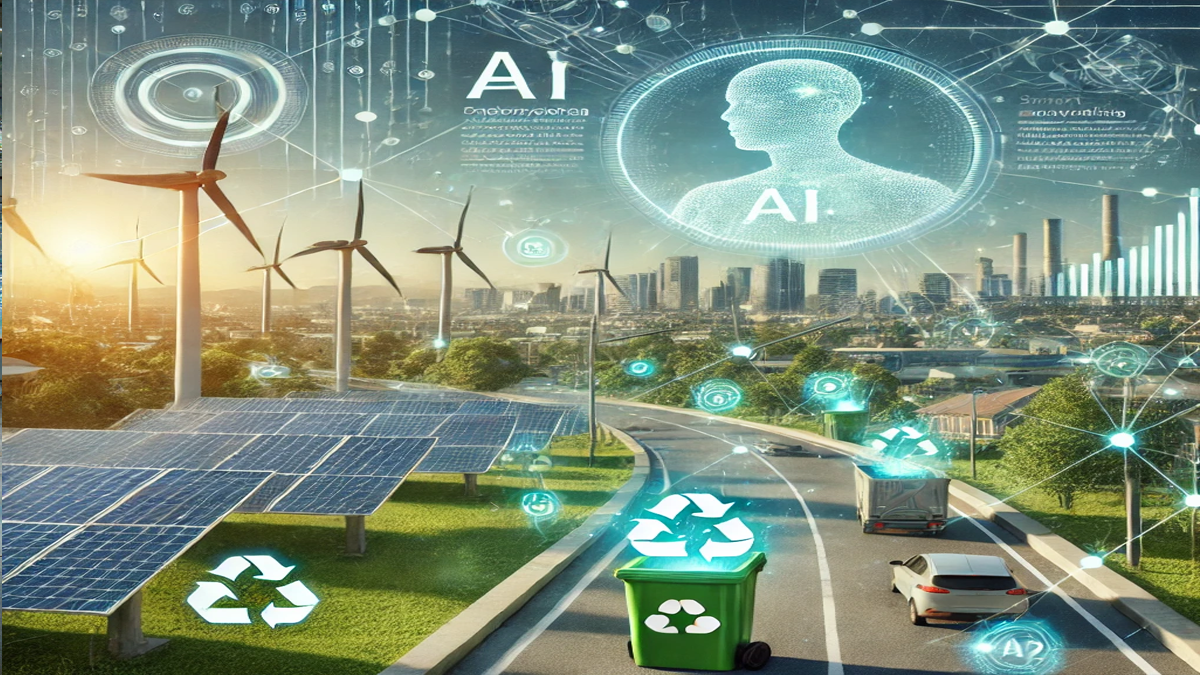
AI-driven systems optimize energy distribution in smart grids by predicting demand patterns and integrating renewable sources like solar and wind power. Machine learning algorithms adjust energy flows in real-time, reducing waste and lowering carbon footprints. Companies such as Google and DeepMind have deployed AI to manage data center cooling systems, cutting energy consumption by up to 40%.
#Carbon Capture and Storage
AI accelerates the development of carbon capture technologies by identifying optimal storage sites and improving the efficiency of capture processes. For instance, AI models analyze geological data to pinpoint locations for underground carbon sequestration, while reinforcement learning optimizes the operation of capture facilities. Startups like Carbon Engineering leverage AI to scale direct air capture (DAC) systems.
#Agricultural Productivity
AI-powered tools enhance agricultural resilience by predicting crop yields, optimizing irrigation, and detecting pests. Satellite imagery combined with AI algorithms monitors soil health and weather conditions, enabling farmers to adopt sustainable practices. Platforms such as IBM's Watson Decision Platform for Agriculture provide actionable insights to reduce water usage and chemical inputs.
#Important Facts
- Energy Consumption: Training large AI models can emit as much CO₂ as five cars over their lifetime, highlighting the need for energy-efficient algorithms.
- Accuracy Gains: AI improves climate prediction accuracy by up to 50% compared to traditional models, according to studies by Nature Climate Change.
- Renewable Integration: AI can increase the share of renewables in energy grids by 20-30% through better forecasting and grid management.
- Policy Impact: The European Green Deal includes AI as a key enabler for achieving carbon neutrality by 2050.
- Ethical Concerns: Bias in AI training data can lead to inequitable climate solutions, disproportionately affecting vulnerable communities.
#Related Terms
#FAQ
What does AI And Climate Change: Solutions And Challenges cover?
Explores how artificial intelligence shapes climate change and solutions and challenges, covering practical use cases, benefits, limitations, and risks.
Why is AI And Climate Change: Solutions And Challenges important?
It helps readers understand key concepts, compare practical use cases, and evaluate how Climate & Society decisions affect outcomes, risks, and implementation choices.
What should readers verify before applying this topic?
Readers should compare the benefits, limitations, data requirements, and related themes such as Climate, Change, Solution before using the ideas in real projects.
#References
- AI And Climate Change: Solutions And Challenges terminology and background research
- AI And Climate Change: Solutions And Challenges use cases, implementation examples, and limitations
- Climate & Society best practices, standards, and risk guidance
- Climate case studies, benchmarks, and current industry analysis


Comments
No comments yet. Start the discussion with a useful note.