

#Short Answer
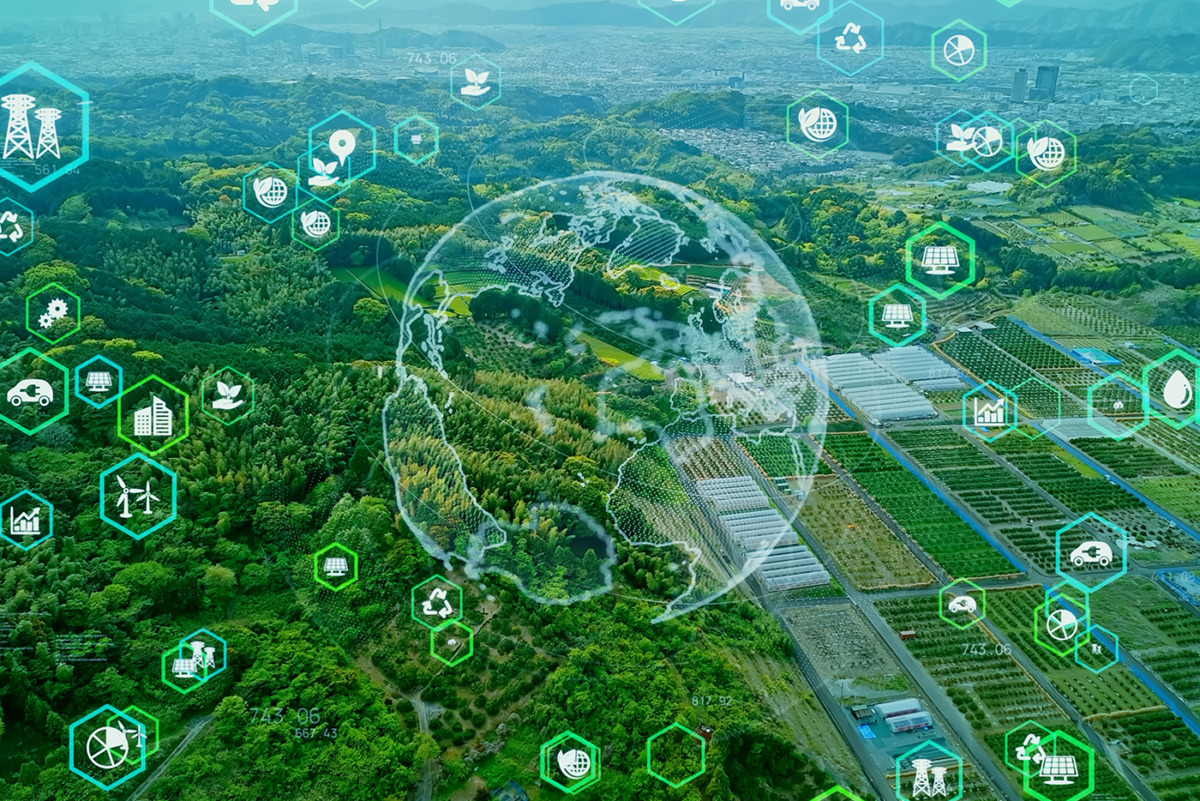
Artificial intelligence is emerging as a powerful tool in the global effort to combat climate change. By leveraging machine learning, deep learning, and data analytics, AI systems can process vast amounts of environmental data to identify patterns, predict trends, and optimize systems that reduce greenhouse gas emissions. From improving the accuracy of climate models to automating energy distribution, AI is being integrated into nearly every sector that contributes to or is affected by climate change.
#Infobox
#Overview
Artificial intelligence is emerging as a powerful tool in the global effort to combat climate change. By leveraging machine learning, deep learning, and data analytics, AI systems can process vast amounts of environmental data to identify patterns, predict trends, and optimize systems that reduce greenhouse gas emissions. From improving the accuracy of climate models to automating energy distribution, AI is being integrated into nearly every sector that contributes to or is affected by climate change.
The intersection of AI and climate science represents a paradigm shift in how humanity understands and responds to environmental challenges. Governments, corporations, and researchers are increasingly investing in AI-driven climate solutions, recognizing their potential to accelerate progress toward net-zero emissions and climate resilience.
#History / Background
The concept of using computational power to understand climate systems dates back to the mid-20th century with the development of early climate models. However, the integration of artificial intelligence into climate science began in earnest during the 2000s, as computing power increased and machine learning techniques matured.
In 2007, researchers at the NASA Goddard Space Flight Center began experimenting with neural networks to improve weather forecasting accuracy. By the early 2010s, AI was being used to analyze satellite imagery for deforestation monitoring and to optimize energy consumption in buildings. The launch of initiatives like Google DeepMind in 2014 and Microsoft's AI for Earth program in 2017 marked a turning point, providing dedicated resources to apply AI to environmental challenges.
The Intergovernmental Panel on Climate Change (IPCC) began incorporating AI into its assessment reports around 2018, recognizing its role in improving climate projections and scenario analysis.
#How It Works
#Climate Modeling and Prediction
AI enhances traditional climate models by using machine learning to identify complex, non-linear relationships in large datasets. Convolutional neural networks (CNNs) and recurrent neural networks (RNNs) are employed to analyze historical climate data, satellite observations, and ocean currents to improve the accuracy of temperature, precipitation, and extreme weather predictions.
For example, AI models can detect early signs of hurricanes or heatwaves weeks in advance, allowing for better preparation and response. These models are trained on decades of climate data, including atmospheric CO₂ levels, sea surface temperatures, and ice sheet dynamics.
#Energy Optimization and Renewable Integration
AI plays a crucial role in the transition to clean energy by optimizing the generation, distribution, and consumption of electricity. Machine learning algorithms analyze weather patterns to predict solar and wind energy output, enabling grid operators to balance supply and demand more efficiently.
Smart grids powered by AI can dynamically adjust energy flows, reduce waste, and integrate distributed energy resources such as rooftop solar panels. Companies like Google and DeepMind have used AI to reduce energy consumption in data centers by up to 30% through predictive cooling systems.
#Emissions Tracking and Reduction
AI is used to monitor and reduce greenhouse gas emissions across industries. Satellite-based AI systems, such as GHGSat, detect methane leaks from oil and gas facilities with high precision, enabling targeted repairs. In agriculture, AI-driven tools analyze soil health and crop yields to optimize fertilizer use, reducing nitrous oxide emissions.
Industrial processes benefit from AI-powered process optimization, which identifies inefficiencies in manufacturing that lead to excess energy use and emissions. For instance, AI can optimize blast furnace operations in steel production, cutting CO₂ output significantly.
#Disaster Prediction and Response
AI systems analyze real-time data from sensors, satellites, and social media to predict natural disasters such as floods, wildfires, and droughts. These systems can issue early warnings, helping communities evacuate and prepare. Post-disaster, AI assists in damage assessment and resource allocation by analyzing aerial imagery and coordinating relief efforts.
#Important Facts
- AI could reduce global greenhouse gas emissions by up to 4% by 2030, according to PwC.
- The energy consumption of AI training models can be equivalent to that of several households over months, raising concerns about sustainability.
- Google’s AI-driven cooling system reduced energy use in data centers by 30%, saving over 1.2 million kWh annually.
- AI-powered deforestation monitoring in the Amazon has increased detection rates of illegal logging by over 50%.
- The IPCC’s Sixth Assessment Report includes AI-enhanced climate projections for the first time.
- AI can improve the efficiency of electric vehicle (EV) charging networks by predicting demand and optimizing power distribution.
- Methane leaks detected by AI satellites have led to a 50% reduction in emissions from targeted oil and gas sites.
#Timeline
- Early climate modeling using
Early climate modeling using basic computational methods
- NASA begins using neural
NASA begins using neural networks for weather prediction
- First AI applications in
First AI applications in renewable energy forecasting
- Google DeepMind founded, focus
Google DeepMind founded, focusing on AI for energy efficiency
- Microsoft launches AI for
Microsoft launches AI for Earth, a $50 million initiative
- IPCC incorporates AI into
IPCC incorporates AI into climate assessment reports
- GHGSat launches first AI-power
GHGSat launches first AI-powered methane detection satellite
- AI used to predict
AI used to predict COVID-19’s impact on global emissions
- European Union announces AI
European Union announces AI Act, including provisions for climate applications
- AI models improve accuracy
AI models improve accuracy of climate projections for 2050 scenarios
#Related Terms
#FAQ
What does AI And Climate Change: Can It Help? cover?
Examines key questions about AI and climate change, including current uses, likely impacts, benefits, limitations, and risks.
Why is AI And Climate Change: Can It Help? important?
It helps readers understand key concepts, compare practical use cases, and evaluate how Climate & Society decisions affect outcomes, risks, and implementation choices.
What should readers verify before applying this topic?
Readers should compare the benefits, limitations, data requirements, and related themes such as Climate, Change, Can before using the ideas in real projects.
#References
- AI And Climate Change: Can It Help? terminology and background research
- AI And Climate Change: Can It Help? use cases, implementation examples, and limitations
- Climate & Society best practices, standards, and risk guidance
- Climate case studies, benchmarks, and current industry analysis

Comments
No comments yet. Start the discussion with a useful note.