


#Short Answer
Traces timeline of ai in marketing, highlighting major milestones, context, examples, and future implications.
#Infobox
#Overview
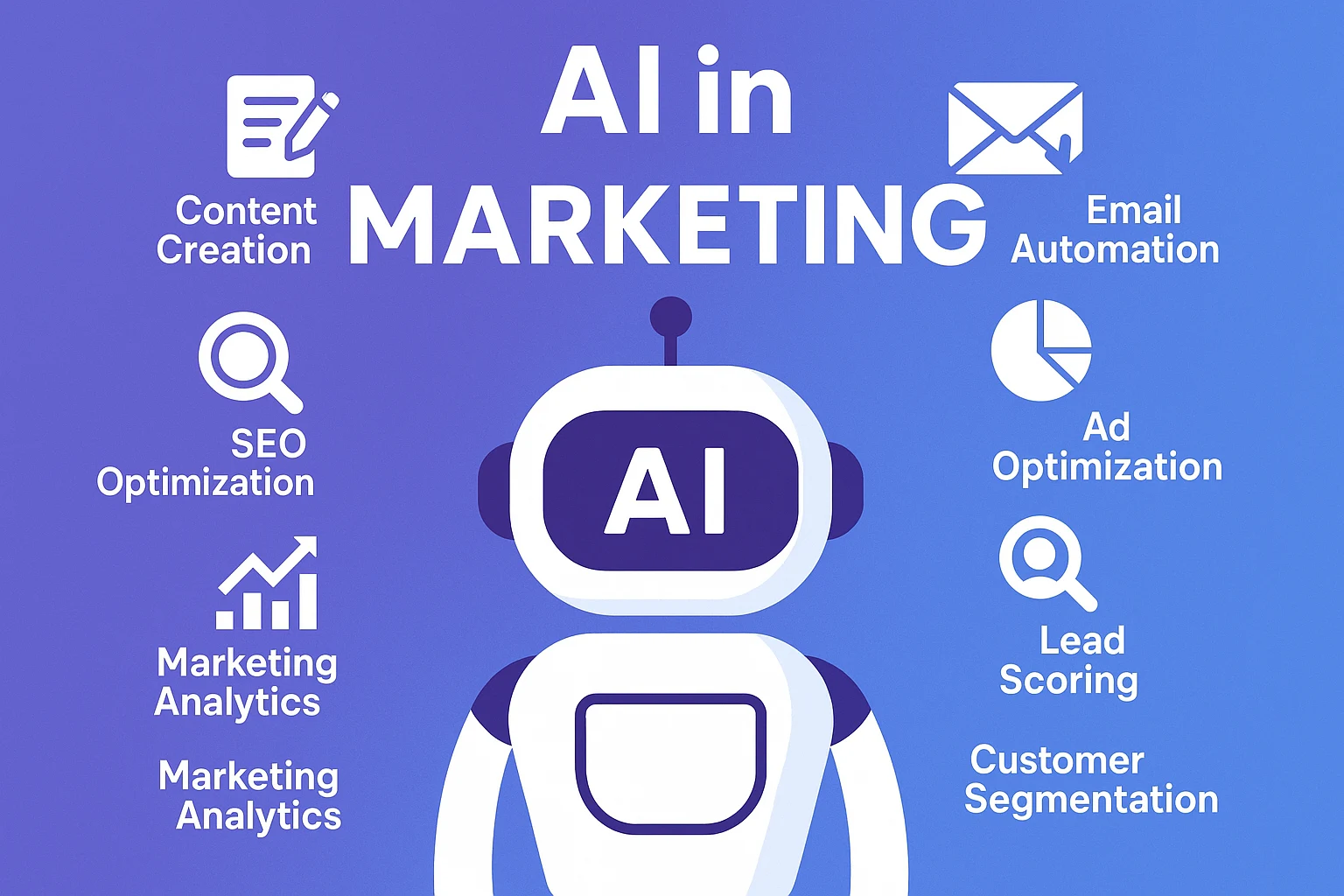
Artificial intelligence (AI) has revolutionized marketing by enabling data-driven decision-making, automation, and hyper-personalization. From early rule-based systems to advanced generative AI, AI tools now power everything from customer segmentation to dynamic ad creation. The integration of AI in marketing has shifted the focus from mass broadcasting to individualized consumer interactions, driven by advancements in machine learning, natural language processing (NLP), and big data analytics. AI’s role in marketing spans multiple domains:
- Predictive Analytics: Forecasting consumer behavior using historical data.
- Chatbots & Virtual Assistants: Enhancing customer service and engagement.
- Programmatic Advertising: Automating ad buying and placement.
- Content Generation: Creating personalized emails, social media posts, and even videos.
- Sentiment Analysis: Monitoring brand perception in real-time. The adoption of AI in marketing has grown exponentially, with businesses leveraging these technologies to improve efficiency, reduce costs, and enhance customer experiences.
#History / Background
#Early Foundations (1950s–1980s)
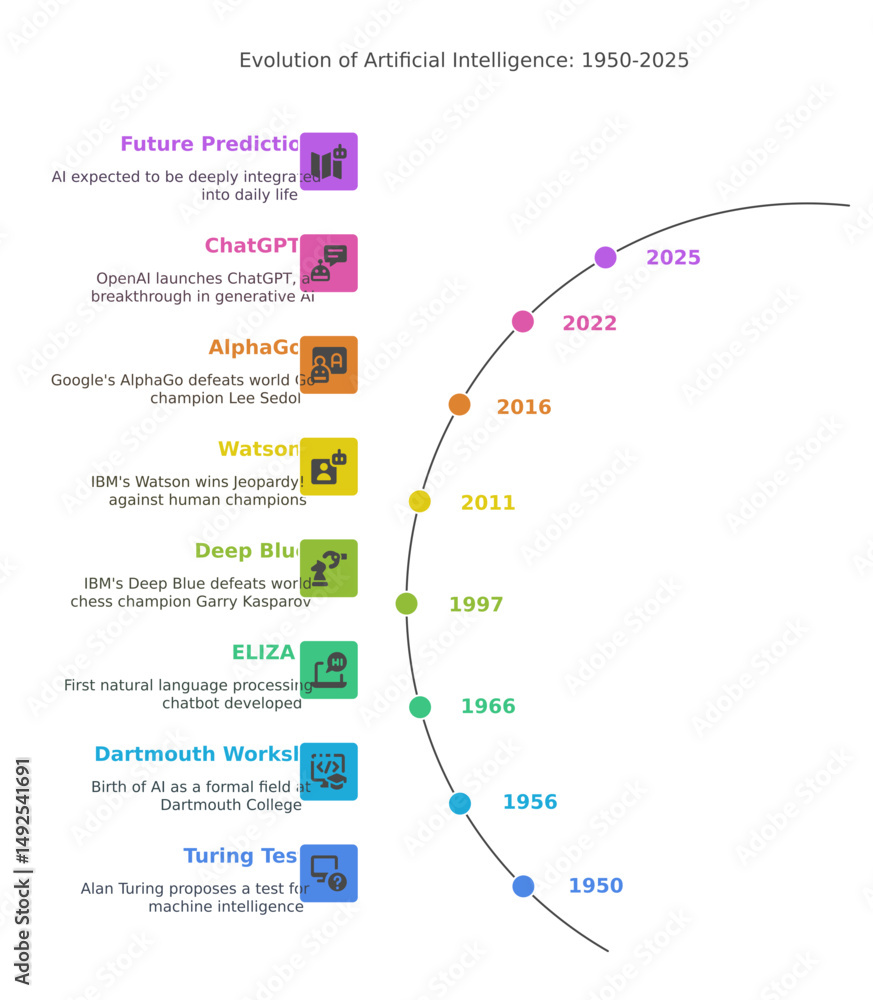
The roots of AI in marketing trace back to the post-World War II era, when early computer scientists explored the potential of artificial intelligence. In 1956, the Dartmouth Conference marked the birth of AI as a field, though its applications in marketing were still decades away. During this period, marketers relied on basic statistical models and manual data analysis to understand consumer behavior.
#The Rise of CRM and Database Marketing (1990s)
The 1990s saw the emergence of Customer Relationship Management (CRM) systems, which laid the groundwork for AI-driven marketing. Companies like Siebel Systems and Salesforce introduced software that allowed businesses to track customer interactions, segment audiences, and automate repetitive tasks. Database marketing became a cornerstone, enabling targeted campaigns based on demographic and behavioral data.
#Big Data and Machine Learning (2000s–2010s)
The explosion of big data in the 2000s, fueled by the internet and social media, created vast datasets that AI could analyze. Machine learning algorithms began to play a pivotal role in:
- Recommendation Engines: Platforms like Amazon and Netflix used AI to suggest products and content based on user behavior.
- Programmatic Advertising: Google AdWords and Facebook Ads introduced automated bidding systems, optimizing ad spend in real-time.
- Sentiment Analysis: Brands started using NLP to gauge public opinion from social media and reviews.
#The AI Marketing Boom (2010s–Present)
The 2010s marked a turning point with the rise of deep learning and generative AI. Key developments included:
- Chatbots: Companies like Sephora and Domino’s deployed AI-powered chatbots to handle customer inquiries.
- Hyper-Personalization: AI enabled dynamic content creation, tailoring emails, ads, and website experiences to individual users.
- Voice Search Optimization: With the proliferation of smart speakers, marketers adapted strategies for voice-based queries.
- Generative AI: Tools like DALL·E and Midjourney allowed brands to create images, videos, and text autonomously. Today, AI in marketing is an indispensable tool, with advancements in reinforcement learning and explainable AI (XAI) further enhancing its capabilities.
#How It Works
#Core AI Technologies in Marketing
- Machine Learning (ML)
- Supervised Learning: Used for predictive modeling (e.g., churn prediction, lead scoring).
- Unsupervised Learning: Helps in customer segmentation and anomaly detection.
- Reinforcement Learning: Optimizes ad bidding strategies and pricing models.
- Natural Language Processing (NLP) - Powers chatbots, sentiment analysis, and content generation. - Enables voice search optimization and real-time translation for global campaigns.
- Computer Vision - Used in image recognition for social media monitoring and visual search (e.g., Pinterest Lens). - Facilitates augmented reality (AR) marketing (e.g., virtual try-ons in retail).
- Generative AI - Creates text, images, and videos for personalized marketing collateral. - Enables dynamic ad copy and A/B testing automation.
#AI-Driven Marketing Workflows
- Data Collection & Integration - AI systems aggregate data from CRM, social media, web analytics, and IoT devices. - Tools like Google Analytics 4 and HubSpot provide unified dashboards.
- Data Processing & Analysis - ML models clean, normalize, and analyze data to extract actionable insights.
- Predictive analytics identifies trends (e.g., seasonal demand fluctuations).
- Personalization & Automation - AI segments audiences and delivers hyper-targeted content (e.g., Netflix’s recommendation engine).
- Marketing automation platforms (e.g., Marketo, ActiveCampaign) use AI to trigger campaigns based on user behavior.
- Real-Time Optimization - Programmatic ad platforms adjust bids and placements dynamically.
- Chatbots provide instant responses, improving customer satisfaction.
- Performance Measurement - AI tracks KPIs like conversion rates, customer lifetime value (CLV), and ROI.
- Attribution modeling determines the most effective marketing channels.
#Important Facts
- Market Growth: The global AI in marketing market is projected to reach $107.5 billion by 2028 (Grand View Research, 2023).
- Adoption Rates: Over 80% of marketers use AI in some form, with personalization and automation being the top applications (Gartner, 2023).
- ROI Impact: Companies using AI for marketing report a 20–30% increase in conversion rates (McKinsey, 2022).
- Ethical Concerns: Issues like data privacy, algorithmic bias, and deepfake marketing pose challenges.
- Generative AI Adoption: 60% of marketers use generative AI tools for content creation (Salesforce, 2023).
- Voice Search: 50% of all searches are expected to be voice-based by 2025 (ComScore).
#Timeline
- Foundational ideas
Core concepts and early methods shape Timeline of AI in Marketing.
- Practical use
Tools, examples, and real-world deployments make the topic easier to evaluate.
- Responsible implementation
Current work focuses on reliability, governance, performance, and measurable impact.
#Related Terms
#FAQ
What does Timeline of AI in Marketing cover?
Traces timeline of ai in marketing, highlighting major milestones, context, examples, and future implications.
Why is Timeline of AI in Marketing important?
It helps readers understand key concepts, compare practical use cases, and evaluate how Business & Marketing decisions affect outcomes, risks, and implementation choices.
What should readers verify before applying this topic?
Readers should compare benefits, limitations, data requirements, and related themes such as Timeline, AI, Marketing before using the ideas in real projects.
#References
- Timeline of AI in Marketing terminology and background research
- Timeline of AI in Marketing use cases, implementation examples, and limitations
- Business & Marketing best practices, standards, and risk guidance
- Timeline case studies, benchmarks, and current industry analysis
Comments
No comments yet. Start the discussion with a useful note.