

#Short Answer
Traces timeline of ai in business, highlighting major milestones, context, examples, and future implications.
#Infobox
#Overview
Artificial intelligence has transformed the business landscape by enabling automation, enhancing decision-making, and personalizing customer interactions. The integration of AI into business operations has evolved from rudimentary rule-based systems to sophisticated deep learning models capable of handling complex tasks such as natural language processing (NLP), image recognition, and predictive analytics. Businesses across industries—finance, healthcare, retail, manufacturing, and logistics—have adopted AI to improve efficiency, reduce costs, and gain competitive advantages. The timeline of AI in business reflects not only technological advancements but also shifts in corporate strategy, workforce dynamics, and consumer expectations. From early expert systems in the 1980s to the proliferation of generative AI tools in the 2020s, AI has become a cornerstone of modern enterprise.
#History / Background
#Early Foundations (1950s–1970s)
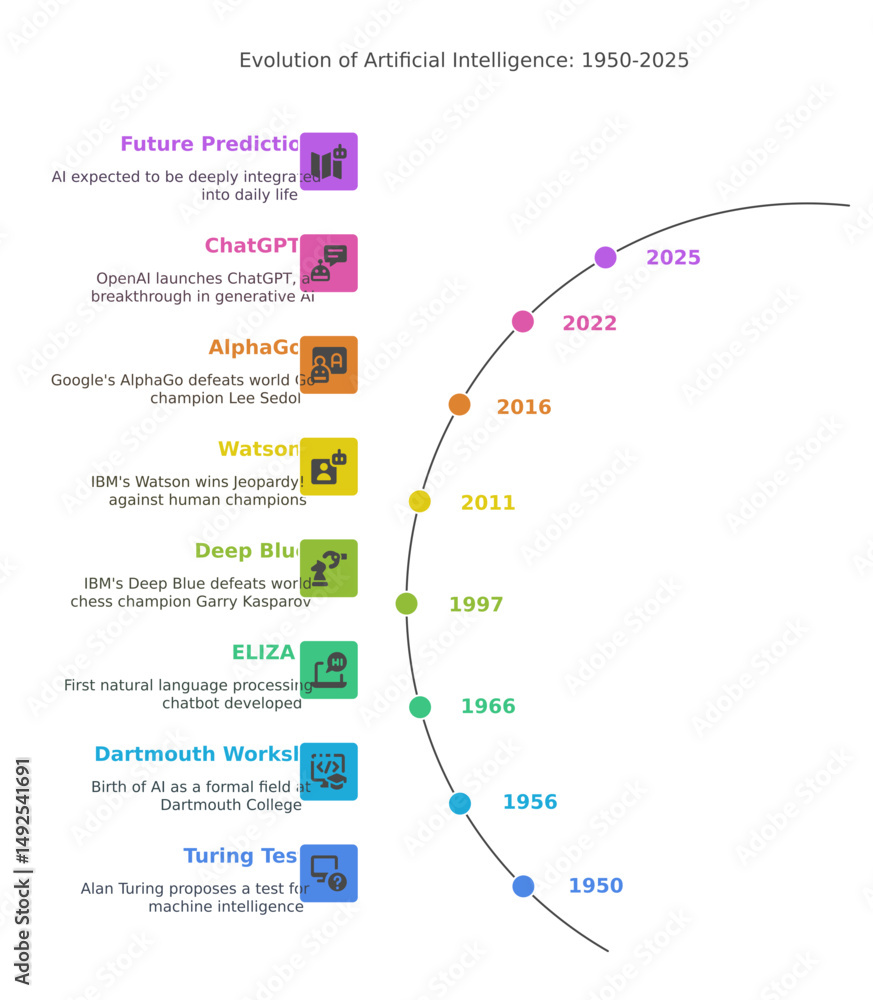
The conceptual roots of AI in business can be traced to the mid-20th century, when early computer scientists began exploring the potential of machines to perform tasks requiring human-like intelligence. In 1956, the Dartmouth Conference marked the birth of AI as a formal field of study. During this period, researchers developed symbolic AI systems capable of solving logic-based problems. However, practical applications in business were limited due to technological constraints. Early AI systems were expensive, slow, and required specialized hardware. Despite these challenges, industries such as banking and insurance began experimenting with rudimentary AI tools for data processing and risk assessment.
#The Rise of Expert Systems (1980s)
The 1980s witnessed a surge in the development of expert systems—AI programs designed to mimic the decision-making abilities of human experts. These systems, such as MYCIN for medical diagnosis and DENDRAL for chemical analysis, laid the groundwork for AI applications in business. In the corporate world, expert systems were deployed in finance for fraud detection, in manufacturing for quality control, and in customer service for automated troubleshooting. Companies like IBM and Xerox invested heavily in AI research, recognizing its potential to streamline operations and reduce human error.
#The AI Winter and Revival (1990s–Early 2000s)
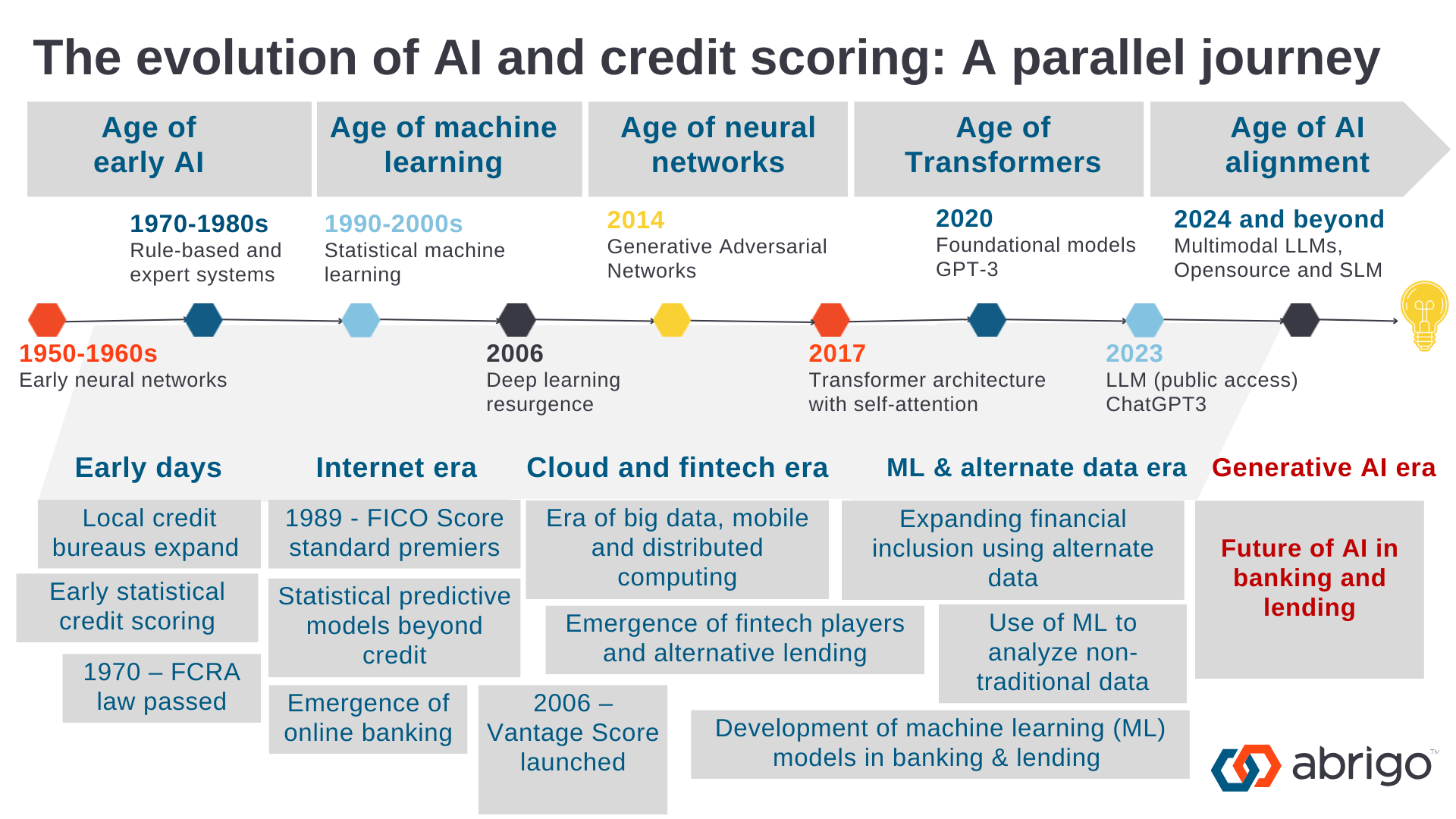
Despite early enthusiasm, the late 1980s and 1990s saw a decline in AI investment, a period known as the "AI Winter." Overhyped promises, high costs, and limited computational power led to skepticism. Many expert systems failed to deliver on their potential, and funding for AI research dwindled. However, the early 2000s marked a revival, driven by advances in computing power, the internet, and data storage. Machine learning algorithms, particularly support vector machines (SVMs) and neural networks, began to show promise in pattern recognition and predictive modeling. Businesses started leveraging AI for customer segmentation, recommendation engines, and supply chain optimization.
#The Big Data Era and Machine Learning Boom (2010s)
The proliferation of big data in the 2010s revolutionized AI in business. Companies gained access to vast datasets, enabling the training of more accurate and sophisticated AI models. Machine learning (ML), a subset of AI, became a buzzword as businesses sought to extract actionable insights from data. Key developments during this decade included:
- Recommendation systems (e.g., Netflix, Amazon, Spotify)
- Chatbots and virtual assistants (e.g., Siri, Alexa, customer service bots)
- Predictive analytics for demand forecasting and risk management
- Computer vision for quality control in manufacturing and retail The rise of cloud computing further democratized AI, allowing businesses of all sizes to access powerful tools without significant upfront investment.
#The Generative AI Revolution (2020s–Present)
The 2020s have been defined by the emergence of generative AI, capable of creating text, images, and even code from simple prompts. Models like GPT-3, DALL·E, and Stable Diffusion have transformed industries by enabling:
- Automated content creation (marketing, journalism, design)
- Hyper-personalized customer experiences (dynamic pricing, tailored recommendations)
- AI-driven innovation (drug discovery, product design, software development) Businesses are increasingly adopting AI-first strategies, integrating generative AI into workflows to enhance productivity and creativity. Regulatory frameworks and ethical considerations have also become critical topics as AI's influence grows.
#How It Works
#Core AI Technologies in Business
- Machine Learning (ML)
- Supervised Learning: Models are trained on labeled data to make predictions (e.g., spam detection, credit scoring).
- Unsupervised Learning: Identifies patterns in unlabeled data (e.g., customer segmentation, anomaly detection).
- Reinforcement Learning: Systems learn by interacting with environments to maximize rewards (e.g., dynamic pricing, robotics).
- Natural Language Processing (NLP) - Enables machines to understand, interpret, and generate human language. - Applications: Chatbots, sentiment analysis, document summarization, and translation services.
- Computer Vision - Uses deep learning to analyze and interpret visual data. - Applications: Quality control in manufacturing, facial recognition for security, autonomous vehicles in logistics.
- Robotic Process Automation (RPA) - Uses software robots to automate repetitive tasks (e.g., data entry, invoice processing). - Integrates with AI to handle exceptions and decision-making.
- Predictive Analytics - Combines statistical techniques and AI to forecast future trends. - Applications: Demand forecasting, inventory management, financial risk assessment.
#AI Integration in Business Processes
- Customer Service: AI-powered chatbots (e.g., Zendesk, Intercom) handle inquiries 24/7, reducing response times and operational costs.
- Marketing & Sales: AI analyzes customer behavior to personalize recommendations (e.g., Amazon’s "Customers who bought this also bought...").
- Supply Chain: AI optimizes logistics, predicts disruptions, and automates warehouse operations (e.g., Amazon’s Kiva robots).
- Finance: AI detects fraud, automates trading (algorithmic trading), and assesses credit risk.
- Human Resources: AI streamlines recruitment (resume screening, interview scheduling) and employee engagement analytics.
#Important Facts
- Economic Impact: According to McKinsey, AI could deliver an additional $13 trillion to $15.4 trillion in global economic output by 2030.
- Adoption Rates: A 2023 Gartner survey found that 42% of companies have deployed AI in at least one business function, up from 35% in 2019.
- Job Transformation: The World Economic Forum estimates that by 2025, AI will create 97 million new jobs while displacing 85 million, leading to a net gain of 12 million roles.
- Ethical Concerns: Bias in AI algorithms, data privacy (e.g., GDPR compliance), and the ethical use of generative AI are major challenges.
- Industry Leaders: Companies like Google, Microsoft, IBM, and Amazon dominate the AI business landscape, offering cloud-based AI services (e.g., Google Cloud AI, AWS AI/ML).
- Startup Ecosystem: Over 3,000 AI startups were founded between 2016 and 2022, focusing on niche applications like healthcare diagnostics, legal tech, and autonomous drones.
#Timeline
- Foundational ideas
Core concepts and early methods shape Timeline of AI in Business.
- Practical use
Tools, examples, and real-world deployments make the topic easier to evaluate.
- Responsible implementation
Current work focuses on reliability, governance, performance, and measurable impact.
#Related Terms
#FAQ
What does Timeline of AI in Business cover?
Traces timeline of ai in business, highlighting major milestones, context, examples, and future implications.
Why is Timeline of AI in Business important?
It helps readers understand key concepts, compare practical use cases, and evaluate how Business & Marketing decisions affect outcomes, risks, and implementation choices.
What should readers verify before applying this topic?
Readers should compare benefits, limitations, data requirements, and related themes such as Timeline, AI, Business before using the ideas in real projects.
#References
- Timeline of AI in Business terminology and background research
- Timeline of AI in Business use cases, implementation examples, and limitations
- Business & Marketing best practices, standards, and risk guidance
- Timeline case studies, benchmarks, and current industry analysis

Comments
No comments yet. Start the discussion with a useful note.