


#Short Answer
Reviews review: best ai business tools in 2026, covering notable options, strengths, limitations, and practical selection factors.
#Infobox
#Overview
The landscape of AI business tools in 2026 has evolved from experimental prototypes to mission-critical infrastructure, reshaping how organizations operate. These tools are no longer confined to niche applications but have become ubiquitous across departments, enabling hyper-automation, personalized customer experiences, and predictive maintenance. The convergence of generative AI, reinforcement learning, and quantum computing has unlocked new capabilities, such as autonomous supply chain optimization and real-time fraud detection. Key drivers behind this transformation include:
- Data Explosion: The proliferation of IoT devices and digital transactions generates petabytes of data daily, necessitating AI for processing and analysis.
- Regulatory Compliance: Stringent data privacy laws (e.g., GDPR, CCPA) require AI systems to incorporate privacy-preserving techniques like differential privacy.
- Cost Efficiency: AI reduces operational costs by automating repetitive tasks, minimizing human error, and optimizing resource allocation.
- Competitive Pressure: Companies leveraging AI gain first-mover advantages in innovation, customer retention, and market expansion. By 2026, AI tools are categorized into five primary domains:
- Customer Experience (CX): AI-powered chatbots, sentiment analysis, and dynamic pricing engines.
- Operational Efficiency: Robotic process automation (RPA), predictive maintenance, and inventory forecasting.
- Financial Services: Algorithmic trading, credit scoring, and fraud detection systems.
- Human Resources (HR): AI-driven recruitment, employee sentiment analysis, and personalized training modules.
- Healthcare: Diagnostic AI, drug discovery acceleration, and patient outcome prediction.
#History / Background
#Early Foundations (Pre-2010)
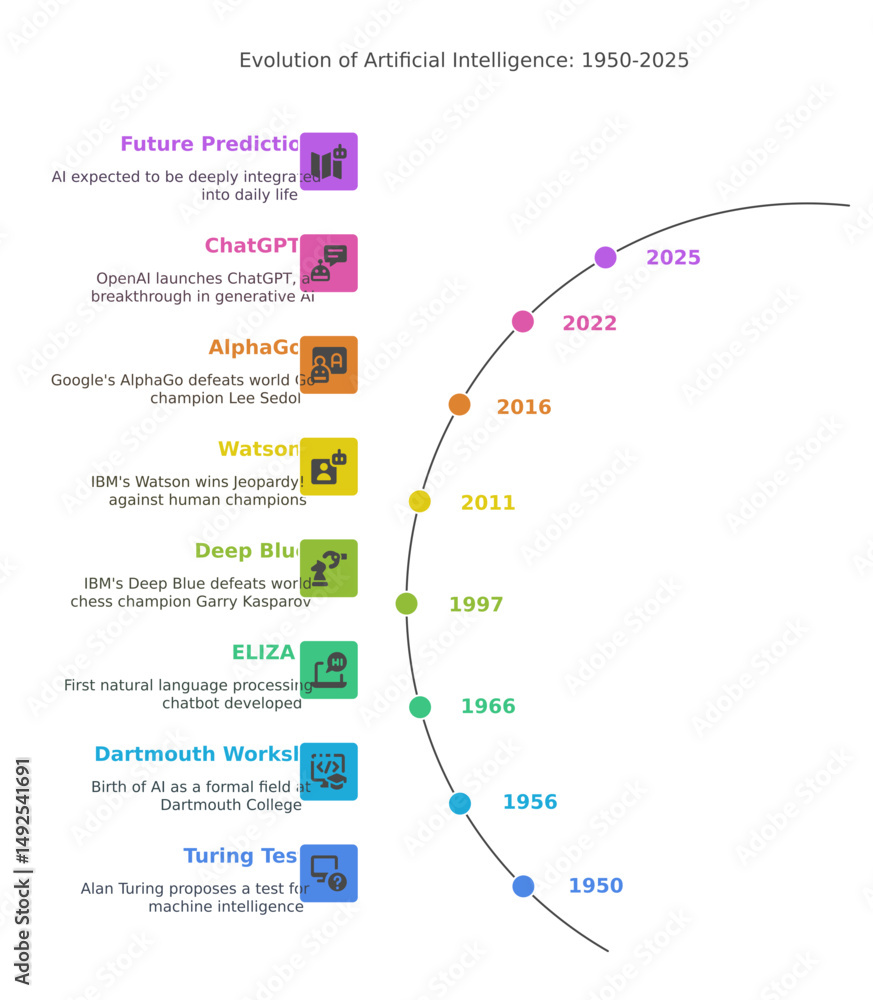
The conceptual groundwork for AI in business was laid in the mid-20th century with the advent of expert systems (e.g., MYCIN for medical diagnostics) and early machine learning algorithms. However, limited computational power and data availability restricted their practical application.
#The Rise of Big Data (2010–2018)
The explosion of big data, fueled by social media and e-commerce, created opportunities for AI adoption. Companies like Google and Amazon pioneered AI-driven recommendation systems, while IBM Watson demonstrated the potential of natural language processing in enterprise settings. Cloud computing platforms (AWS, Azure, Google Cloud) democratized access to AI tools, enabling startups to compete with legacy enterprises.
#The Generative AI Revolution (2019–2024)
The introduction of transformer models (e.g., BERT, GPT-3) revolutionized AI capabilities, particularly in natural language understanding and generative tasks. Businesses began deploying AI for content creation, code generation, and customer interaction. The launch of ChatGPT (2022) marked a turning point, accelerating AI adoption across sectors.
#Maturity and Integration (2025–2026)
By 2026, AI tools have achieved enterprise-grade reliability, with features like:
- Multi-modal AI: Combining text, image, and voice inputs for holistic business insights.
- AI Governance: Frameworks for ethical AI, bias mitigation, and regulatory compliance.
- Edge AI: Deploying lightweight AI models on local devices to reduce latency and enhance privacy.
- Collaborative AI: Tools that augment human decision-making rather than replace it (e.g., AI co-pilots for executives). Regional adoption varies, with North America leading in AI investment, followed by Asia-Pacific (driven by China’s AI-first policies) and Europe (focused on ethical AI frameworks).
#How It Works
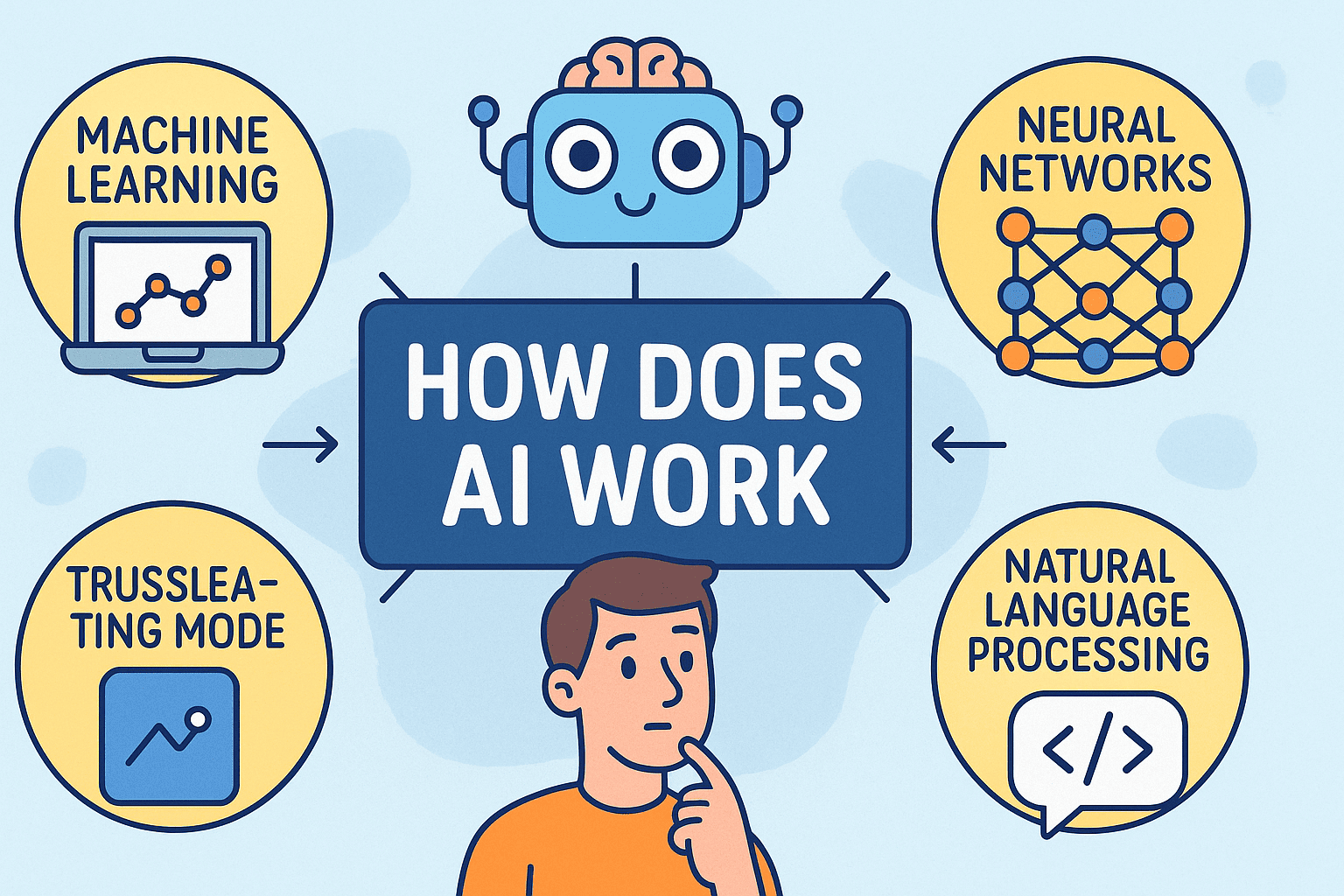
AI business tools operate through a combination of algorithms, data pipelines, and user interfaces, tailored to specific business functions. Below is a breakdown of their core mechanisms:
#1. Data Ingestion and Preprocessing
- Sources: Structured data (databases, spreadsheets) and unstructured data (emails, social media, sensor logs).
- Techniques:
- Cleaning: Removing duplicates, handling missing values, and normalizing formats.
- Feature Engineering: Extracting relevant variables (e.g., customer purchase history, sentiment scores).
- Augmentation: Synthetic data generation to address data scarcity.
#2. Model Training and Optimization
- Algorithms:
- Supervised Learning: Used for classification (e.g., spam detection) and regression (e.g., sales forecasting).
- Unsupervised Learning: Identifies patterns (e.g., customer segmentation, anomaly detection).
- Reinforcement Learning: Optimizes decision-making in dynamic environments (e.g., supply chain routing).
- Deep Learning: Powers complex tasks like image recognition (e.g., quality control in manufacturing) and natural language generation (e.g., chatbots).
- Training Methods:
- Federated Learning: Trains models across decentralized devices without sharing raw data.
- Transfer Learning: Adapts pre-trained models (e.g., BERT for domain-specific tasks).
- Quantum Machine Learning: Explores quantum algorithms for faster optimization (still in experimental stages).
#3. Deployment and Integration
- Cloud vs. On-Premise:
- Cloud-based AI: Scalable, cost-effective, and accessible via APIs (e.g., AWS SageMaker, Google Vertex AI).
- On-Premise AI: Preferred for sensitive data (e.g., healthcare, defense) to ensure compliance and security.
- APIs and SDKs: Enable seamless integration with existing software (e.g., CRM systems, ERP platforms).
- Edge Deployment: Deploys lightweight models on local devices (e.g., IoT sensors, mobile apps) for real-time processing.
#4. User Interaction and Feedback Loop
- Interfaces:
- Dashboards: Visualize insights (e.g., Power BI, Tableau with AI plugins).
- Chatbots/Virtual Assistants: Handle customer queries (e.g., banking chatbots, HR FAQ bots).
- Augmented Reality (AR): Overlays AI-generated data in real-world environments (e.g., warehouse picking optimization).
- Feedback Mechanisms:
- Human-in-the-Loop (HITL): Combines AI predictions with human review for accuracy.
- Continuous Learning: Models update based on new data and user interactions.
#5. Security and Compliance
- Data Privacy: Techniques like homomorphic encryption and tokenization protect sensitive information.
- Bias Mitigation: Algorithms are audited for fairness (e.g., using tools like IBM’s AI Fairness 360).
- Explainability: Tools like LIME and SHAP provide interpretable AI outputs for regulatory compliance.
#Important Facts
#Market Growth - The global AI in business market is projected to reach $420 billion by 2026, growing at a CAGR of 35% (2023–2026).
- North America holds the largest market share (~40%), followed by Asia-Pacific (~30%) and Europe (~20%).
#Adoption Barriers
- Data Quality: Poor data hygiene leads to inaccurate AI predictions (affecting ~35% of deployments).
- Skill Gaps: 62% of companies cite a lack of AI expertise as a major hurdle.
- Cost: High initial investment deters SMEs, though pay-as-you-go models are gaining traction.
- Ethical Concerns: Bias in AI models (e.g., gender/racial discrimination in hiring tools) remains a critical issue.
#Success Stories
- JPMorgan Chase: Deployed an AI system to analyze legal documents, saving 360,000 hours annually.
- Walmart: Uses AI for demand forecasting, reducing out-of-stock items by 10%.
- Siemens: Implements AI for predictive maintenance, cutting downtime by 50% in manufacturing plants.
#Emerging Innovations
- AI Agents: Autonomous agents that perform multi-step tasks (e.g., negotiating contracts, scheduling meetings).
- Neuro-Symbolic AI: Combines deep learning with symbolic reasoning for explainable decisions.
- AI-Powered Cybersecurity: Detects and mitigates threats in real-time using behavioral analysis.
#Timeline
- Foundational ideas
Core concepts and early methods shape Review: Best AI Business Tools in 2026.
- Practical use
Tools, examples, and real-world deployments make the topic easier to evaluate.
- Responsible implementation
Current work focuses on reliability, governance, performance, and measurable impact.
#Related Terms
#FAQ
What does Review: Best AI Business Tools in 2026 cover?
Reviews review: best ai business tools in 2026, covering notable options, strengths, limitations, and practical selection factors.
Why is Review: Best AI Business Tools in 2026 important?
It helps readers understand key concepts, compare practical use cases, and evaluate how Business & Marketing decisions affect outcomes, risks, and implementation choices.
What should readers verify before applying this topic?
Readers should compare benefits, limitations, data requirements, and related themes such as Review, Best, AI before using the ideas in real projects.
#References
- Review: Best AI Business Tools in 2026 terminology and background research
- Review: Best AI Business Tools in 2026 use cases, implementation examples, and limitations
- Business & Marketing best practices, standards, and risk guidance
- Review case studies, benchmarks, and current industry analysis

Comments
No comments yet. Start the discussion with a useful note.