


#Short Answer
Explains how to implement ai in your business, including the main process, tools, examples, risks, and practical implementation steps.
#Infobox
#Overview
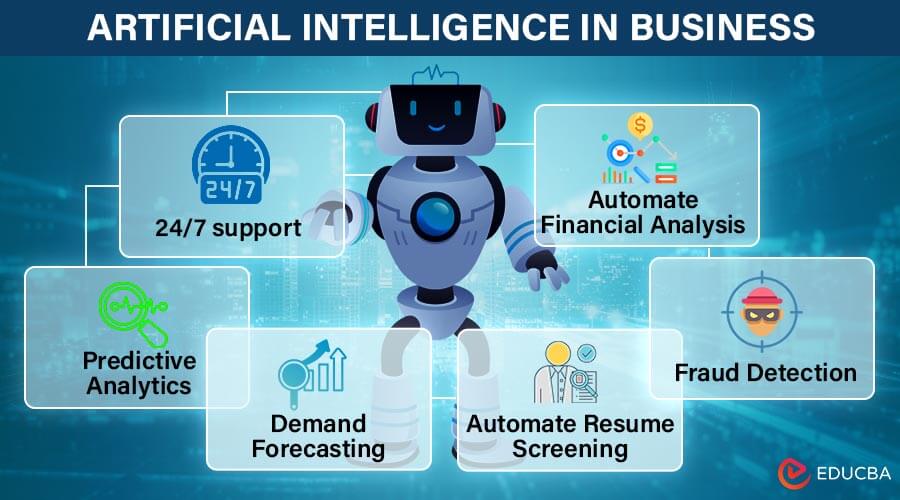
Artificial Intelligence (AI) has transitioned from a futuristic concept to a cornerstone of modern business strategy. Implementing AI in business involves leveraging algorithms, machine learning models, and data analytics to automate processes, derive actionable insights, and enhance customer interactions. From small enterprises to multinational corporations, AI adoption is reshaping industries by driving innovation, reducing operational costs, and enabling data-driven decision-making. Businesses implement AI to address specific challenges such as improving supply chain efficiency, personalizing marketing campaigns, detecting fraud, and optimizing resource allocation. The integration of AI tools—ranging from chatbots and virtual assistants to advanced predictive analytics—allows organizations to stay competitive in an increasingly digital marketplace. However, successful AI implementation requires more than just technology; it demands a strategic approach that aligns AI capabilities with business objectives, ensures data integrity, and fosters organizational readiness.
#History / Background
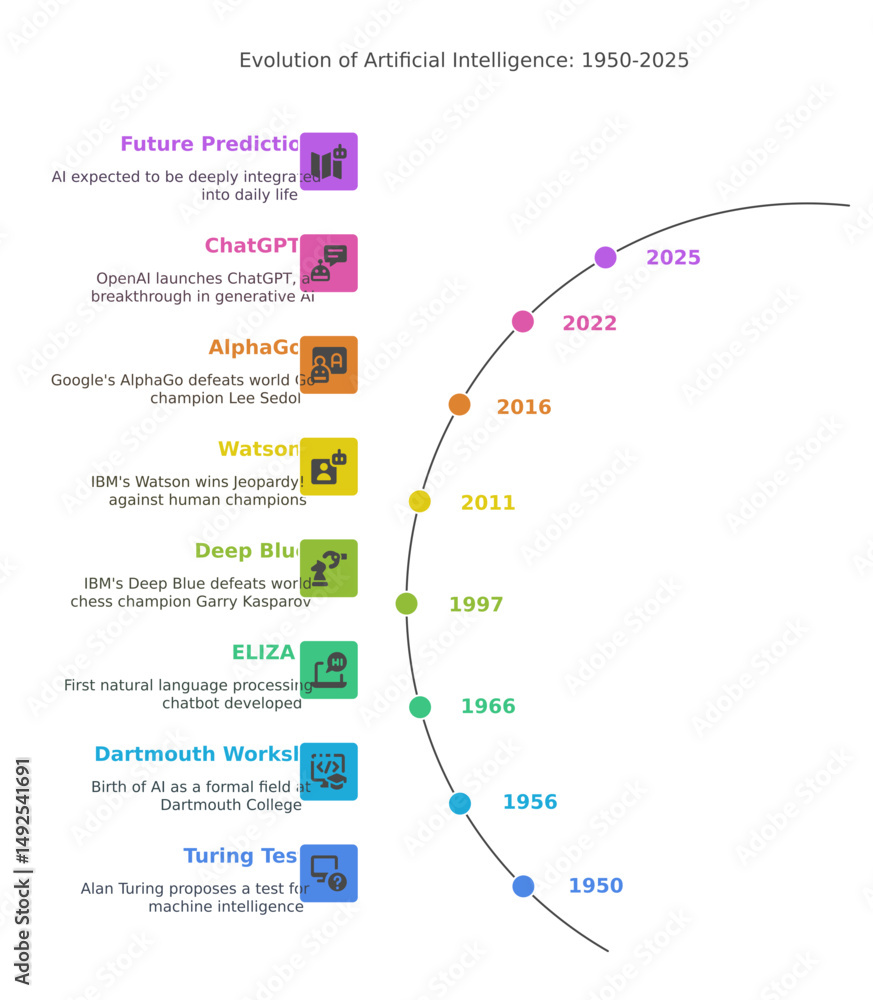
The concept of AI dates back to the mid-20th century, with foundational work by pioneers like Alan Turing and John McCarthy. However, the practical application of AI in business began gaining traction in the late 1980s and early 1990s with the advent of expert systems and early machine learning algorithms. These systems were primarily rule-based and limited in scope, often confined to specific industries like finance and healthcare. The real transformation occurred in the 2010s, driven by three key developments:
- Big Data: The explosion of digital data from sources like social media, IoT devices, and transactional systems provided the raw material for AI models.
- Computational Power: Advances in cloud computing and GPU technology enabled the processing of vast datasets at unprecedented speeds.
- Algorithmic Breakthroughs: Innovations in deep learning, particularly neural networks, allowed AI systems to achieve human-like performance in tasks such as image recognition, natural language processing, and predictive modeling. By the mid-2010s, businesses across sectors began experimenting with AI. Early adopters included tech giants like Google, Amazon, and Microsoft, which integrated AI into their core products. Retailers adopted recommendation engines, banks implemented fraud detection systems, and manufacturers used AI for predictive maintenance. The COVID-19 pandemic further accelerated AI adoption, as businesses sought to automate operations and adapt to remote work environments. Today, AI is no longer a luxury but a necessity for businesses aiming to remain relevant. Governments and industry bodies are also playing a role by establishing ethical guidelines and regulatory frameworks to ensure responsible AI deployment.
#How It Works
Implementing AI in business involves a structured process that begins with identifying the problem or opportunity and ends with the deployment and monitoring of AI solutions. Below is a step-by-step breakdown of how AI integration typically works:
#
- Problem Identification and Goal Setting
- Objective: Define the business challenge or opportunity that AI can address. Common use cases include:
- Customer Service: Automating responses via chatbots or virtual assistants.
- Supply Chain: Optimizing logistics and inventory management.
- Marketing: Personalizing customer experiences through recommendation engines.
- Finance: Detecting fraudulent transactions or automating audits.
- Key Questions: - What specific problem needs solving? - How will AI improve efficiency, accuracy, or revenue? - What are the success metrics (e.g., cost savings, customer satisfaction)?
#
- Data Collection and Preparation
- Data Sources: AI relies on high-quality, relevant data. Sources may include: - Internal databases (CRM, ERP, transaction records). - External data (social media, public datasets, third-party APIs). - IoT devices and sensors (for real-time data).
- Data Cleaning: Removing duplicates, correcting errors, and standardizing formats.
- Data Labeling: For supervised learning, data must be labeled (e.g., tagging images for computer vision models).
- Data Storage: Cloud platforms (AWS, Google Cloud, Azure) or on-premise servers may be used, depending on security and scalability needs.
#
- Choosing the Right AI Technology
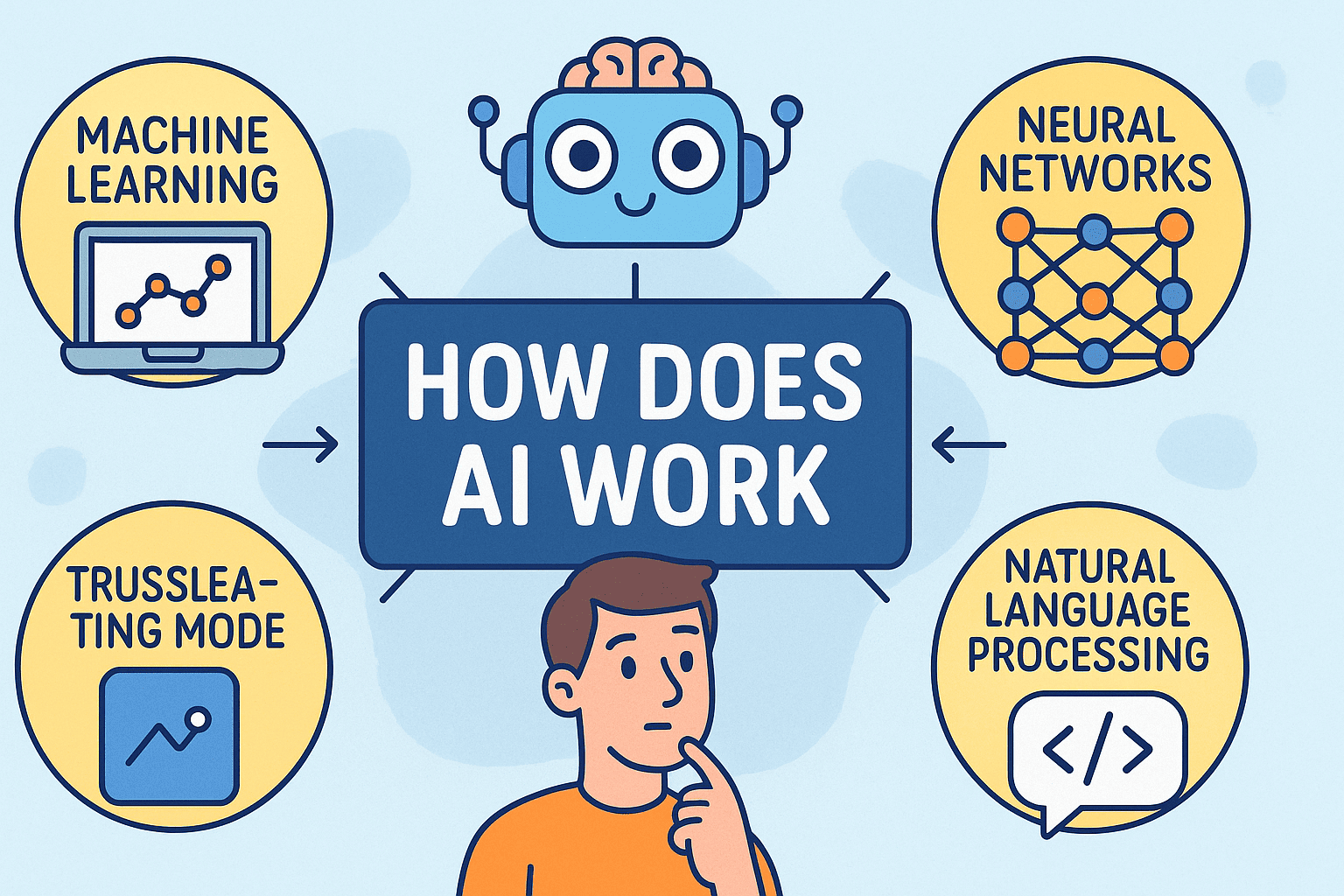
- Machine Learning (ML): Algorithms that learn from data to make predictions or decisions. Subtypes include:
- Supervised Learning: Uses labeled data (e.g., spam detection).
- Unsupervised Learning: Identifies patterns in unlabeled data (e.g., customer segmentation).
- Reinforcement Learning: Learns through trial and error (e.g., robotics, game AI).
- Natural Language Processing (NLP): Enables machines to understand and generate human language (e.g., chatbots, sentiment analysis).
- Computer Vision: Analyzes visual data (e.g., facial recognition, quality control in manufacturing).
- Robotic Process Automation (RPA): Automates repetitive, rule-based tasks (e.g., data entry, invoice processing).
#
- Model Development and Training
- Algorithm Selection: Choosing the appropriate model based on the problem (e.g., decision trees for classification, neural networks for image recognition).
- Training: Feeding the model with historical data to learn patterns. This may involve:
- Feature Engineering: Selecting and transforming relevant variables.
- Hyperparameter Tuning: Adjusting model settings to optimize performance.
- Validation: Testing the model on a separate dataset to ensure accuracy and generalization.
#
- Integration and Deployment
- APIs and Microservices: AI models are often deployed as APIs that can be integrated into existing business applications (e.g., CRM, ERP).
- Edge Computing: For real-time applications (e.g., autonomous vehicles, industrial IoT), AI models may be deployed on local devices to reduce latency.
- User Interface: Developing dashboards or applications that allow non-technical users to interact with AI tools (e.g., sales teams using predictive analytics).
#
- Monitoring and Maintenance
- Performance Tracking: Continuously evaluating the AI model’s accuracy, bias, and relevance.
- Feedback Loops: Incorporating user feedback to improve the model over time.
- Updates: Retraining models with new data to adapt to changing conditions (e.g., market trends, customer behavior).
#
- Scaling and Optimization
- Cloud vs. On-Premise: Scaling AI solutions may require cloud infrastructure for flexibility or on-premise solutions for data security.
- Cost Management: Optimizing computational resources to balance performance and expenses.
- Ethical Considerations: Ensuring compliance with regulations (e.g., GDPR, CCPA) and addressing biases in AI models.
#Important Facts
- Cost Savings: Businesses implementing AI report an average cost reduction of 20–30% in operational processes (McKinsey, 2022).
- Revenue Growth: Companies using AI for customer insights see a 10–15% increase in sales (Deloitte, 2023).
- Job Transformation: While AI automates routine tasks, it also creates new roles such as AI trainers, data annotators, and ethical AI auditors.
- Industry Adoption:
- Healthcare: AI is used for diagnostic imaging, drug discovery, and personalized treatment plans.
- Retail: E-commerce platforms leverage AI for dynamic pricing, inventory management, and chatbots.
- Manufacturing: Predictive maintenance reduces downtime by up to 50% (PwC).
- Ethical Concerns: Bias in AI models can lead to discriminatory outcomes (e.g., hiring algorithms favoring certain demographics). Addressing this requires diverse training data and fairness-aware algorithms.
- Small Business Accessibility: Cloud-based AI tools (e.g., Google’s Vertex AI, IBM Watson) have lowered the barrier to entry, allowing SMEs to adopt AI without heavy upfront investment.
#Timeline
- Foundational ideas
Core concepts and early methods shape How to Implement AI in Your Business.
- Practical use
Tools, examples, and real-world deployments make the topic easier to evaluate.
- Responsible implementation
Current work focuses on reliability, governance, performance, and measurable impact.
#Related Terms
#FAQ
What does How to Implement AI in Your Business cover?
Explains how to implement ai in your business, including the main process, tools, examples, risks, and practical implementation steps.
Why is How to Implement AI in Your Business important?
It helps readers understand key concepts, compare practical use cases, and evaluate how Business & Marketing decisions affect outcomes, risks, and implementation choices.
What should readers verify before applying this topic?
Readers should compare benefits, limitations, data requirements, and related themes such as Implement, AI, Business before using the ideas in real projects.
#References
- How to Implement AI in Your Business terminology and background research
- How to Implement AI in Your Business use cases, implementation examples, and limitations
- Business & Marketing best practices, standards, and risk guidance
- Implement case studies, benchmarks, and current industry analysis

Comments
No comments yet. Start the discussion with a useful note.