

#Short Answer
Traces google ai: company profile and history, highlighting major milestones, context, examples, and future implications.
#Infobox
#Overview
Google AI is the artificial intelligence research and development arm of Google, operating under Alphabet Inc. It integrates AI technologies into Google’s ecosystem while advancing the frontiers of machine learning (ML), deep learning, and neural networks. The division is responsible for groundbreaking projects such as TensorFlow, Google Brain, and large language models like LaMDA and PaLM. Google AI also prioritizes ethical AI development, addressing biases, privacy, and societal impacts through frameworks like Google’s AI Principles. The division collaborates with academic institutions, publishes research in top-tier conferences (e.g., NeurIPS, ICML), and releases open-source tools to foster global AI innovation. Its work spans consumer applications (e.g., Google Search, Assistant) to enterprise solutions (e.g., Google Cloud AI) and autonomous systems (e.g., Waymo).
#History / Background
#Early Foundations (2011–2015)
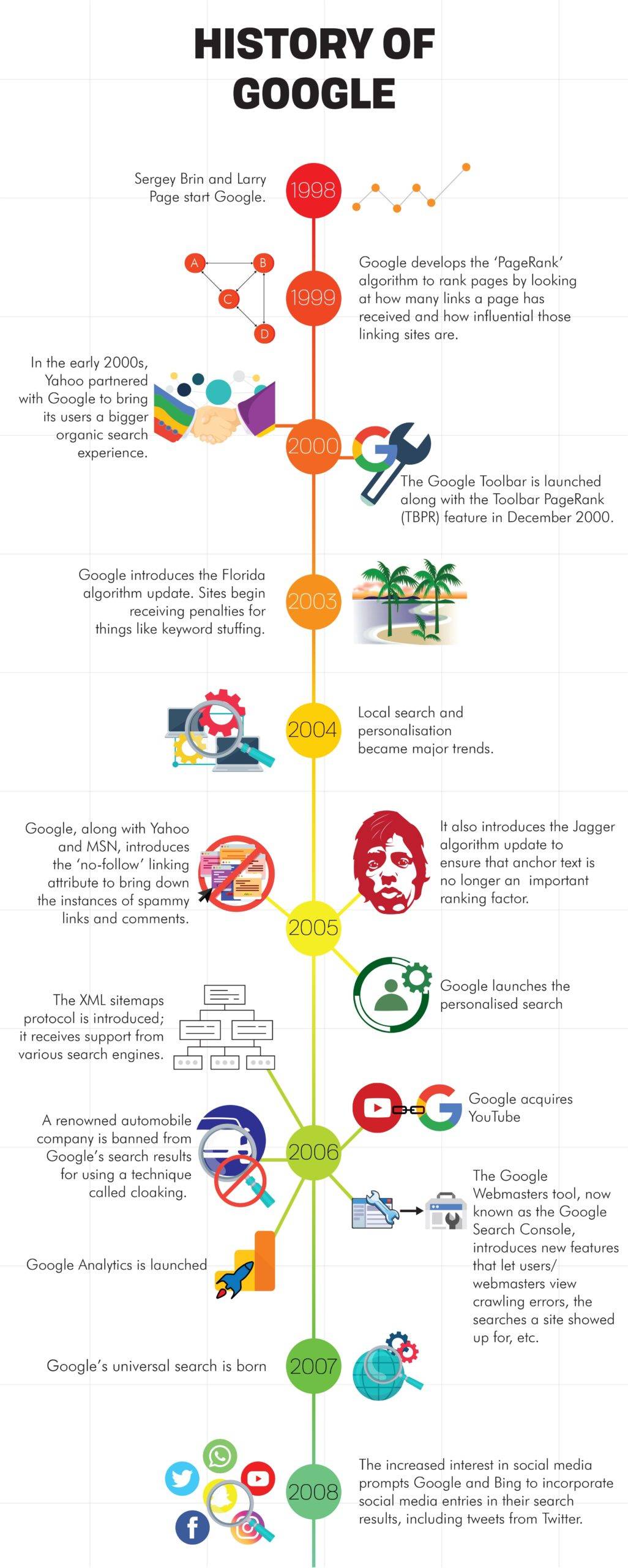
Google’s AI journey began with the Google Brain project in 2011, led by researchers Andrew Ng and Jeff Dean. This initiative pioneered deep learning techniques using neural networks, demonstrating breakthroughs in image and speech recognition. Concurrently, the Google X lab (later renamed X Development) explored AI applications in robotics and autonomous vehicles, laying the groundwork for projects like Waymo. In 2014, Google acquired DeepMind, a London-based AI lab known for its work in reinforcement learning and AlphaGo, the AI that defeated a world champion Go player. This acquisition accelerated Google’s AI capabilities, particularly in reinforcement learning and neural networks.
#Formalization as Google AI (2016–Present)
In 2016, Google consolidated its AI efforts under Google AI, a dedicated division led by Jeff Dean. This move formalized research into areas like:
- Natural Language Processing (NLP): Development of models like BERT (2018), which revolutionized search and language understanding.
- Computer Vision: Advances in image recognition, object detection, and medical imaging (e.g., Google’s AI for diabetic retinopathy detection).
- Ethical AI: Establishment of the Google AI Principles in 2018, guiding responsible AI development. Key milestones include:
- 2017: Launch of TensorFlow, an open-source ML framework adopted globally.
- 2020: Introduction of LaMDA, a conversational AI model capable of generating human-like dialogue.
- 2022: Release of PaLM (Pathways Language Model), a 540-billion-parameter model for complex language tasks.
- 2023: Advancements in multimodal AI, integrating text, image, and audio processing (e.g., Gemini models).
#How It Works
#Core Technologies
Google AI leverages several foundational technologies to drive innovation:
- Machine Learning (ML) and Deep Learning
- Neural Networks: Google AI employs convolutional neural networks (CNNs) for image recognition, recurrent neural networks (RNNs) for sequential data, and transformers for NLP tasks.
- Reinforcement Learning: Used in projects like Waymo for autonomous driving and AlphaGo for game-playing AI.
- Federated Learning: Enables on-device ML (e.g., Gboard’s predictive text) while preserving user privacy.
- Natural Language Processing (NLP)
- Transformers: Models like BERT, T5, and PaLM use attention mechanisms to understand context in language.
- Large Language Models (LLMs): PaLM and LaMDA generate coherent, context-aware text for applications like chatbots and search.
- Computer Vision
- Object Detection: Models like EfficientDet and Vision Transformer (ViT) power features in Google Photos and Google Lens.
- Medical Imaging: AI analyzes X-rays and MRIs to assist in diagnostics (e.g., detecting breast cancer in mammograms).
- AI Ethics and Responsible Innovation
- Fairness: Tools like What-If Tool and Fairness Indicators identify biases in ML models.
- Explainability: Techniques like LIME and SHAP make AI decisions interpretable.
- Privacy: Differential privacy and federated learning minimize data exposure.
#Key Projects and Products
| Project | Description | Impact | |-------------------|---------------------------------------------------------------------------------|-----------------------------------------------------------------------------| | TensorFlow | Open-source ML framework for building and deploying models. | Adopted by 10M+ developers; powers Google’s AI services. | | Google Brain | Research lab for deep learning and neural networks. | Pioneered breakthroughs in speech recognition and image classification. | | Waymo | Autonomous vehicle division under Alphabet. | Leading in self-driving technology with 10M+ autonomous miles driven. | | AlphaFold | AI system for predicting protein structures. | Solved the protein-folding problem (CASP14, 2020); used in drug discovery. | | LaMDA | Conversational AI model for dialogue generation. | Enables more natural interactions in Google Assistant and chatbots. | | PaLM | Large-scale language model for complex reasoning tasks. | Powers Google’s generative AI features in Search and Bard. |
#Important Facts
- Scale: Google AI processes over 40,000 AI-related queries per second on Google Search.
- Energy Efficiency: The Tensor Processing Unit (TPU) is a custom ASIC designed by Google to accelerate ML workloads, reducing energy consumption by up to 30x compared to GPUs.
- Open Source: Over 2,000 open-source AI projects have been released by Google, including JAX, MediaPipe, and Magenta.
- Ethical AI: Google’s AI Principles prohibit applications in weapons, surveillance, and bias reinforcement.
- Global Reach: Google AI operates in 10+ research labs worldwide, including offices in Mountain View, New York, Zurich, and Tokyo.
#Timeline
- Foundational ideas
Core concepts and early methods shape Google AI: Company Profile and History.
- Practical use
Tools, examples, and real-world deployments make the topic easier to evaluate.
- Responsible implementation
Current work focuses on reliability, governance, performance, and measurable impact.
#Related Terms
#FAQ
What does Google AI: Company Profile and History cover?
Traces google ai: company profile and history, highlighting major milestones, context, examples, and future implications.
Why is Google AI: Company Profile and History important?
It helps readers understand key concepts, compare practical use cases, and evaluate how Business & Marketing decisions affect outcomes, risks, and implementation choices.
What should readers verify before applying this topic?
Readers should compare benefits, limitations, data requirements, and related themes such as Google, AI, Company before using the ideas in real projects.
#References
- Google AI: Company Profile and History terminology and background research
- Google AI: Company Profile and History use cases, implementation examples, and limitations
- Business & Marketing best practices, standards, and risk guidance
- Google case studies, benchmarks, and current industry analysis



Comments
No comments yet. Start the discussion with a useful note.