

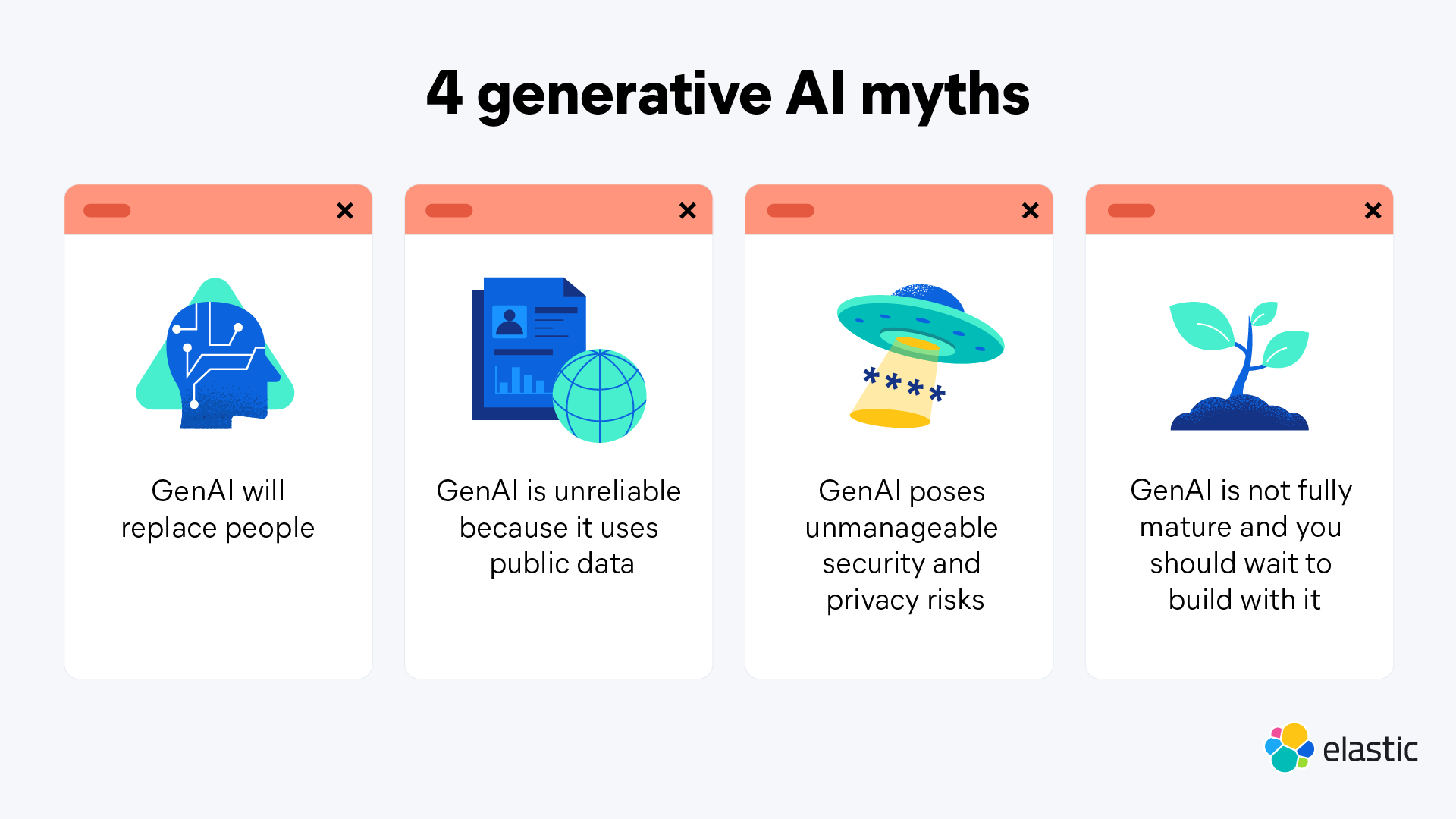
#Short Answer
Covers generative ai myths debunked, including core concepts, practical examples, benefits, limitations, and risks in Generative AI.
#Infobox
#Overview
Generative AI refers to artificial intelligence systems capable of creating new content—such as text, images, audio, or video—based on patterns learned from existing data. Unlike traditional AI, which focuses on classification or prediction, generative models generate novel outputs that resemble human-created content. These systems have gained prominence due to advancements in deep learning, particularly transformer architectures like those used in models such as GPT (Generative Pre-trained Transformer) and Stable Diffusion. The technology has applications across industries, including marketing, healthcare, entertainment, and software development. However, its rapid adoption has fueled misconceptions about its capabilities, limitations, and ethical implications. This article debunks common myths surrounding generative AI while providing a structured overview of its mechanisms, history, and real-world implications.
#History / Background
#Early Foundations (1950s–2010s)
The concept of generative AI traces back to early experiments in machine learning and neural networks. In the 1950s, researchers explored rule-based systems that could generate text or music, though these were rudimentary by modern standards. The 1980s and 1990s saw the development of probabilistic models like Hidden Markov Models (HMMs) and early neural networks, which laid the groundwork for more sophisticated generative approaches. A pivotal moment arrived in 2014 with the introduction of Generative Adversarial Networks (GANs) by Ian Goodfellow and colleagues. GANs consist of two neural networks—a generator and a discriminator—that compete in a zero-sum game, enabling the generator to produce increasingly realistic outputs. This breakthrough accelerated progress in image and video generation.
#The Transformer Era (2017–Present)
The release of the Transformer architecture in 2017 by Vaswani et al. revolutionized generative AI. Unlike previous models that relied on sequential processing (e.g., Recurrent Neural Networks), Transformers leveraged self-attention mechanisms to handle long-range dependencies in data, making them ideal for tasks like language modeling and text generation. This architecture underpins modern large language models (LLMs) such as:
- GPT-3 (2020): Developed by OpenAI, capable of generating coherent and contextually relevant text.
- LaMDA (2021): Google’s model designed for dialogue applications.
- Stable Diffusion (2022): A text-to-image model that gained widespread attention for its ability to generate high-quality visuals from textual prompts. The democratization of generative AI tools, fueled by open-source frameworks and cloud computing, has further expanded its accessibility and applications.
#How It Works
#Core Principles Generative AI operates by learning statistical patterns from large datasets. The process typically involves:
- Training: The model is exposed to vast amounts of data (e.g., text corpora, images, or audio) to identify underlying structures and relationships.
- Model Architecture: Depending on the use case, different architectures are employed:
- Language Models (LLMs): Use transformer-based architectures to predict the next word or token in a sequence.
- Diffusion Models: Gradually add noise to data and then learn to reverse the process, enabling high-fidelity image generation.
- Variational Autoencoders (VAEs): Encode input data into a latent space and decode it to generate new samples.
- Inference: Once trained, the model generates new content by sampling from the learned distribution, often guided by user prompts or constraints.
#Key Techniques
- Fine-Tuning: Adapting a pre-trained model to a specific task using smaller, task-specific datasets.
- Prompt Engineering: Crafting input prompts to guide the model’s output toward desired results.
- Reinforcement Learning from Human Feedback (RLHF): Aligning model outputs with human preferences to reduce harmful or biased responses.
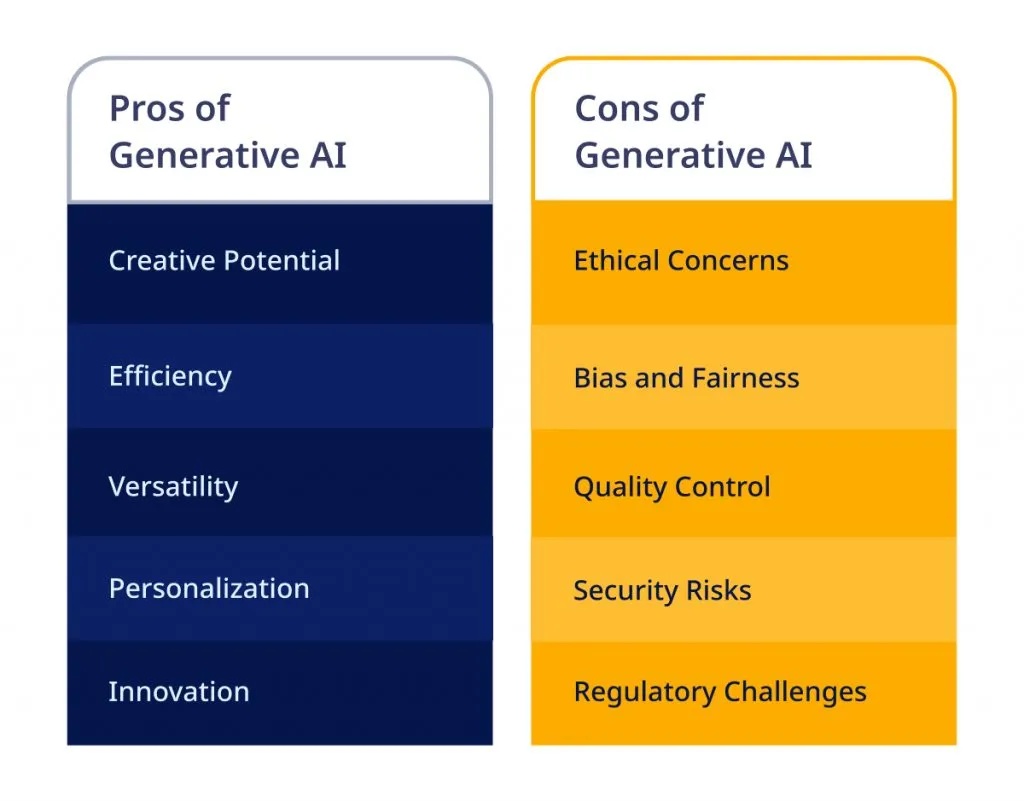
#Limitations Despite its capabilities, generative AI faces challenges:
- Hallucinations: Generating plausible but incorrect or nonsensical information.
- Bias: Reflecting and amplifying biases present in training data.
- Resource Intensity: Requiring significant computational power for training and inference.
#Important Facts
#Capabilities
- Text Generation: Models like GPT-4 can produce human-like text for applications such as chatbots, summarization, and creative writing.
- Image and Video Synthesis: Tools like DALL·E and MidJourney generate images from textual descriptions, while models like Sora create short videos.
- Code Generation: AI can assist in writing, debugging, and optimizing code (e.g., GitHub Copilot).
- Data Augmentation: Generating synthetic data to improve machine learning models in scenarios with limited real-world data.
#Limitations
- Contextual Understanding: While advanced, models may struggle with nuanced or ambiguous prompts.
- Ethical Risks: Potential for misuse in creating deepfakes, misinformation, or plagiarized content.
- Regulatory Scrutiny: Governments and organizations are increasingly focusing on AI governance, transparency, and accountability.
#Industry Impact
- Productivity: Automating repetitive tasks (e.g., drafting emails, generating reports) to enhance efficiency.
- Creativity: Assisting artists, writers, and designers in ideation and execution.
- Healthcare: Accelerating drug discovery, medical imaging analysis, and personalized treatment recommendations.
#Timeline
- Foundational ideas
Core concepts and early methods shape Generative AI Myths Debunked.
- Practical use
Tools, examples, and real-world deployments make the topic easier to evaluate.
- Responsible implementation
Current work focuses on reliability, governance, performance, and measurable impact.
#Related Terms
#FAQ
What does Generative AI Myths Debunked cover?
Covers generative ai myths debunked, including core concepts, practical examples, benefits, limitations, and risks in Generative AI.
Why is Generative AI Myths Debunked important?
It helps readers understand key concepts, compare practical use cases, and evaluate how Generative AI decisions affect outcomes, risks, and implementation choices.
What should readers verify before applying this topic?
Readers should compare benefits, limitations, data requirements, and related themes such as Generative, AI, Myths before using the ideas in real projects.
#References
- Generative AI Myths Debunked terminology and background research
- Generative AI Myths Debunked use cases, implementation examples, and limitations
- Generative AI best practices, standards, and risk guidance
- Generative case studies, benchmarks, and current industry analysis



Comments
No comments yet. Start the discussion with a useful note.