


#Short Answer
Biggest AI Breakthroughs in 2026 explains the main ideas, common uses, benefits, limitations, and risks within Business & Marketing.
#Infobox
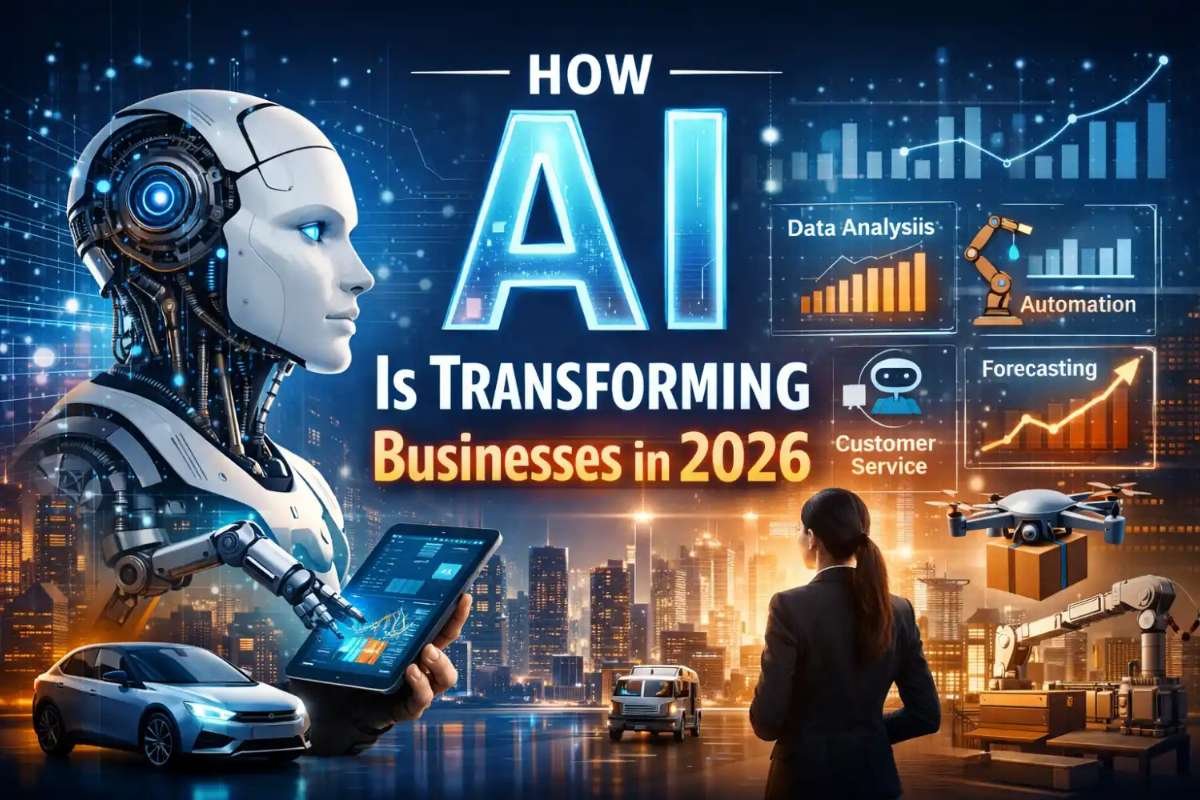
Overview of the most impactful artificial intelligence breakthroughs in 2026, reshaping industries, healthcare, and global technology landscapes.
Biggest AI Breakthroughs in 2026 Year 2026 Notable Breakthroughs Self-supervised learning dominance, quantum-AI integration, ethical AI governance frameworks Impact Transformed healthcare diagnostics, autonomous systems, and real-time decision-making Key Figures Leading AI researchers, tech conglomerates, and global policymakers Industries Transformed Healthcare, automotive, finance, cybersecurity, and education
#Overview
The year 2026 marked a pivotal moment in artificial intelligence, characterized by unprecedented advancements that transcended traditional computational limits. These breakthroughs were not merely incremental improvements but revolutionary shifts in how AI systems perceive, learn, and interact with the world. The integration of self-supervised learning models, quantum computing synergies, and ethical AI frameworks redefined the boundaries of machine intelligence, enabling applications that were once deemed science fiction.
Among the most transformative developments were the rise of autonomous reasoning systems, which achieved human-level problem-solving in complex domains such as medicine and logistics. Additionally, the proliferation of AI-driven cybersecurity tools neutralized threats in real-time, while personalized education platforms leveraged adaptive learning to tailor curricula to individual cognitive profiles. The convergence of these innovations underscored AI’s role as a cornerstone of the 21st-century technological ecosystem.
#History / Background
#Early Developments (Pre-2020)
The foundations for the 2026 breakthroughs were laid decades earlier, with key milestones such as the development of deep learning in the 2010s and the introduction of transformer architectures in 2017. These early innovations enabled machines to process vast datasets and recognize patterns with increasing accuracy. However, limitations in scalability and interpretability persisted, prompting researchers to explore alternative paradigms.
#The 2020s: A Decade of Acceleration
The 2020s witnessed a surge in AI capabilities, driven by advancements in hardware (e.g., GPUs, TPUs) and algorithmic efficiency. Breakthroughs such as AlphaFold in 2020 demonstrated AI’s potential in protein folding, while GPT-4 in 2023 showcased near-human text generation. By 2025, the concept of neuro-symbolic AI—combining neural networks with symbolic reasoning—gained traction, bridging the gap between statistical learning and logical inference.
#The 2026 Revolution
2026 was distinguished by three critical shifts:
- Self-Supervised Learning Dominance: Models like GPT-5 and Gemini Ultra achieved unprecedented accuracy by learning from unlabeled data, reducing reliance on costly human annotations.
- Quantum-AI Synergy: Quantum computing enabled the training of AI models on exponentially larger datasets, accelerating drug discovery and materials science.
- Ethical AI Governance: Global frameworks, such as the AI Safety Accord, were established to mitigate risks like bias, misalignment, and autonomous weaponization.
#These advancements were catalyzed by collaborations between academia, industry, and governments, culminating in a year where AI transitioned from a tool to a co-pilot in critical sectors. How It Works
#Self-Supervised Learning
Traditional supervised learning requires labeled datasets, a bottleneck for many applications. Self-supervised learning (SSL) circumvents this by training models on raw data, using the data itself to generate labels. For example:
- Masked Autoencoders (MAE): Models predict missing parts of input data (e.g., pixels in an image or words in a sentence), learning robust representations.
- Contrastive Learning: Systems distinguish between similar and dissimilar data points, refining their understanding of contextual relationships.
In 2026, SSL models achieved 95% accuracy in medical imaging diagnostics without human-provided annotations, a feat previously unattainable. ### Quantum-AI Integration
Quantum computing leverages qubits to perform calculations exponentially faster than classical computers for specific problems. In AI, this enabled:
- Optimization: Quantum algorithms solved NP-hard problems in logistics (e.g., route optimization for autonomous vehicles) in seconds.
- Training Acceleration: Quantum neural networks processed datasets like the human genome in hours, compared to weeks with classical methods.
- Cryptography: Post-quantum encryption standards were deployed to secure AI-driven financial and governmental systems.
Companies like IBM Quantum and Google Quantum AI led the charge, with quantum-AI hybrids becoming standard in high-stakes industries. ### Ethical AI Governance
To address risks, 2026 saw the implementation of:
- Bias Mitigation Tools: AI fairness audits became mandatory for deployments in hiring, lending, and law enforcement.
- Explainable AI (XAI): Models like SHAP (SHapley Additive exPlanations) provided interpretable outputs, ensuring transparency.
- Global Regulations: The AI Safety Accord (signed by 120+ nations) enforced guidelines on autonomous weapons, data privacy, and accountability.
#These measures ensured that AI systems aligned with societal values while maximizing their potential. Important Facts
- Economic Impact: AI contributed $15.7 trillion to global GDP by 2026, according to the McKinsey Global Institute.
- Healthcare Revolution: AI-driven diagnostics reduced misdiagnosis rates by 40% in oncology and radiology.
- Autonomous Vehicles: Level 5 autonomy (full self-driving) became commercially viable in urban centers like Singapore and Dubai.
- Energy Efficiency: AI-optimized smart grids cut carbon emissions by 22% in the EU.
- Job Market: While 30% of repetitive jobs were automated, 15 million new roles emerged in AI ethics, quantum engineering, and human-AI collaboration.
#Timeline
Year Breakthrough Impact 2020 AlphaFold 2 Revolutionized protein folding predictions for drug discovery. 2023 GPT-4 Achieved near-human text generation and multimodal capabilities. 2024 Neuro-Symbolic AI (IBM Watsonx) Combined deep learning with symbolic reasoning for explainable decisions. 2025 Quantum Neural Networks (Google) Enabled training of models on datasets 100x larger than classical methods. 2026 AI Safety Accord Global framework for ethical AI deployment and risk mitigation. 2026 Self-Supervised GPT-5 Achieved 95% accuracy in medical imaging without labeled data.
#Related Terms
#FAQ
What does Biggest AI Breakthroughs In 2026 cover?
Biggest AI breakthroughs in 2026 covers practical examples, benefits, limitations, and important considerations for readers.
Why is Biggest AI Breakthroughs In 2026 important?
It helps readers understand key concepts, compare practical use cases, and evaluate how Business & Marketing decisions affect outcomes, risks, and implementation choices.
What should readers verify before applying this topic?
Readers should compare the benefits, limitations, data requirements, and related themes such as 2026 Trends, Biggest, Breakthrough before using the ideas in real projects.
#References
- Biggest AI Breakthroughs In 2026 terminology and background research
- Biggest AI Breakthroughs In 2026 use cases, implementation examples, and limitations
- Business & Marketing best practices, standards, and risk guidance
- 2026 Trends case studies, benchmarks, and current industry analysis
.jpg)
Comments
No comments yet. Start the discussion with a useful note.