

#Short Answer
AI-Generated Music: the Next Big Thing explains the main ideas, common uses, benefits, limitations, and risks within Creative AI.
#Infobox
AI-generated music is transforming the music industry by enabling machines to compose, produce, and even perform original compositions autonomously.
AI-Generated Music Field Music First developed 1950s (early experiments) Major contributors David Cope, François Pachet, AIVA Key technologies Machine learning, deep neural networks, generative adversarial networks (GANs), transformer models Notable applications Film scoring, background music, commercial jingles, experimental compositions Ethical concerns Copyright infringement, artist displacement, authenticity debates
#Overview
AI-generated music refers to the process of creating original musical compositions using artificial intelligence systems. These systems analyze vast datasets of existing music to identify patterns, styles, and structures, then generate new melodies, harmonies, rhythms, and even lyrics that mimic human creativity. Unlike traditional music production, which relies on human composers, AI tools can produce music in real-time, adapt to specific genres, and collaborate with artists as co-creators.
The rise of AI in music has been accelerated by advancements in machine learning, particularly deep learning models such as recurrent neural networks (RNNs), transformers, and generative adversarial networks (GANs). These technologies enable AI to not only replicate existing musical styles but also innovate by blending genres, experimenting with unconventional structures, and even simulating the styles of specific artists or historical periods.
AI-generated music is increasingly being used across industries, from film scoring and video game soundtracks to background music for advertisements and streaming platforms. Companies like AIVA, Amper Music, and Boomy have commercialized AI music generation, offering tools for both amateur musicians and professional producers.
#History / Background
#Early experiments
The concept of AI-generated music dates back to the 1950s, with one of the earliest examples being The Illiac Suite, composed in 1957 by Lejaren Hiller and Leonard Isaacson using the ILLIAC I computer. This string quartet was created using algorithmic composition techniques, marking the first time a computer was used to generate a complete musical work.
In the 1980s and 1990s, researchers like David Cope developed systems such as EMI (Experiments in Musical Intelligence), which analyzed the works of classical composers like Bach and Mozart to generate new compositions in their styles. Cope's work demonstrated that AI could not only mimic but also extend the creative processes of human composers.
#Modern developments
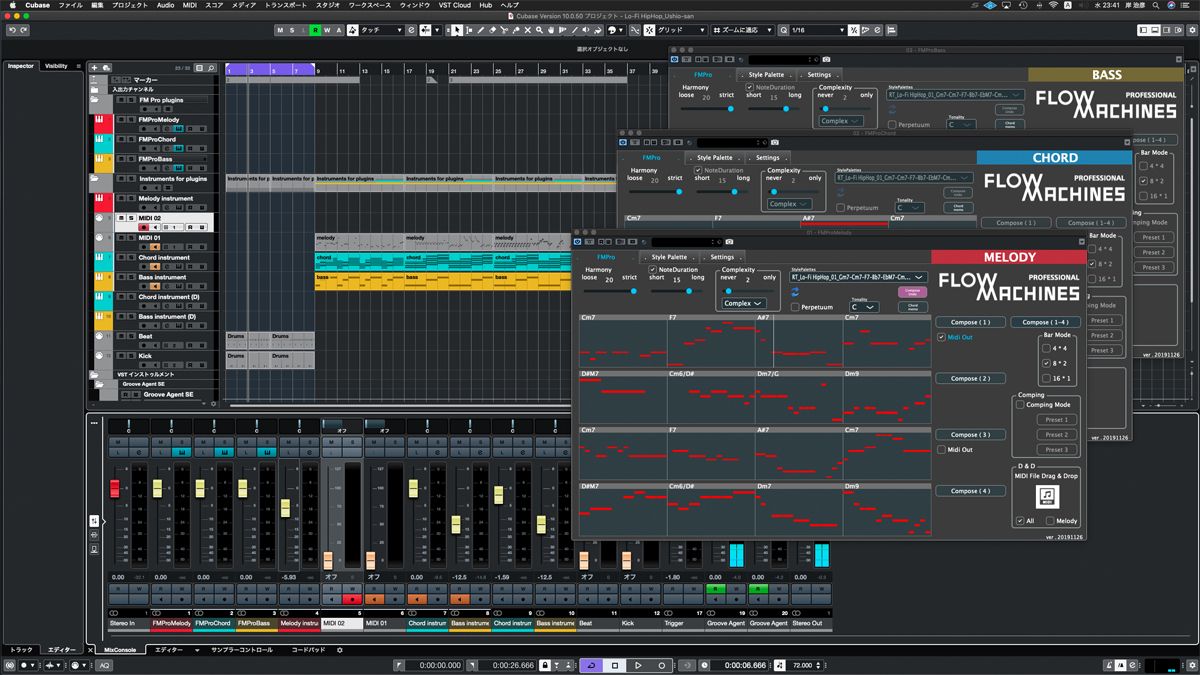
The 21st century has seen a surge in AI music generation, driven by breakthroughs in deep learning. In 2016, Magenta, a Google Brain project, introduced tools like NSynth, which uses neural networks to synthesize new sounds from existing audio samples. Around the same time, François Pachet and his team at Sony CSL developed Flow Machines, which generated the first AI-composed pop song, "Daddy's Car", in the style of The Beatles.
The launch of OpenAI's Jukebox in 2020 marked a significant milestone, as it could generate music with vocals in various styles and genres, including imitations of specific artists. Other notable AI music tools include AIVA (Artificial Intelligence Virtual Artist), which became the first AI to be recognized as a composer by a music society, and Boomy, a platform that allows users to create and share AI-generated tracks with minimal input.
#How It Works
#Data collection and training
AI music generation systems rely on large datasets of existing music to learn patterns, structures, and stylistic elements. These datasets typically include MIDI files, audio recordings, sheet music, and metadata such as tempo, key signatures, and instrumentation. The data is preprocessed to extract features like pitch, duration, and timbre, which are then used to train neural networks.
Common datasets used for training include the Lakh MIDI Dataset, which contains over 170,000 MIDI files, and the MAESTRO Dataset, which includes high-quality piano performances. Some systems also incorporate symbolic representations of music, such as chord progressions and melody lines, to improve the quality of generated outputs.
#Neural network architectures
Several neural network architectures are employed in AI music generation, each with unique strengths:
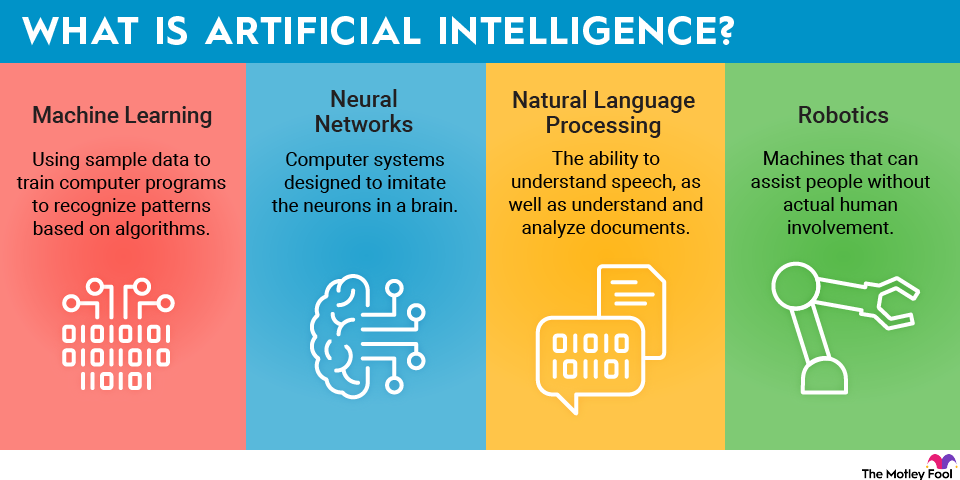
- Recurrent Neural Networks (RNNs): RNNs, particularly LSTM (Long Short-Term Memory) networks, are well-suited for sequential data like music. They can model temporal dependencies in melodies and harmonies, making them ideal for generating coherent musical phrases.
- Transformers: Transformer models, such as those used in MusicLM and Jukebox, excel at capturing long-range dependencies in music. They use self-attention mechanisms to weigh the importance of different parts of the input sequence, enabling more nuanced and context-aware generation.
- Generative Adversarial Networks (GANs): GANs consist of two neural networks—a generator that creates music and a discriminator that evaluates its authenticity. The generator learns to produce realistic music by trying to fool the discriminator, resulting in high-quality outputs. Examples include MuseGAN and GANSynth.
- Diffusion Models: Diffusion models, such as those used in Stable Audio, generate music by gradually refining noise into structured audio. This approach has shown promise in producing high-fidelity audio with fine-grained control over style and texture.
#Music generation process
The process of generating AI music typically involves the following steps:
- Input specification: Users provide input parameters such as genre, mood, tempo, key, instrumentation, or even a seed melody. Some systems allow users to upload reference tracks to guide the generation process.
- Model inference: The trained neural network processes the input and generates a new musical sequence. This may involve predicting notes, chords, rhythms, or even lyrics, depending on the system's capabilities.
- Post-processing: The raw output is often refined to improve coherence, remove artifacts, and enhance audio quality. This may include adjusting dynamics, applying effects, or converting MIDI to audio.
- Output delivery: The final output can be exported as MIDI, audio files (e.g., WAV, MP3), or integrated directly into digital audio workstations (DAWs) for further editing.
#Important Facts
- Speed and scalability: AI can generate music in seconds or minutes, compared to the hours or days required by human composers. This scalability makes it ideal for applications like background music, jingles, and personalized playlists.
- Style versatility: AI systems can emulate virtually any musical style, from classical and jazz to electronic and hip-hop. Some models, like AIVA, specialize in specific genres, while others, like Jukebox, offer multi-genre capabilities.
- Collaborative potential: AI is increasingly used as a tool for human musicians, helping with composition, arrangement, and sound design. Artists like Holly Herndon and Grimes have incorporated AI into their creative processes.
- Ethical and legal challenges: The rise of AI-generated music has raised concerns about copyright infringement, as AI models may inadvertently reproduce protected works. There are also debates about the displacement of human musicians and the authenticity of AI-composed music.
- Commercial adoption: Major companies like Spotify, Apple Music, and YouTube are exploring AI-generated music for personalized content, while startups like Boomy and Soundraw are democratizing music creation for non-professionals.
#Timeline
Year Event 1957 The Illiac Suite is composed by Lejaren Hiller and Leonard Isaacson using the ILLIAC I computer. 1980s–1990s David Cope develops EMI, an AI system that composes music in the style of classical composers. 2016 Google's Magenta project introduces NSynth, a neural synthesizer for generating new sounds. 2016 Sony CSL's Flow Machines generates "Daddy's Car," the first AI-composed pop song. 2018 AIVA becomes the first AI to be recognized as a composer by a music society (Société des Auteurs, Compositeurs et Éditeurs de Musique). 2020 OpenAI releases Jukebox, capable of generating music with vocals in various styles. 2022 MusicLM is introduced, using transformer models to generate high-fidelity music from text descriptions. 2023 Startups like Boomy and Soundraw gain popularity for AI-assisted music creation.
#Related Terms
#FAQ
What does AI-Generated Music: The Next Big Thing? cover?
AI-generated music: the next big thing covers practical examples, benefits, limitations, and important considerations for readers.
Why is AI-Generated Music: The Next Big Thing? important?
It helps readers understand key concepts, compare practical use cases, and evaluate how Creative AI decisions affect outcomes, risks, and implementation choices.
What should readers verify before applying this topic?
Readers should compare the benefits, limitations, data requirements, and related themes such as Aigenerated, Music, Big before using the ideas in real projects.
#References
- AI-Generated Music: The Next Big Thing? terminology and background research
- AI-Generated Music: The Next Big Thing? use cases, implementation examples, and limitations
- Creative AI best practices, standards, and risk guidance
- Aigenerated case studies, benchmarks, and current industry analysis

Comments
No comments yet. Start the discussion with a useful note.