

#Short Answer
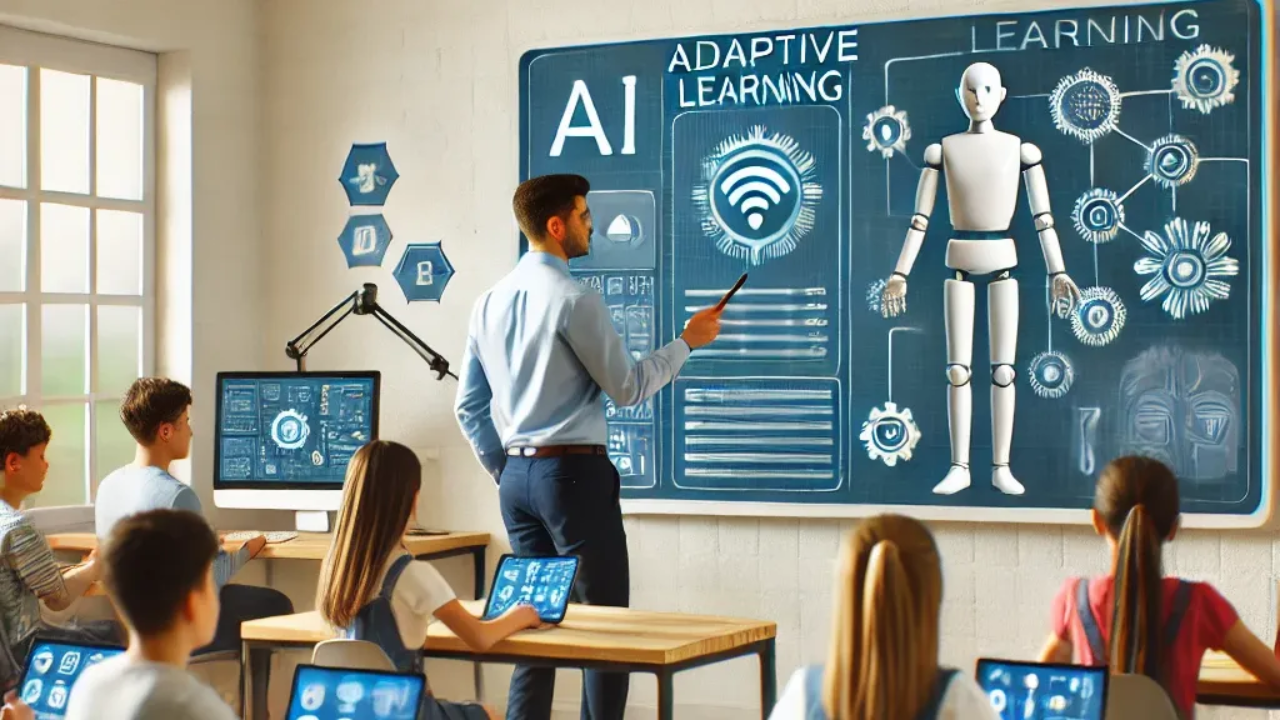
Shows how AI can support teachers through enhancing instruction, including tools, examples, benefits, and responsible-use tips.
#Infobox
Artificial intelligence in education is transforming teaching methodologies through personalized learning, automated grading, and adaptive content delivery.
Artificial Intelligence in Teaching Field Education Focus Enhancing instructional methods, student engagement, and administrative efficiency Key Applications Personalized learning, automated grading, content generation, virtual tutoring Benefits Improved student outcomes, reduced teacher workload, scalable education Challenges Data privacy, ethical concerns, digital divide, implementation costs First Introduced 1950s (early concepts), 2010s (modern applications)
#Overview
Artificial intelligence (AI) in teaching refers to the integration of machine learning, natural language processing, and data analytics to enhance educational practices. AI tools assist educators by automating administrative tasks, personalizing learning experiences, and providing real-time feedback to students. These technologies enable teachers to focus more on instructional design and student mentorship while AI handles repetitive tasks such as grading, attendance tracking, and content recommendations.
The adoption of AI in education has accelerated due to advancements in computational power, cloud storage, and the availability of large datasets. Modern AI systems can analyze student performance patterns, predict learning outcomes, and suggest tailored interventions. This shift aligns with the broader trend of digital transformation in education, where technology bridges gaps in accessibility and quality.
#History / Background
#Early Developments
The conceptual foundation of AI in education dates back to the 1950s, with early experiments in computer-assisted instruction (CAI). One of the first notable projects was PLATO, developed at the University of Illinois in 1960. PLATO used mainframe computers to deliver interactive lessons, marking a significant step toward automated learning systems.
In the 1970s and 1980s, researchers explored intelligent tutoring systems (ITS), which used AI to simulate one-on-one tutoring. Systems like SCHOLAR and PROUST demonstrated the potential of AI to adapt to individual student needs. However, limited computational resources constrained widespread adoption during this period.
#Modern Era
The 2010s witnessed a resurgence of AI in education, driven by breakthroughs in deep learning and big data analytics. The proliferation of MOOCs and online learning platforms like Coursera and edX incorporated AI-driven features such as automated grading and personalized course recommendations. Companies like Duolingo and Khan Academy leveraged AI to create adaptive learning experiences.
Governments and educational institutions began investing in AI-powered tools to address challenges such as teacher shortages and unequal access to quality education. Initiatives like UNESCO’s AI in Education framework emphasized ethical considerations and inclusive design. By 2020, AI tools had become integral to blended learning models, combining in-person instruction with digital resources.
#How It Works
#Core Technologies
AI in teaching relies on several key technologies:
- Machine Learning (ML): Algorithms analyze student data to identify patterns and predict outcomes. For example, ML models can detect students at risk of falling behind and recommend interventions.
- Natural Language Processing (NLP): Enables AI systems to understand and generate human language. Tools like chatbots and virtual assistants use NLP to provide instant responses to student queries.
- Computer Vision: Analyzes visual data, such as handwritten assignments or facial expressions, to assess engagement or correct errors.
- Reinforcement Learning: Optimizes teaching strategies by learning from feedback. For instance, an AI tutor might adjust its teaching pace based on a student’s performance.
#Key Applications
Personalized Learning
AI systems create customized learning paths by analyzing a student’s strengths, weaknesses, and learning style. Platforms like DreamBox Learning use adaptive algorithms to tailor math lessons to each student’s proficiency level. This approach ensures that students receive content at an appropriate difficulty, reducing frustration and improving retention.
Automated Grading
AI-powered grading tools, such as Gradescope and Turnitin, automate the evaluation of assignments, quizzes, and essays. These systems use NLP to assess written responses and provide detailed feedback. Automated grading saves teachers time and ensures consistency in scoring, though it may lack the nuance of human evaluation in subjective subjects.
Content Generation
AI tools like Jasper and Copy.ai generate lesson plans, quiz questions, and study guides. These systems analyze existing educational materials and produce original content aligned with curriculum standards. While AI-generated content can be a valuable resource, educators must review it for accuracy and relevance.
Virtual Tutoring
AI tutors, such as Socratic and Brainly, provide on-demand assistance to students. These tools use NLP to answer questions, explain concepts, and offer step-by-step solutions. Virtual tutors are particularly beneficial in remote or underserved areas where access to human tutors is limited.
#Implementation in Classrooms
Integrating AI into classrooms involves several steps:
- Needs Assessment: Identify specific challenges, such as low student engagement or high administrative workload.
- Tool Selection: Choose AI tools that align with educational goals and budget constraints.
- Training: Provide professional development for teachers to familiarize them with AI technologies.
- Pilot Testing: Implement AI tools in a controlled environment to evaluate their effectiveness.
- Scaling Up: Expand successful implementations across the institution while monitoring outcomes.
#Important Facts
- AI can reduce teacher workload by up to 40% by automating administrative tasks (McKinsey, 2023).
- The global AI in education market is projected to reach $25.7 billion by 2027 (HolonIQ, 2023).
- Personalized learning systems can improve student performance by 30% compared to traditional methods (RAND Corporation, 2022).
- Over 60% of teachers report using AI tools in some capacity, though adoption varies by region (OECD, 2023).
- AI-powered chatbots can reduce student dropout rates by providing timely academic support (EdTech Magazine, 2023).
#Timeline
Year Event 1960 PLATO, the first computer-assisted instruction system, is developed at the University of Illinois. 1970s Intelligent tutoring systems like SCHOLAR and PROUST emerge, using early AI techniques. 1997 AIBO, a robotic pet used for educational purposes, is introduced by Sony. 2011 IBM’s Watson wins Jeopardy!, demonstrating the potential of AI in complex problem-solving. 2012 Coursera and edX launch, incorporating AI-driven features like automated grading. 2016 Google Classroom integrates AI to streamline assignment management. 2018 Duolingo introduces AI-powered adaptive learning for language education. 2020 UNESCO releases guidelines for ethical AI use in education. 2022 Generative AI tools like ChatGPT gain widespread adoption in educational settings. 2023 Over 70% of K-12 schools in the U.S. report using AI tools for administrative or instructional purposes.
#Related Terms
#FAQ
What does AI For Teachers: Enhancing Instruction cover?
Shows how AI can support teachers through enhancing instruction, including tools, examples, benefits, and responsible-use tips.
Why is AI For Teachers: Enhancing Instruction important?
It helps readers understand key concepts, compare practical use cases, and evaluate how Education & Careers decisions affect outcomes, risks, and implementation choices.
What should readers verify before applying this topic?
Readers should compare the benefits, limitations, data requirements, and related themes such as Teacher, Enhancing, Instruction before using the ideas in real projects.
#References
- AI For Teachers: Enhancing Instruction terminology and background research
- AI For Teachers: Enhancing Instruction use cases, implementation examples, and limitations
- Education & Careers best practices, standards, and risk guidance
- Teacher case studies, benchmarks, and current industry analysis



Comments
No comments yet. Start the discussion with a useful note.