


#Short Answer
Fairness in AI models is an interdisciplinary field that intersects artificial intelligence, machine learning, ethics, and law. It addresses the challenge of ensuring that AI systems operate without bias, particularly against historically marginalized or underrepresented groups. As AI systems increasingly influence decisions in employment, finance, healthcare, and criminal justice, the need for fairness has become a central concern for researchers, policymakers, and industry leaders.
#Infobox
#Overview
Fairness in AI models is an interdisciplinary field that intersects artificial intelligence, machine learning, ethics, and law. It addresses the challenge of ensuring that AI systems operate without bias, particularly against historically marginalized or underrepresented groups. As AI systems increasingly influence decisions in employment, finance, healthcare, and criminal justice, the need for fairness has become a central concern for researchers, policymakers, and industry leaders.
The concept of fairness in AI is not monolithic; it encompasses multiple definitions and metrics, each reflecting different philosophical and technical perspectives. These include individual fairness (treating similar individuals similarly), group fairness (ensuring parity across demographic groups), and counterfactual fairness (evaluating outcomes under hypothetical scenarios). The choice of fairness metric often depends on the specific context and ethical priorities of the application.
#History / Background
Concerns about bias in AI systems date back to the early days of computing, but the formal study of fairness in machine learning gained momentum in the 2010s. Early work focused on identifying and quantifying biases in datasets and algorithms, particularly in areas like facial recognition and predictive policing. Landmark studies, such as those by Cynthia Dwork and colleagues in 2012, introduced formal definitions of fairness and proposed mathematical frameworks for measuring and mitigating bias.
In 2016, the White House published a report titled Big Data: A Report on Algorithmic Systems, Opportunity, and Civil Rights, which highlighted the risks of algorithmic discrimination and called for greater transparency and accountability in AI systems. Around the same time, high-profile cases, such as the COMPAS algorithm used in criminal sentencing, exposed the dangers of biased AI, sparking public debate and regulatory scrutiny.
The European Union’s General Data Protection Regulation (GDPR), enacted in 2018, included provisions for algorithmic transparency and fairness, further elevating the issue on the global stage. Since then, governments, corporations, and academic institutions have invested heavily in research and development to create fairer AI systems.
#How It Works
Ensuring fairness in AI models involves a multi-step process that spans data collection, model training, and deployment. The following are key components of this process:
#Data Collection and Preprocessing
Fairness begins with the data used to train AI models. Biases can enter datasets through historical discrimination, sampling errors, or flawed data collection methods. For example, if a hiring algorithm is trained on resumes from a predominantly male workforce, it may learn to favor male candidates. To mitigate this, practitioners use techniques such as data augmentation (adding synthetic data to balance underrepresented groups) and bias correction (adjusting labels or features to reduce disparities).
#Fairness Metrics and Definitions
Fairness is not a single concept but a spectrum of definitions, each suited to different contexts. Common fairness metrics include:
- Demographic Parity: Ensures that the positive prediction rate is equal across different demographic groups.
- Equal Opportunity: Requires that the true positive rate (recall) is equal across groups.
- Equalized Odds: Demands that both the true positive rate and false positive rate are equal across groups.
- Calibration: Ensures that predicted probabilities match the actual likelihood of the outcome for each group.
Choosing the right metric depends on the application. For instance, in hiring, equal opportunity may be prioritized to ensure that qualified candidates from all groups have an equal chance of being selected, while in lending, calibration may be more important to ensure accurate risk assessments.
#Bias Mitigation Techniques
Once biases are identified, several techniques can be applied to reduce them:
- Pre-processing: Adjusting the training data to remove or reduce bias before model training. Examples include reweighting samples or transforming features to obscure sensitive attributes.
- In-processing: Modifying the learning algorithm to explicitly account for fairness. Techniques include adding fairness constraints to the optimization problem or using adversarial training to debias the model.
- Post-processing: Adjusting the model’s predictions after training to achieve fairness. This can involve recalibrating decision thresholds or applying group-specific adjustments.
#Evaluation and Monitoring
Fairness is not a one-time achievement but an ongoing process. AI systems must be continuously evaluated for bias, particularly as they interact with real-world data. Techniques such as fairness audits and stress testing help identify potential issues before deployment. Additionally, tools like explainable AI (XAI) provide insights into how models make decisions, enabling stakeholders to detect and address biases.
#Important Facts
- AI systems can perpetuate biases present in historical data, even if the data is not explicitly labeled with sensitive attributes.
- Fairness metrics often involve trade-offs; improving one metric (e.g., demographic parity) may worsen another (e.g., predictive accuracy).
- Regulations such as the EU’s GDPR and the U.S. Algorithmic Accountability Act require transparency and fairness in automated decision-making systems.
- Bias in AI is not limited to race or gender; it can also affect other groups, such as people with disabilities, non-native English speakers, or individuals from low-income backgrounds.
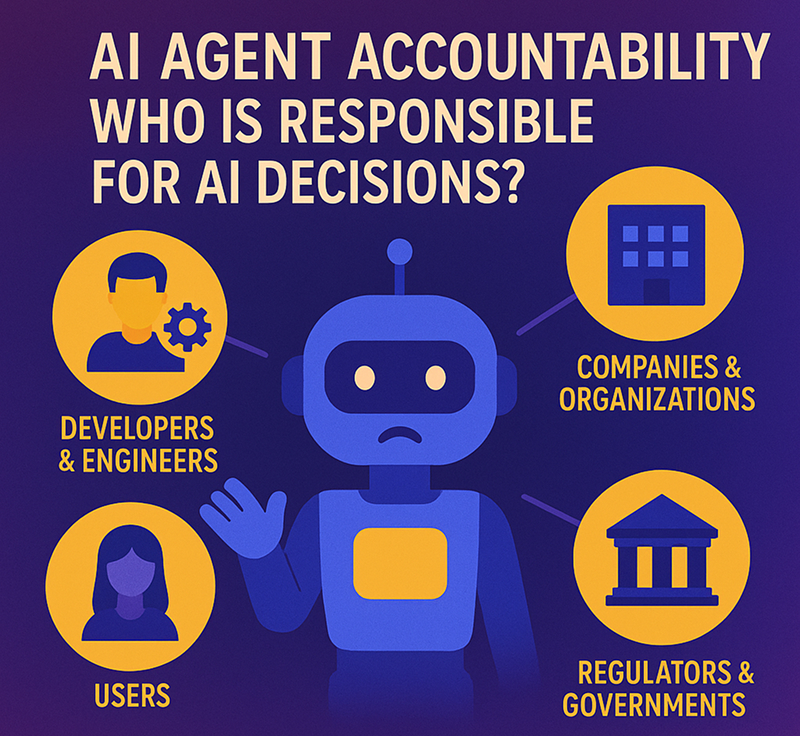
- Fairness in AI is closely linked to broader ethical concerns, such as privacy, accountability, and the societal impact of automation.
#Timeline
- Cynthia Dwork et al
[Cynthia Dwork](# 'Cynthia Dwork') et al. publish *Fairness Through Awareness*, introducing formal fairness definitions.
- White House releases *Big
White House releases *Big Data: A Report on Algorithmic Systems, Opportunity, and Civil Rights*, highlighting algorithmic bias.
- ProPublica investigation revea
ProPublica investigation reveals racial bias in the COMPAS criminal sentencing algorithm.
- European Union enacts GDPR
European Union enacts [GDPR](# 'General Data Protection Regulation'), including provisions for algorithmic transparency.
- Google releases *What-If Tool*
Google releases *What-If Tool*, a fairness evaluation tool for machine learning models.
- IBM launches *AI Fairness
IBM launches *AI Fairness 360*, an open-source toolkit for detecting and mitigating bias.
- U.S. introduces the Algorithmi
U.S. introduces the [Algorithmic Accountability Act](# 'Algorithmic Accountability Act'), proposing regulations for high-risk AI systems.
- European Union agrees on
European Union agrees on the [Artificial Intelligence Act](# 'Artificial Intelligence Act'), which includes strict rules for high-risk AI systems.
#Related Terms
#FAQ
What does AI Fairness: Ensuring Equity cover?
AI fairness: ensuring equity covers practical examples, benefits, limitations, and important considerations for readers.
Why is AI Fairness: Ensuring Equity important?
It helps readers understand key concepts, compare practical use cases, and evaluate how AI Ethics decisions affect outcomes, risks, and implementation choices.
What should readers verify before applying this topic?
Readers should compare the benefits, limitations, data requirements, and related themes such as Fairnes, Ensuring, Equity before using the ideas in real projects.
#References
- AI Fairness: Ensuring Equity terminology and background research
- AI Fairness: Ensuring Equity use cases, implementation examples, and limitations
- AI Ethics best practices, standards, and risk guidance
- Fairnes case studies, benchmarks, and current industry analysis


Comments
No comments yet. Start the discussion with a useful note.