


#Short Answer
AI ethics in 2026 represents a maturing discipline that addresses the moral, legal, and societal implications of artificial intelligence systems. As AI adoption accelerates across industries, the ethical considerations surrounding its development and deployment have become central to policy discussions, corporate strategies, and public discourse. The year 2026 is expected to mark a turning point where ethical frameworks transition from theoretical debates to enforceable regulations, with a strong emphasis on accountability, transparency, and risk management.
#Infobox
#Overview
AI ethics in 2026 represents a maturing discipline that addresses the moral, legal, and societal implications of artificial intelligence systems. As AI adoption accelerates across industries, the ethical considerations surrounding its development and deployment have become central to policy discussions, corporate strategies, and public discourse. The year 2026 is expected to mark a turning point where ethical frameworks transition from theoretical debates to enforceable regulations, with a strong emphasis on accountability, transparency, and risk management.
Key trends shaping AI ethics in 2026 include the global harmonization of standards, the rise of AI governance tools, and the integration of ethical considerations into the earliest stages of AI system design. Organizations are increasingly adopting AI governance frameworks to align with emerging regulations, while civil society groups push for stronger protections against algorithmic discrimination and privacy violations. The proliferation of AI ethics conferences in the USA, such as those highlighted in the AI Ethics and Governance conferences in the USA for 2026, underscores the growing demand for collaborative solutions to complex ethical challenges.
#History / Background
The foundations of AI ethics can be traced back to the 1950s, when early computer scientists like Alan Turing and Norbert Wiener pondered the societal implications of artificial intelligence. However, it was not until the 21st century that AI ethics emerged as a distinct field, driven by high-profile incidents such as biased hiring algorithms, facial recognition misidentifications, and autonomous vehicle accidents.
In 2016, the Partnership on AI was founded by major technology companies to promote responsible AI development. This was followed by the release of the Asilomar AI Principles in 2017, which outlined ethical guidelines for AI researchers and developers. The European Union took a significant step in 2021 with the proposal of the EU AI Act, the first comprehensive legal framework for AI regulation, which is expected to enter into force in 2026.
In the United States, the National Institute of Standards and Technology (NIST) published the AI Risk Management Framework in 2023, providing voluntary guidelines for managing AI risks. The U.S. government also established the AI Bill of Rights in 2022, outlining five principles for protecting individuals from harmful AI systems. These developments reflect a global trend toward regulatory oversight, with 2026 serving as a critical year for implementation and enforcement.
#How It Works
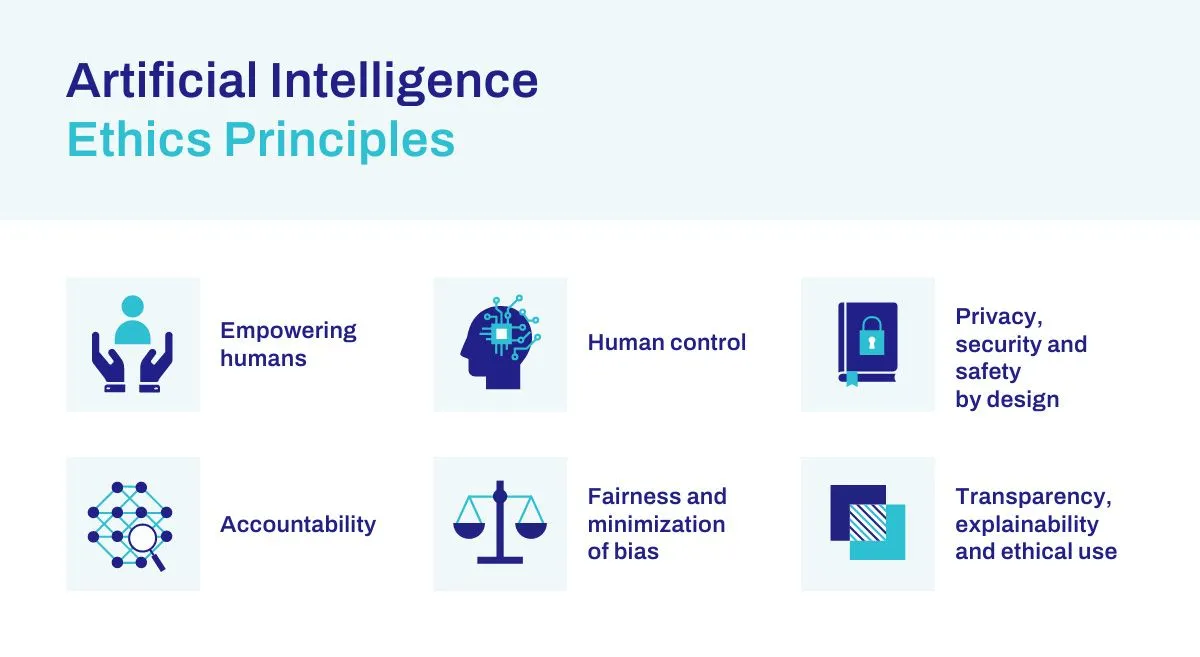
AI ethics in 2026 operates through a combination of regulatory frameworks, organizational policies, and technological safeguards. The process begins with the identification of potential ethical risks during the design phase of AI systems, often referred to as ethics by design. Developers and ethicists collaborate to assess factors such as bias, fairness, transparency, and accountability before deployment.
Once an AI system is deployed, continuous monitoring and auditing are conducted to ensure compliance with ethical standards. This includes the use of AI auditing tools that evaluate model performance, detect biases, and assess the impact on vulnerable populations. Organizations are increasingly adopting AI governance frameworks, such as the ISO/IEC 23894 standard, to document ethical decision-making processes and demonstrate accountability to regulators and stakeholders.
Public engagement and transparency are also critical components of AI ethics in 2026. Many organizations now publish AI impact assessments that detail the potential societal effects of their systems, while governments and civil society groups advocate for stronger public oversight mechanisms. The rise of AI ethics boards within corporations and academic institutions further institutionalizes ethical considerations, ensuring that diverse perspectives are represented in decision-making processes.
#Important Facts
- The EU AI Act, set to take full effect in 2026, will classify AI systems into risk categories and impose strict requirements on high-risk applications, including mandatory risk assessments and human oversight.
- The NIST AI Risk Management Framework provides a voluntary but widely adopted approach to identifying, assessing, and mitigating AI risks, influencing both U.S. and international policies.
- By 2026, over 60% of Fortune 500 companies are expected to have dedicated AI ethics teams, up from less than 20% in 2023, according to industry reports.
- The ISO/IEC 23894 standard, published in 2023, offers a globally recognized framework for AI risk management, harmonizing ethical practices across industries and jurisdictions.
- Public trust in AI systems remains a significant challenge, with surveys indicating that only 35% of respondents in the U.S. and Europe trust AI to make fair and unbiased decisions without regulatory oversight.
- The number of AI ethics conferences in the USA has grown by 40% annually since 2022, reflecting the increasing demand for knowledge-sharing and collaboration among policymakers, researchers, and industry leaders.
- Bias in AI systems continues to be a major concern, with studies showing that facial recognition technologies misidentify people of color at disproportionately high rates, prompting calls for stricter regulations.
- Generative AI tools, such as large language models, have raised new ethical questions about copyright, misinformation, and the potential for AI-generated content to manipulate public opinion.
#Timeline
- Founding of the Partnership
Founding of the [Partnership on AI](# 'Partnership on AI') by major tech companies.
- Release of the Asilomar
Release of the [Asilomar AI Principles](# 'Asilomar AI Principles') by the Future of Life Institute.
- European Commission proposes t
European Commission proposes the [EU AI Act](# 'EU AI Act').
- U.S. government releases the
U.S. government releases the [AI Bill of Rights](# 'AI Bill of Rights').
- NIST publishes the AI
NIST publishes the [AI Risk Management Framework](# 'NIST AI Risk Management Framework'); ISO/IEC 23894 standard is published.
- First major fines imposed
First major fines imposed under the EU AI Act for non-compliance with transparency requirements.
- Widespread adoption of AI
Widespread adoption of AI governance tools in Fortune 500 companies; surge in AI ethics conferences globally.
- Full implementation of the
Full implementation of the [EU AI Act](# 'EU AI Act'); U.S. federal regulations on AI bias mitigation take effect; AI ethics conferences in the USA reach record attendance.
#Related Terms
#FAQ
What does AI Ethics In 2026: Trends And Predictions cover?
Reviews AI ethics in 2026: trends and predictions, focusing on emerging developments, expert viewpoints, practical opportunities, and risks to watch.
Why is AI Ethics In 2026: Trends And Predictions important?
It helps readers understand key concepts, compare practical use cases, and evaluate how AI Ethics decisions affect outcomes, risks, and implementation choices.
What should readers verify before applying this topic?
Readers should compare the benefits, limitations, data requirements, and related themes such as 2026 Trends, Ethics, 2026 before using the ideas in real projects.
#References
- AI Ethics In 2026: Trends And Predictions terminology and background research
- AI Ethics In 2026: Trends And Predictions use cases, implementation examples, and limitations
- AI Ethics best practices, standards, and risk guidance
- 2026 Trends case studies, benchmarks, and current industry analysis

Comments
No comments yet. Start the discussion with a useful note.