


#Short Answer
Explores how artificial intelligence shapes voice assistants and beyond siri and alexa, covering practical use cases, benefits, limitations, and risks.
#Infobox
Explore the evolution of AI voice assistants beyond Siri and Alexa, their underlying technologies, and their impact on modern computing.
Artificial Intelligence Voice Assistants Type Artificial intelligence Primary Use Natural language processing, task automation Key Developers Google, Amazon, Microsoft, Apple, IBM First Release 2011 (Siri) Latest Major Version 2024 (various) Operating Systems iOS, Android, Windows, macOS, Linux Programming Languages Python, Java, C++, JavaScript License Proprietary (most), Open-source (some)
#Overview
Artificial intelligence (AI) voice assistants represent a transformative advancement in human-computer interaction, enabling users to perform tasks through natural spoken language. These systems integrate speech recognition, natural language understanding (NLU), and machine learning to interpret commands, answer queries, and automate routine activities. While consumer-facing assistants like Siri and Alexa remain widely recognized, the broader ecosystem includes enterprise solutions, embedded systems, and specialized AI agents designed for niche applications.
The technology underpinning voice assistants has evolved from basic voice command systems to sophisticated AI models capable of contextual reasoning, multilingual support, and predictive personalization. Modern assistants leverage deep learning frameworks such as Transformers and RNNs to process and generate human-like responses. Beyond consumer use, AI voice assistants are increasingly deployed in healthcare, automotive, smart home ecosystems, and customer service automation.
#History / Background
The concept of voice-activated systems dates back to the mid-20th century, with early experiments in speech recognition emerging in the 1950s. However, practical applications remained limited due to computational constraints and linguistic complexity. The breakthrough came in 2011 with the introduction of Siri by Apple, the first widely adopted AI voice assistant integrated into a consumer device (iPhone 4S). Siri’s launch marked a turning point, demonstrating the feasibility of real-time voice interaction on mobile platforms.
Following Siri’s success, tech giants accelerated development:
- 2014: Amazon launched Alexa, a cloud-based assistant designed for smart speakers and IoT devices.
- 2016: Google introduced the Google Assistant, leveraging the company’s expertise in search and NLP.
- 2017: Microsoft unveiled Cortana, integrating AI into Windows 10 and enterprise solutions.
- 2020s: Specialized assistants emerged for healthcare (e.g., IBM Watson), automotive (e.g., Tesla’s in-car assistant), and industrial IoT.
The evolution was driven by advancements in machine learning, cloud computing, and the proliferation of smart devices. Today, voice assistants are a $10+ billion industry, with projections indicating continued growth as AI models become more context-aware and personalized.
#How It Works
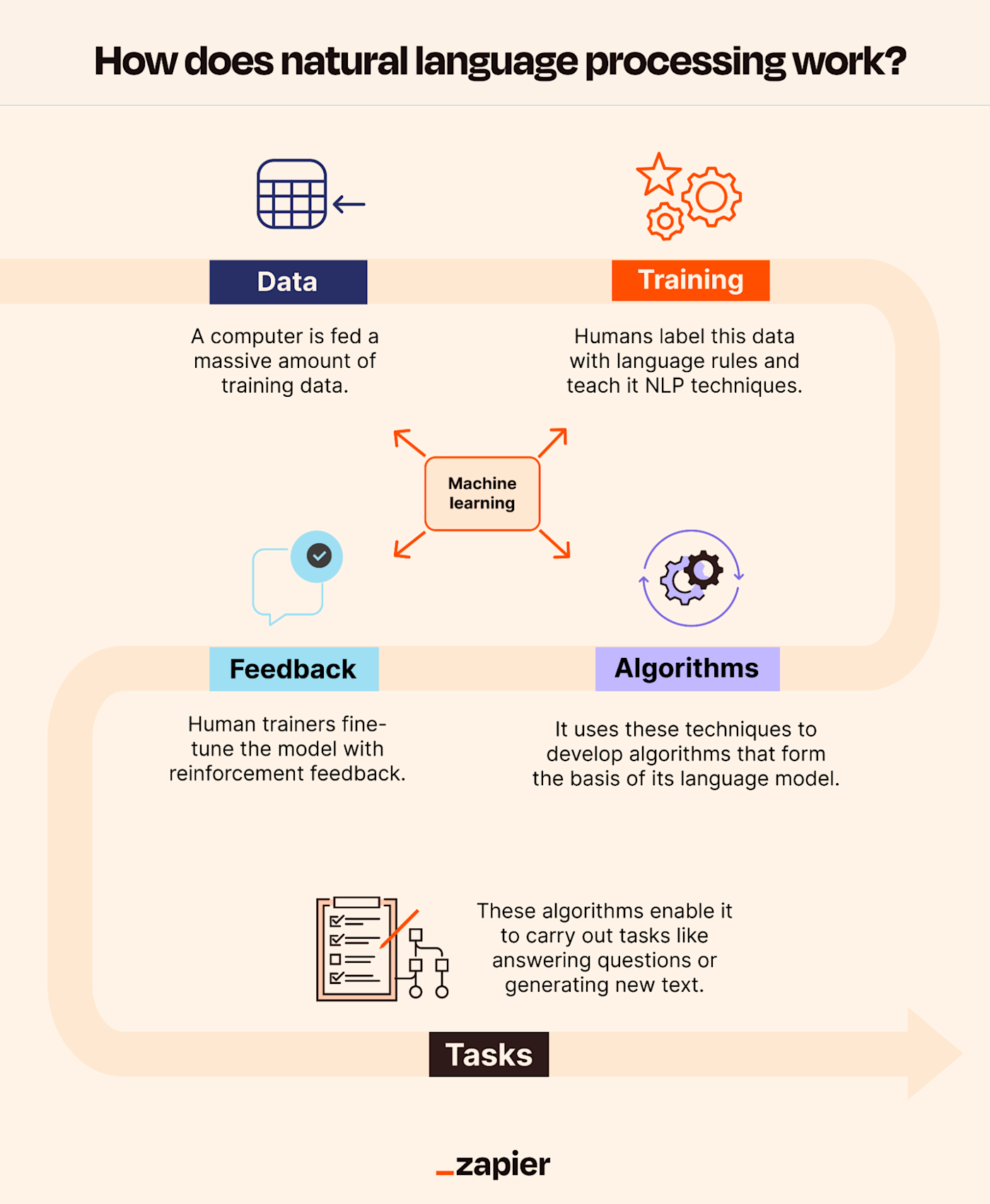
AI voice assistants operate through a multi-stage pipeline that processes spoken input into actionable output:
#Speech Recognition
The process begins with automatic speech recognition (ASR), which converts audio signals into text. Modern ASR systems use deep neural networks (DNNs) trained on vast datasets of spoken language. Key components include:
- Acoustic Modeling: Maps audio features (e.g., spectrograms) to phonemes.
- Language Modeling: Predicts word sequences based on context (e.g., using n-grams or transformer-based models).
- Noise Reduction: Filters background interference for clearer transcription.
#Natural Language Understanding
Once transcribed, text is analyzed to extract intent and entities. NLU systems employ:
- Intent Classification: Determines the user’s goal (e.g., "play music" vs. "set a timer").
- Entity Recognition: Identifies key data (e.g., song titles, dates, locations).
- Contextual Analysis: Resolves ambiguities (e.g., "turn off the lights" vs. "turn off the TV").
Advanced systems integrate contextual AI to remember prior interactions and adapt responses dynamically.
#Response Generation and Execution
After interpreting the command, the assistant generates a response using:
- Text-to-Speech (TTS): Converts text responses into natural-sounding speech (e.g., using WaveNet or Tacotron).
- Action Execution: Interfaces with APIs or device controls (e.g., smart home hubs, calendar apps).
- Fallback Mechanisms: Handles unrecognized queries via clarifying questions or web searches.
#Important Facts
- Market Dominance: As of 2024, Google Assistant and Alexa lead the global market, with over 1 billion monthly active users combined.
- Multilingual Support: Leading assistants support 50+ languages, with real-time translation features in some cases.
- Privacy Concerns: Voice recordings are often stored for training, raising debates over data security and user consent.
- Integration with IoT: Over 70% of smart home devices in 2024 are voice-assistant compatible.
- Accessibility: Voice assistants have become critical tools for individuals with disabilities, enabling hands-free device control.
- Energy Efficiency: On-device processing (e.g., Apple’s Siri with Neural Engine) reduces cloud dependency and latency.
- Future Trends: Predictive assistants (e.g., anticipating user needs before explicit commands) are in development.
#Timeline
Year Milestone 1952 Audrey, the first speech recognition system, developed by Bell Labs. 1962 IBM demonstrates "Shoebox," a voice-activated calculator. 1980s Hidden Markov Models (HMMs) improve speech recognition accuracy. 2001 Microsoft introduces speech recognition in Windows XP. 2011 Apple launches Siri with the iPhone 4S. 2014 Amazon releases Alexa with the Echo smart speaker. 2016 Google Assistant debuts with the Pixel smartphone. 2017 Microsoft integrates Cortana into Windows 10 and Xbox. 2019 Voice assistants surpass 3 billion monthly users globally. 2022 AI models like LaMDA enable more conversational assistants. 2024 On-device AI (e.g., Apple’s Siri with A16 chip) reduces cloud dependency.
#Related Terms
#FAQ
What does AI And Voice Assistants: Beyond Siri And Alexa cover?
Explores how artificial intelligence shapes voice assistants and beyond siri and alexa, covering practical use cases, benefits, limitations, and risks.
Why is AI And Voice Assistants: Beyond Siri And Alexa important?
It helps readers understand key concepts, compare practical use cases, and evaluate how Language AI decisions affect outcomes, risks, and implementation choices.
What should readers verify before applying this topic?
Readers should compare the benefits, limitations, data requirements, and related themes such as Voice, Assistant, Beyond before using the ideas in real projects.
#References
- AI And Voice Assistants: Beyond Siri And Alexa terminology and background research
- AI And Voice Assistants: Beyond Siri And Alexa use cases, implementation examples, and limitations
- Language AI best practices, standards, and risk guidance
- Voice case studies, benchmarks, and current industry analysis


Comments
No comments yet. Start the discussion with a useful note.