


#Short Answer
AI enhances engineering problem-solving by leveraging algorithms, machine learning, and generative models to automate analysis, optimize designs, predict failures, and generate innovative solutions. These technologies enable engineers to tackle complex, data-intensive challenges more efficiently than conventional methods.
#Infobox
Artificial intelligence in engineering problem-solving refers to the application of AI techniques to address complex challenges in engineering disciplines. This interdisciplinary field combines principles from computer science, mathematics, and engineering to develop intelligent systems capable of analyzing, optimizing, and solving real-world engineering problems. AI-driven problem-solving has transformed traditional engineering approaches by enabling faster decision-making, improved accuracy, and the ability to handle large-scale, dynamic systems.
#Overview
Engineering problem-solving traditionally relies on analytical methods, empirical data, and expert judgment. However, the increasing complexity of modern engineering systems—such as smart infrastructure, autonomous vehicles, and advanced manufacturing—has necessitated more sophisticated approaches. AI introduces adaptive, data-driven techniques that can process vast amounts of information, identify patterns, and propose solutions in real time.
Key AI methodologies applied in engineering include:
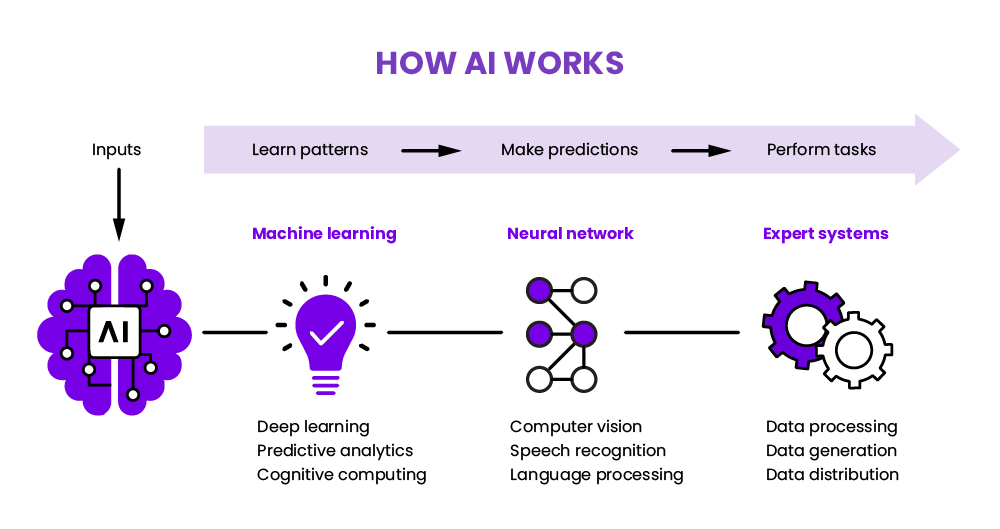
- Machine Learning (ML): Used for predictive modeling, classification, and regression tasks, such as forecasting equipment failures or optimizing production processes.
- Generative AI: Enables the creation of novel designs, simulations, and solutions by learning from existing data and generating new possibilities.
- Optimization Algorithms: Techniques like genetic algorithms and particle swarm optimization help find optimal solutions in complex design spaces.
- Expert Systems: Rule-based systems that emulate human expertise to diagnose problems or recommend actions in specialized domains.
These AI tools are particularly valuable in fields such as civil, mechanical, electrical, and software engineering, where they augment human capabilities and reduce the time and cost associated with traditional problem-solving.
#History / Background
The integration of AI into engineering problem-solving has evolved over several decades, marked by key milestones and technological breakthroughs.
#Early Developments
The theoretical foundations of AI were laid in the mid-20th century. In 1950, Alan Turing proposed the Turing Test, a criterion for machine intelligence, while John McCarthy coined the term "artificial intelligence" in 1956. Early AI research focused on symbolic reasoning and problem-solving, leading to the development of expert systems in the 1970s and 1980s. These systems, such as MYCIN for medical diagnosis, demonstrated the potential of AI in specialized domains.
#Rise of Machine Learning
The 1990s saw a shift toward data-driven approaches with the advent of machine learning. Algorithms like support vector machines (SVMs) and neural networks enabled systems to learn from data and improve over time. In engineering, ML was applied to tasks such as quality control, predictive maintenance, and process optimization. The availability of large datasets and computational power further accelerated these developments.
#Generative AI and Modern Applications
The 2010s marked a new era with the rise of deep learning and generative AI. Models like generative adversarial networks (GANs) and transformer-based architectures (e.g., large language models) revolutionized problem-solving by enabling the generation of novel designs, simulations, and solutions. In engineering, generative AI is used for:
- Design Automation: Generating optimized structural designs or circuit layouts based on performance criteria.
- Simulation and Modeling: Creating realistic simulations of physical systems for testing and validation.
- Autonomous Systems: Enabling robots and drones to navigate and solve problems in dynamic environments.
#How It Works
AI-driven engineering problem-solving typically involves several stages, from data collection to solution implementation. The process can be broken down into the following steps:
#Data Collection and Preprocessing
Engineering problems often require high-quality data to train AI models. This data may include sensor readings, historical records, simulation outputs, or expert annotations. Preprocessing steps such as normalization, noise reduction, and feature extraction are essential to prepare the data for analysis.
#Model Selection and Training
Depending on the problem, different AI models may be employed:
- Supervised Learning: Used when labeled data is available (e.g., predicting equipment failures based on maintenance logs).
- Unsupervised Learning: Applied to uncover hidden patterns or clusters in unlabeled data (e.g., identifying anomalies in sensor data).
- Reinforcement Learning: Suitable for problems requiring sequential decision-making (e.g., optimizing control systems in robotics).
- Generative Models: Used to create new data or designs (e.g., generating 3D models for architectural design).
#Problem Solving and Optimization
Once trained, AI models can be deployed to solve engineering problems. For example:
- Predictive Maintenance: ML models analyze sensor data to predict when machinery will fail, allowing for timely interventions.
- Design Optimization: Generative AI explores vast design spaces to propose optimal solutions that meet performance, cost, and sustainability criteria.
- Fault Diagnosis: Expert systems or neural networks identify the root causes of failures in complex systems.
#Validation and Deployment
AI solutions must be validated against real-world data or simulations to ensure accuracy and reliability. Once validated, the models can be integrated into engineering workflows, such as computer-aided design (CAD) software, manufacturing execution systems (MES), or autonomous control platforms.
#Important Facts
- AI reduces problem-solving time: In some cases, AI can solve engineering problems in minutes that would take humans days or weeks.
- Generative AI enables creativity: Unlike traditional optimization, generative AI can propose novel solutions that humans might not consider.
- AI improves safety: Predictive maintenance and fault diagnosis reduce the risk of catastrophic failures in critical systems.
- Data quality is crucial: Poor or biased data can lead to inaccurate AI models, highlighting the importance of robust data collection.
- AI complements human expertise: While AI excels at processing data, human engineers provide context, creativity, and ethical oversight.
#Related Terms
#FAQ
What does AI And Engineering: Problem-Solving cover?
Explores how artificial intelligence shapes engineering and problem-solving, covering practical use cases, benefits, limitations, and risks.
Why is AI And Engineering: Problem-Solving important?
It helps readers understand key concepts, compare practical use cases, and evaluate how Artificial Intelligence decisions affect outcomes, risks, and implementation choices.
What should readers verify before applying this topic?
Readers should compare the benefits, limitations, data requirements, and related themes such as Engineering, Problemsolving, AI Applications before using the ideas in real projects.
#References
- AI And Engineering: Problem-Solving terminology and background research
- AI And Engineering: Problem-Solving use cases, implementation examples, and limitations
- Artificial Intelligence best practices, standards, and risk guidance
- Engineering case studies, benchmarks, and current industry analysis


Comments
No comments yet. Start the discussion with a useful note.